
Random Debate Topic Generator for Kids

Sometimes you just need a fast, low-prep way to get students thinking. A short debate works almost every time.
This random debate topic generator for kids is designed for mixed ages and flexible use, whether you’re running a quick brain break, starting a bell ringer, or warming up debate club.
Each topic includes two simple argument starters so students can move from silence to discussion in seconds, without you scrambling to prompt them.
Random Debate Topic Generator for Kids
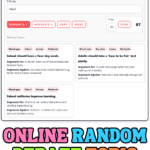
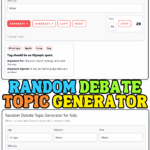
Filters + a topic with 2 starter arguments (1 sentence each).
How the Debate Topic Generator Works
Start by selecting the age group, category, tone (serious or funny), and difficulty level. You can generate one topic for a quick bell ringer or three at once if you want options.
Each debate topic includes a clear statement plus one short argument for and one against, so students aren’t stuck trying to think of where to begin.
If you’d like to add a little pressure, switch on the optional timer and give them 30–90 seconds to prepare before sharing their ideas.
Examples of Random Debate Topics for Kids
If you’d like a quick idea without using the tool, here are a few classroom-friendly examples grouped by tone.
Funny Debate Topics
- Should homework be banned?
- Are cats better than dogs?
- Should students be allowed to wear pajamas to school?
- Does pineapple belong on pizza?
- Should recess last all day?
Serious Debate Topics
- Should schools include more outdoor learning time?
- Should schools start later in the morning?
- Should screen time be limited for kids?
- Should school uniforms be required?
- Should students have more choice in what they learn?
Debate Formats That Work for Mixed Ages
When you’re working with a range of ages or confidence levels, structure matters. Keep it simple. Pair students up and assign sides, or split the room in half and let each group prepare one main argument.
For larger groups, choose two volunteers to debate while the rest of the class listens and votes at the end.
You can also adjust expectations by age. Younger students might share one reason each, while older students can build on counterarguments and respond directly to the opposing side.
How to Run a Fast, Low-Prep Classroom Debate
Set a clear time limit from the start. Give students 30–90 seconds to think, then one minute per side to share their main argument. Keeping it short prevents overthinking and keeps energy high.
Assign sides quickly rather than letting students choose, especially for mixed ages. This encourages flexible thinking and prevents the same confident voices from always leading.
End with a quick reflection or class vote. Ask which arguments were strongest and why. That short wrap-up is often where the most meaningful thinking happens.
Why Debate Builds Critical Thinking Skills
Debate pushes students to do more than share opinions. They have to listen carefully, consider opposing viewpoints, and explain their reasoning clearly. Even a short discussion encourages them to organize their thoughts and support their ideas with logic rather than emotion.
It also builds confidence. When students practice defending a position, especially one they didn’t choose, they learn how to think flexibly and respond respectfully.
Over time, that habit of weighing both sides strengthens decision-making far beyond the classroom.
More Classroom Generators for Brain Breaks and Bell Ringers
If this debate tool works well for your group, you might also like rotating in other quick, low-prep generators.
A writing prompt generator is great for transitioning into independent work, while a Would You Rather tool keeps discussions light and energetic.
The Scattergories generator adds a fast-paced vocabulary challenge that works especially well with mixed ages.
For fair participation, a random name picker helps you call on students without putting the same voices on the spot.
Switching between formats keeps energy up while still building speaking, reasoning, and creative thinking skills.
Frequently Asked Questions
These topics are designed for elementary through middle school. You can filter by age, but many work well across mixed groups with slight adjustments in expectations.
Yes. The topics are classroom-safe and avoid extreme or highly political issues, while still encouraging thoughtful discussion.
Absolutely. Select the middle school filter and choose more thoughtful difficulty levels for deeper discussion.
You can generate one topic for a quick bell ringer or three at once if you want options to choose from.
Yes. Every topic includes one short argument for and one against to help students get started quickly.
Set a short timer, assign sides, and limit responses to one main point per student. Keeping it structured and fast makes it manageable and engaging.
