Easter scavenger hunt ideas have completely replaced the “everyone runs and grabs eggs” chaos in our house.
As my son got older, the basic egg hunt stopped feeling exciting, so we started adding clues, puzzles, photo challenges, and even a few brain-teasers. It instantly made Easter morning last longer and feel more like an adventure than a five-minute scramble.
Over the years, we’ve tested simple rhyming clues for younger kids, outdoor garden hunts when the weather cooperates, and harder cipher-style challenges that actually stump teenagers. Some take ten minutes to set up.
Others feel like a mini escape room. If you’re looking for Easter egg hunt ideas that work for preschoolers, tweens, or teens, and don’t require hours of prep, these are the ones that have worked in real life.
**This post may contain affiliate links. As an Amazon Associate and a participant in other affiliate programs, I earn a commission on qualifying purchases.**
How to Plan an Easter Scavenger Hunt That Lasts More Than 5 Minutes
If you’ve ever watched an egg hunt end before you’ve finished your first sip of coffee, you know the problem. A little structure turns it from a five-minute sugar grab into something that actually feels like an event.
Start with the number of clues. Younger kids don’t need a marathon. Five to seven simple stops is usually perfect. Elementary-aged kids can handle eight to twelve, especially if the clues rhyme. Older kids and teens? They need more, and they need something to solve. Add codes, mirror writing, or small logic puzzles so it doesn’t feel obvious.
Next, decide your space before you hide anything. Indoor hunts are easier to manage. Outdoor hunts feel bigger and burn energy fast. A mix of both stretches the time and keeps it interesting. If you’re working with a small house or apartment, think vertical instead of wide, tape clues to doors, tuck them on shelves, slide them under chairs.
If you want it to last longer, don’t save everything for the end. Small rewards at each stop keep momentum going. It doesn’t have to be candy. Puzzle pieces, Lego parts, stickers, or clues tucked inside plastic Easter eggs all work well and add a little extra suspense at every stop.
And if you have more than one child, plan for balance. Separate clue paths, assigned colors, or a shared final prize prevent one person from racing ahead and deflating the whole thing.
With just a little thought beforehand, an Easter scavenger hunt can easily stretch to twenty or thirty minutes, and feel intentional instead of chaotic.
Fun Easter Hunt Ideas for Every Age and Setting
Not every Easter hunt needs to follow the same format. Some kids love short rhyming clues and quick wins. Others prefer solving puzzles, completing photo challenges, or working through layered riddles before finding their prize.
Below are 12 different hunt styles organized by difficulty and setting.
Whether you’re planning something simple for younger kids, a backyard adventure for mixed ages, or a more challenging clue-based game for older children, these ideas help you choose the right format for your group without overcomplicating the prep.
Easter Scavenger Hunt Clues for Inside
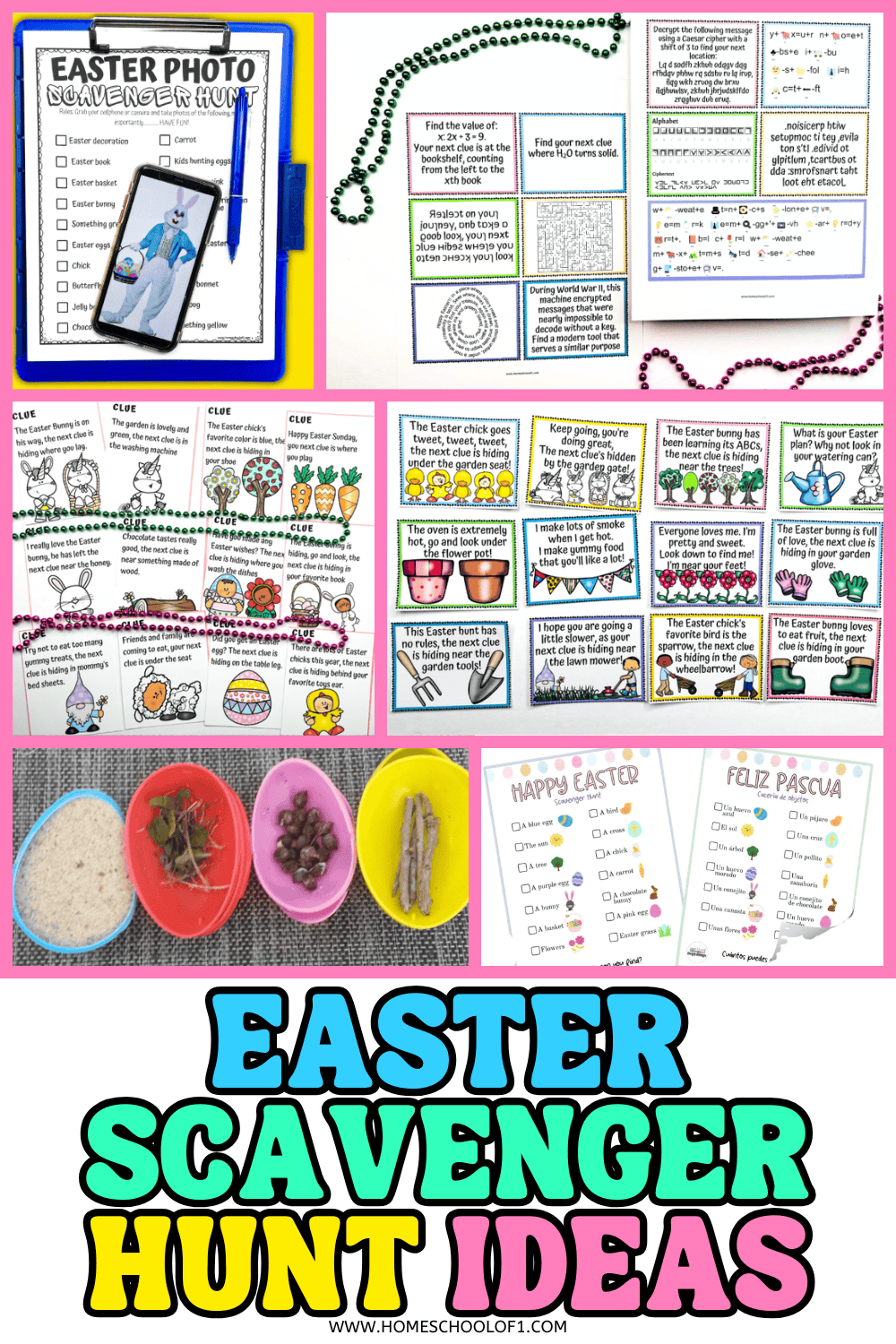
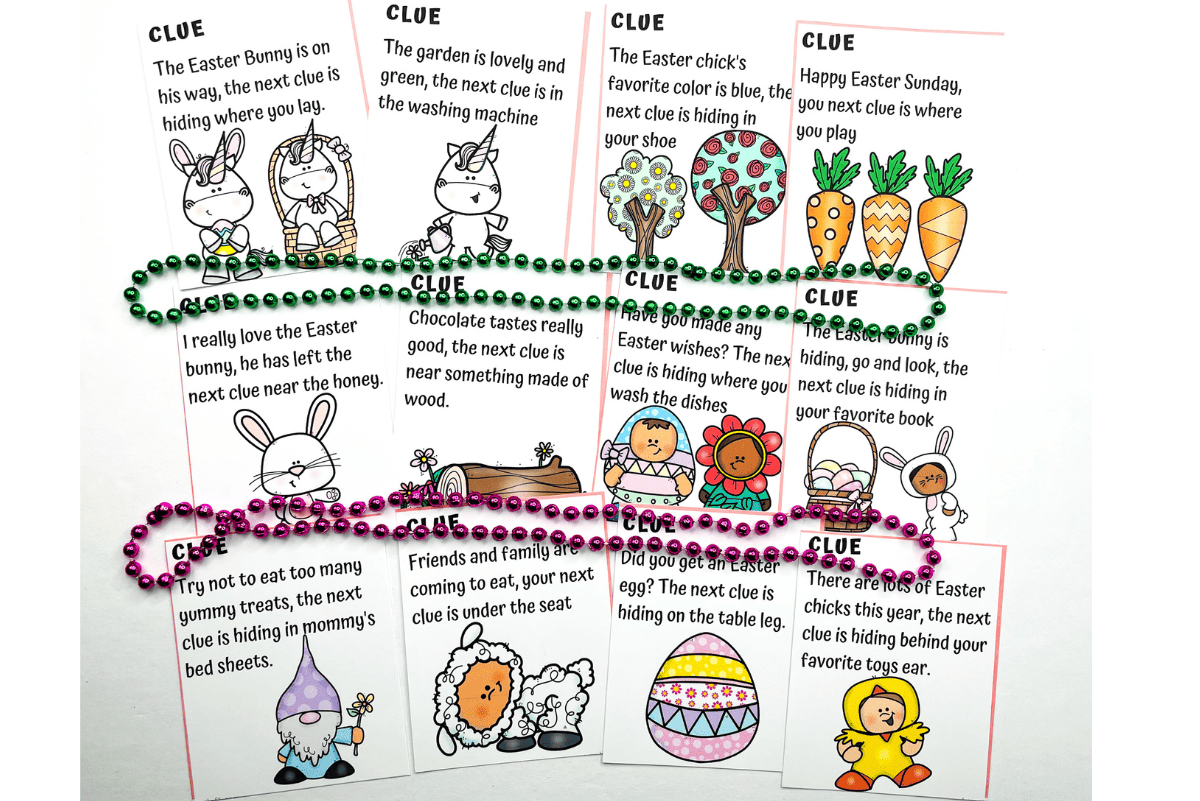
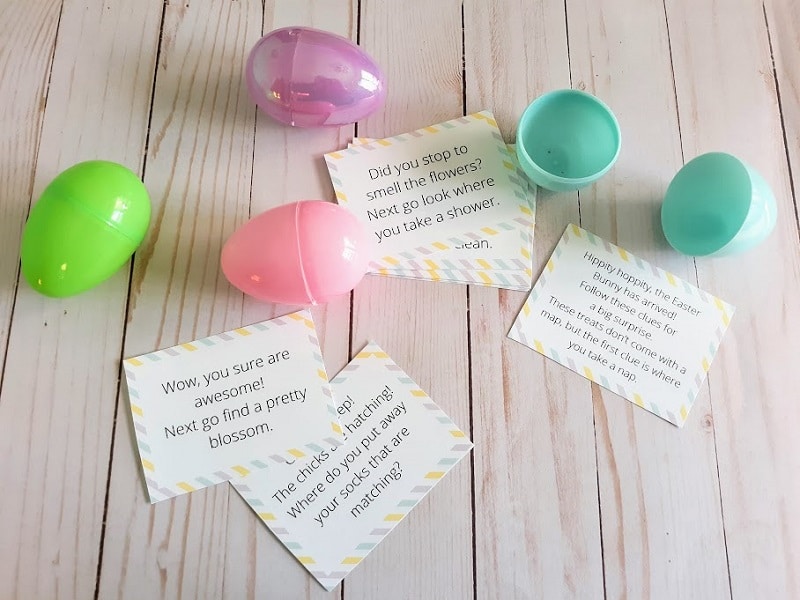
This is my go-to when the weather refuses to cooperate (which happens more often than I’d like). These indoor rhyming clues send kids from room to room, under the sink, near the couch, inside the laundry basket, and instantly slow the pace of Easter morning in a good way. Instead of one frantic egg dash, the kids actually read, think, and move with purpose. It works especially well for mixed ages because younger kids can guess locations while older ones read the clues aloud.
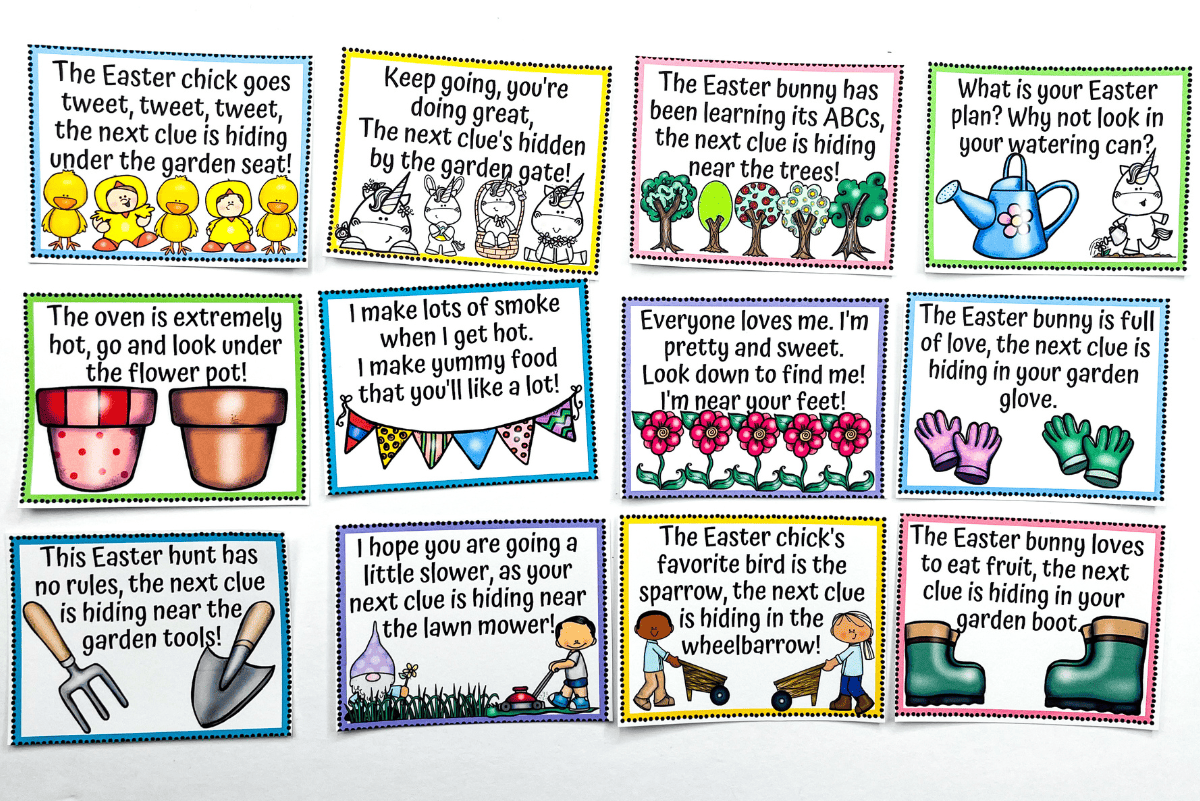
If it’s sunny, I always take the hunt outside. There’s something about hiding clues near the mailbox, under flower pots, or tucked beside the swing set that makes it feel bigger than it actually is. These outdoor rhyming clues are simple enough for younger kids but still fun for older ones when you add a small prize at each stop. I like that it gets everyone moving instead of hovering around the kitchen waiting for chocolate.
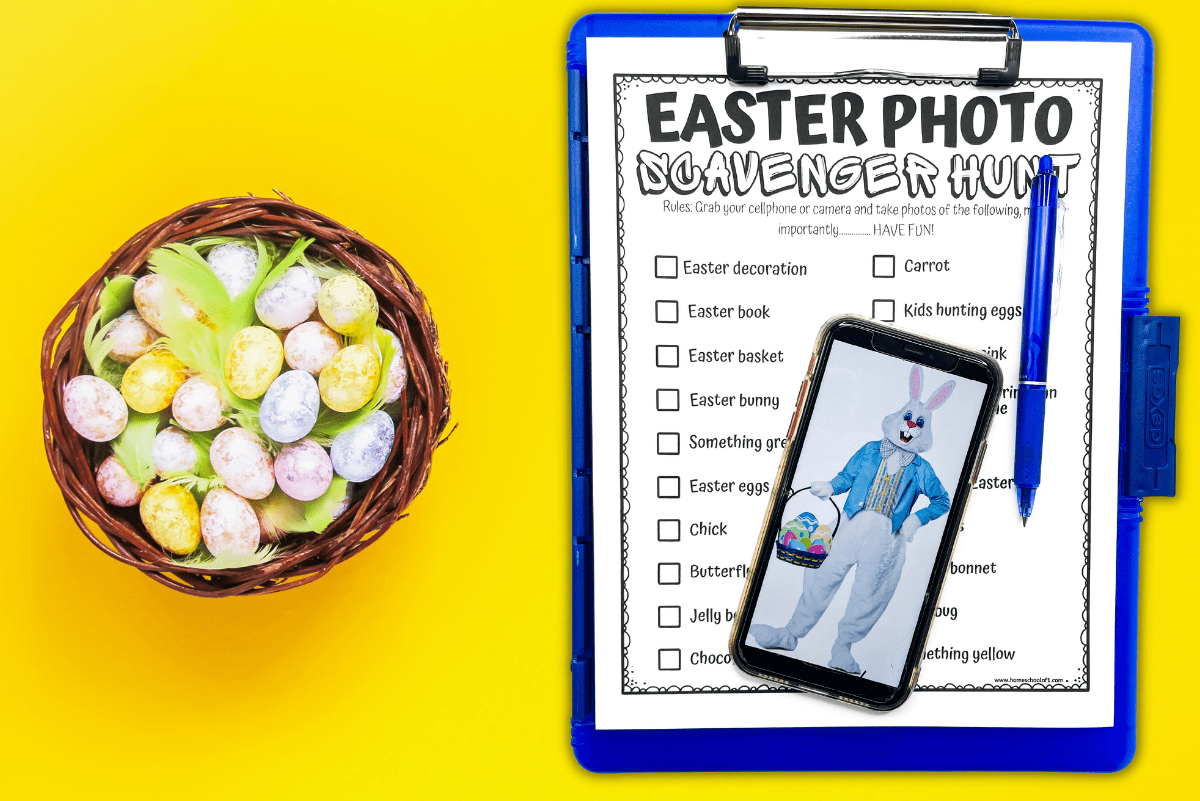
This one saved Easter once my son hit the “I’m too old for this” phase. Instead of hunting for eggs, teens hunt for photos, a bunny decoration, something yellow, a sibling mid-jump, spring flowers outside. They use their phones (which they’re holding anyway), but now there’s a goal. It feels independent and a little competitive if you split into teams. Less babyish, more creative.
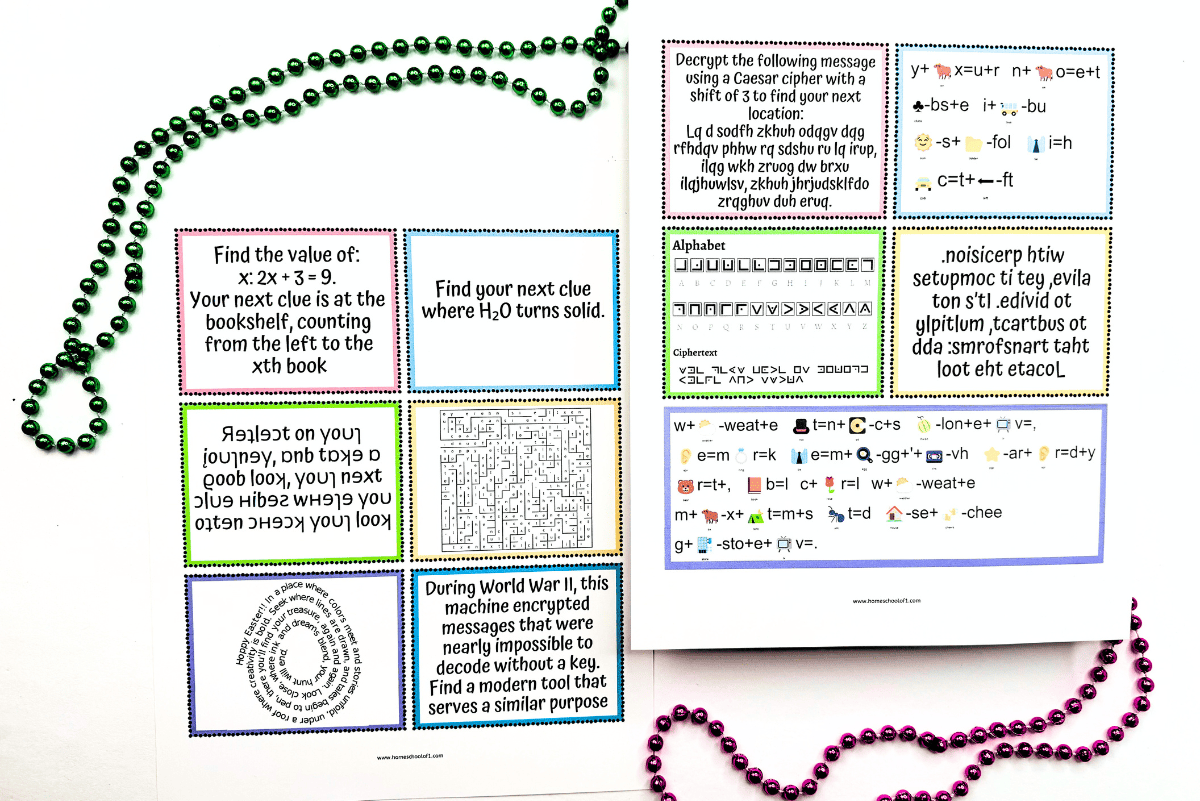
If you’ve got older kids who roll their eyes at rhyming riddles, this version actually challenges them. Think mirror writing, simple ciphers, and logic-based clues instead of “look where you brush your teeth.” It turns Easter into something closer to a mini puzzle game. I’ve found teens are far more engaged when they have to decode something instead of just running to the next obvious spot.
Simple Print-and-Hide Easter Clue Hunt (No Prep Stress)
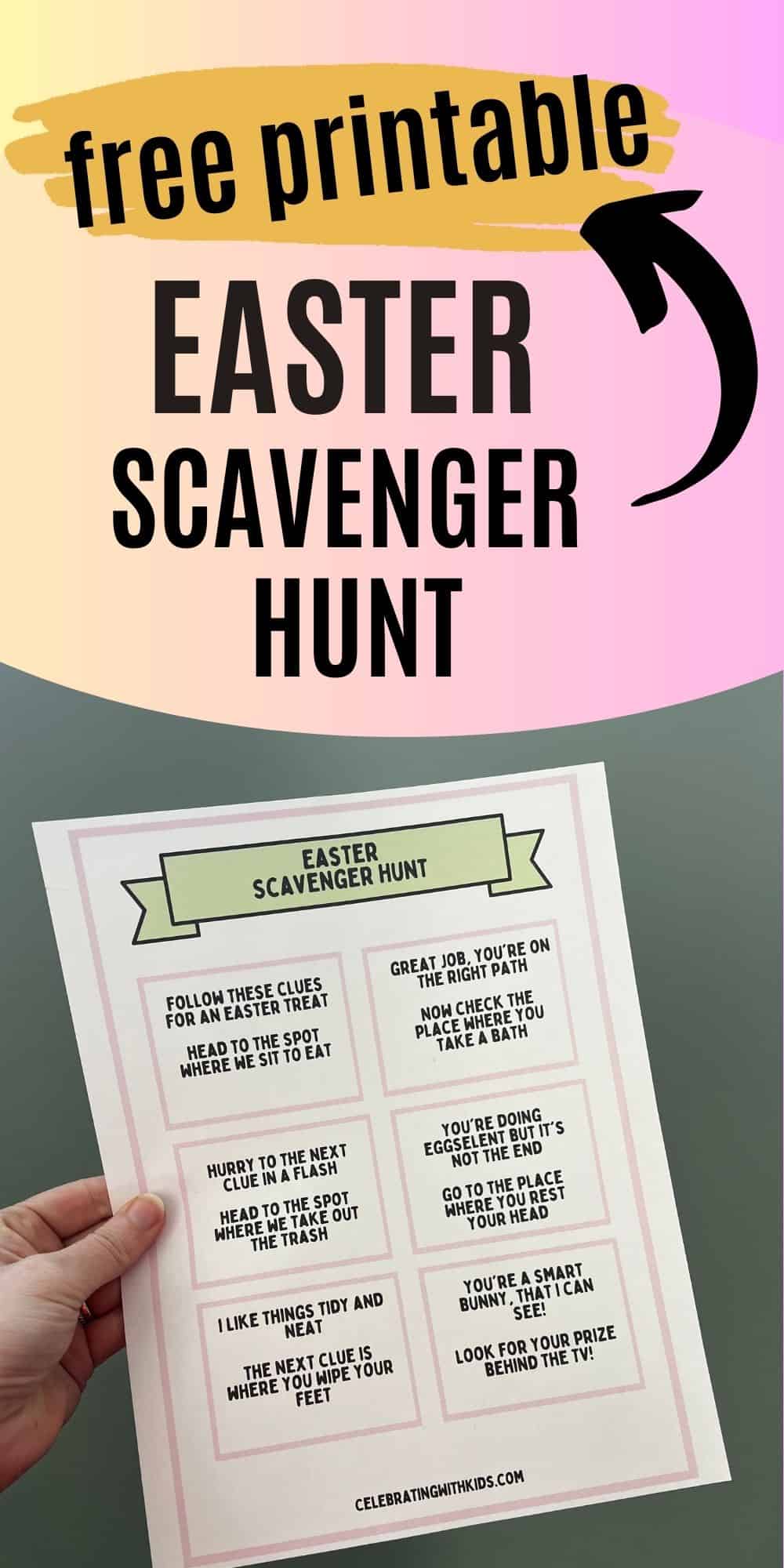
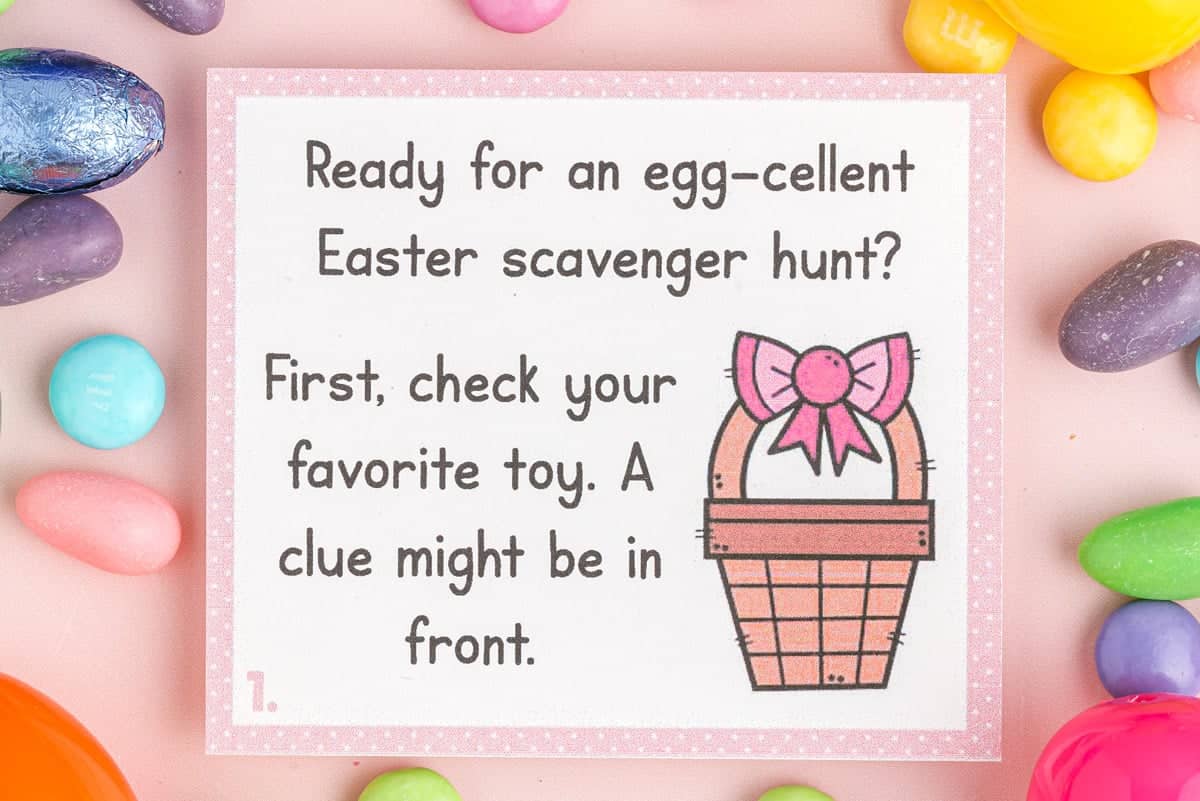
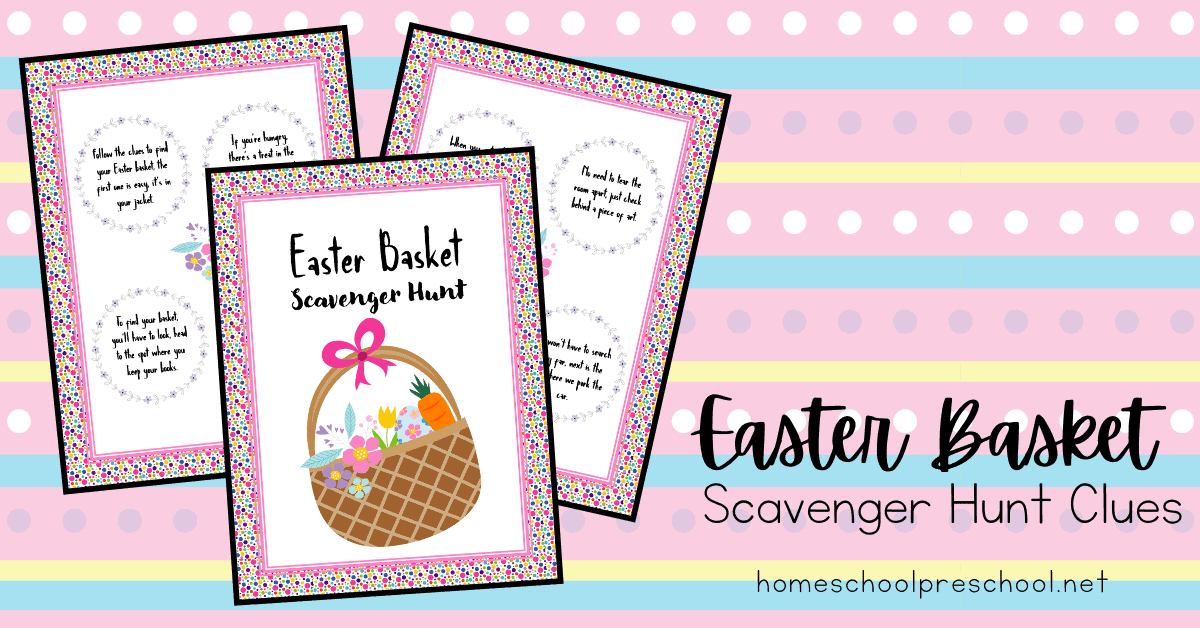
Sometimes you just want a straightforward, print-and-hide setup. This printable set is simple but effective, short clues that move kids through familiar spots and lead to a final surprise. It’s easy to personalize with a few handwritten swaps if a clue doesn’t fit your house.
When you don’t want to overthink it but still want structure, this is the kind of hunt that works without drama.
Flexible Family Easter Hunt (Easy to Adapt for Any Age)
This is a flexible option when you’ve got a mix of ages and don’t want to reinvent the wheel. The clues are simple enough for younger kids, but you can easily make it harder by rearranging the order or adding small challenges at each stop.
I like that it’s adaptable, you can tuck clues into baskets, inside plastic eggs, or tape them under chairs without needing a complicated setup.
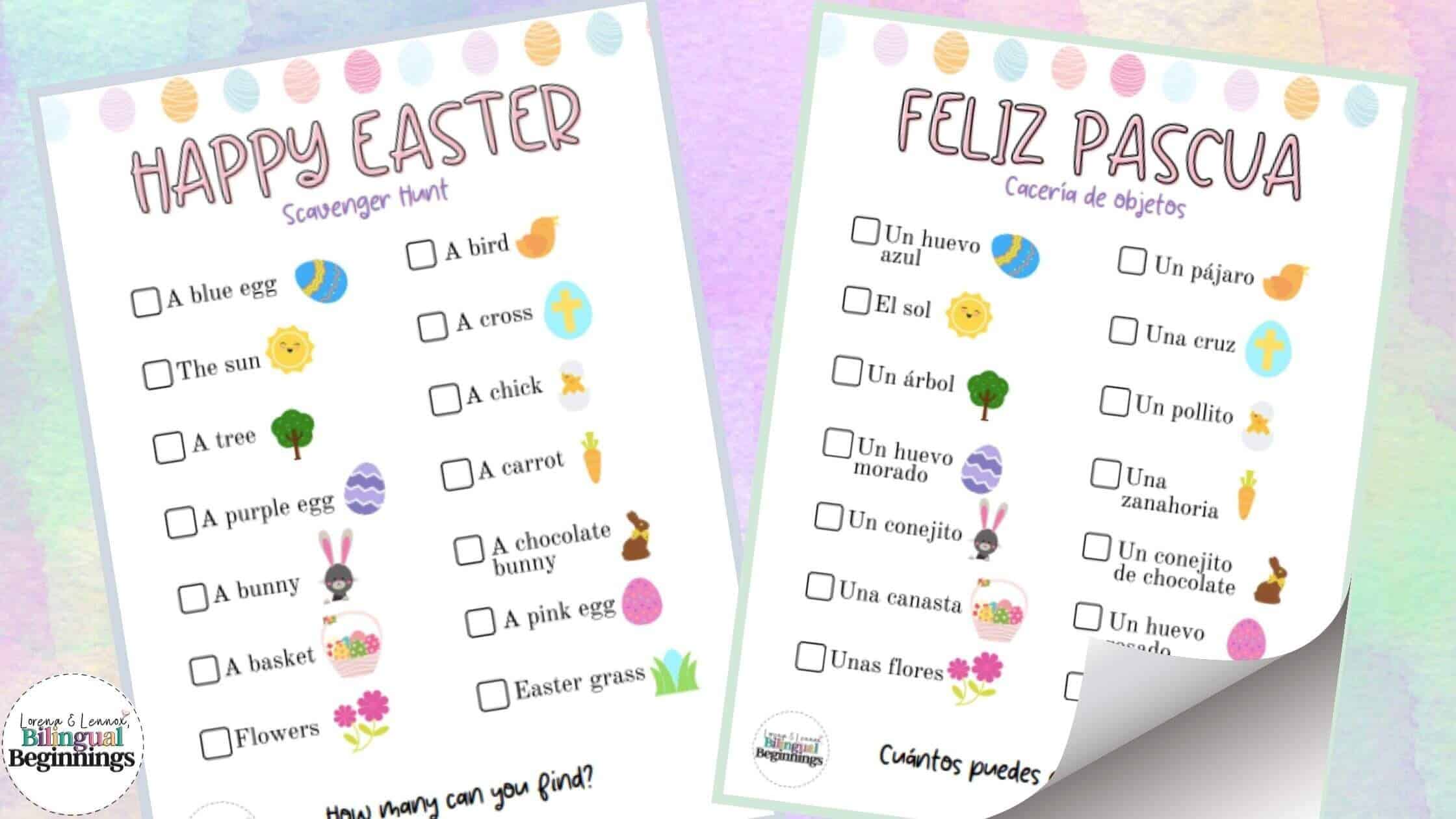
If you’re learning Spanish at home or in the classroom, this version adds a small academic twist without feeling like a lesson. The vocabulary stays light and seasonal, so kids aren’t overwhelmed, but they still get real language exposure. It works especially well if you pair it with a short Easter-themed book or quick review beforehand. It feels intentional rather than random.
This is the kind of hunt that works when you don’t want to commit to fully inside or fully outside. You can send kids to the backyard for one clue, then back into the kitchen for the next.
I’ve found that alternating locations keeps the energy up and avoids bottlenecks where everyone crowds into one room. Adding a small treat at each stop helps stretch it out so it lasts longer than five minutes.
If you prefer low-prep, this is about as easy as it gets. Print, cut, hide, done. I’d recommend heavier paper if you’re using it outside, one year we learned that lesson the hard way.
It’s simple, straightforward, and reliable when you want structure but don’t want to spend the night before Easter writing riddles at 11pm.
This one works especially well for preschoolers or early readers because the clues can be read aloud by an adult. Instead of complicated puzzles, it’s more about the rhythm of “find, read, move.”
Younger kids love the predictability of knowing another clue is waiting. It feels organized without being overwhelming, which matters when attention spans are short.
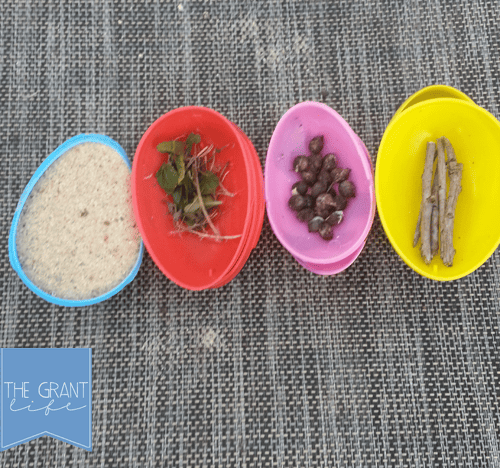
This is a fun reset if you’re trying to tone down the candy focus. Instead of racing to grab filled eggs, kids head outside and collect small natural items to put inside empty eggs, a tiny leaf, a pebble, a feather, a blade of grass.
It slows everything down in a good way. Younger kids especially love matching colors or textures, and it turns into more of a nature walk than a sugar hunt. It’s simple, but surprisingly engaging.
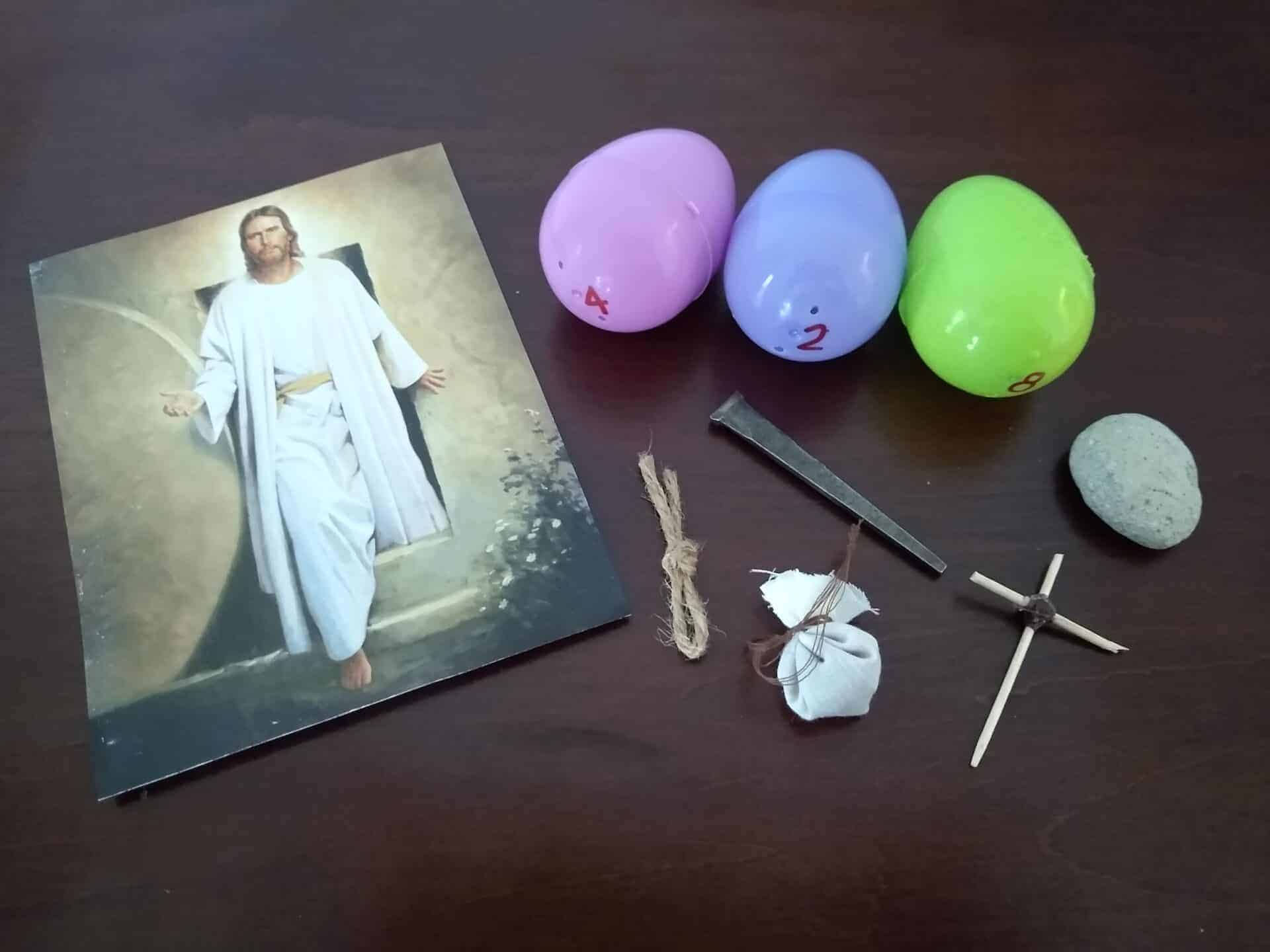
If you want something more faith-centered, this version gives structure to the story of Easter. Each egg holds a small symbol and a corresponding scripture, so instead of just collecting treats, kids move through the story step by step.
It works well during Holy Week or as part of a Sunday School lesson. I like that it creates space for conversation rather than just excitement, it feels meaningful without being complicated to set up.
Clare Brown is the founder of Homeschool of 1. She creates free printables and interactive learning tools for kids, helping parents and teachers generate activities instantly with no prep. Her work has been featured in Parade, HuffPost, Business Insider, Motherly, AOL, and Yahoo. Read more.