Reading Time Calculator for Kids

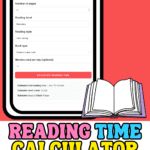
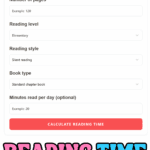
Use this reading time calculator to estimate how long a printed book will take to read. Enter the page count, choose a reader level, or add your own reading speed to create a personalized reading plan.
Reading Time Calculator
Estimate how long a printed book will take to read and create a daily reading plan.
Leave blank to use the selected reader level.
Reading Time Calculator by Homeschool of 1
How to Use the Reading Time Calculator
Enter the total number of pages and, if you have already started reading, your current page. Choose the reader level, reading style, and book type that fit best.
For a more personalized result, enter your actual reading speed in words per minute. You can also add your daily reading time to calculate a page target and see how many days the book should take.
How Reading Time Is Estimated
The calculator combines the pages remaining, estimated words per page, and reading speed. Illustrated books generally contain fewer words per page than standard chapter books, while dense novels and textbooks contain more.
The reader-level settings use reading fluency benchmarks as a general guide. These are estimates rather than reading assessments, so actual times will vary with text difficulty, concentration, and familiarity with the subject.
For the most accurate result, time how many words you read in one minute and enter that as a custom reading speed.
When a Book Reading Calculator Is Useful
This calculator helps when page count alone does not show how demanding a book will be. Use it to plan:
- Independent reading assignments
- Classroom or homeschool reading
- Family read-alouds
- Book club deadlines
- Daily reading goals
- Library books with a return date
I also use it when we are deciding whether a book is realistic for this week or better saved for later. A clear daily page target can make a longer book feel much more manageable.
Reading Resources to Use With It
Once you know how long a book should take, these resources can add some useful structure:
The random book generator for kids can help choose the next book.
Reading response forms help children record important details, questions, and reactions while they read.
A monthly reading log makes it easier to track daily progress.
The book scavenger hunt gives younger or reluctant readers something specific to look for.
Use the 3rd grade book report or middle school book report template after finishing.
Last Updated on 26 August 2026 by Clare Brown
