Homeschool Laws By State

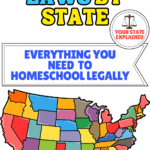
Homeschool laws by state vary considerably, from states with almost no requirements to those requiring notice, testing, record keeping, or annual evaluations.
Use the guide below to compare homeschool requirements across all 50 states, see what your state requires, and access official government guidance. I’ve homeschooled in both Florida and Alabama, so I know firsthand how different the rules can be when you move states.
If you’re completely new to homeschooling, start with my guide to starting homeschooling in the US, then use the tool below to check the requirements for your state.
Homeschool laws by state
Homeschool requirements for all 50 states – no membership required. Select your state to see legal requirements, the official government source, and local Facebook groups.
Groups listed are independent communities — Homeschoolof1.com is not affiliated with any group. Join at your own discretion.
This page is for general informational purposes only and does not constitute legal advice. Homeschool laws change — always verify current requirements with your state’s official government website. If you spot an error or outdated info, please let us know.
How Homeschool Requirements Differ By State
The biggest differences between state homeschool laws usually involve notice requirements, testing, required subjects, attendance records, portfolios, and parent qualifications. Some states regulate very little, while others require considerably more paperwork and oversight.
The tool above lets you compare these requirements and see the official government source for your state. Since homeschool laws can change, always check the linked state source before making decisions based on the information here.
Even in states with few legal requirements, I recommend keeping basic attendance records, work samples, and high school transcripts. They can make record keeping much easier later.
Common Homeschool Law Questions Answered
Is homeschooling legal in all 50 states? Yes, homeschooling is legal in all 50 states, but every state sets its own rules. Requirements range from little or no notification to reporting, testing, record-keeping, and other requirements.
Do I need a teaching degree to homeschool my child? In most states, no. Many states have no teacher qualification requirements for homeschool parents, although requirements can vary depending on the state and homeschooling option you choose.
What is an umbrella school? An umbrella school (sometimes called a cover school) is an organization that homeschool families can enroll with to help meet state requirements. How umbrella schools operate and whether they are available depends on the state.
What does “notice of intent” mean? A notice of intent is a form or letter used to notify the appropriate state or local authority that you intend to homeschool. Whether you need one, where you file it, and how often you submit it depends on your state’s laws.
Can I homeschool if my child has special needs? Yes. Homeschooling is legal in every state, although requirements and available services for children with special needs can vary by state.
What happens if I don’t follow my state’s homeschool laws? The consequences vary by state. Always check your state’s current requirements and use the official government source linked in the tool above before you begin.
Free Homeschool Tools & Resources
Whether you’re just getting started or deep into your homeschool journey, these free tools can help you plan, track, and personalize your approach.
- What’s your homeschool style quiz – Not sure which homeschool method fits your family? This quiz helps you figure out your teaching style in minutes.
- Homeschool resource finder – Find curriculum and resources matched to your child’s age, learning style, and budget.
- Homeschool attendance calculator – Easily track attendance days and stay on top of your state’s requirements.
- Random homeschool name generator – Give your home school a name that makes it feel official.
- Weighted & unweighted GPA calculator – Calculate your homeschooler’s GPA for transcripts, college applications, and scholarship forms.
Last Updated on 27 August 2026 by Clare Brown
