
Random Games for Kids (Quick Ideas When You Don’t Want to Plan)

Random games for kids are what I use when I need something that works straight away and don’t want to overthink it.
Some days it’s not about finding the “best” game, it’s just about getting started quickly without overthinking it.
Letting something random decide, whether that’s a spinner, a generator, or even just picking from a list, takes that pressure off and usually gets kids more interested straight away.
I tend to use these when plans change, or when there’s a bit of time to fill and nothing obvious to do next.
Quick Ideas You Can Start Straight Away
- random drawing games
- quick charades
- guessing games for kids
- simple word challenges
Most of these take a minute or two to set up at most.
When You Need a Game but Don’t Know What to Pick
There are always those moments where you know you need something to do, but nothing obvious comes to mind.
It might be the end of the day, a lesson finishing early, or just a group that’s a bit all over the place. That’s usually when I stop trying to come up with the “best” activity and just let something random decide instead.
It takes the pressure off, and it’s often quicker than trying to think of something that will work for everyone.
Using Random Generators for Games
Sometimes the easiest way to run a game is to stop choosing altogether.
Instead of deciding what to play, I’ll just use a generator and build something around whatever comes up. It sounds simple, but it works, especially when you don’t have time to plan or the group is a bit mixed.
Here are a few ways I use them:
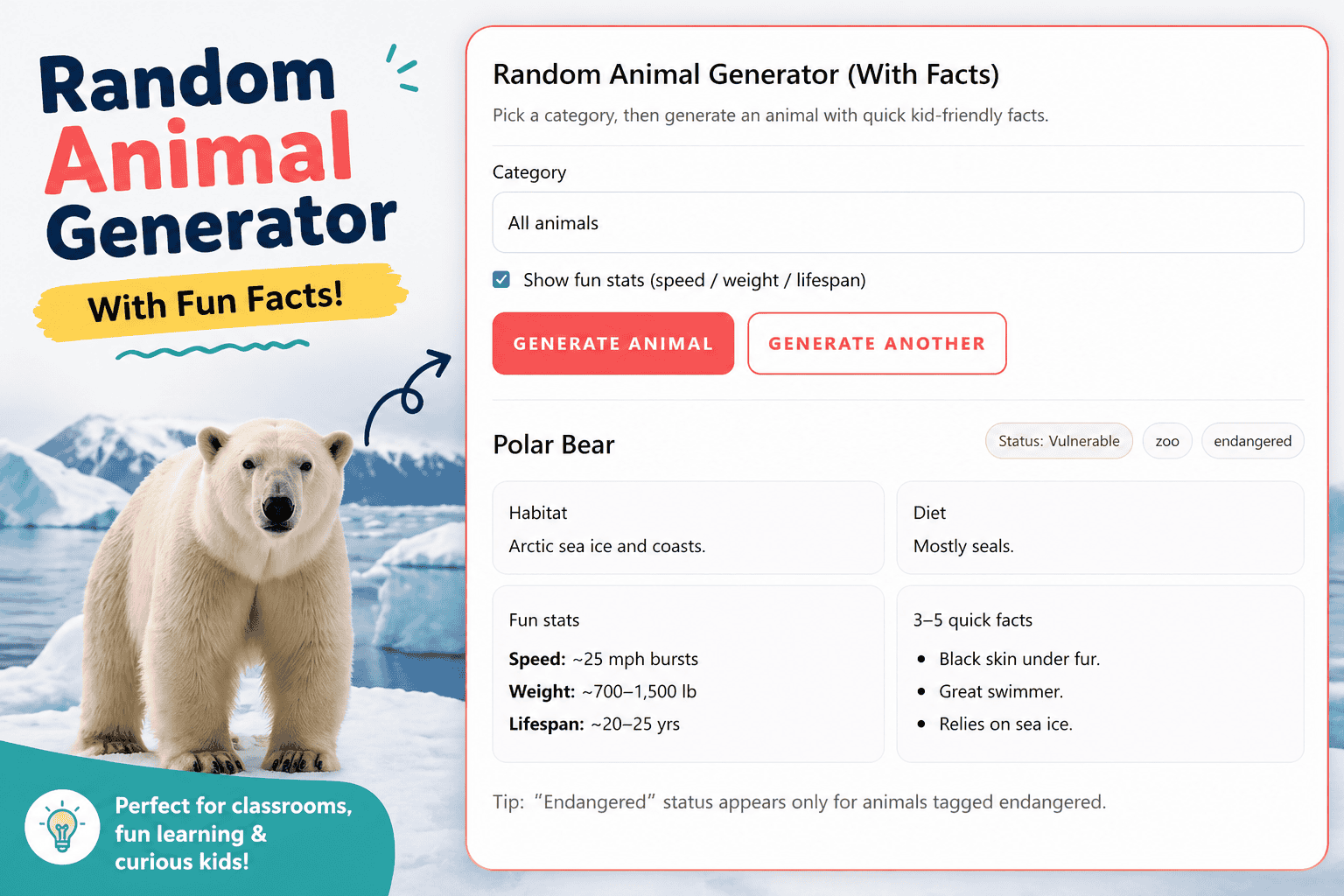
Random animal generator
This works well for quick guessing games or charades.
I’ll pick an animal at random, then either describe it and have them guess, or let them act it out. It’s simple, but it usually gets everyone involved straight away.
Random letter generator
Good for word-based games when you just want a random letter.
You can use it for things like:
- naming words that start with the letter
- quick spelling challenges
- or even a fast round of Scattergories
Random country or city generator
These work well if you want to bring in a bit of geography without making it feel like a lesson. Pick a place with either the US city generator or the world generator then:
- name something about it
- guess the continent
- or turn it into a quick trivia-style game
Random superpower generator
This one works well when you want something a bit more creative.
Pick a random superpower, then:
- act it out
- describe how it works
- or turn it into a quick writing or drawing task
Easy Random Games for Kids to Try
Sometimes it’s quicker to skip setting anything up and just start a game.
These all follow the same idea. You’re not planning it out, you’re just picking something and going with it, which is usually enough to get everyone involved straight away.
Random drawing game
This one usually ends up lasting longer than you expect. I’ll pick something to draw, give them a minute, then we go round guessing what everyone’s meant to be.
Most of the time I’ll just use the drawing prompt generator and go with whatever comes up.

Random word storytelling
Pick a word and build a story around it, one sentence at a time. It normally goes completely off track after a few turns, but that’s part of it.
I’ll use the random word generator here so it’s not always the same kind of ideas.
Guess the animal
Think of an animal and describe it without saying what it is. This one gets competitive pretty quickly.
If you want to make it easier, use a random animal generator to choose.
Random charades
Instead of stopping to think of something, just go with whatever comes to mind first. It keeps things moving and avoids that awkward pause.

Random category challenge
Pick a letter or category and give everyone a short time to come up with answers.
If I want to make it a bit more structured, I’ll just use the online Scattergories game and let that handle it.
When to Use Random Games with Kids
I don’t use these all the time, but they’re useful to have when you need something quickly.
They work well for things like:
- the last 10 minutes of the day
- when a lesson finishes earlier than expected
- early finishers who need something to do
- or just days where nothing is quite going to plan
Because you’re not overthinking it, you can start straight away, which is usually the hardest part.
Making Random Games Work for Different Ages
This is one of those things that depends a lot on the group.
With younger kids, I tend to keep it really simple. One idea at a time, shorter rounds, and nothing too open-ended. If it’s too complicated, they lose interest quickly.
With older kids, you can stretch it a bit more. They usually enjoy the competitive side, so I’ll add time limits, keep score, or make the prompts slightly harder.
If you’ve got mixed ages, it’s usually easier to adjust as you go rather than overthink it at the start. Most of the time, they’ll settle into it once you get going.
