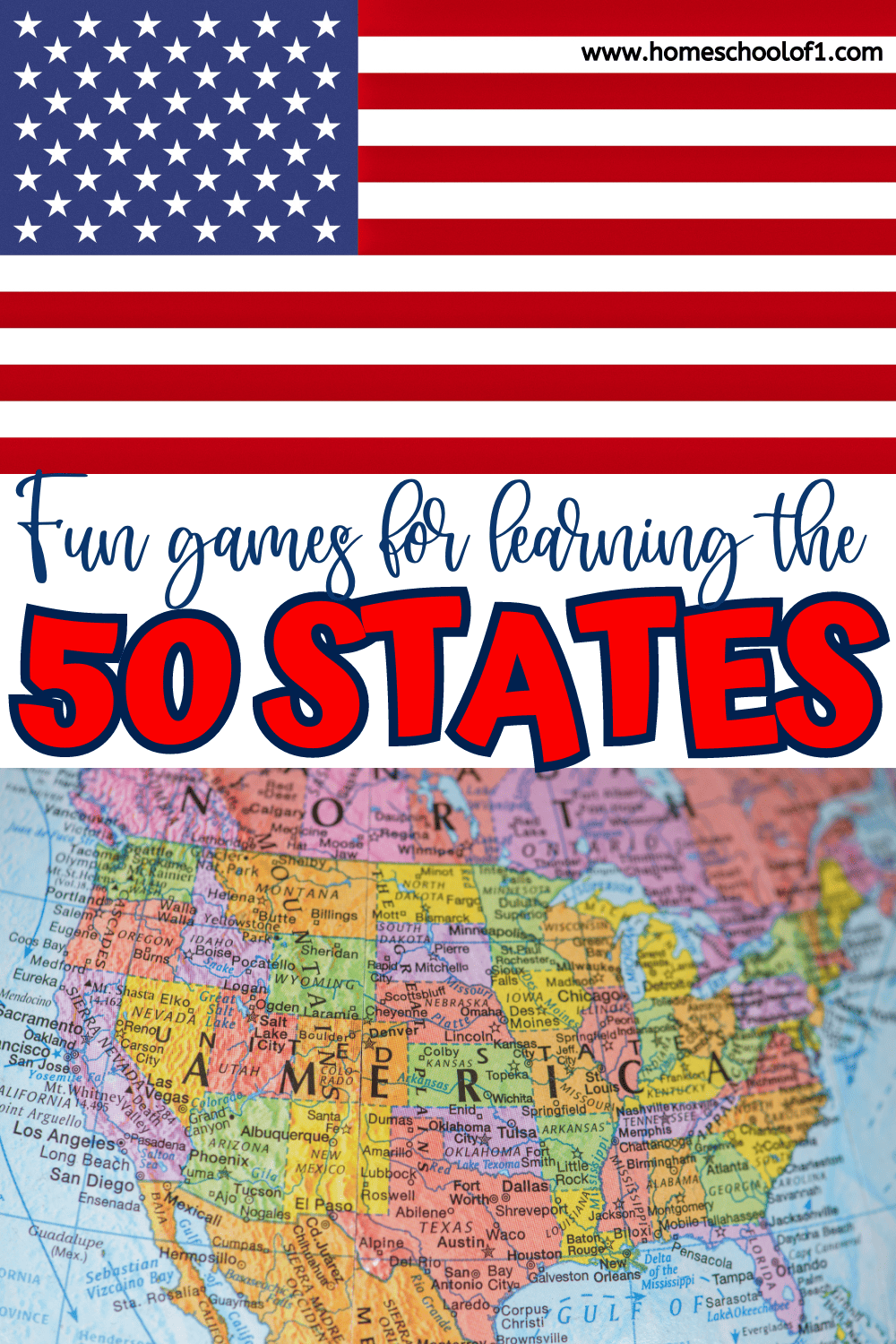
Learning the 50 states can feel overwhelming at first. When we started working through U.S. geography, I quickly realized that memorizing lists of capitals wasn’t going to stick.
What worked instead were games. Moving state pieces around a map, racing to answer trivia questions, or spotting locations during road trips made everything feel more manageable.
These are the state games that helped us practice geography without turning it into another worksheet.
**This post may contain affiliate links. As an Amazon Associate and a participant in other affiliate programs, I earn a commission on qualifying purchases.**
Board Games for Learning the 50 States
When we started working on U.S. geography, I found that games worked far better than flashcards alone. Moving pieces across a map or answering trivia questions helped the state names and capitals stick naturally.
These geography board and card games made it easier to review shapes, locations, capitals, and a few interesting facts without turning it into a memorization exercise.
If you want something more active, we also use our Random City Generator to pick a surprise U.S. city and then find it on the map. It’s a simple way to reinforce location skills without adding another worksheet.
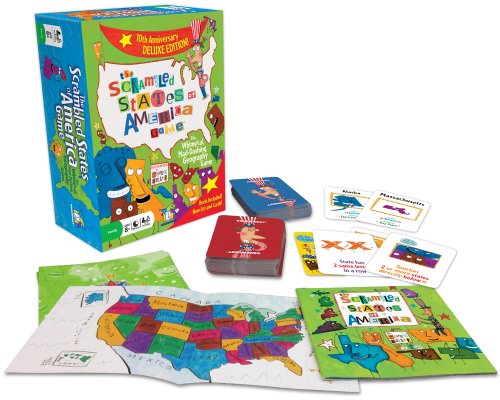
The Scrambled States of America Game
This was one of the first geography games that actually made the map feel less intimidating. The state shapes are part of the gameplay, so kids naturally start recognizing outlines without being told to “study them.” What I liked most is that it moves quickly, it doesn’t feel like a trivia drill. It worked best for us once basic state names were familiar but before capitals were fully memorized.
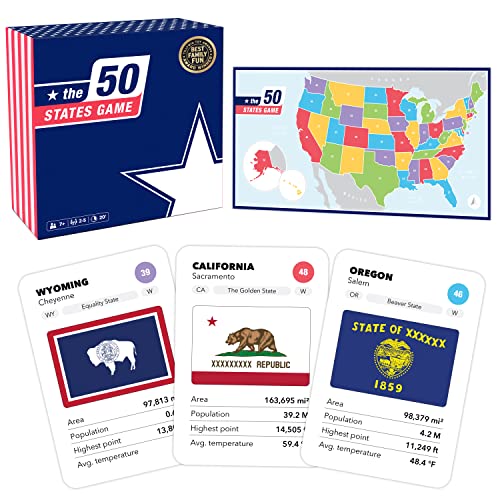
This one leans more into trivia. If your child likes quiz-style challenges, it can be motivating. The multiple-choice format makes it approachable, especially for kids who freeze when answers feel open-ended. We’ve used it more as a review tool than a first introduction, it’s better once they’ve seen the material at least once.
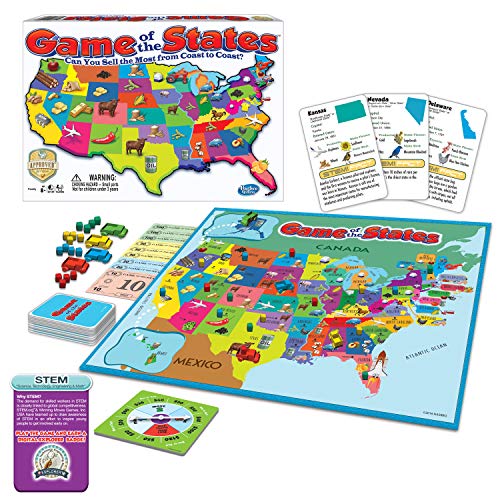
This feels more strategic than academic at first, which is why it’s clever. Kids are moving goods across the country and thinking about routes, and in the process they start noticing where states are located. It’s slower-paced than some of the others, so it works well for kids who enjoy planning and competition more than speed rounds.
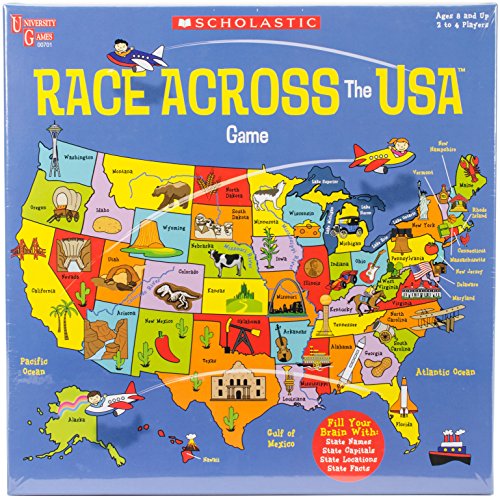
This one feels lighter and more visual. There’s movement across the map, which helps with spatial awareness. If your child struggles to picture where states sit in relation to each other, this type of gameplay helps more than flashcards ever could. It’s also a good option when you want something cooperative rather than intensely competitive.
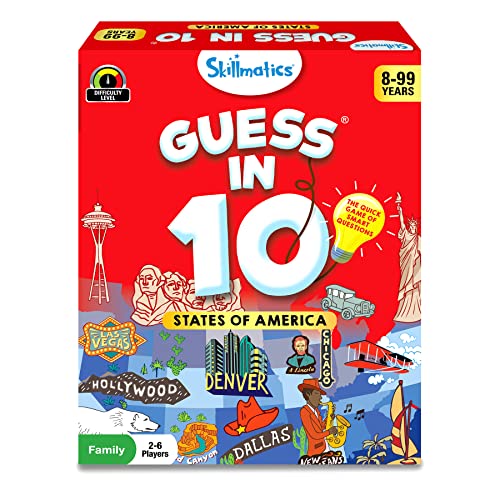
This one surprised me. Because it’s question-based, kids practice narrowing down clues rather than just recalling facts. It works well in small groups and doesn’t require a long setup. We’ve found it especially useful for road trips or quick review sessions when you don’t want to pull out a full board game.
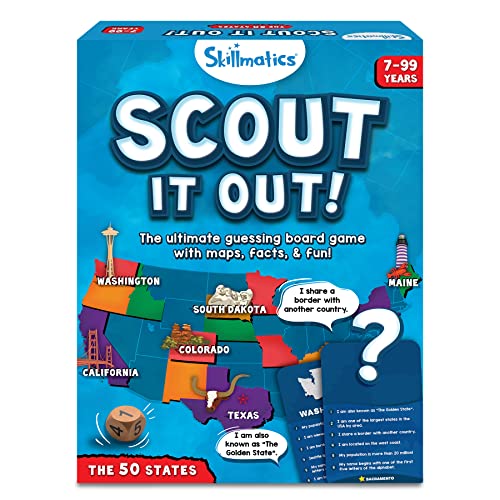
This one works well if your child enjoys guessing games and a bit of trivia mixed together. The questions are varied enough that it doesn’t feel repetitive, and it’s approachable for a range of ages. We found it most useful as reinforcement, something to pull out after the basics were already somewhat familiar rather than as a starting point.
This isn’t strictly a “learn the states” game, but it’s one we played a lot during our geography phase. Building rail routes across North America naturally gets kids looking at the map and noticing city locations. It won’t teach capitals, but it builds spatial awareness in a way that sticks because it’s tied to strategy and planning.
This one is less about trivia and more about noticing. On road trips especially, it turns into a quiet challenge to spot license plates and connect them to the map. It’s simple, but that simplicity is what makes it effective. We’ve used it as an easy way to reinforce state names without sitting down at a table.
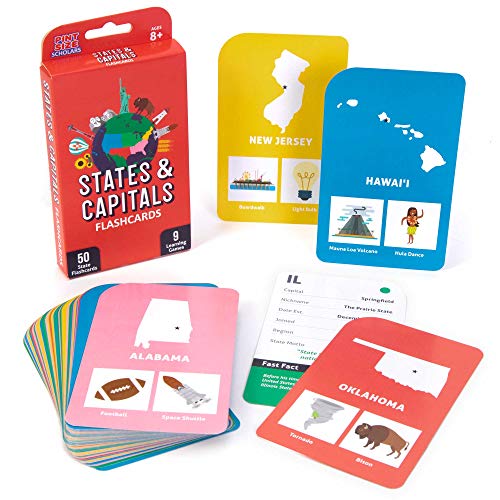
Flash cards aren’t exciting, but they’re efficient. We used these more in short bursts, five or ten minutes at a time, rather than long sessions. Turning them into mini-challenges or timed rounds helped. They work best alongside games, not instead of them.
This one sits somewhere between trivia and traditional board play. Kids move around the map and answer questions, which keeps it structured but not overly intense. It’s a good middle-ground option if you want something clearly geography-focused without it feeling like a quiz worksheet in disguise.
Professor Noggin’s Geography of The United States Trivia Card Game
This is a straightforward trivia-style card game, which makes it easy to pull out for short review sessions. The questions vary in difficulty, so younger kids can participate without feeling outmatched. We’ve used it more as reinforcement after covering the material elsewhere. It works best when you want something quick and focused rather than a long board game.
Looking for an online activity? Try our American Geography Trivia Quiz featuring 60 questions about states, capitals, landmarks, rivers, regions, and national parks.
Clare Brown is the founder of Homeschool of 1. She creates free printables and interactive learning tools for kids, helping parents and teachers generate activities instantly with no prep. Her work has been featured in Parade, HuffPost, Business Insider, Motherly, AOL, and Yahoo. Read more.