Free Printable Flag Day Worksheets for Kids

Flag Day worksheets are an easy way to introduce kids to the history of the American flag without turning it into a long lesson.
When we first talked about the flag at home, my son noticed the obvious things first, the stars, stripes, and colors. But once we looked a little closer, the questions started: why are there 13 stripes? Were there always 50 stars? And who designed the first flag?
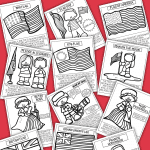
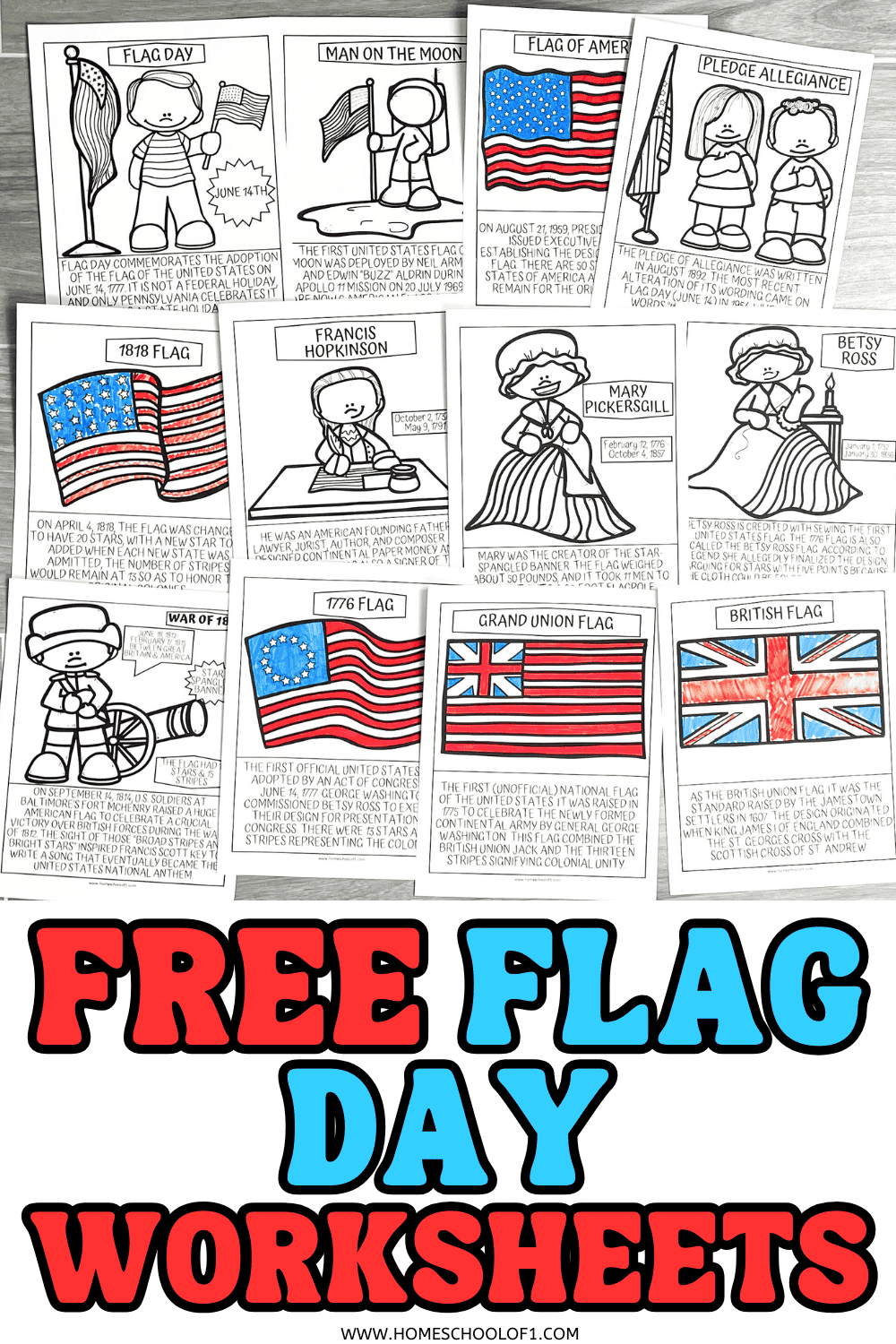
These printable Flag Day coloring pages walk through the key moments that shaped the American flag. Each page includes a short historical fact and a coloring illustration so kids can learn about the flag while they color.
**This post may contain affiliate links. As an Amazon Associate and a participant in other affiliate programs, I earn a commission on qualifying purchases.**
What’s Included in the Flag Day Worksheets
These Flag Day printables work well when you want to introduce the story behind the American flag without adding a full research project to the day.
The printable set includes 12 coloring pages, each focusing on a different moment or person connected to the flag’s history. Kids can color the illustration while reading a short fact, which makes it easier to remember how the flag changed over time.
The activities are best suited for second grade and up, especially when you’re covering American symbols or early U.S. history.
You’ll find the full printable set near the bottom of this page.
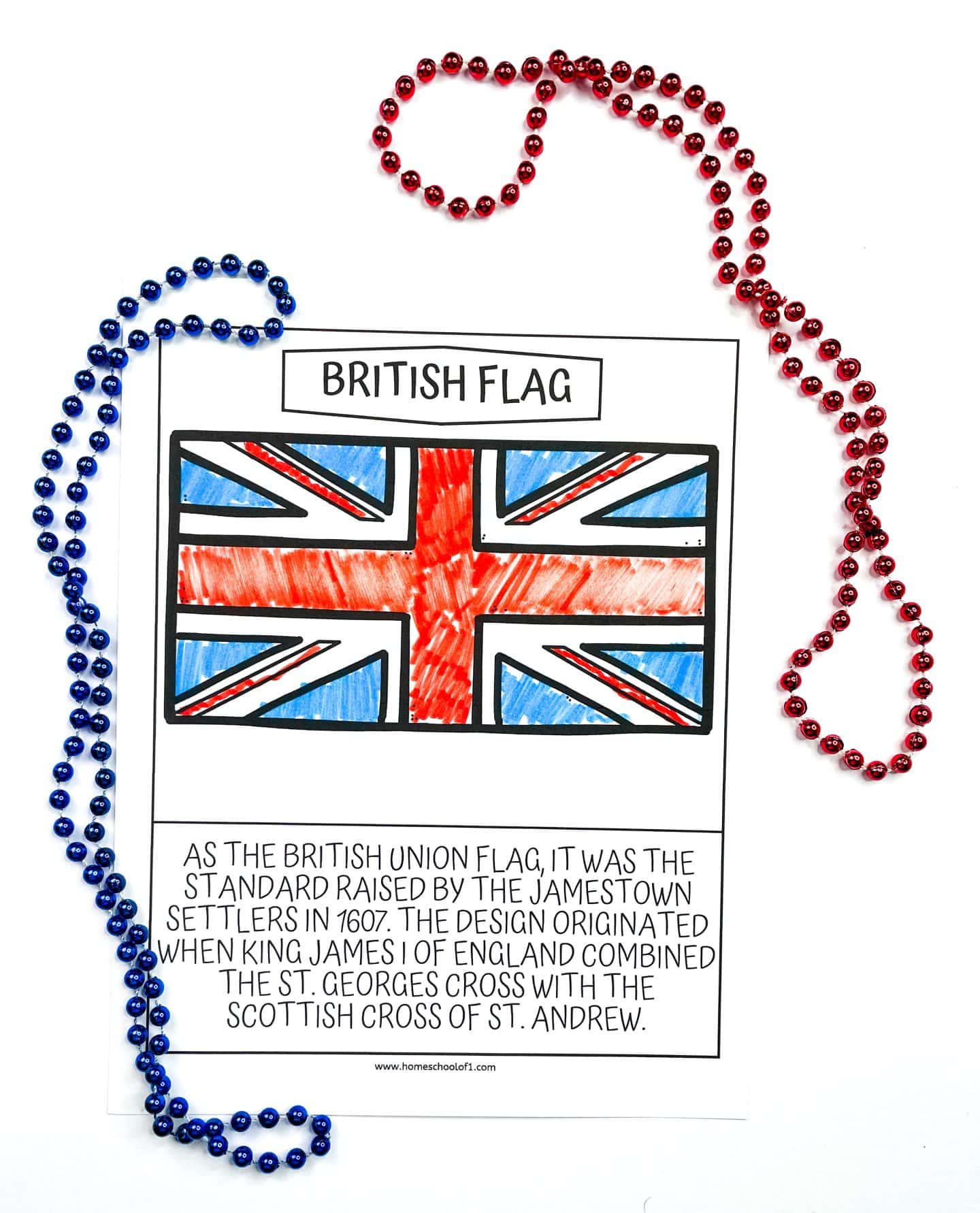
British Flag
Long before the United States had its own flag, the British Union Flag flew over the early colonies.
When English settlers arrived in Jamestown in 1607, this was the flag they raised. Its design combined two crosses, the red St. George’s Cross of England and the white St. Andrew’s Cross of Scotland.
(If you’re covering early exploration as well, these Christopher Columbus worksheets fit nicely alongside this page.)
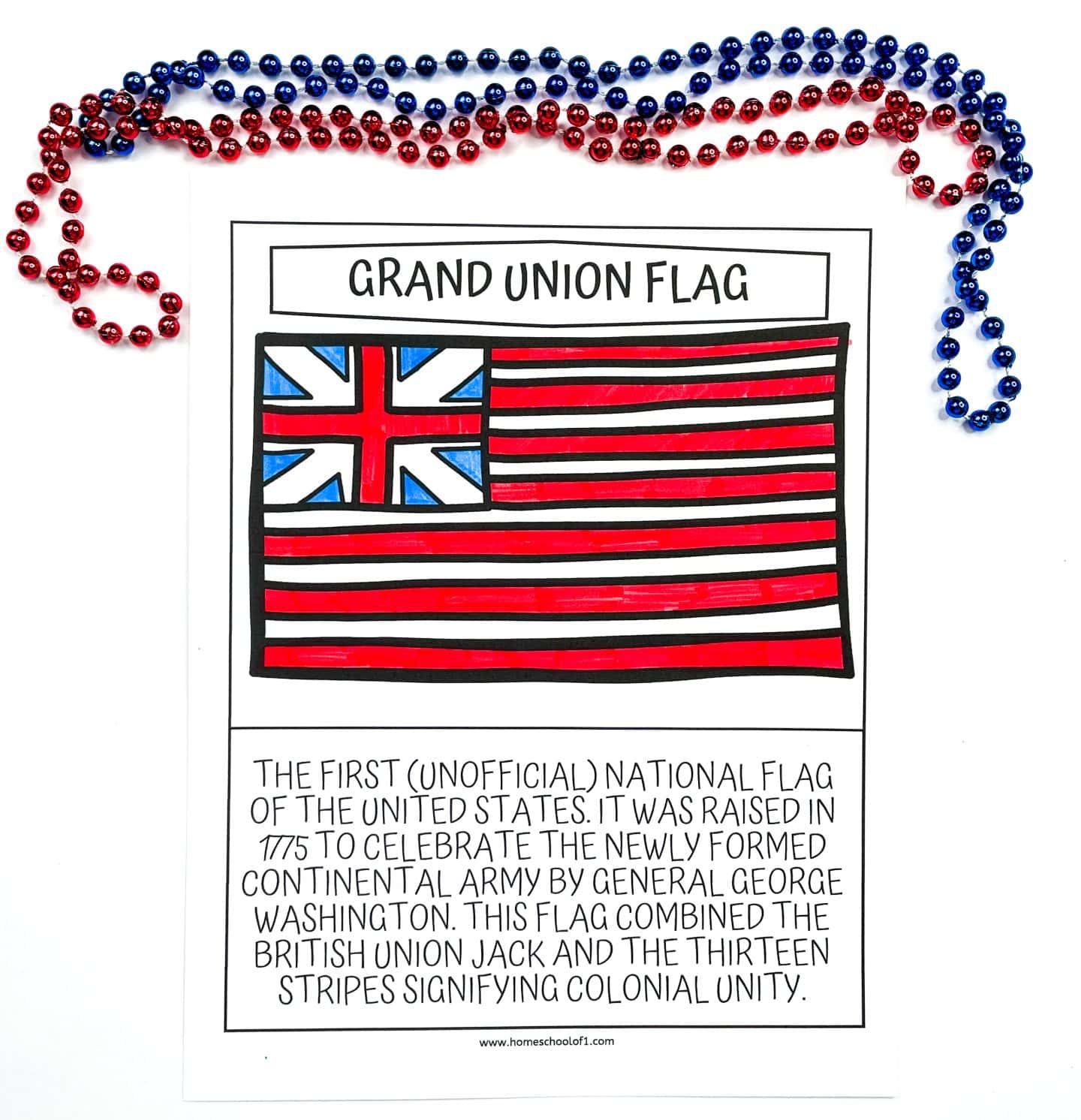
Grand Union Flag
The Grand Union Flag appeared during the early days of the American Revolution.
In 1775, George Washington raised this flag while commanding the Continental Army. It included 13 red and white stripes for the colonies, but the British Union Jack still appeared in the corner.
That small detail shows how complicated things were at the start of the revolution, the colonies were fighting Britain while still connected to it.
(For more about Washington’s role in American history, check out these George Washington worksheets.)
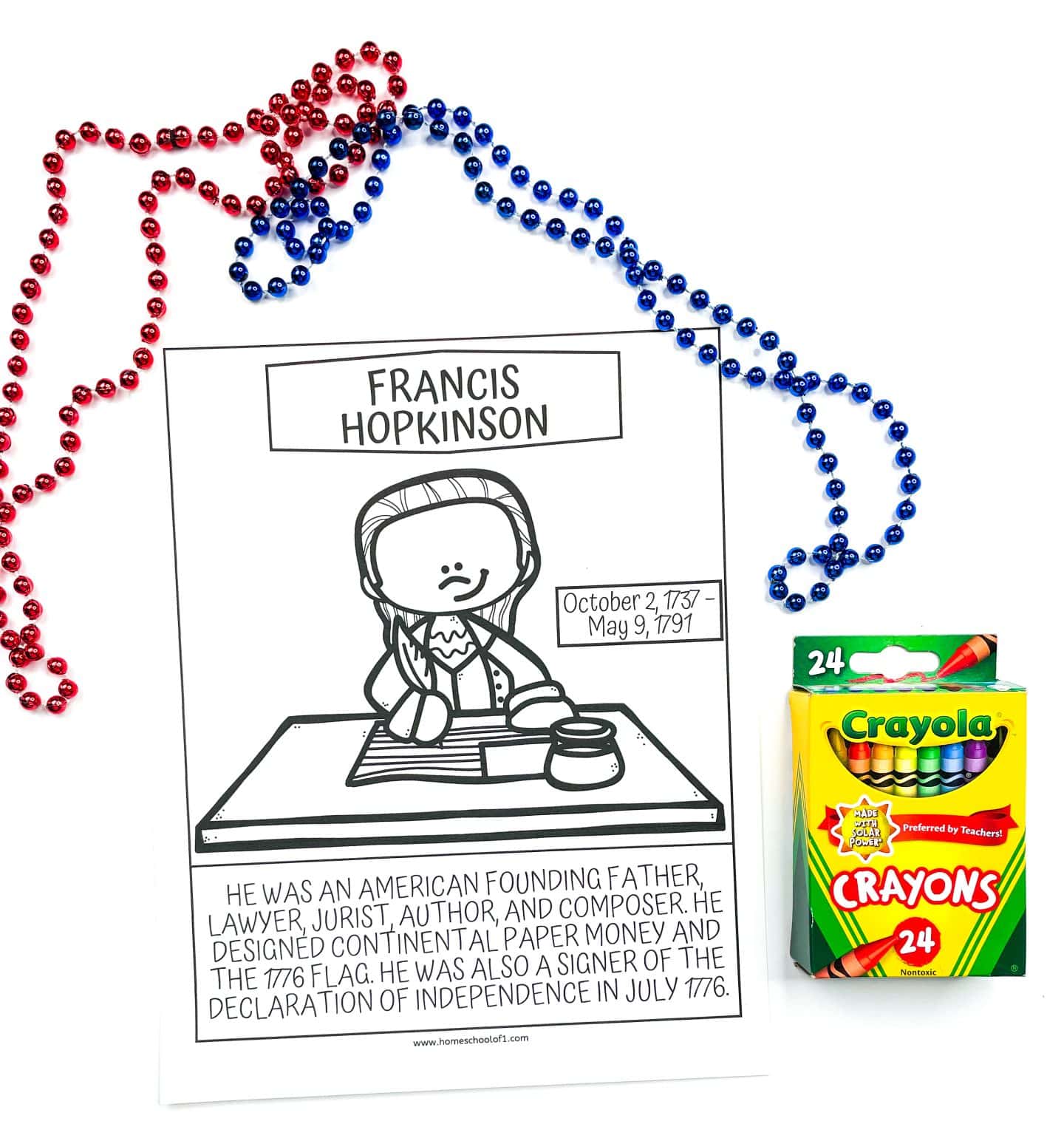
Francis Hopkinson
One name that doesn’t come up as often in elementary history lessons is Francis Hopkinson.
He was a signer of the Declaration of Independence and is widely believed to have helped design the early American flag. Hopkinson also worked on early U.S. coins and Continental paper money, so his influence on the young country went far beyond the flag itself.
(You can explore more early American leaders with these Founding Fathers coloring pages.)
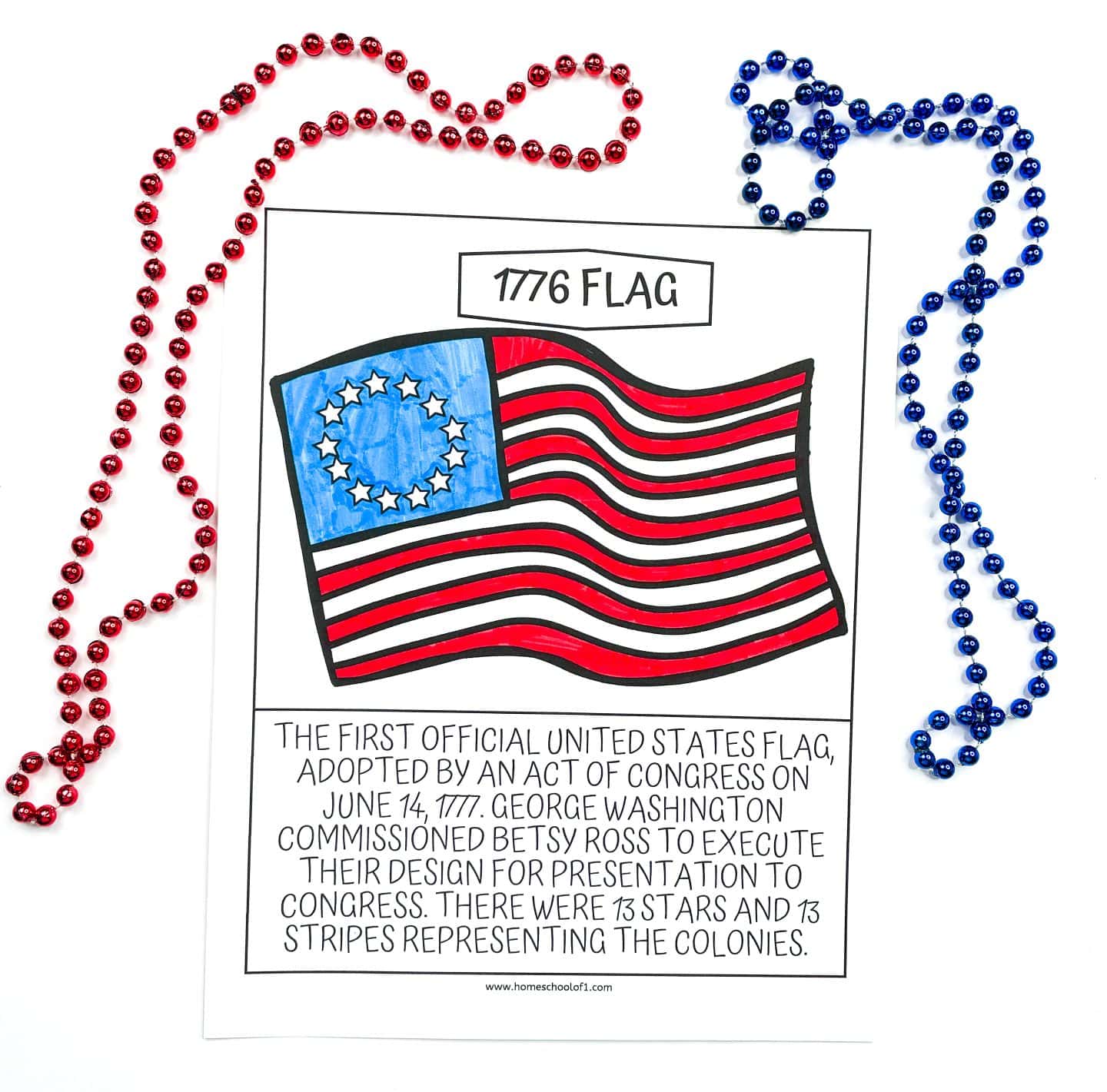
1776 Flag
On June 14, 1777, Congress passed a resolution creating the first official United States flag.
The design included 13 stars and 13 stripes, representing the original colonies. This date is why Flag Day is still celebrated every year on June 14.
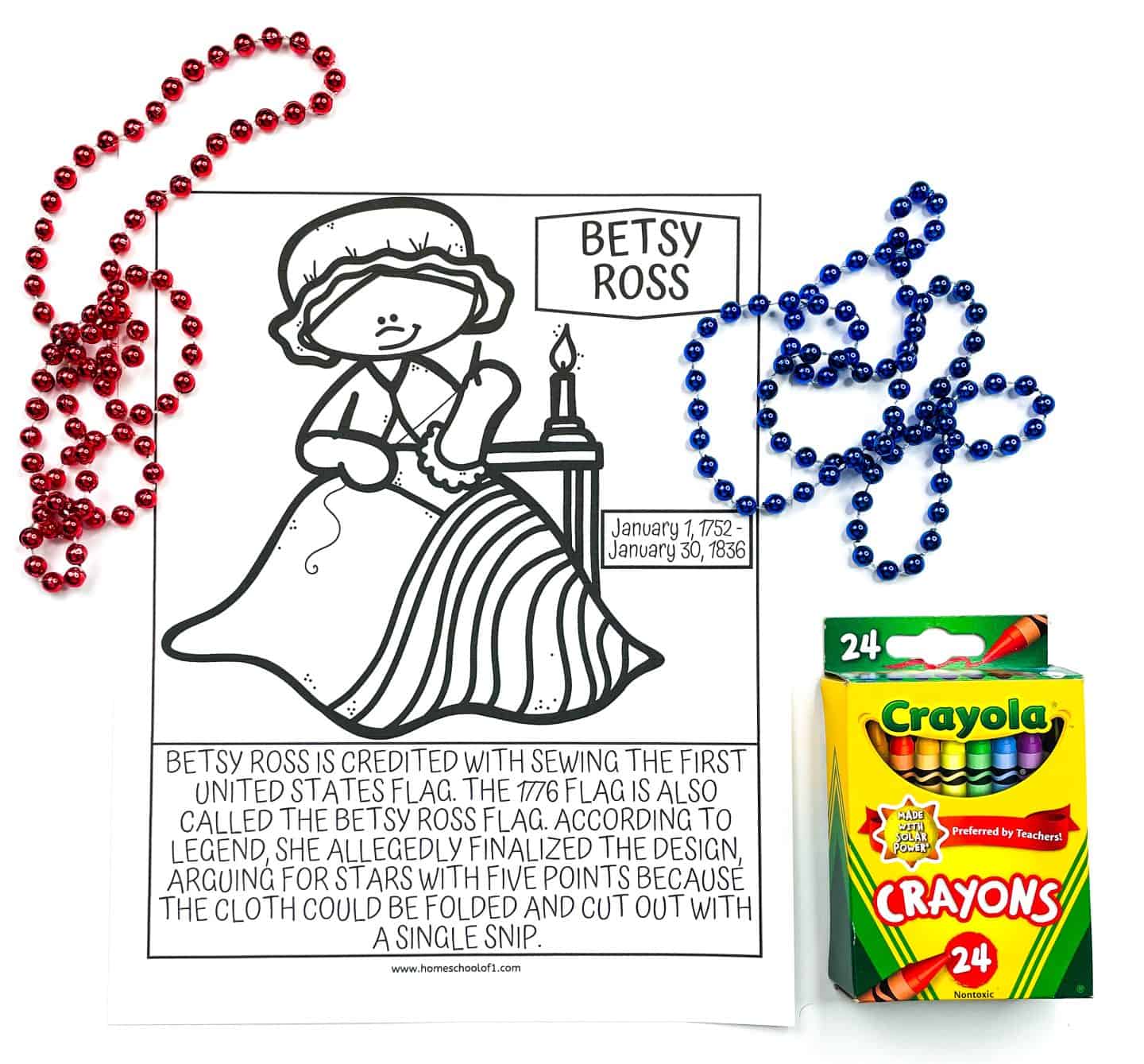
Betsy Ross
Many children first hear about the American flag through the story of Betsy Ross.
According to tradition, she sewed the first flag after being asked by George Washington. One detail kids often remember is her suggestion to use five-pointed stars, because they could be cut quickly from folded fabric with a single snip.
(Some historians debate this story today, but it remains one of the best-known flag legends.)
(Interested in her story? “Who was Betsy Ross?” is a great kid-friendly read.)
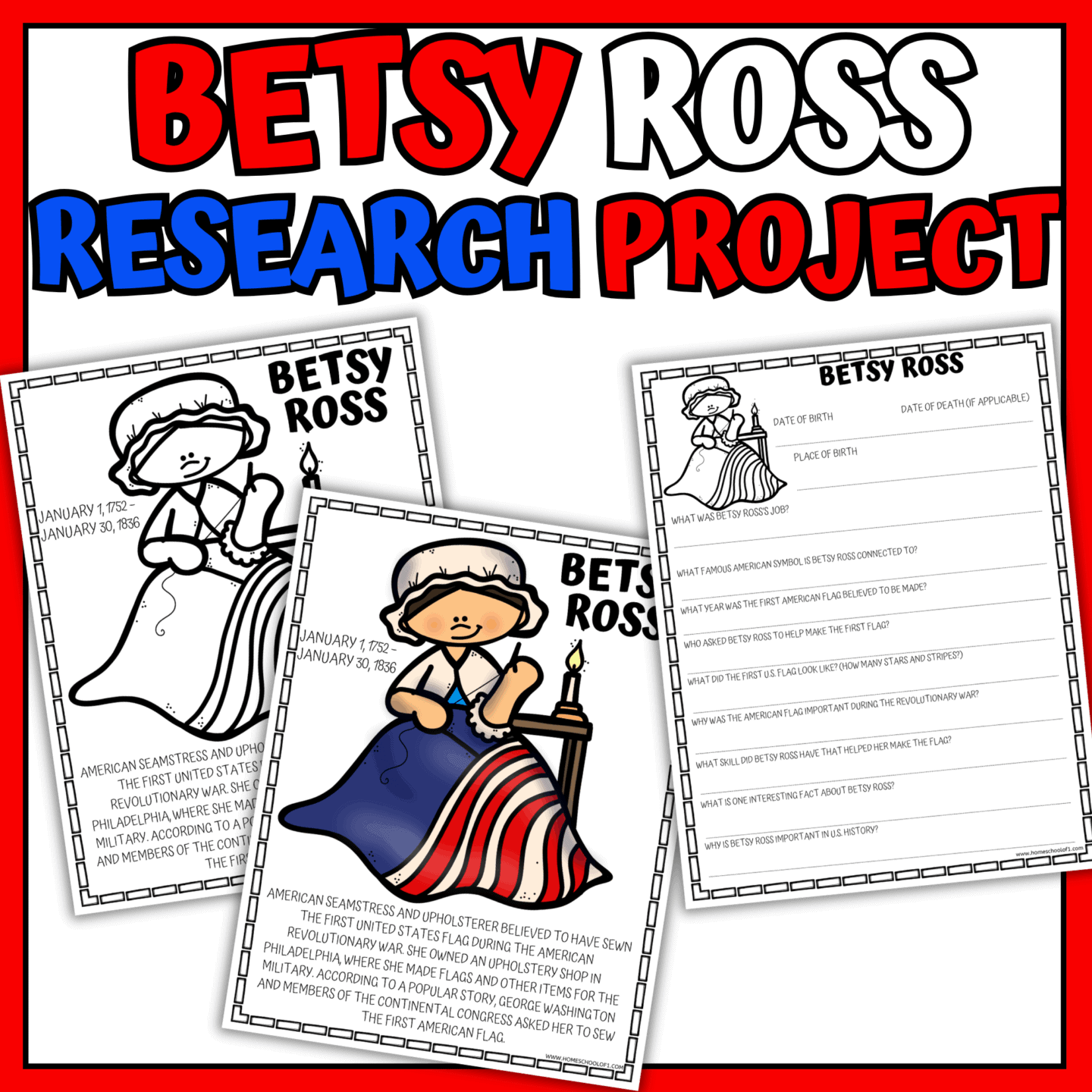
Learn About Betsy Ross & The American Flag
Learn about Betsy Ross and the history of the American flag with this engaging printable research project. Perfect for Independence Day, Flag Day, and elementary history lessons.
War of 1812
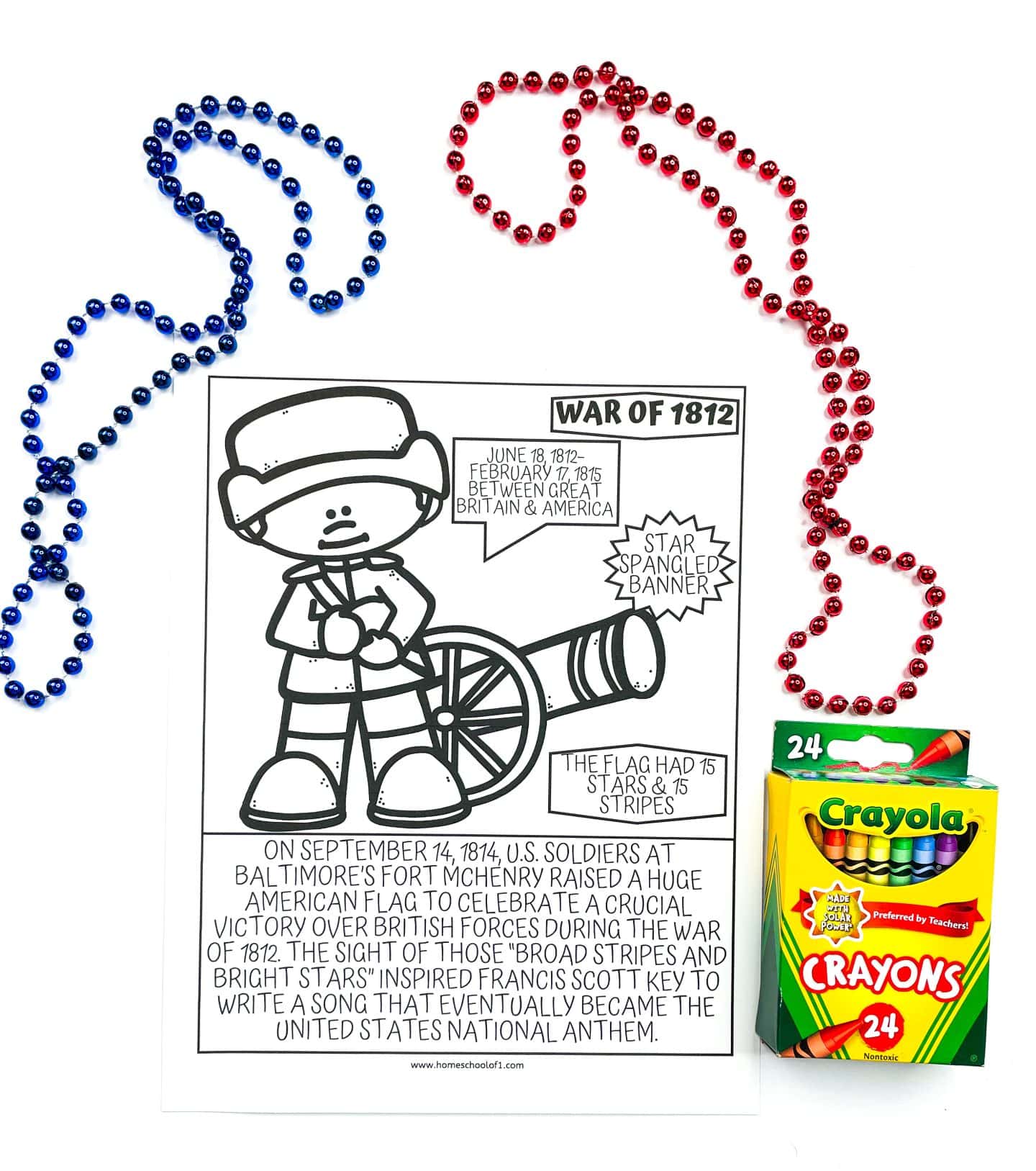
During the War of 1812, the American flag became a powerful symbol of national pride.
The flag flying over Fort McHenry had 15 stars and 15 stripes, representing the states at the time. When the British attack ended and the flag was still flying, Francis Scott Key was inspired to write the poem that later became “The Star-Spangled Banner.”
(“The Town that Fooled the British” is a wonderful storybook introduction to the War of 1812 for kids.)
Mary Pickersgill
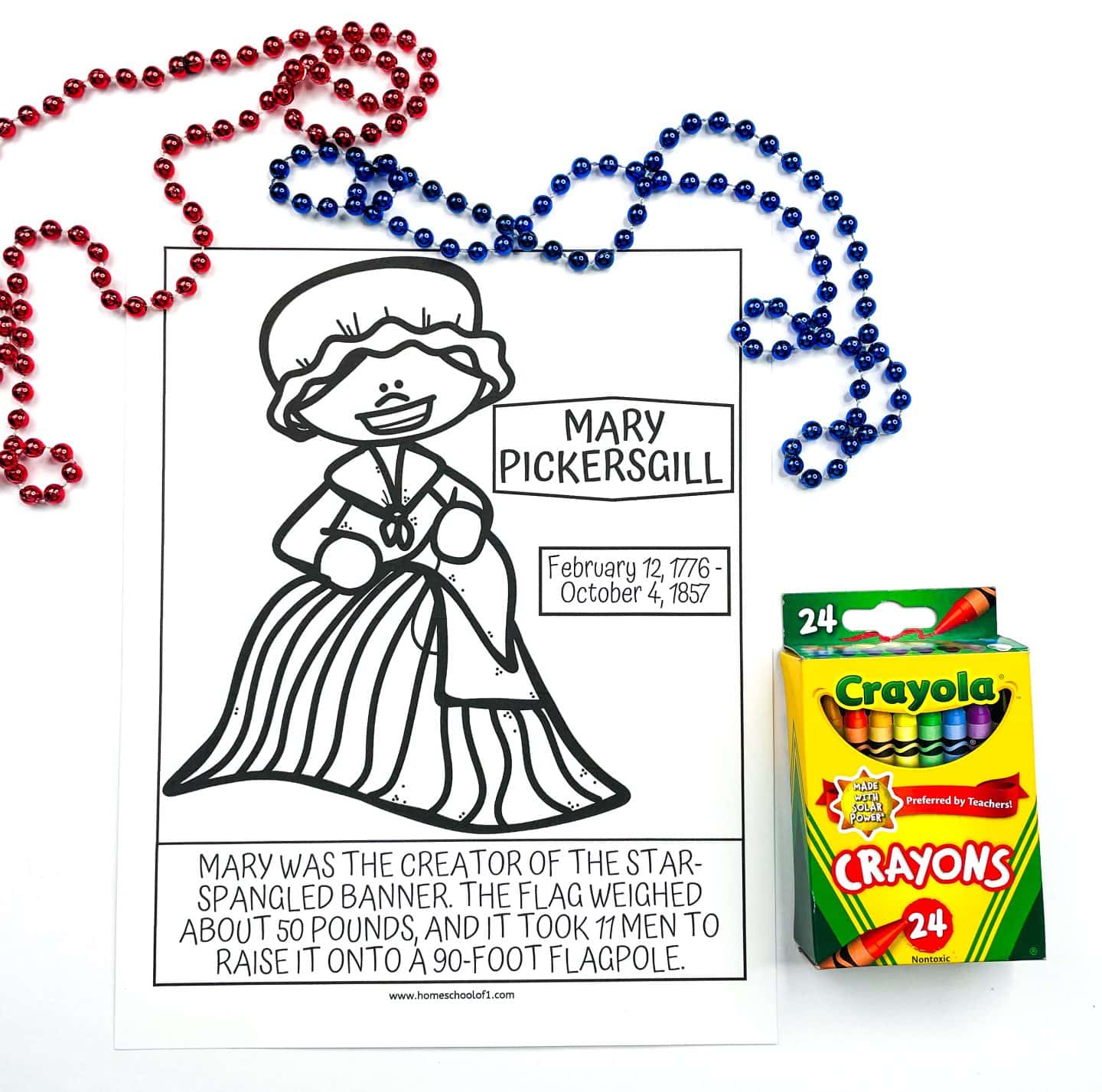
The enormous Fort McHenry flag was sewn by Mary Pickersgill, a skilled flag maker from Baltimore.
The finished flag was huge, about 30 by 42 feet, roughly the size of a small house. It weighed around 50 pounds, and raising it onto the flagpole required several men.
(For more about her life, “Our Flag Was Still There” is an excellent children’s book.)
1818 Flag
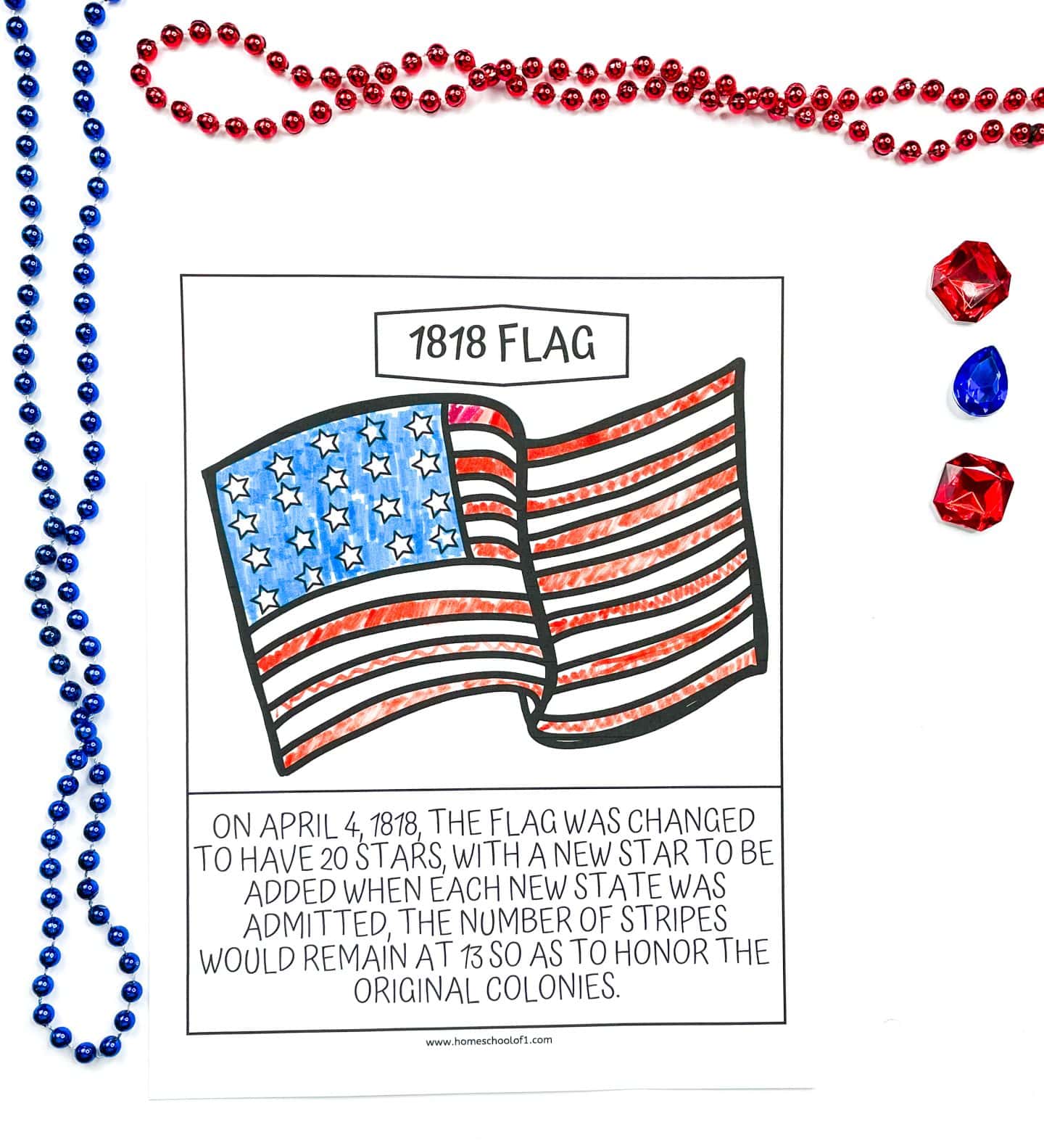
As new states joined the country, the flag design needed an update.
In 1818, Congress decided to keep the 13 stripes to honor the original colonies while adding a new star for each state. That basic system is still used today.
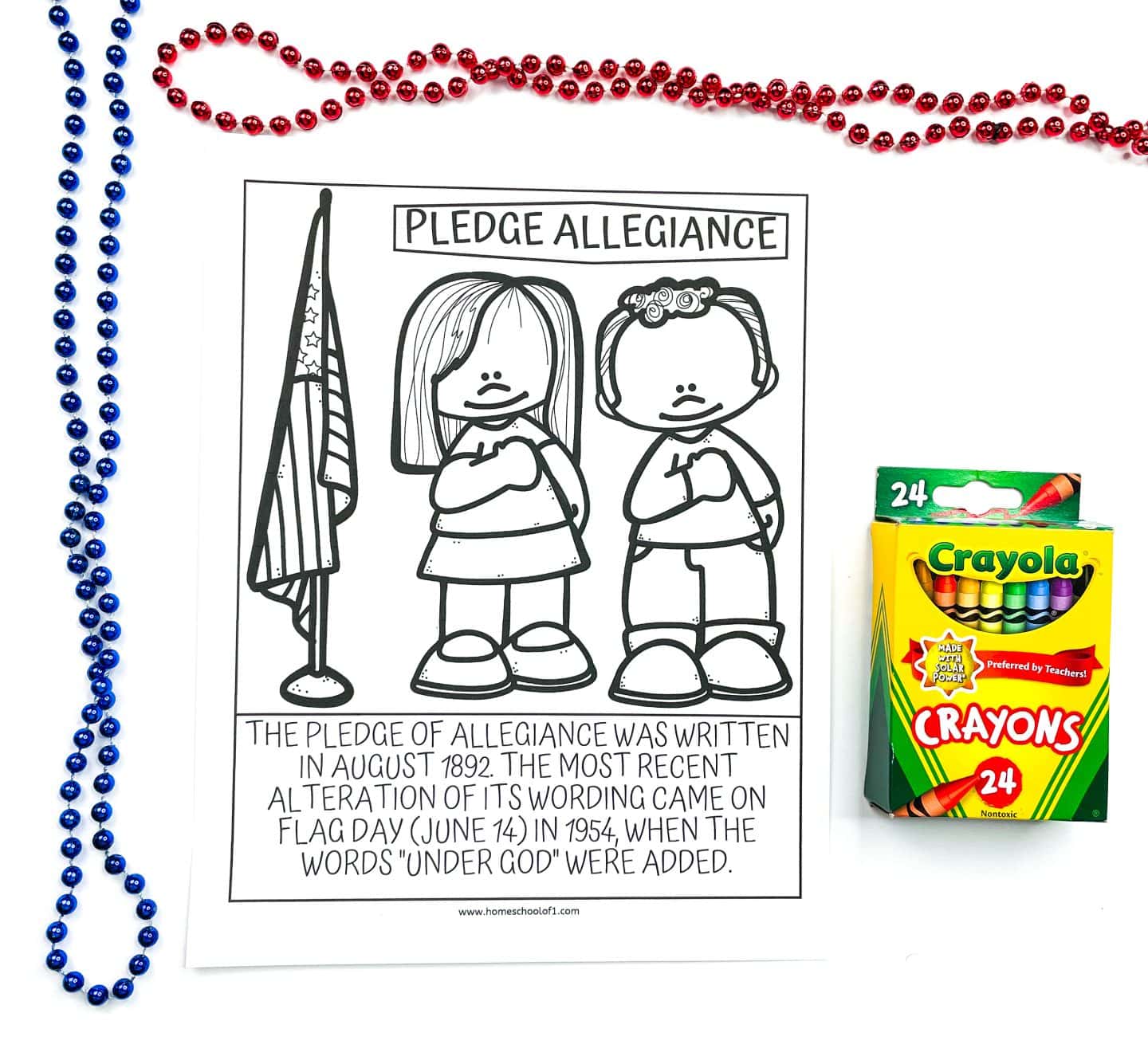
Pledge of Allegiance
The Pledge of Allegiance was written in 1892 by Francis Bellamy.
Many years later, in 1954, the phrase “under God” was added during the Cold War era.
(You can pair this with Pledge of Allegiance coloring pages if you’re discussing American symbols.)
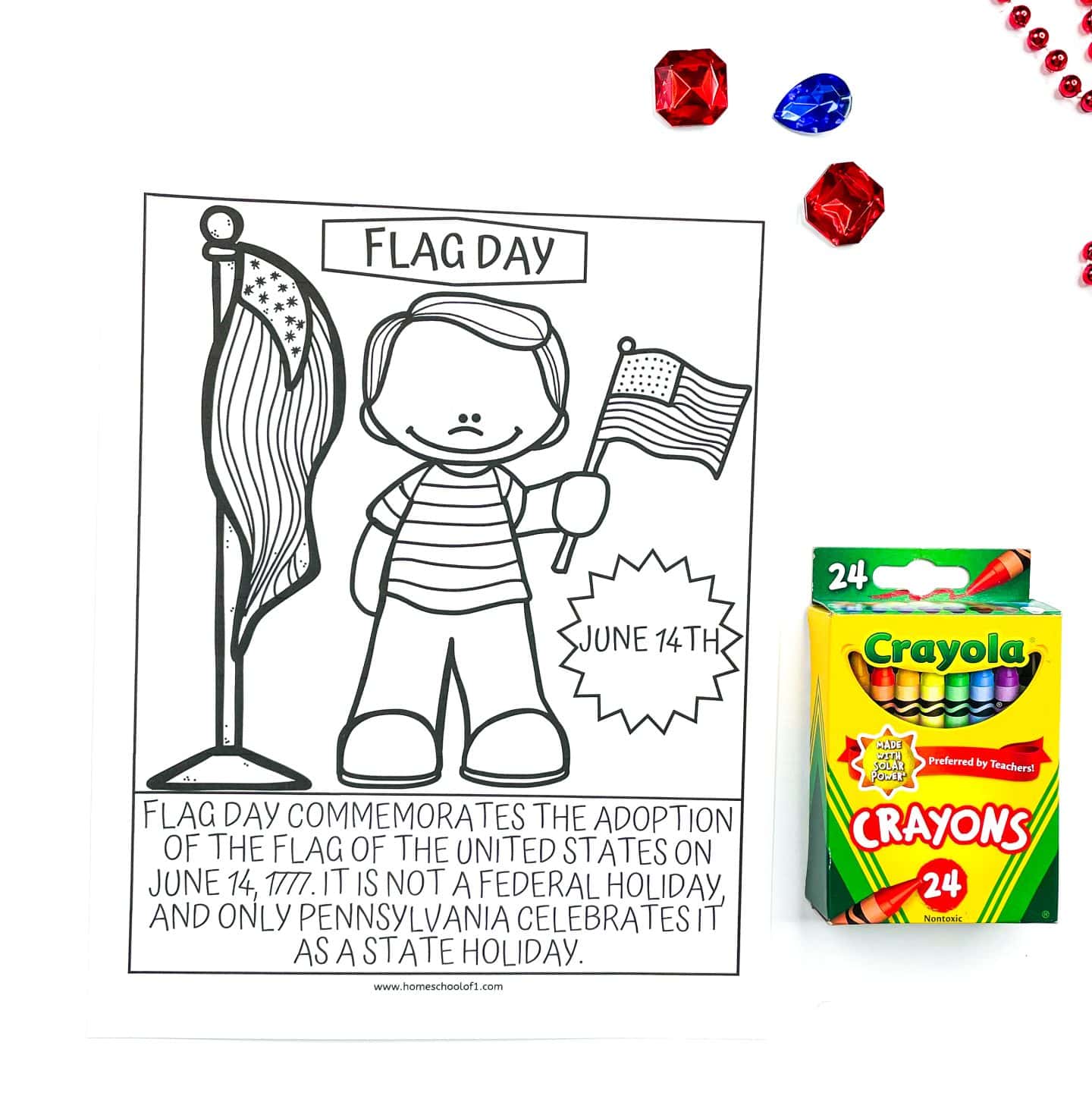
When is it?
Flag Day is observed each year on June 14, the anniversary of the 1777 flag resolution.
While it’s not a federal holiday, Pennsylvania recognizes it as an official state holiday, and many schools use the day to teach about American symbols and history.
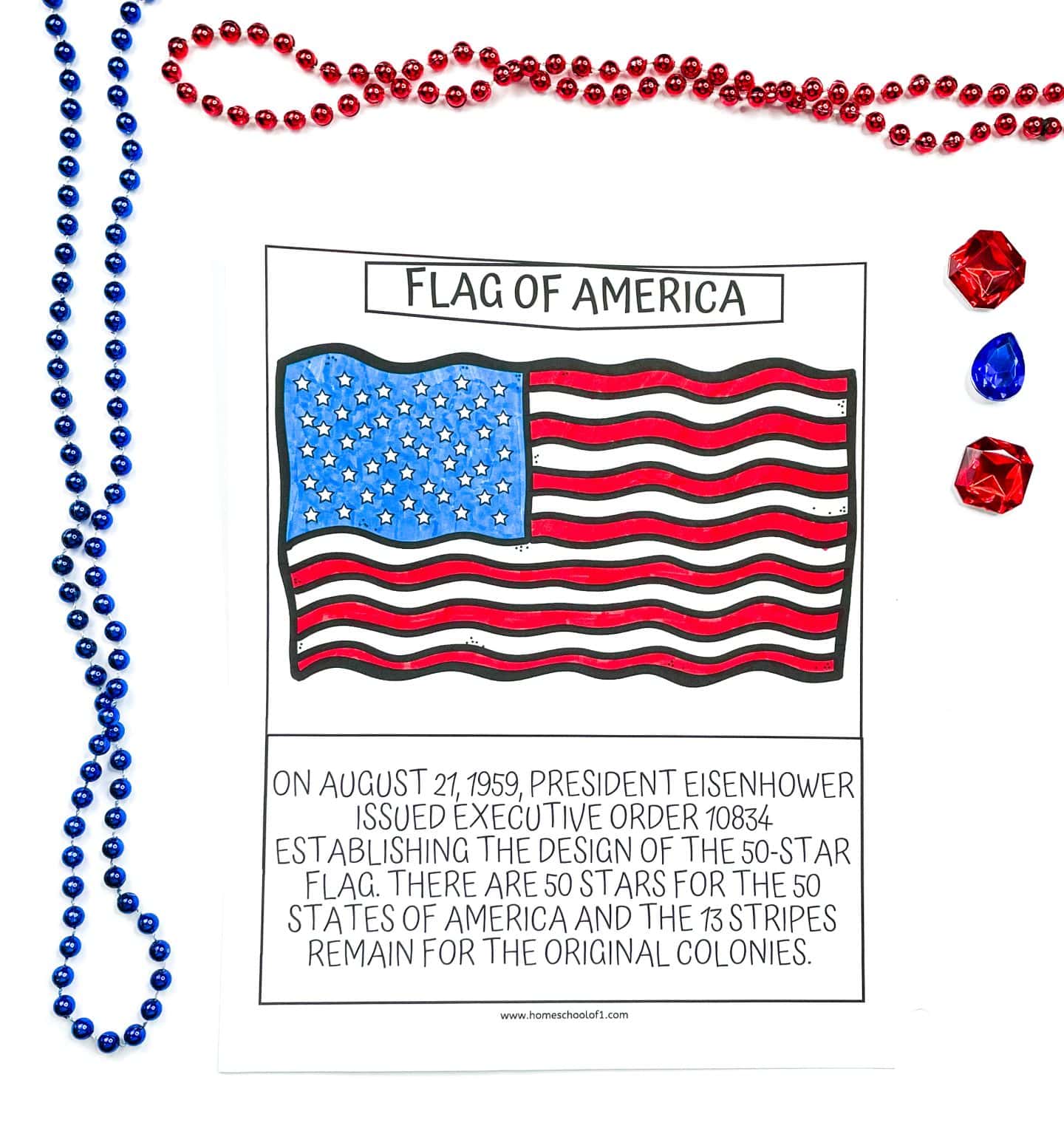
Flag of America
The current 50-star flag was introduced in 1959 after Alaska and Hawaii became states.
President Dwight D. Eisenhower approved the design, which is the same flag used today.
(Interested in learning more? Take a look at this Dwight D. Eisenhower unit study.)
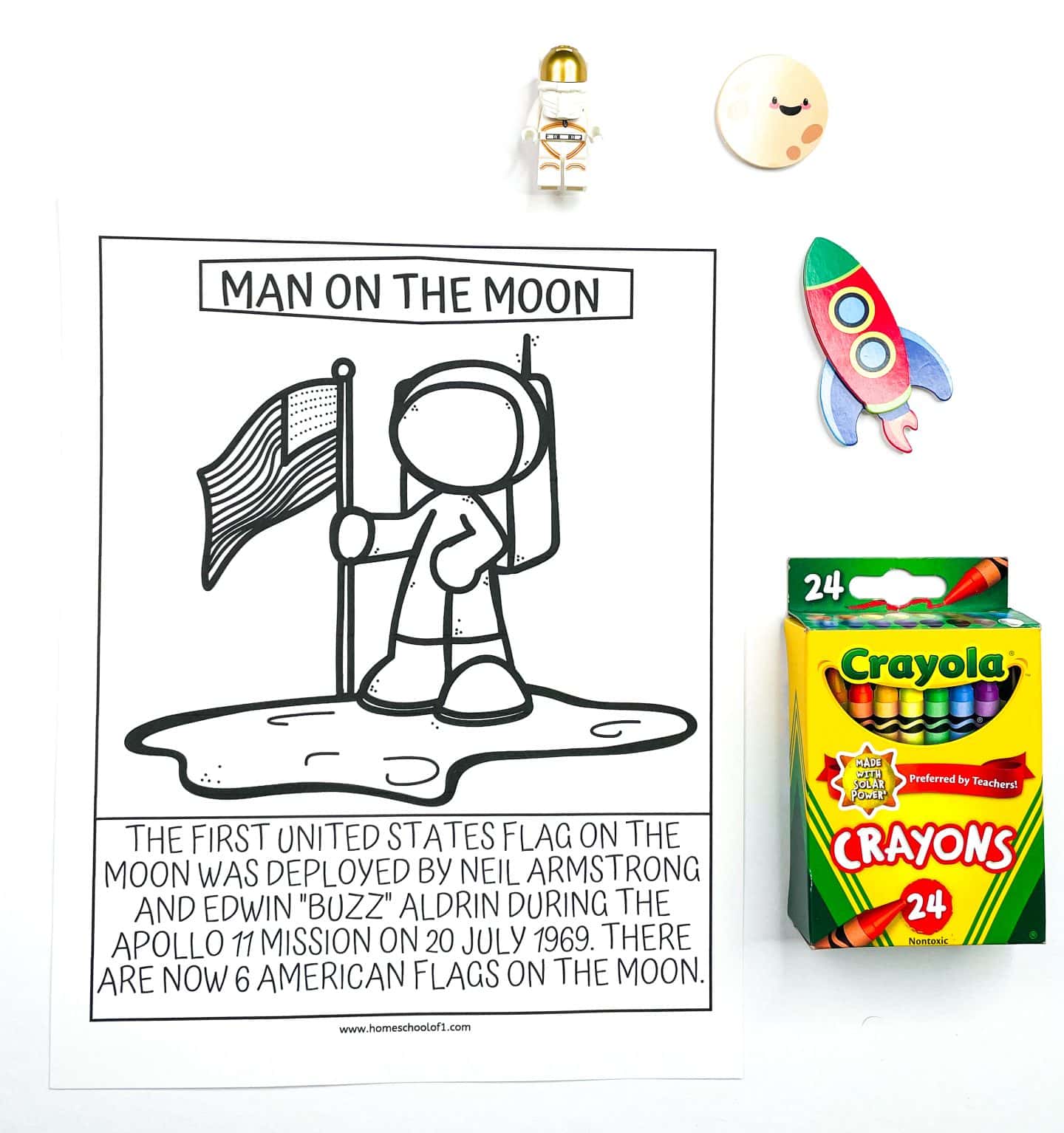
Flag on the Moon
One of the most memorable moments in modern American history happened in 1969, when astronauts Neil Armstrong and Buzz Aldrin planted a U.S. flag on the moon during the Apollo 11 mission.
In fact, six American flags have been placed on the moon during different missions.
Best Children’s Books About the American Flag
Books were one of the easiest ways for us to start conversations about the American flag. A story often made the history stick much better than just explaining it. These were a few that worked well for us:
F is for Flag – When my son was in kindergarten, this was one of the first books we read to start talking about the flag. It’s simple, colorful, and a great introduction for younger kids.
Why Are There Stripes on the American Flag? – My son always wanted to know “why?” about everything, and this book gave really clear, age-appropriate answers about the design and meaning of the flag.
I’m Your Flag So Please Treat Me Right – We loved this one because it made the flag feel like a real character, teaching respect in a way that stuck. It was one of those stories he wanted to read again just for fun.
America’s Flag Story – As he got a little older, this book helped fill in some of the bigger historical details without overwhelming him. A good bridge between simple picture books and more detailed history.
Red, White, and Blue: The Story of the American Flag – This one became a go-to for our Flag Day activities because it ties the history of the flag to big events kids recognize, like Independence Day.
Each of these books pairs perfectly with free printable US flag coloring pages if you want to build a full mini-lesson around American symbols.
Take Your Civics Lessons Further
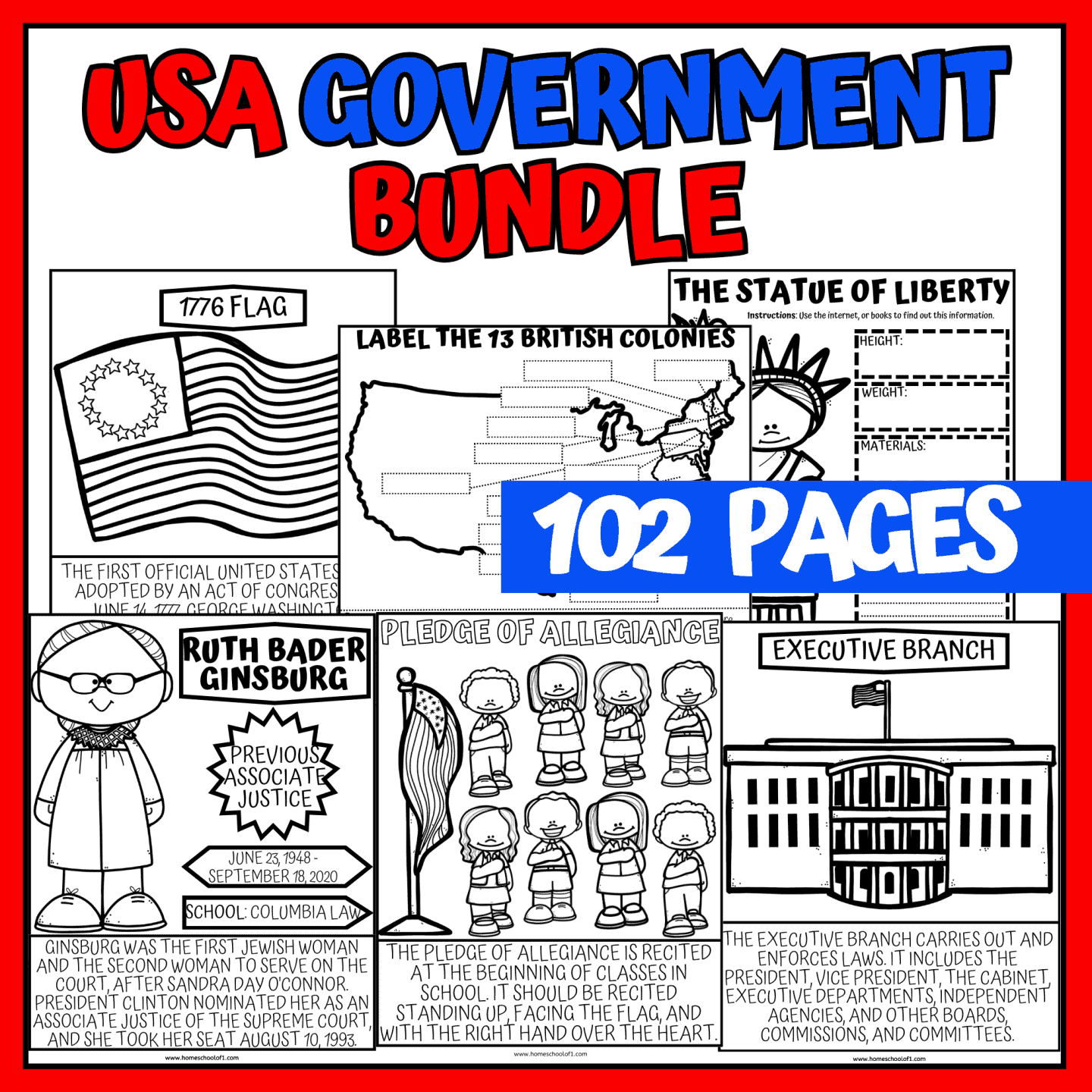
Upgrade to our complete Government Unit Study with 100+ printable pages covering the Constitution, Supreme Court, Founding Fathers, the Bill of Rights, and more.
Patriotic Holiday Worksheets for Kids
If you’re doing a small patriotic unit around Flag Day, a few other history printable activities can fit in nicely during the same week.
A Memorial Day color by number works well for younger kids who still enjoy coloring but are also practicing number recognition.
This Declaration of Independence worksheet for kids is another good addition if you want to introduce the document in a simple way without turning it into a full history lesson.
One activity my son enjoyed was building flags with LEGO using printable guides that show 50 different country flag designs.
For something a little more active, a Fourth of July scavenger hunt can break up the day and get kids moving while still tying into the holiday theme.
Get Your Free Flag Day Coloring Pages Here!
Ready to grab your free printable? Just pop your name and email into the form below, and it’s all yours!
Tip: Use a personal email address (like Gmail), school or work emails sometimes filter printable links.

If you don’t see the form below, click here to get the free PDF.
Last Updated on 5 March 2026 by Clare Brown

thank you
My pleasure I hope the kids enjoy them 🙂
The Flag Day Worksheets provide a huge improvement in children’s understanding of the complicated origin of our National flag. Below is more information for further clarification.
1. The Grand Union Flag served as America’s unofficial National flag from December 3, 1775, to June 14, 1777. The first person to raise this flag was Continental Navy Lieutenant John Paul Jones aboard the Continental Navy Ship “Alfred” in the Delaware River. On January 1, 1776, General George Washington raised the Grand Union Flag at his headquarters in Cambridge, Massachusetts. The Grand Union Flag was America’s unofficial National flag on our first Independence Day — July 4, 1776. (Source: “Our Flag.” Joint Committee on Printing. United States Congress. H. Doc. 100-247. Washington: U.S. Government Printing Office. 1989. p. 3, https://nps.gov/parkhistory/online_books/flag/h_doc_100-247/index.htm)
2. According to the U.S. government, there is no proof that Betsy Ross made the first Stars and Stripes flag. The story is based on Ross family tradition from 1870 — nearly a century after the Revolutionary War. Although Mrs. Ross made flags for 50 years, she made flags for Pennsylvania’s navy during the Revolution. Lastly, the so-called “Betsy Ross Flag” dates from the early 1790s — not from the Revolution. (Source: “Our Flag.” p. 2, https://nps.gov/parkhistory/online_books/flag/h_doc_100-247/index.htm)
3. General George Washington — Commander-in-Chief of the Continental Army — had nothing to do with creating the Stars and Stripes because it was a naval affair. Congress’ Marine (maritime) Committee authored the U.S. Flag Resolution of June 14, 1777. (Source: “Our Flag.” p. 1, https://nps.gov/parkhistory/online_books/flag/h_doc_100-247/index.htm)
To the contrary, General Washington was concerned about creating a standard Army flag — not the Stars and Stripes — to be carried along with each Army regiment’s flag. These flags are called “colors.” (Source: Furlong, William Rea and Byron McCandless. “So Proudly We Hail: The History of the United States Flag.” Washington: Smithsonian Institution Press. 1981. pp. 117 [bottom] to 119.)
4. Congress never created a committee to design or create the Stars and Stripes. As mentioned in point No. 3 above, Congress’ Marine Committee authored the U.S. Flag Resolution of June 14, 1777. This was nearly a year after the Declaration of Independence was adopted. Creating an official National flag was a lower priority because of the preexising Grand Union Flag. Congress’ higher priority was creating the Great Seal of the United States to denote America’s sovereignty. Congress created a committee to design the Great Seal of the United States on Independence Day — July 4, 1776. (Source: “The Great Seal of the United States.” United States Department of State. Washington: U.S. Government Printing Office. Feb. 1986. p. 1.)
5. Betsy Ross was not associated with her eponymous flag until Charles H. Weisgerber painted “Birth of Our Nation’s Flag” for the Columbian Exposition in Chicago in 1893. Sources:
(a) Furlong and McCandless. pp. 116 and 117.
(b) Harker, John Balderston. “Betsy Ross’s Five Pointed Star: Elizabeth Claypoole, Quaker Flag Maker — A Historical Perspective.” Melbourne Beach, FL: Canmore Press. 2005. p. 94.
Submitted by Earl P. Williams, Jr., U.S. flag historian (paleovexillologist)
Thank you so much for taking the time to add all of these details about the American flag.