Fun Shakespeare Activities for Kids (Easy & Engaging Ideas)




Fun Shakespeare activities for kids don’t have to be complicated or feel like a full-on literature lesson.
We’ve come back to Shakespeare quite a few times over the years, and honestly, it’s ended up being something we’ve both really enjoyed. That definitely wasn’t what I expected at the start. I thought it would feel too advanced, but once we found the right way in, it just clicked.
We’ve built up a bit of a collection now, books, random resources, even photos from visits in England, and we’ve seen a few of his plays too. Some went down better than others, but that’s kind of the point. You don’t need to understand everything straight away.
If you’re trying to make Shakespeare feel less intimidating, these are the things that have actually worked for us, simple, low-pressure ways to get kids interested without overthinking it.

**This post may contain affiliate links. As an Amazon Associate and a participant in other affiliate programs, I earn a commission on qualifying purchases.**
How to Get Started with Shakespeare (Without Overwhelming Kids)
You don’t need to start with full plays or try to “teach” Shakespeare properly right away. That’s usually where it starts to feel heavy, especially for younger kids.
What worked much better for us was easing into it. We started with the stories first, just getting a feel for the characters and what actually happens, without worrying about the original language. Once that made sense, everything else felt a lot less intimidating.
It also helps to keep it familiar. If your child already loves something like Star Wars or funny wordplay, lean into that. Shakespeare is full of dramatic characters, silly insults, and over-the-top moments, so there’s plenty to hook into without making it feel like a lesson.
We’ve also found it’s better to dip in and out rather than try to do it all at once. A short activity, a quick video, or even just reading part of a story works far better than sitting down and trying to “cover” a whole play.
And honestly, you don’t need to understand everything. We definitely didn’t at the start. The goal is just to make it feel interesting and approachable, the understanding builds naturally over time.
Simple Shakespeare Activities to Try First
Once you’ve taken the pressure off, this is where Shakespeare actually starts to stick. Activities worked far better for us than trying to read a play from start to finish, especially at the beginning.
One of the easiest wins was focusing on the language in a fun way. Shakespeare’s insults are ridiculous in the best way, and turning them into a game instantly made it feel less serious. We’d mix and match phrases and try to guess what they meant, which ended up being far more memorable than anything written down.
Acting things out also made a big difference. Even short scenes or simplified versions worked well, especially when we didn’t worry about getting every word right. Changing the setting or putting a modern twist on it (we once tried a very questionable Star Wars version) made it feel more like play than school.
Word games have been another easy addition. Simple things like word scrambles or matching activities help with recognising names, themes, and key ideas without needing to fully understand the text yet. These are great for quick wins, especially if attention is limited.
We’ve also used short video clips to bring the stories to life before doing anything else. Seeing the characters and setting first makes everything that follows easier to follow, even if you only watch a small section.
The main thing is keeping it flexible. Some days it’s a quick game, other days it’s watching part of a play, and occasionally it’s just talking about a character. It doesn’t need to look like a full lesson to still be useful.
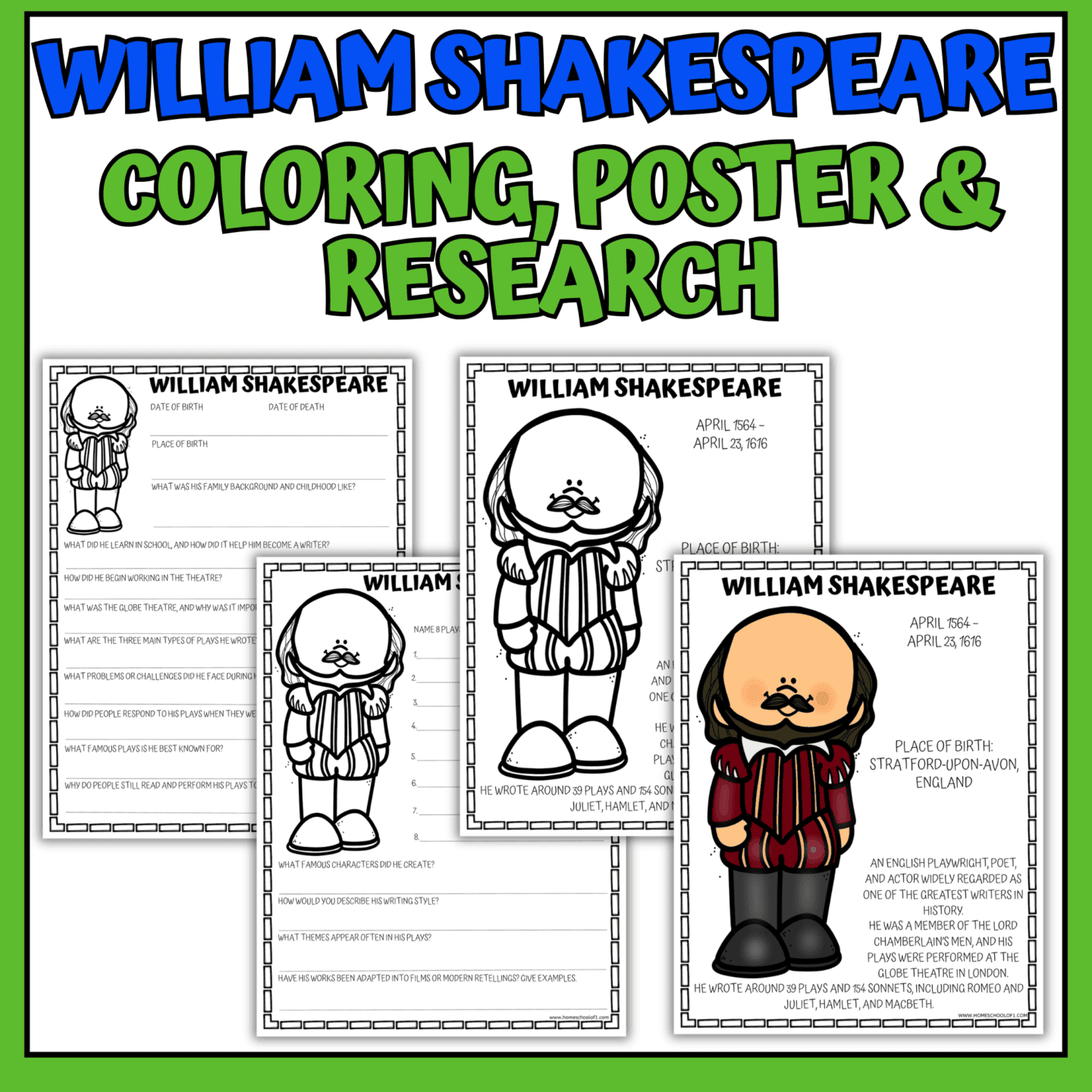
Teaching Shakespeare? Make It Student-Led and Simple.
Shakespeare Games for Kids
Games have honestly been the easiest way to keep interest going, especially on days when reading anything even slightly complicated just wasn’t going to happen.
One of the first things that worked for us was playing around with Shakespearean insults. They’re dramatic, a bit ridiculous, and surprisingly memorable. Turning them into a mix-and-match game or even just reading them out loud and guessing the meaning made it feel more like a joke than a lesson.
Shakespeare matching pairs are another easy win. Pairing characters with their stories or key events helps everything start to stick without needing to remember long passages. It’s also something you can come back to again and again without it feeling repetitive.
Card and board games based on Shakespeare can work well too, especially for older kids. Some focus on characters and plots, while others lean into the humor and language. We’ve found these are good for reinforcing what they already know rather than introducing something completely new.
And then there are quick, low-prep options like a Shakespeare word scramble printable. These are great for short bursts of learning, especially if you just want to keep Shakespeare in the mix without turning it into a full lesson.
Like everything else with Shakespeare, the key has been keeping it light. If it feels like a game, they’re far more likely to actually remember it.
Shakespeare Books for Kids
Books have probably been the easiest way for us to keep coming back to Shakespeare without it ever feeling too heavy.
We didn’t start with the original plays. Instead, we leaned into retellings and more visual versions first, just so the stories actually made sense. Once the plot and characters clicked, everything else felt much more manageable.
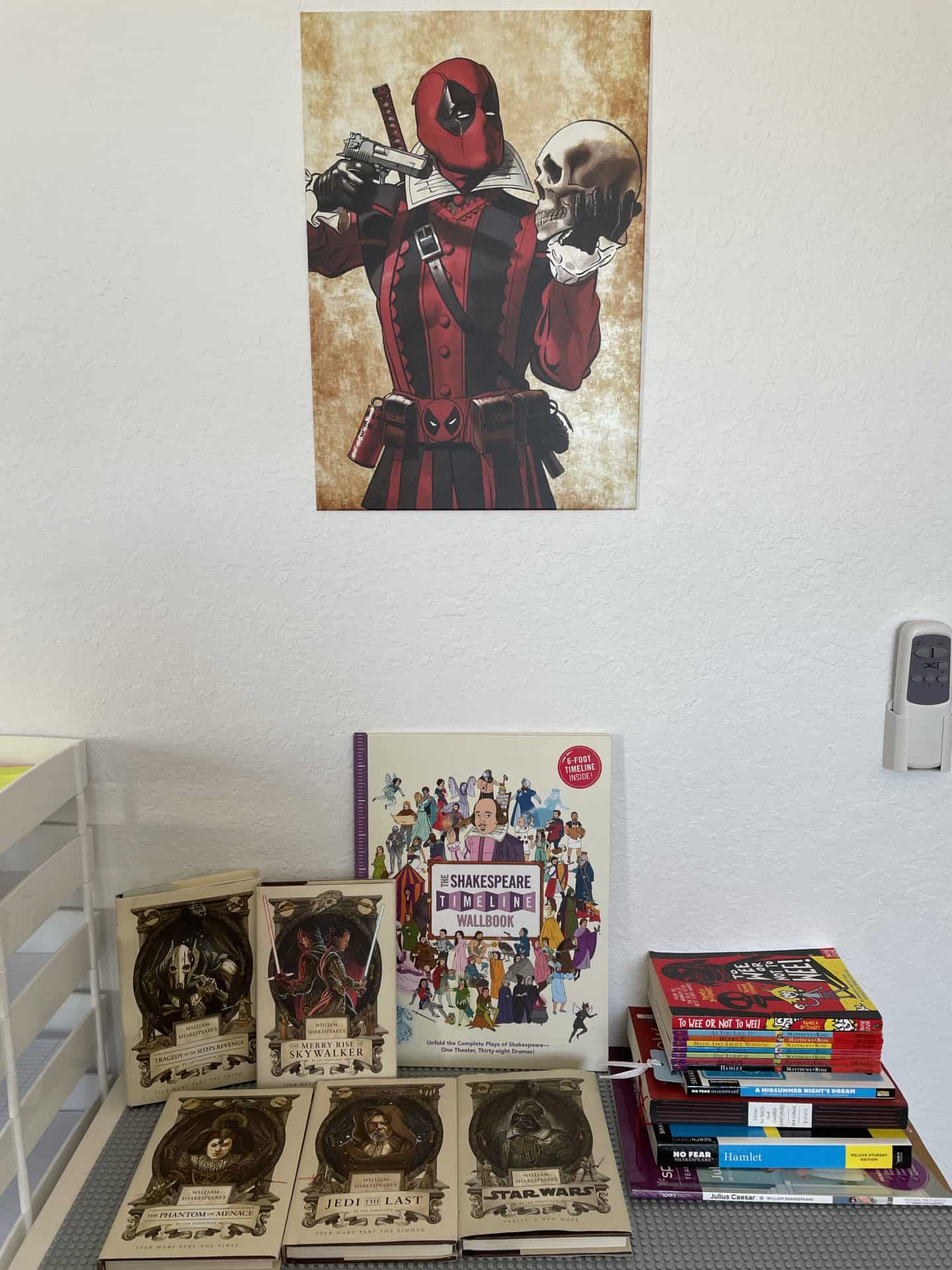
One that worked really well for us was How to Teach Your Children Shakespeare by Ken Ludwig. It’s surprisingly easy to follow and makes memorizing lines feel much less intimidating than I expected.
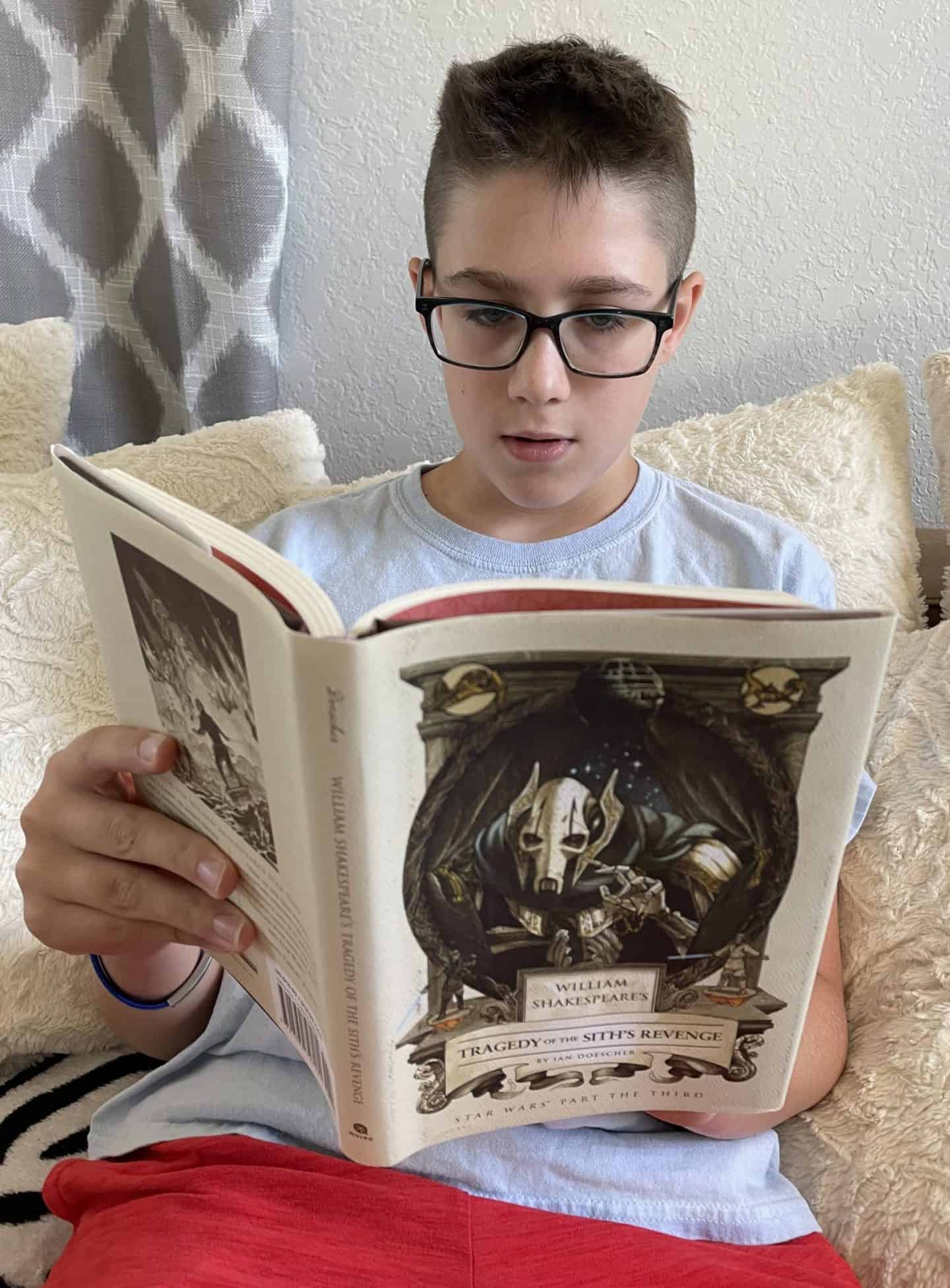
The William Shakespeare’s Star Wars books were also a big hit in our house. My son was already obsessed with Star Wars at the time, so it was an easy way to introduce the style of language without it feeling completely unfamiliar.
For younger readers, To Wee Or Not To Wee is exactly the kind of silly humor that keeps them interested, and it’s a nice reminder that Shakespeare doesn’t always have to be taken so seriously.
We’ve also used Manga Shakespeare, which worked well once he was a bit older. The visual format makes it much easier to follow what’s going on, especially with more complex stories.
And if you want something that covers a lot in one place, the Usborne Complete Book of Shakespeare has been one we’ve gone back to quite a bit. It’s easy to dip in and out of and gives a good overview of the plays without being overwhelming.
If you’re just starting out, I’d stick to one or two of these rather than trying to cover everything. That made a big difference for us.

Seeing Shakespeare Come to Life
We’ve found that seeing Shakespeare performed, even in a very informal setting, makes a huge difference.
We’ve been lucky enough to visit his birthplace in England and see a few of his plays, and even when not everything made sense, it still brought the stories to life in a completely different way. The characters feel much more real when you actually watch them being performed rather than just reading about them.
That said, you don’t need to go anywhere special. We’ve also watched outdoor performances at local parks and short clips online, and those have worked just as well. Even a quick scene can be enough to help kids understand what’s going on.
If your child struggles with the language, this is often the easiest way in. Once they’ve seen it, going back to books or activities feels much more manageable.
Last Updated on 28 March 2026 by Clare Brown
