
5 Minute Classroom Games (No Prep, Easy to Use)

If you’ve ever had five unexpected minutes to fill, you’ll know how quickly that time can turn chaotic without a plan.
These 5 minute classroom games are the ones I’ve found actually work when you need something fast, low effort, and easy to start. No explaining complicated rules, no prep, just simple ideas that get students focused again (or burn off a bit of energy).
Whether it’s the end of a lesson, a transition, or one of those “we’ve got a few minutes left” moments, these quick classroom games give you something reliable to fall back on.
Why Quick Games Matter
Those short gaps in the day come up more than you expect, and they’re usually where things start to slip.
A quick game gives you an easy reset without turning it into a whole new activity. It helps students refocus, breaks up the pace, and makes transitions feel smoother instead of rushed.
Even simple guessing or movement games can shift the energy in the room quickly, especially when attention is starting to drop.
Over time, having a few go-to no prep classroom games makes those in-between moments much easier to handle without having to think on the spot.
No Prep Games You Can Start Instantly
When time’s tight, you don’t want anything that needs explaining or setting up. These are the games I go back to when I just need something that works straight away.
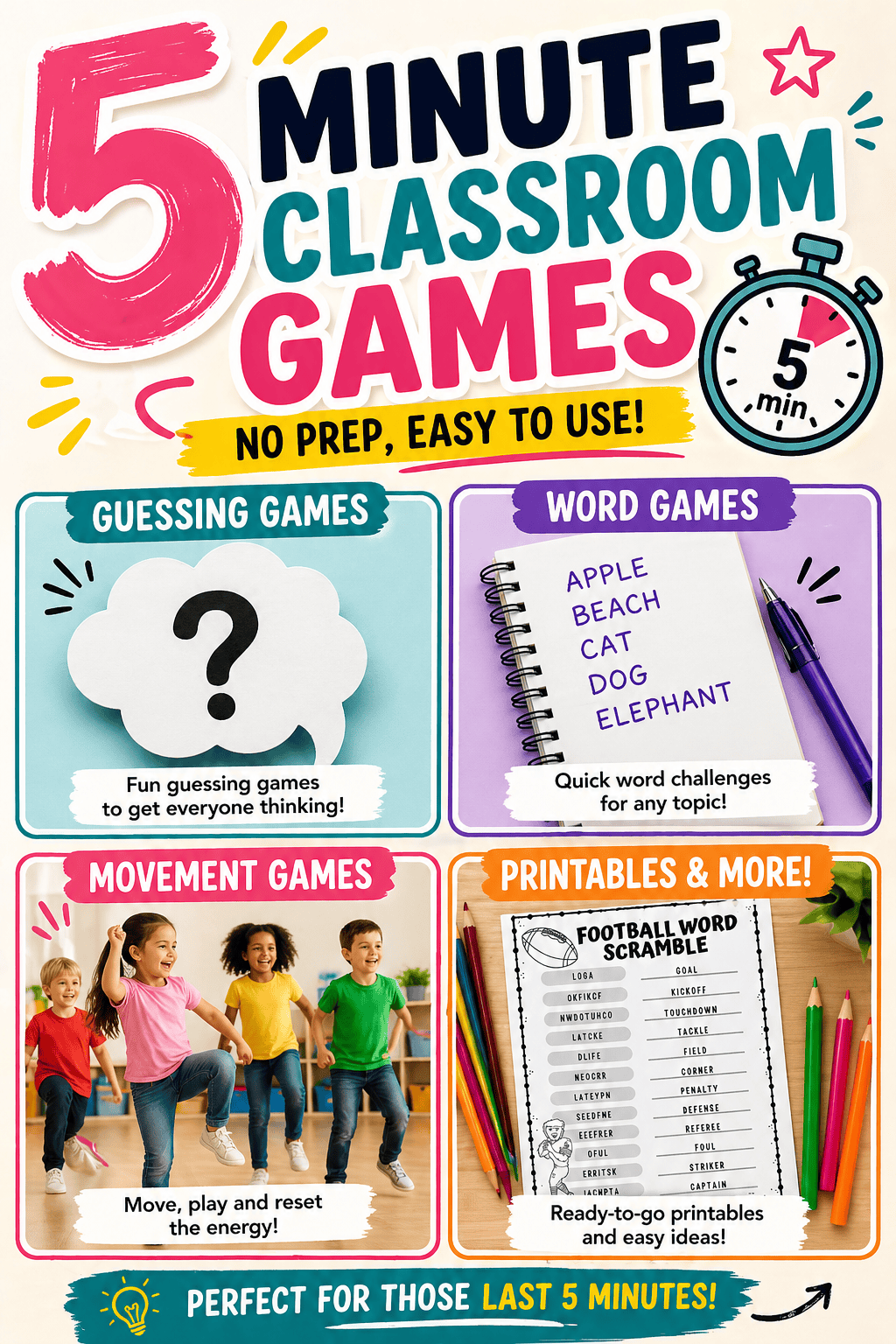
Quick guessing activities
These are my go-to when I want something calm but still engaging. They don’t need much explaining, and most kids already understand how they work.
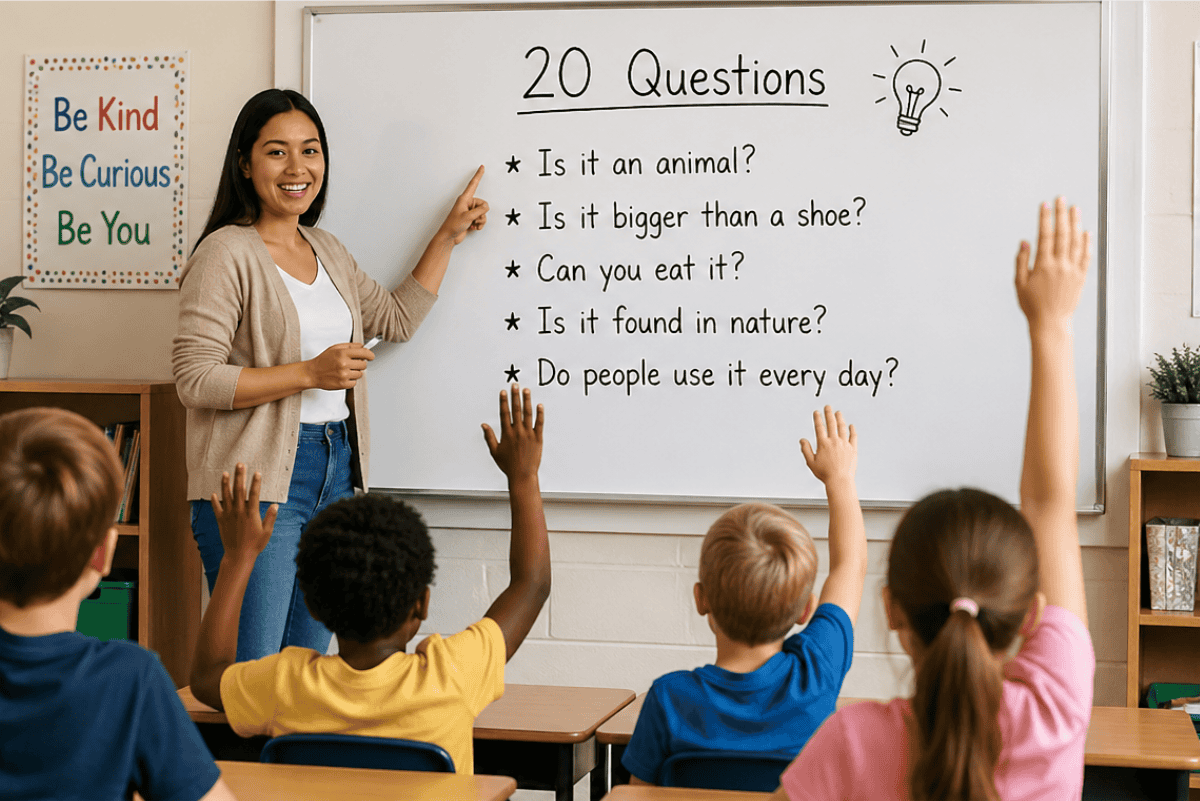
- 20 Questions – Think of an object and let students ask yes/no questions to figure it out. This works well as a whole class and usually lasts a few minutes without needing anything else.
- Five Questions – A quicker version when you’ve only got a couple of minutes. After five questions, students have to make a guess, which keeps it moving.
- Guess the rule – Choose a simple rule (like items that start with a certain letter) and have students suggest ideas to work it out. Once a few correct answers are on the board, they usually start spotting the pattern.
If you want more ideas, you can find more guessing games here. Or, if you’d rather not think of something on the spot, a random animal generator makes it really easy to get started.
Word games
These work well when you want something a bit more focused without it feeling like extra work. They’re easy to start, but still keep students thinking.
- Categories – Pick a topic and give students a minute or two to list as many items as they can. You can play individually or in small groups, then compare answers at the end.
- Alphabet game – Choose a topic and go through the alphabet, with students giving one answer per letter. This works well as a whole class and usually keeps everyone involved.
- One word story – Build a sentence or story together, one word at a time. Go around the class and see how long you can keep it going before it falls apart.
These are easy to adapt depending on time. You can run them as a whole class, in small groups, or turn them into a quick written task if you need something quieter. They also work across different ages just by adjusting the topic or level of difficulty.
Movement games
These are useful when energy is either too high or starting to dip. A quick movement game can reset the room without taking over the whole lesson.
- Simon Says – Call out actions for students to follow, but only if you say “Simon says” first. It’s quick to run and great for getting everyone focused again.
- Freeze dance – Play music and let students move around, then stop it suddenly so they have to freeze. Anyone still moving is out or does a quick challenge.
- Line up by… (no talking) – Give a category like height, birthday, or shoe size and have students organize themselves silently. It works well as a transition and keeps everyone involved.
- Rock paper scissors tournament – Students pair up and play, with winners moving on to face new opponents until you have a final champion. It’s fast, competitive, and easy to run with the whole class.
These don’t need any setup, and they’re usually the fastest way to shift the mood if things are getting a bit restless.
**This post may contain affiliate links. As an Amazon Associate and a participant in other affiliate programs, I earn a commission on qualifying purchases.**
Printable Games for Quick Use
Sometimes you just want something ready to go without having to think about it. That’s where printable activities make things much easier.
They’re ideal for early finishers, quiet time, or those moments when you need something structured but still low effort. You can keep a small stack on hand and reuse them whenever those spare minutes come up.
These are some of the ones I use most often:
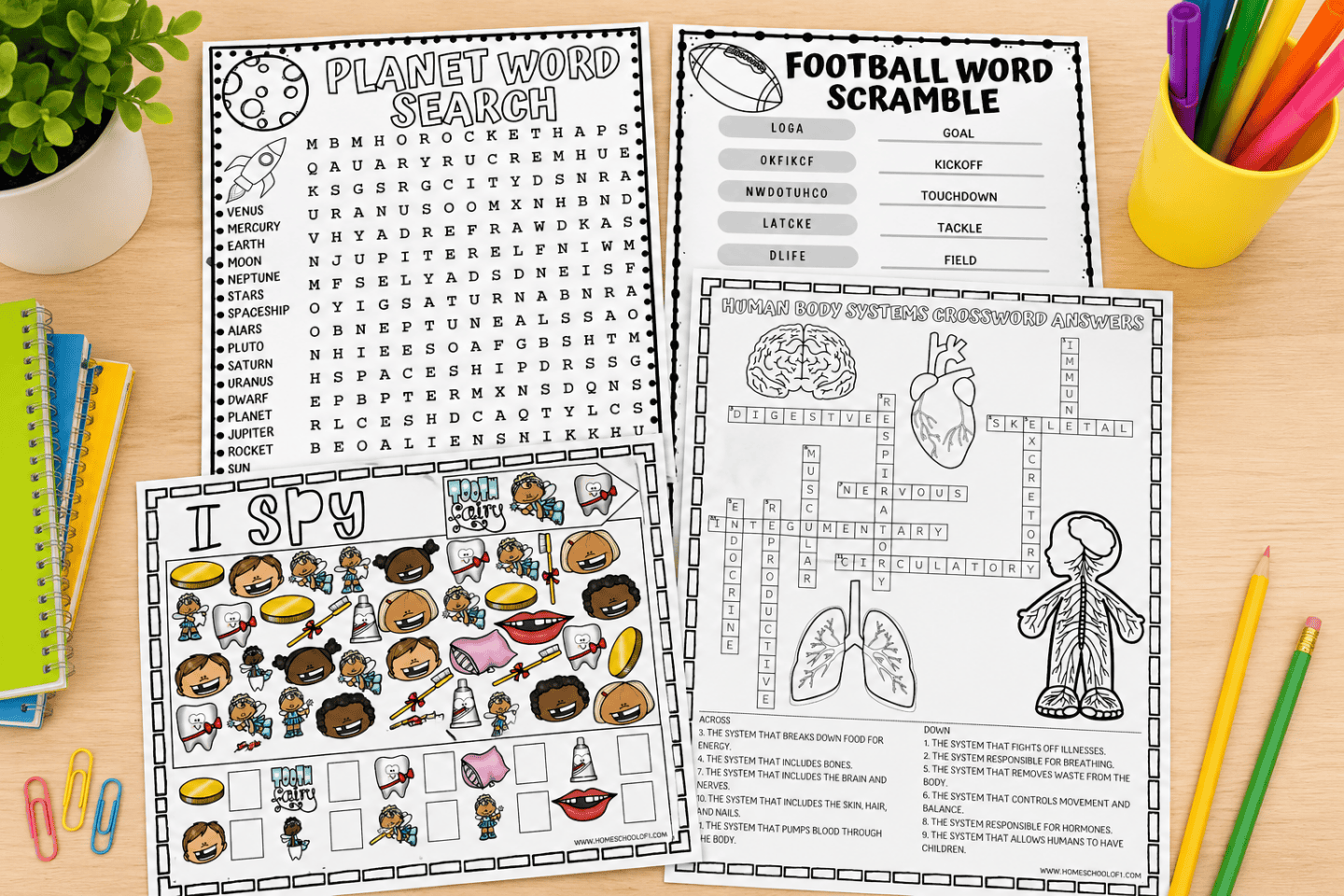
- Word search printables – Great for independent work and easy to reuse
- Bingo games – Works well for small groups or a quick whole-class activity
- I Spy printables – A simple option that keeps everyone engaged without much explaining
- Crossword puzzles – Good if you want something a bit more focused
- Word scrambles – Quick to start and easy to turn into a short challenge
These are easy to keep on hand and use whenever you’ve got a few minutes to fill. Some work better for quiet, independent time, while others are ideal if you want something a bit more interactive with the whole class.
Most of them can be reused too, especially if you print a few copies or use dry-erase sleeves so students can go through them more than once.
Interactive Tools for Fast Activities
When you don’t want to prep anything at all, interactive random games can give you ideas instantly. They’re especially useful when you need something different but don’t have time to think it through.
Instead of coming up with prompts on the spot, you can use a few simple tools to generate them for you. I tend to use these when I want a quick activity that still feels fresh:
- Debate topic generator – Good for quick discussions or getting students thinking without much setup
- Writing prompt generator – Works well for a short writing task or early finishers
- Drawing prompt creator – A simple option when you want something creative but low effort
- Random city or country generator – Easy to turn into a quick geography or guessing activity
They’re quick to use, work for different ages, and make it much easier to fill those last few minutes without repeating the same activities.
When to Use 5 Minute Games
These come up more often than you’d expect. I tend to use them at the end of a lesson when things finish early, or during those in-between moments where students are waiting to move on.
They also work really well for transitions, indoor recess, or early finishers when you need something quick that doesn’t take over the rest of the day. Having a few go-to fast activities for students ready makes those small gaps much easier to handle without overthinking it.
