Sonlight American History Review (Intro to American History)


This Sonlight American History review comes after using History / Bible / Literature D: Intro to American History, Year 1 of 2 with my middle-schooler across a full year.
We’re a secular family from the UK now living in the US, so American history was new for all of us and I was genuinely unsure whether a Christian curriculum would work.
In practice, this level has been one of the few history programs we’ve actually finished, so I wanted to share how it looked day to day, what we changed, and whether it might be a good fit for your family too.

**Disclosure: I was compensated for my time to write this post. As always, all thoughts and opinions are my own. I only share resources that I would use with my own family and those that I believe other homeschool families will enjoy. There may be affiliate links in this post.**
What We Actually Used
We used Level D Intro to American History, Year 1 of 2, aimed at roughly ages 9–12 (grades 4–7), on the four-day schedule.
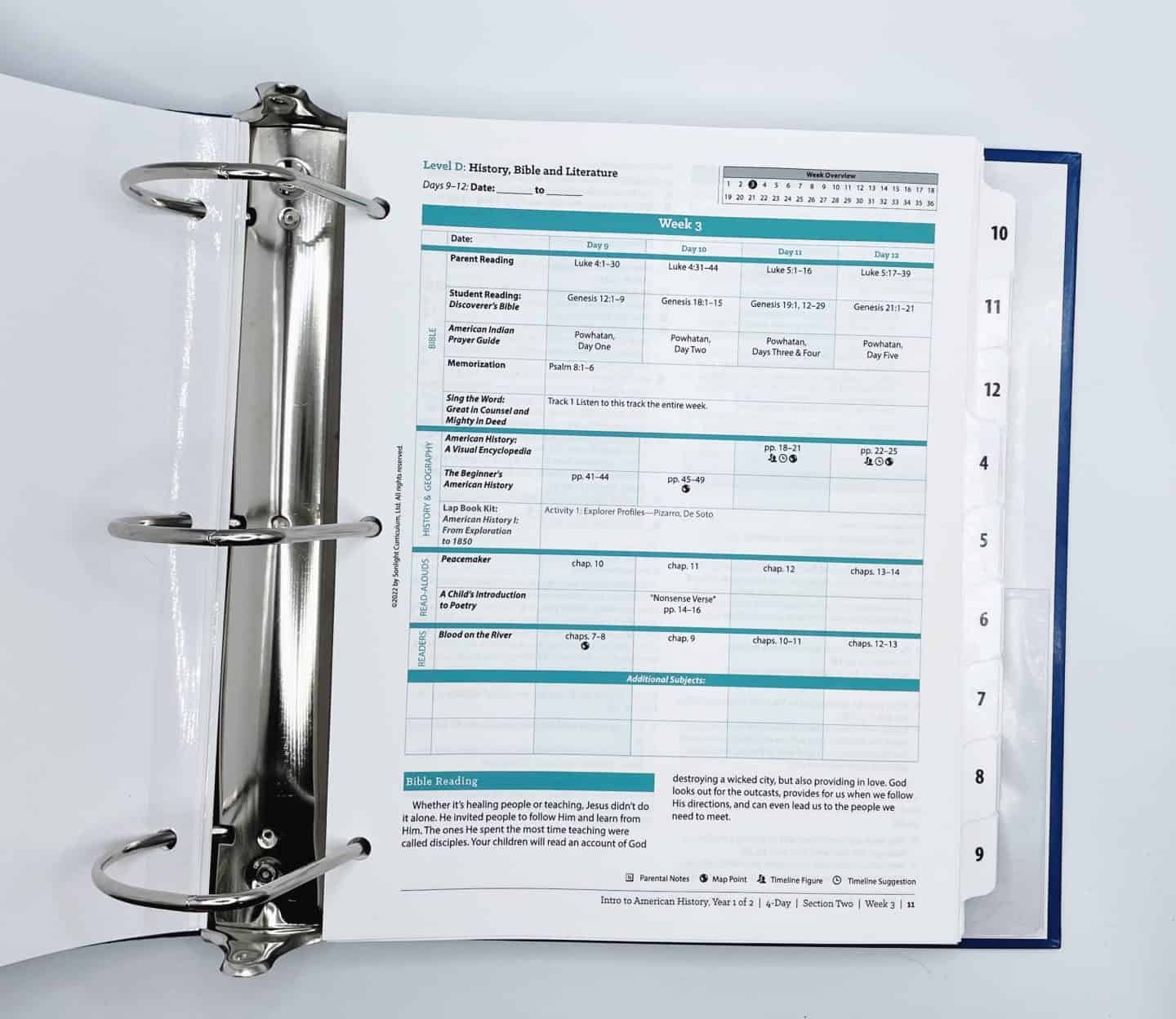
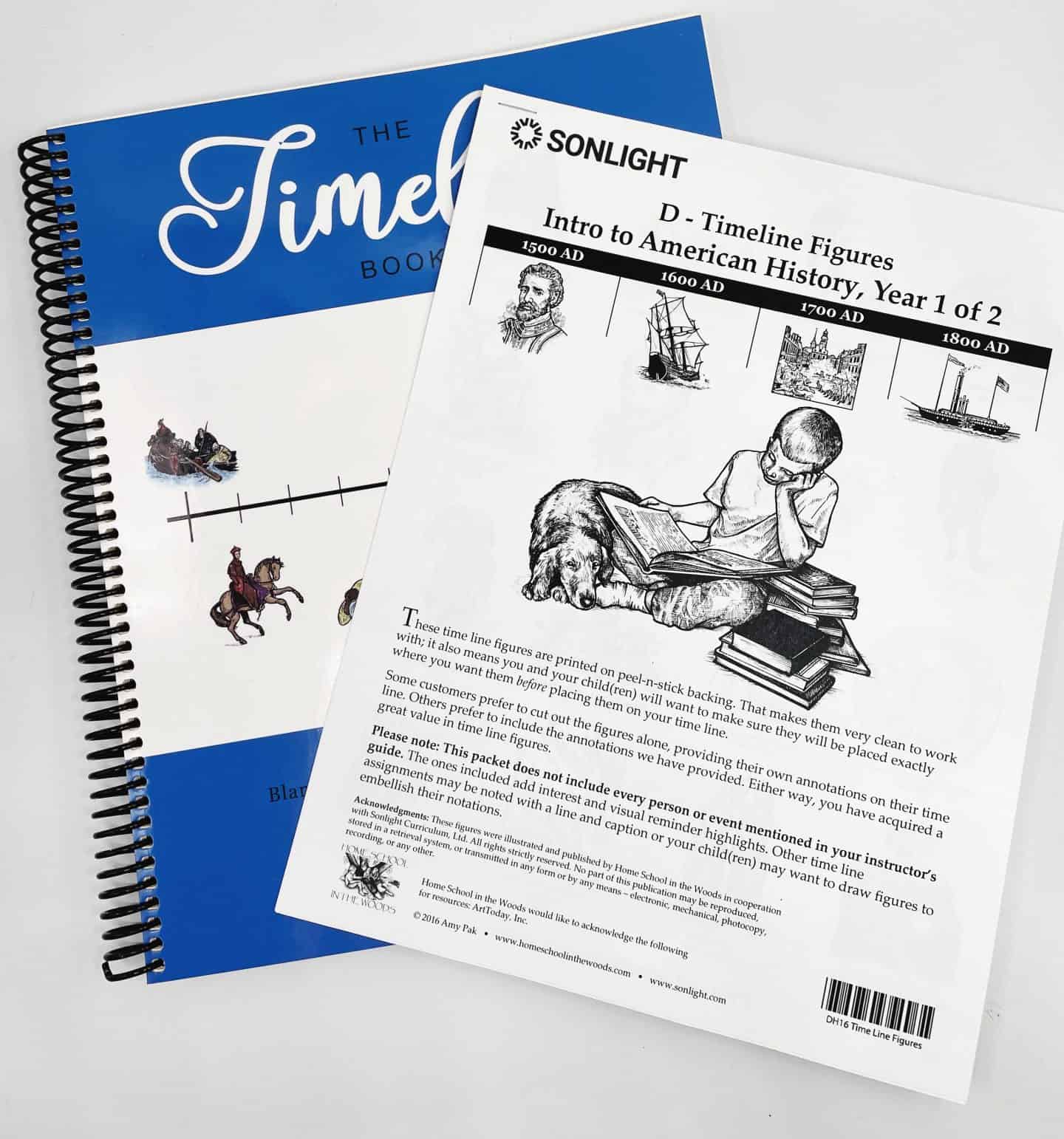
The core of the program is the Instructor’s Guide, a stack of history spines and read-alouds, independent readers, a timeline book with stickers, and a large USA/world map with marker pens.
Everything arrived in one box, which meant no hunting for extra books or piecing together plans from different sources.
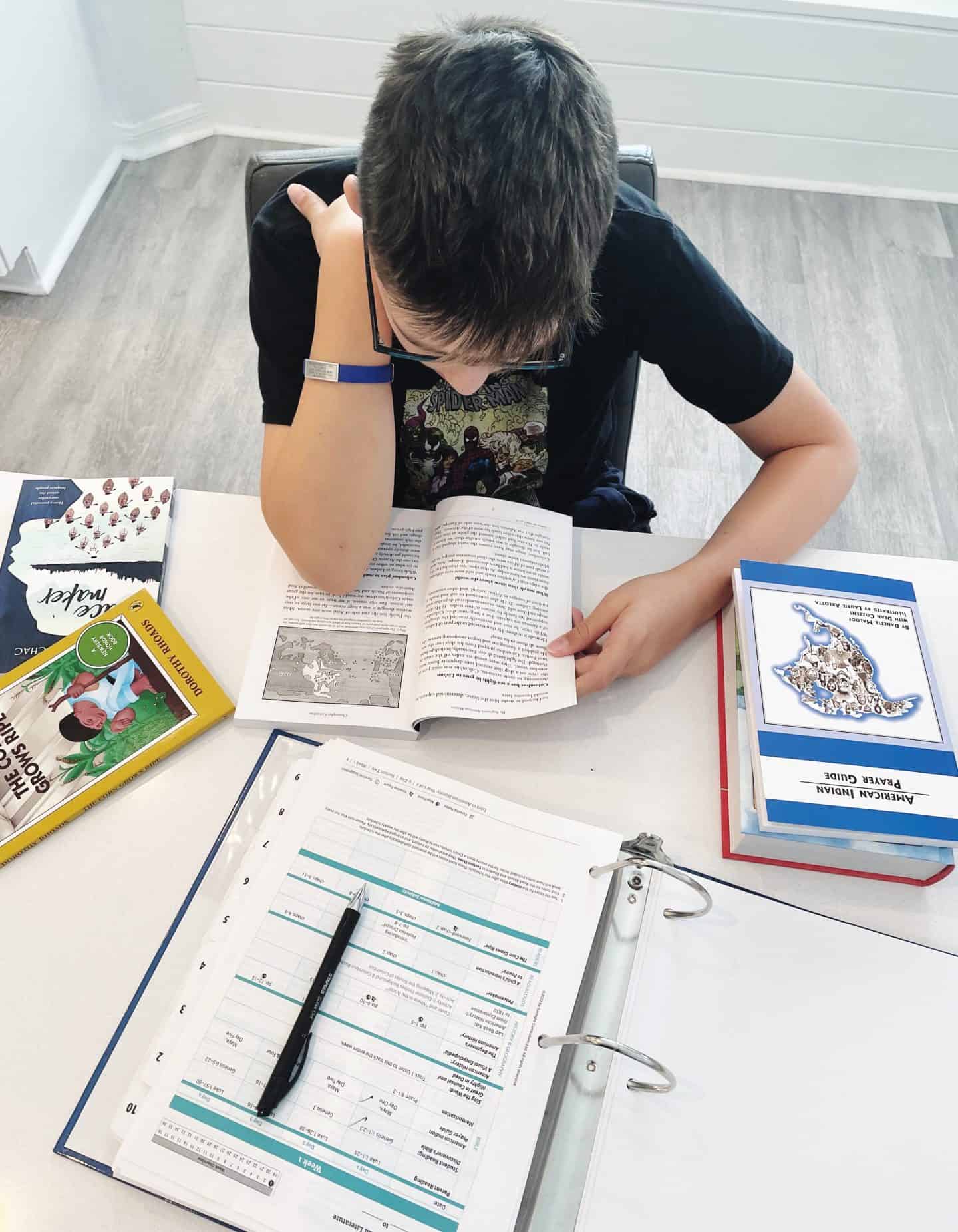
A typical day for us took about 45–60 minutes for history, including one history reading, a read-aloud, my son’s independent reader, and a short bit of map or timeline work. On heavier days we either split the readings or dropped the optional bits.
Quick Overview: Pros and Cons
For us, Sonlight American History Level D had very clear strengths and a few real drawbacks.
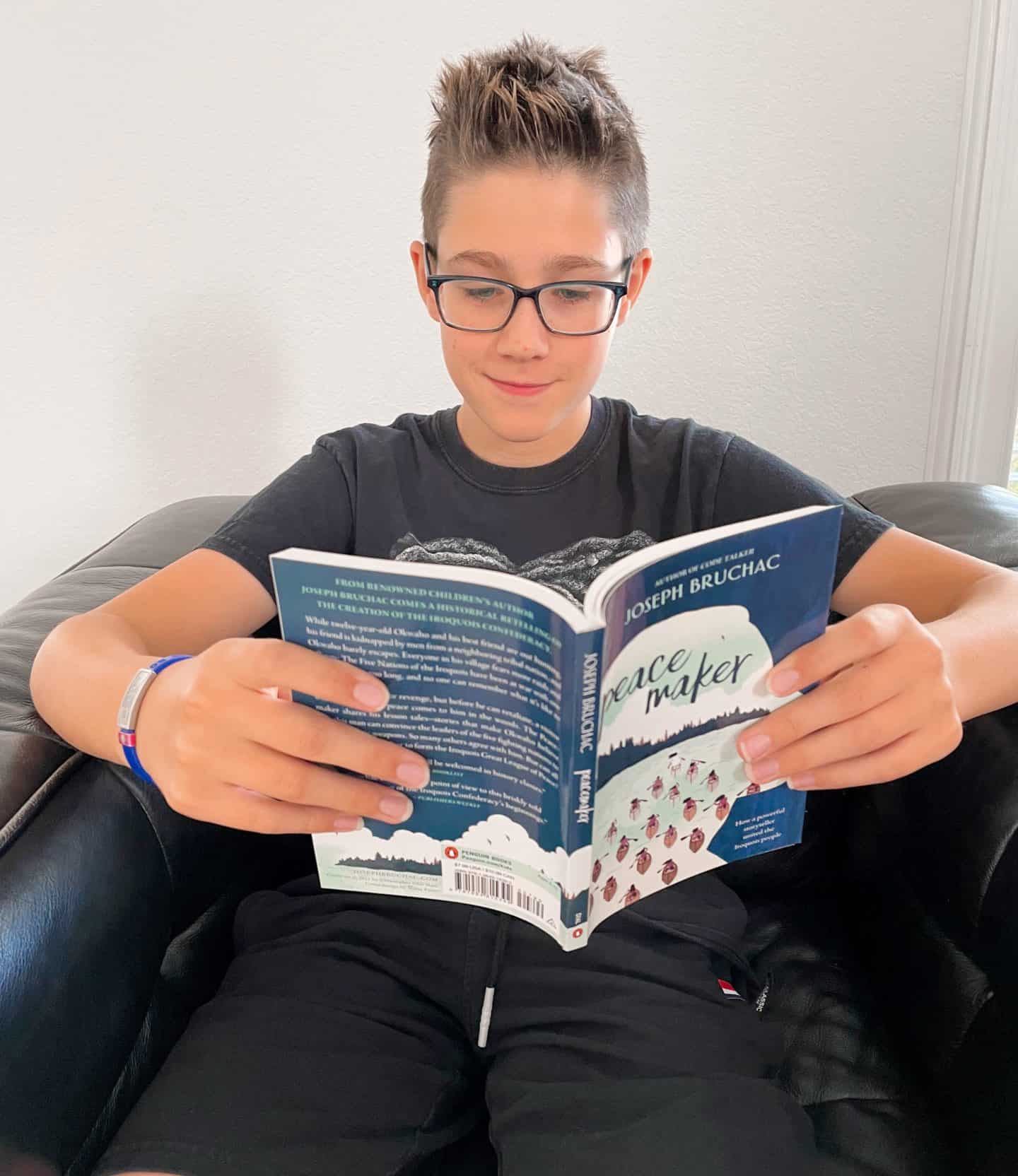
On the positive side, the Instructor’s Guide made it genuinely open-and-go, the book choices were strong and varied, and the built-in map and timeline work helped my son see where events fit together. He could follow the schedule quite independently for a middle-grade student, which was a big plus.
On the negative side, some days felt reading-heavy, especially if we tried to do everything as written. The cost is higher than many history options, and if you are completely opposed to any Bible content you will either need to skip parts of the schedule or be comfortable editing as you go.
Using Sonlight American History as a Secular Family
The obvious question for other secular families is how religious this level feels in practice. The history spines and most of the read-alouds are not especially preachy; they read more as standard narrative history and historical fiction.
The “Christian” part sits mainly in the daily planner, where there are scheduled Bible passages and two specifically Christian books.
We handled it quite simply. Some weeks my son followed the Bible readings out of curiosity, other weeks we skipped them when time was tight. Skipping the Bible never broke the history sequence or made the assignments confusing.
If you are comfortable treating the Bible as part of religious literacy or are happy to ignore those lines in the grid, this level is very workable for secular families. If you want a program with no Bible mentioned at all, this is not it.

How Independent It Really Is for Middle School
One of the reasons we stuck with this level is that it works well for a middle-grade student who is ready for more independence. My son could:
- open the Instructor’s Guide, find the right week and day,
- do his history and reader assignments on his own, and
- mark the map or add a couple of timeline stickers without help.
I usually kept the read-alouds as shared time and went through the discussion questions at the end of the day. It felt like a good balance: he had control over most of the work, but we still had built-in time to talk about what he was reading.
If you need something your child can run with while you work nearby, Sonlight D is strong. If you prefer a video-based or worksheet-only approach, it will feel too book-heavy.
Cost and Value
There is no getting around the fact that Sonlight is expensive compared to a single history spine plus library books.
The American History D package includes a lot of physical books, the Instructor’s Guide, maps, and timeline materials, so you are paying for a full year’s structure as well as a home library shelf.
For us, the value came from actually using it. We have had cheaper programs sit half-finished on the shelf; this one we completed, and the books will be reused or passed on.
If you only have one child and rarely re-use curriculum, the price will feel steep. If you plan to homeschool for several years or have younger siblings, the cost spreads out more sensibly.
Who Sonlight American History D Is Best For
Based on our year, I would say this level works best for families with children who either enjoy reading or are at least willing to listen to read-alouds most days. It suits parents who like having a clear plan and want history, geography, literature, and some Bible laid out together in one place.
It is less ideal for very reluctant readers, for families who strongly prefer online or video-based teaching, or for those who want a completely secular schedule with no editing. If you never want to see a Bible reference in your planner, you will probably be happier with a different program.
Test the kids’ knowledge with our free interactive American History trivia quiz.
Final Thoughts
Overall, Sonlight American History D has been one of the most successful history years we have had. As a secular family new to American history, I appreciated how the books brought events to life and how little planning I had to do.
We made small adjustments to fit our beliefs and our schedule, but the core of the program worked well for a middle-grade learner who enjoys books and increasing independence.
If you are comfortable working around the Bible readings and you want a structured, literature-rich way to cover American history from early Native cultures through the Civil War, this level is well worth considering.
More History Resources
- Top history books for students – a curated list of engaging reads for kids.
- Sonlight history lap book – a hands-on way to support timeline and mapping work.
- World history options for homeschoolers – an overview of programs we’ve tried.
- Our favorite history board games – games that bring events and people to life.
- All homeschool curriculum reviews – a full list if you’re comparing programs.
Last Updated on 3 December 2025 by Clare Brown
