Homeschool Supplies List | Essentials for Every Budget

Every year before we start a new homeschool term, I end up doing the same thing: checking drawers, counting pencils, and realizing we’re somehow out of printer paper again.
I’ve learned the hard way that having a few core supplies ready makes the first week far less stressful.
You don’t need a fully stocked classroom to homeschool well. In fact, most families already have the basics at home. The trick is knowing what actually gets used daily and what can wait until later.
This homeschool supplies list focuses on the essentials first, then the tools you can add over time as your routine and subjects expand.
**This post may contain affiliate links. As an Amazon Associate and a participant in other affiliate programs, I earn a commission on qualifying purchases.**
Homeschool Supplies We Use Most Often
Some of these supplies we use constantly. Others sit on a shelf until we’re in the middle of a project and suddenly very glad we bought them. If you’re just starting out, don’t feel like you need everything at once.
Most years, the only things we actually run out of are paper and pens. The rest tends to last much longer than you’d expect.
I’ve also learned to think about supplies in two buckets: the things we replace over and over (printer paper, ink, pencils), and the items we buy once and keep for years (like a laminator or whiteboard). Looking at it that way makes budgeting feel far less overwhelming.
A reliable laptop or desktop is helpful for research, writing, and online programs. We’ve used Lenovo devices for years because they’ve been dependable, but any solid computer will work.
Here are the everyday essentials:
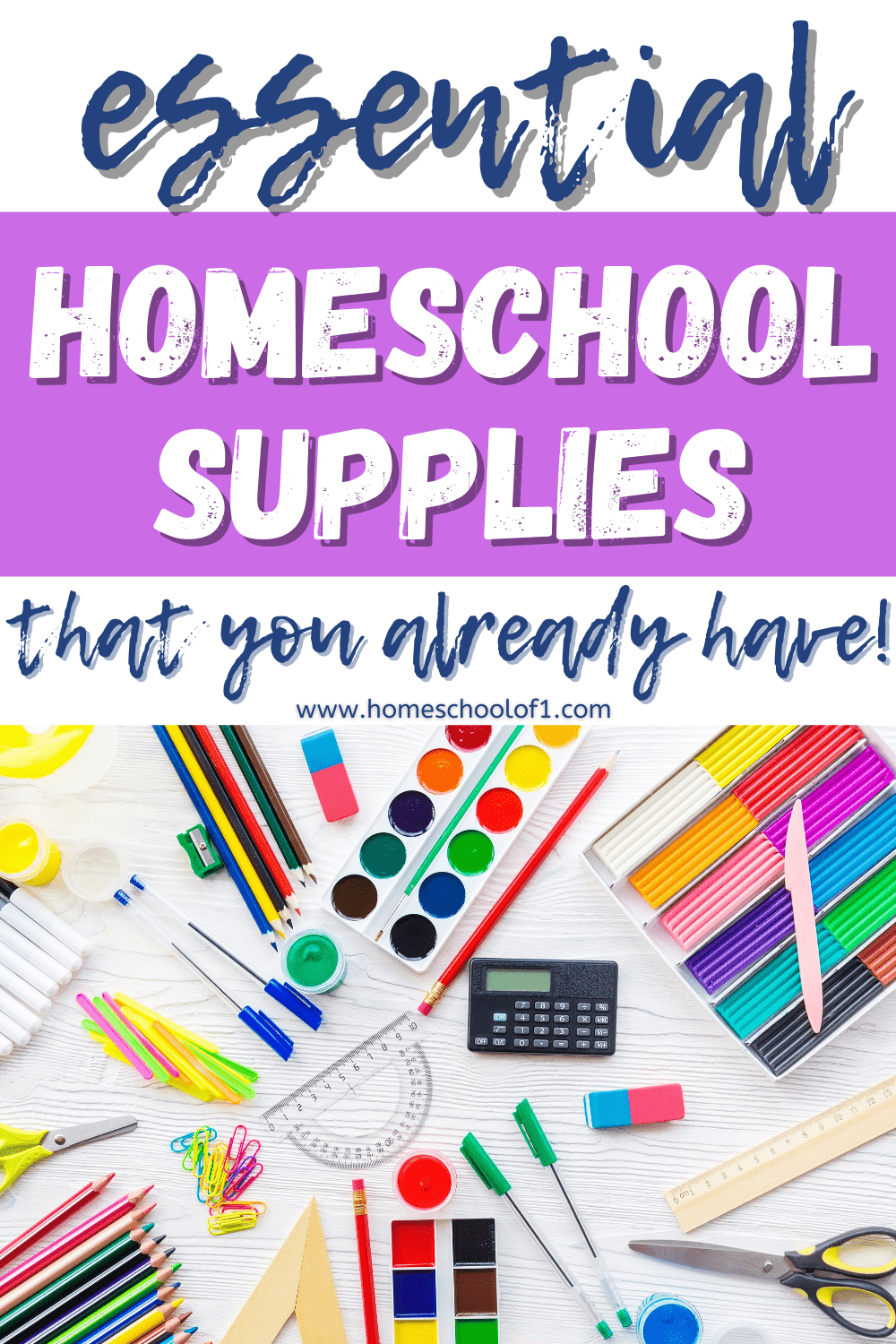
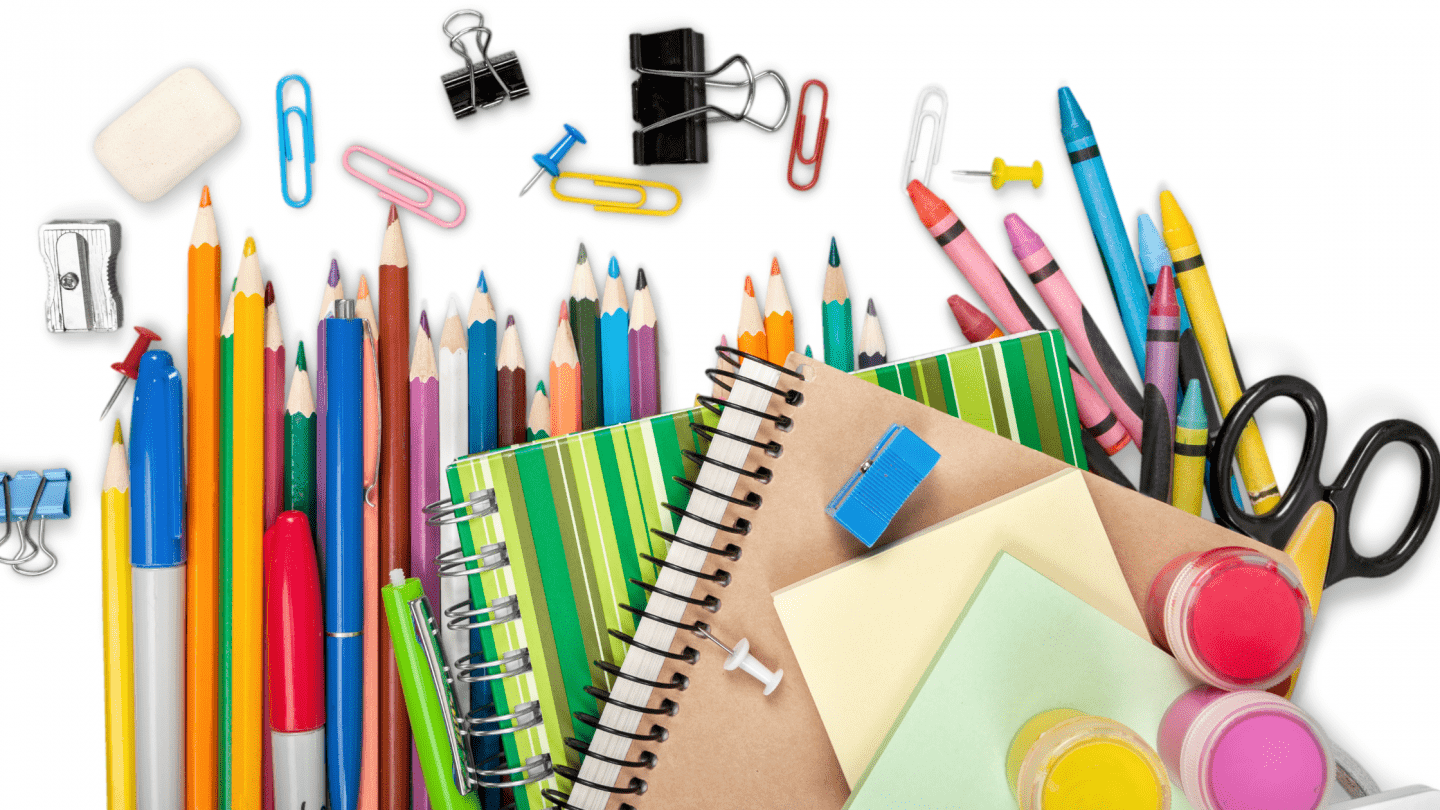
- Paper: lined, copy printer, and graph paper are all needed.
- Composition notebooks
- Printer
- Cardstock – useful for sturdier printables and reusable activities.
- Paper cutter
- 3 ring binders
- Pencils – coloring and writing
- Highlighter Pens
- Erasable pens (Frixion-style pens work well for revising without wasting paper).
- Pens – lots of different colors for reworking and marking
- Sharpies
- Glue –
- Paint & Brushes
- Scissors
- Hole Punch
- Ruler
- Stapler
- Electric pencil sharpener (helpful if sharpening daily).
- Stylus for a laptop or IPad
- Laminator with pouches
- White Board Pens and Eraser
- Scientific Calculator
- Food dye (we use this for lots of experiments)
- Sticks for crafts
- Dictionary
- Thesaurus
- Cork Tiles (we have added these to the wall of our homeschool room to display topic work)
- Geometry set
Homeschool Organization and Space Essentials
You don’t need a dedicated classroom, but a functional setup makes daily learning smoother.
- Good lighting – Natural light or a bright desk lamp helps reduce eye strain.
- Desk or table – A consistent workspace keeps materials contained and focused.
- Comfortable seating – Choose something supportive enough for longer lessons.
- Storage solutions – Shelves, bins, baskets, or a utility cart help keep supplies organized.
- Whiteboard or chalkboard – Useful for teaching, brainstorming, and working through problems together.
Homeschool Math Supplies
Hands-on tools make abstract math concepts easier to understand, especially in elementary and middle school.
- Ruler
- Compass and protractor
- Scientific calculator (for upper grades)
- Math manipulatives (base ten blocks, fraction circles, counters)
- Student clock for learning time
Manipulatives aren’t necessary forever, but they’re extremely helpful when introducing new concepts.
Homeschool Science Supplies
Science becomes much more engaging when students can experiment instead of just read.
- Basic lab tools (measuring cups, droppers, trays)
- Magnifying glass
- Microscope (especially for upper elementary and beyond)
- Structured science kits for guided experiments
You don’t need a full lab setup, just a few practical tools that support observation and experimentation.
Arts and Craft Supplies for Homeschool
Art supplies don’t need to be complicated, but having a small, reliable set on hand makes creative projects much easier to manage throughout the year.
For everyday art and notebooking:
- Crayons
- Markers
- Colored pencils
- Watercolor palettes and brushes
- Glue sticks
- Construction paper
For older students or more detailed projects:
- Sketchbooks or mixed-media paper
- Acrylic or oil paints
- Tempera paint
- Oil pastels
- Artist pencil sets
Erasable pens can also be helpful for illustrated notebooking or draft sketches before outlining.
Physical Education and Outdoor Learning Supplies
Homeschooling doesn’t happen only at a desk. Having a few simple supplies on hand makes it easier to incorporate movement, nature study, and outdoor exploration into your week.
For PE and active play:
- Yoga mats or exercise bands
- Jump ropes, balls, or basic sports equipment
- Timer or stopwatch
For outdoor learning and nature study:
- Small backpack
- Binoculars
- Field guides
- Nature journal
- Magnifying glass
Safety basics like helmets or reflective gear are also worth having on hand.
Larger Homeschool Equipment
We didn’t buy most of this at the beginning. Some of it came years later when a subject needed more depth, and some of it was added because my son suddenly got interested in something specific.
You really don’t need all of this right away. Add pieces as they make sense for your space and budget.
- A globe is one of those things that gets used more than you’d expect. Ours has survived years of being spun mid-lesson.
- A microscope becomes useful once science shifts from reading about cells to actually wanting to see something under a slide.
- We’ve used a few structured science kits over the years when I didn’t want to piece experiments together myself.
- Educational board games have probably reinforced math and logic more than I realized at the time.
- Coding tools can be helpful if your child shows interest in programming, but they aren’t essential early on.
- A Binding machine or label maker falls into the “nice but not necessary” category. They’re helpful if you like things organized.
- Headsets are useful if you’re doing live online classes.
- And once high school math starts, a scientific calculator becomes non-negotiable.
Last Updated on 13 February 2026 by Clare Brown
