
Sonlight World History Review (Level G)

This Sonlight World History review comes after using level G (World History, Year 1 of 2) across sixth and seventh grade with my middle-schooler, and it’s one of the few history programs we’ve actually stuck with.
We needed something open-and-go, literature-heavy, and flexible enough for real life, and Sonlight ended up fitting better than I expected. Especially as a secular family working through a Christian curriculum.
What surprised me most was how manageable the pacing felt, how much of the reading my son genuinely enjoyed, and how easy it was to adjust the Bible component without breaking the flow.
If you’re trying to figure out whether Sonlight World History is worth using for a full year of middle-grade homeschooling, here’s what it looked like day-to-day, what worked, what didn’t, and how it compares to other programs we’ve tried.
**Disclosure: I was compensated for my time to write this post. As always, all thoughts and opinions are my own. I only share resources that I would use with my own family and those that I believe other homeschool families will enjoy. There may be affiliate links in this post.**
What Is Sonlight World History (Level G)?
Sonlight World History (Level G) is the first half of Sonlight’s two-year world history program for middle school, covering ancient civilizations through the fall of Rome. It follows the usual Sonlight structure, an Instructor’s Guide with a clear weekly schedule, a main history “spine,” and a large mix of historical fiction, biographies, and narrative nonfiction.
The aim is to build a full timeline of early world history through reading, discussion, and consistent daily work rather than worksheets or tests.
Level G is designed for roughly ages 12–14, and it includes daily Bible readings, memory work, and notes for parents. As a secular family, we kept the readings and skipped the extra activities without it affecting the flow of the program.
The history and literature portions stand on their own, and the layout is genuinely open-and-go. Most days we followed the guide as written, history reading, a few pages from the reference books, and whatever chapters were assigned from the readers or read-alouds, without extra prep.
In short, Level G is a structured, literature-based way to work through early world history with middle-grade students, and it’s flexible enough to adjust to different schedules, reading speeds, and belief systems. Let me walk through what it actually includes and how it worked for us day-to-day.
What Sonlight World History Includes
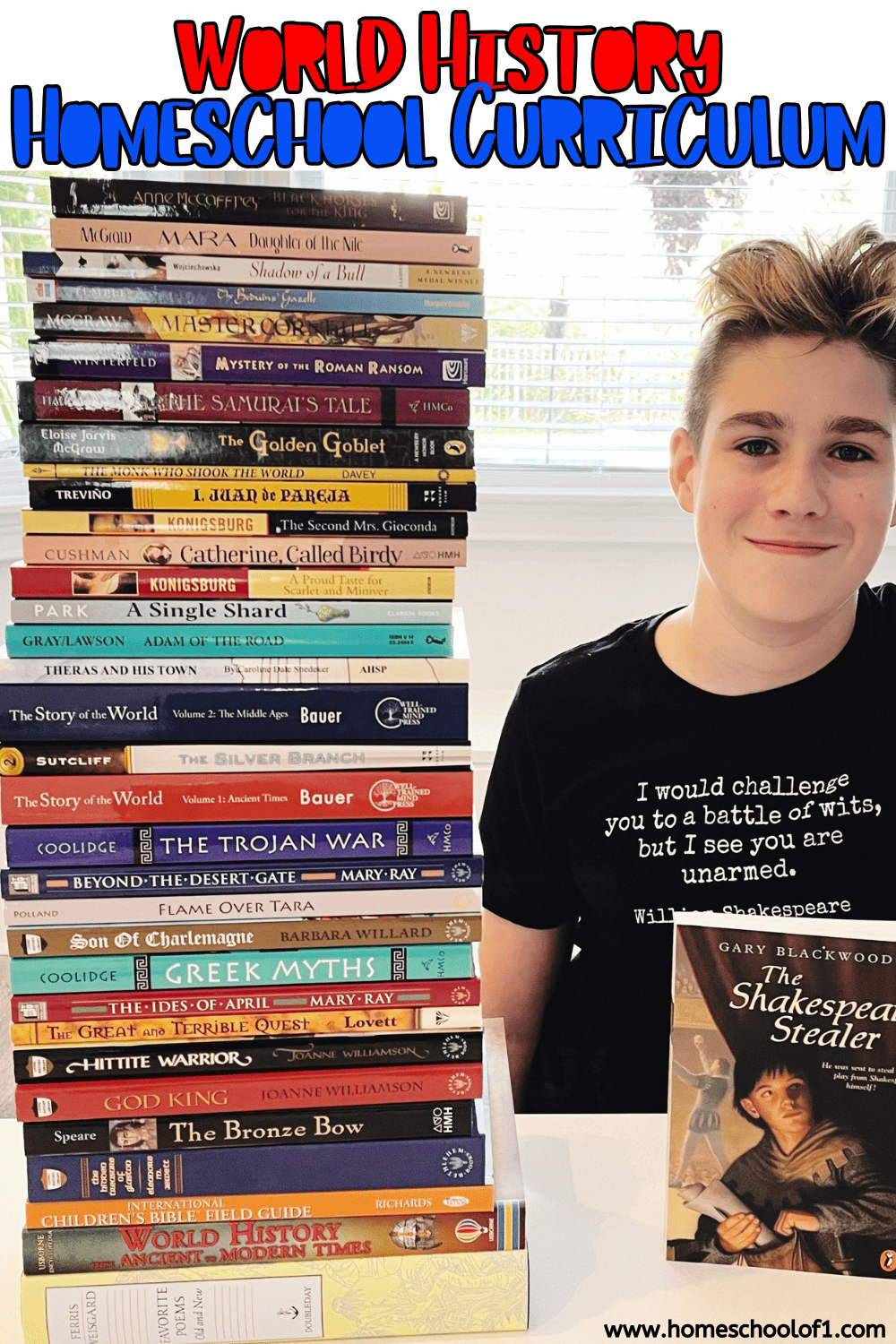
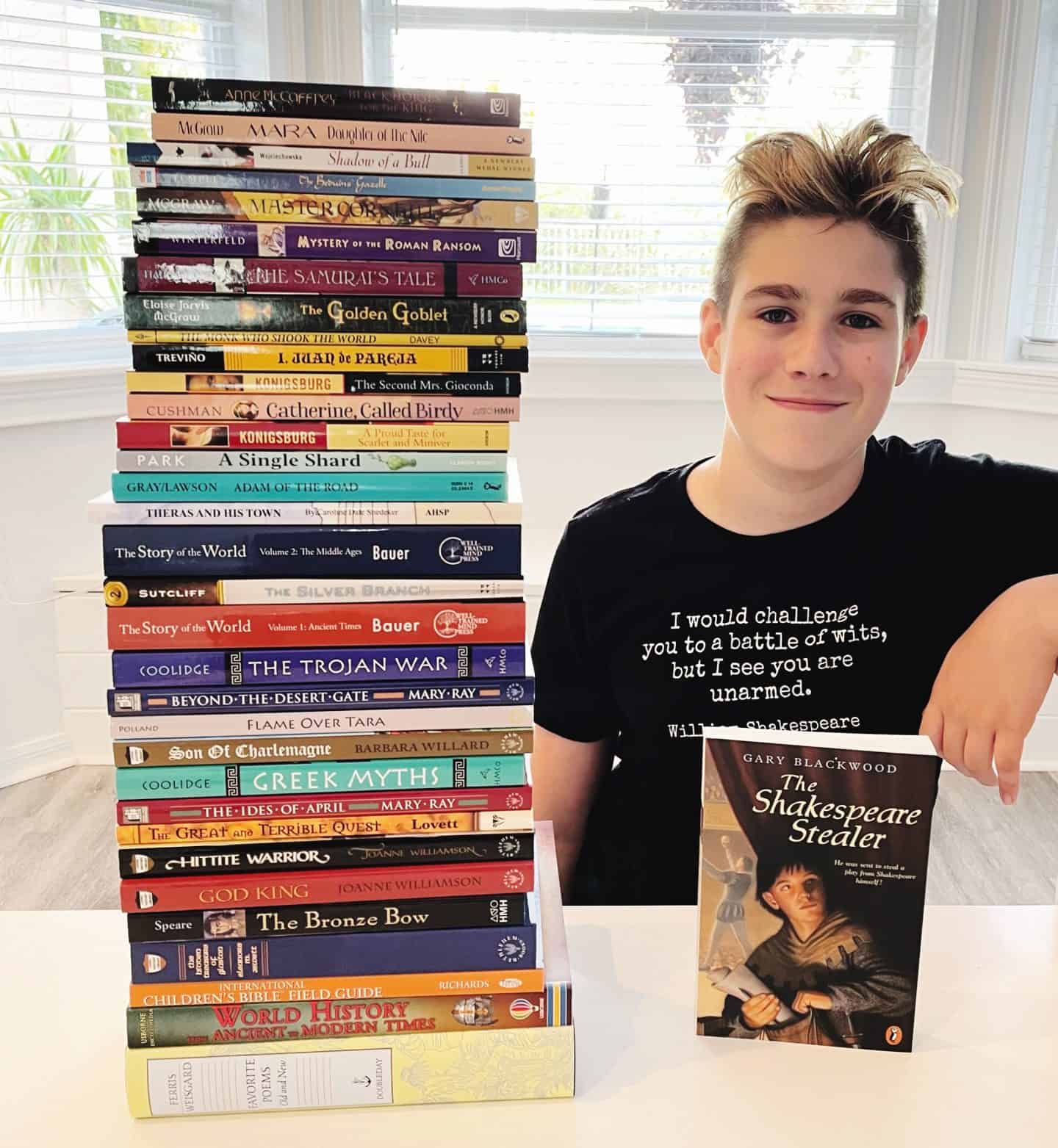
Level G comes with everything you need for a full year of early world history: the Instructor’s Guide, a main history spine, supporting reference books, a large set of readers and read-alouds, timeline figures, and the Bible component.
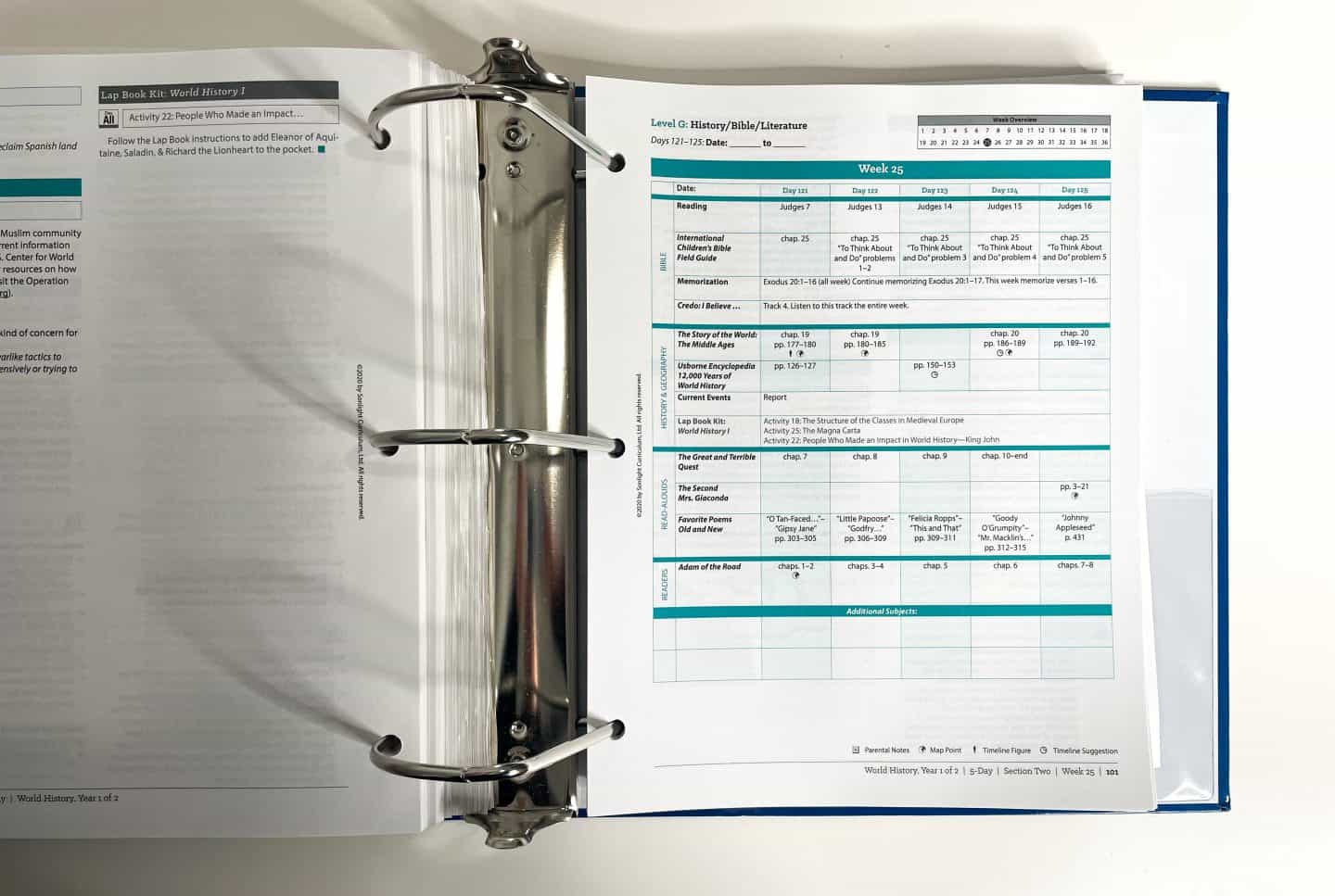
The Instructor’s Guide is the anchor, each week is already mapped out with daily assignments, discussion notes, vocabulary, and the points where you add timeline stickers or check geography.
The book list is big, but that’s part of the appeal. My son responded really well to the mix of historical fiction and narrative nonfiction, and the variety kept the pace from feeling repetitive. We didn’t use every book exactly on schedule, but even when we shifted the order or pushed something to a later week, the structure stayed intact.
For secular families, the Bible portion is easy to adapt. We kept the readings but skipped the extra activities and memory work when needed, and nothing in the core history or literature sequence depends on doing the full Bible track. The flexibility here is one of the reasons this program worked for us.
Overall, the materials feel substantial without being overwhelming: a clear plan, consistent daily reading, and enough variety to keep middle schoolers engaged without adding more prep to your plate.
How it Worked in Our Homeschool
Once we settled into Level G, most days followed the same pattern. My son did his independent reading first, and then we worked through the history and read-alouds together.
The Instructor’s Guide made it easy to stay on track without extra planning. I opened the week’s schedule, checked what needed to be read, and we just followed the list. It’s as close to open-and-go as a literature-based program can get.
The mix of books helped more than I expected. Some weeks leaned heavier on the history spine and reference books. Other weeks were mostly chapters from the historical fiction titles. That variety kept things moving, and my son stayed more engaged with world history than he ever did with programs that relied on textbooks.
We didn’t use every single timeline figure on the exact day it was assigned, but we added them in batches when it made sense. The map work was the same, simple and quick, and he remembered more geography this year than in any previous program.
The biggest difference we noticed was consistency. Before Sonlight, history was the subject most likely to slide. With Level G, we stuck with it because it was manageable, interesting, and didn’t require me to hunt for extra resources. Even when we adjusted the schedule or skipped a book, the overall flow never fell apart.
What We Liked About Sonlight World History
The biggest win for us was the reading load feeling doable. There’s a lot of literature in Level G, but the pacing is steady rather than overwhelming, and most of the books were ones my son didn’t have to be reminded to finish.
He especially liked the historical fiction titles that tied directly to whatever era we were studying, and that helped anchor the timeline far better than any worksheet ever has.
The structure also worked well for a middle-school schedule. I didn’t have to prep lessons, gather materials, or figure out how to connect the different pieces. Everything was laid out clearly in the Instructor’s Guide, and the notes made it easy to have real conversations without feeling like I needed to research ahead of time.
I also appreciated how flexible it was for a secular homeschool. We kept the daily Bible reading because my son enjoys narrative texts, but we skipped the extra activities without it affecting the history sequence at all. The program didn’t force anything that made us feel out of step, which isn’t always the case with Christian curricula.
Finally, the consistency mattered. Because it wasn’t overwhelming or chaotic, world history became one of the subjects we actually finished each week, even on the days where everything else felt a bit off. It struck the balance between structure and ease that we hadn’t found with other programs.
What Was Hard (and What We Changed)
The main challenge for us was the sheer number of books. Even though most of them were genuinely good reads, there were weeks where the pace felt a little tight, especially when life got busy.
We ended up moving a few titles to slower weeks or saving them for later in the year. It didn’t break anything, Sonlight is forgiving that way, but it’s worth knowing up front that you probably won’t read every single page on the exact day it’s assigned.
We also adjusted the Bible component. As a secular family, the daily readings were fine, but the memory work and extra activities didn’t fit what we wanted to do. Skipping those pieces made the workload lighter and kept the focus on the history without losing the rhythm of the schedule.
The other small issue was discussion pacing. Some books naturally led to longer conversations, and on those days we shortened something else or trimmed the reading slightly. That’s the trade-off with a literature-based program, discussion takes time, but it was a manageable adjustment once we accepted that not every day needed to look identical.
In short, the parts that stretched us were mostly about volume and pacing, not content. Once we started treating the Instructor’s Guide as a guide rather than a checklist, the whole program felt much more realistic.
Using Sonlight as a Secular Homeschool Family
One thing I wondered before starting Level G was whether the Christian elements would feel too woven in, or whether they’d distract from the history. In practice, it was much easier to adapt than I expected.
The history and literature sequences stand completely on their own, and the Bible portion sits off to the side as its own track. We kept the readings because my son treats them like narrative texts, but we skipped the memory work and any activities that didn’t fit our approach.
The Instructor’s Guide does include occasional notes about worldview, but nothing in Level G required us to teach the material from a specifically Christian lens. We noticed that most of the history conversations were grounded in the books themselves, not doctrinal commentary. If anything, the structure made it simple to talk openly about different cultures, religions, and perspectives without it feeling forced.
If you’re secular and worried about whether Sonlight World History is workable, I’d say it’s one of the easier Christian programs to adapt. You decide how much of the Bible track you want to include, and the rest of the program continues smoothly either way. For us, it never got in the way of the actual world history learning.
How Sonlight World History Compares to Other Programs We’ve Tried
We came to Sonlight after using more traditional history programs, including options built around a single textbook with worksheets. Those were fine on paper, but they never held my son’s attention for long, and history was the subject most likely to get pushed aside.
Sonlight changed that simply because the reading felt more alive. The mix of fiction, biography, and reference texts gave him more entry points into each time period, and he remembered far more than he did when we relied on a textbook alone.
We’ve also used secular programs like History Odyssey, which has solid content but requires more prep and sometimes felt heavier on assignments than reading.
Sonlight was easier to maintain in the long run. The open-and-go format made a noticeable difference on busy days, and the pace worked better for us as a middle-school schedule tightened up.
If you prefer a straightforward spine with minimal literature, Sonlight might feel like too much reading. But if you want a program that builds understanding through stories and discussion rather than worksheets, Level G has been the most consistent and engaging option we’ve used.
Who Sonlight World History Is a Good Fit For
Sonlight World History works best for middle-grade students who learn well through reading and discussion. If your child enjoys stories, prefers books over worksheets, and remembers information better through narrative than note-taking, Level G is a strong match.
The structure also suits families who like an open-and-go plan without sacrificing depth, everything is already laid out, so you’re not piecing together units or scrambling for extra materials.
It’s also a good fit if you want a flexible program. We adjusted the Bible component, shifted a few books around, and still kept the overall flow intact. If you need a curriculum that can absorb schedule changes without falling apart, Sonlight is forgiving in that way.
And if you’re homeschooling a student who thrives on routine, the predictable daily structure is helpful. My son knew what to expect each week, history reading, reference pages, and whatever fiction was assigned, and that consistency made it easier to stay on track.
If you want fast, test-based assessments or a short daily reading load, Sonlight may not be the right style. But for families who value books, conversation, and steady progress through world history, Level G fits well.
Who Might Want to Choose Something Else
If your child dislikes reading or struggles with long-form narrative, Sonlight World History may feel heavy. The program is built around books, not worksheets or quick summaries, so a student who prefers short tasks or checkboxes might get frustrated with the pacing.
It’s also not ideal if you want a strict secular curriculum without any Bible component included, while it’s easy to adapt, the materials are written from a Christian perspective.
Families who prefer clear tests, written assignments, or a traditional textbook approach will likely be happier with a more structured, assessment-focused program.
Sonlight leans heavily on discussion and narration, and that teaching style doesn’t fit every household. The volume of reading can also feel like a lot if you’re juggling multiple grade levels or a busier schedule.
Finally, if you need a program that sticks tightly to a four-day week without flexibility, you may find the reading load tight. Sonlight is adaptable, but you’ll need to be comfortable adjusting the plan when life gets busy. For families who want a minimalist, streamlined world history course with fewer books, something lighter may make more sense.
Is Sonlight World History Worth It?
For us, yes. Sonlight World History delivered a solid middle-school year without the usual stop-and-start that happens when a program requires too much prep or feels dry after a few weeks.
The steady reading rhythm, the variety of books, and the clarity of the Instructor’s Guide kept us moving even on the days when motivation was low. My son remembered far more from this year than he did with textbook-driven programs, and the structure made it easy for me to stay consistent without adding extra planning.
It’s not perfect, there’s a lot of reading, and you have to be comfortable skipping or shifting pieces when life gets busy, but the flexibility makes it manageable. And as a secular family, we found the Bible track simple to adapt without losing the flow of the history sequence.
If you want an open-and-go world history program that leans on books and discussion rather than worksheets, Level G is one of the more reliable options we’ve used. It kept our momentum steady, the content was strong, and the workload stayed realistic for middle school.
More Sonlight Reviews From Our Homeschool
We’ve used different pieces of Sonlight over the last few years. And these posts walk through how those fit into our homeschool too:
Last Updated on 3 December 2025 by Clare Brown
