Best Homeschool Geography Curriculum

Finding the right homeschool geography curriculum took us some trial and error. We started with maps and worksheets, but quickly realized my son learned far more when geography was connected to real places, cultures, history, books, and hands-on activities.
Over the years, we’ve tried a mix of world geography programs, U.S. geography curriculum, unit studies, workbooks, and online resources from elementary through high school. Some were much better fits than others.
These are the geography curricula that worked best for us, along with who I think each one is best suited to and the extra resources we used to make geography more interesting.
**This post may contain affiliate links. As an Amazon Associate and a participant in other affiliate programs, I earn a commission on qualifying purchases.**
Our Favorite Homeschool Geography Curriculum
We’ve tried several geography programs over the years, and each has its strengths depending on your child’s age and how they prefer to learn. Here’s a quick comparison of our favorites to help you narrow down the best fit.
| Curriculum | Best for | Age/grade | Approach |
|---|---|---|---|
| Let’s Go Geography | Younger learners | Elementary | World geography with maps, videos, songs, and hands-on projects |
| Memoria Press Geography | Structured learning | Upper elementary–middle school | Classical, workbook-based geography with detailed map work |
| Schoolhouse Teachers Geography | Flexibility | Elementary–high school | Online courses with multiple geography topics and levels |
| Guest Hollow Geography & Cultures | Older learners | High school | Literature-rich world geography with cultures, history, videos, and projects |
| Sonlight 50 States | U.S. states and regions | Elementary–middle school | Literature-based geography combined with U.S. history |
Best World Geography Curriculum for Homeschool
World geography became much more interesting once we moved beyond memorizing countries and capitals. The programs that worked best for us connected maps with real places, cultures, history, food, and everyday life.
We used these world geography curricula at different stages, from shorter hands-on lessons in the elementary years to more detailed programs as my son got older.
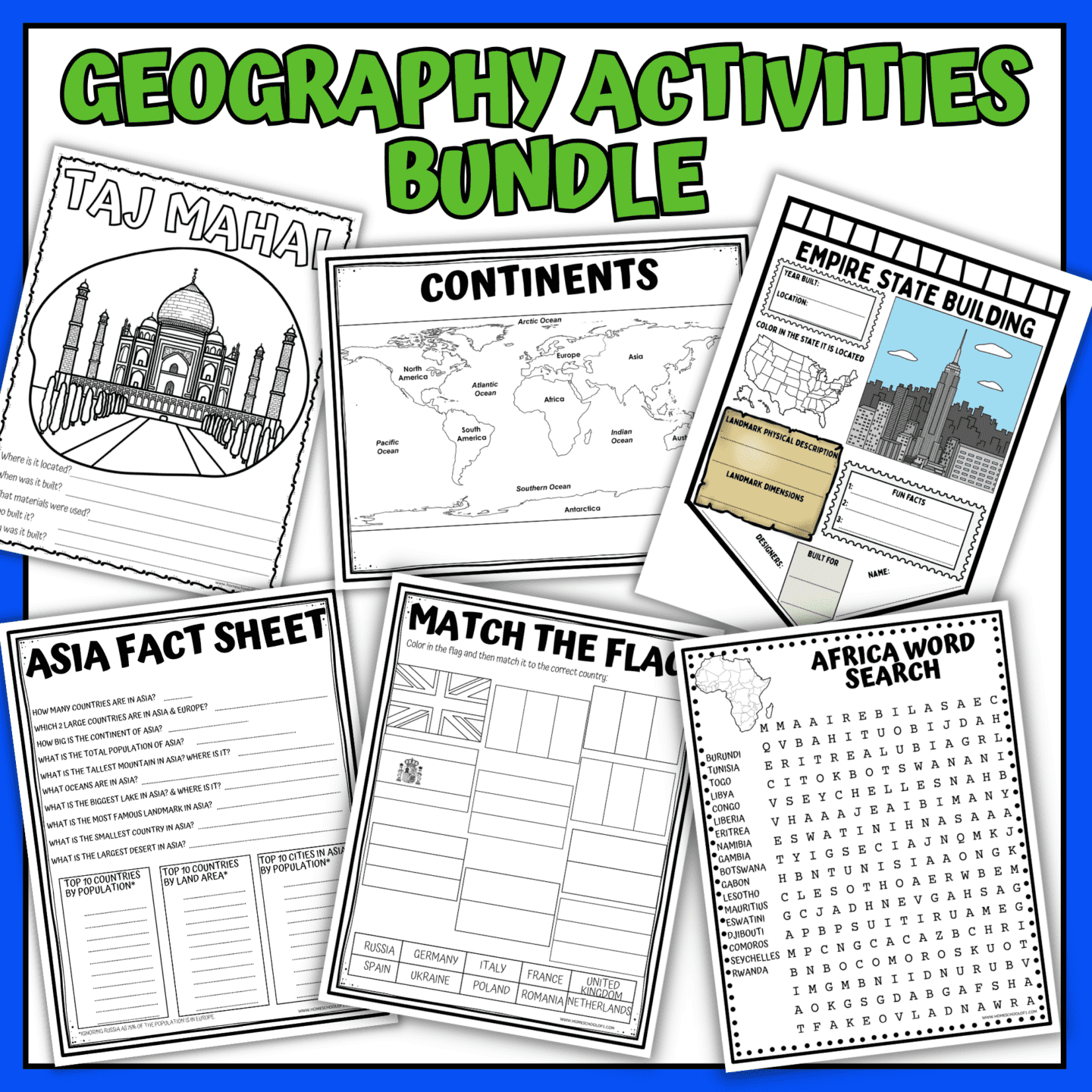
Explore the World with the Complete Geography Bundle
Get everything in one place with 274 printable geography activities designed for homeschool and classroom use. Print only the pages you need, whenever you need them.
Let’s Go Geography
We used Let’s Go Geography during the elementary years, and it worked well for keeping lessons short and interesting. Each week focused on a new country, which kept things fresh and gave us something new to look forward to.
Between the maps, flags, short videos, songs, and simple projects, it didn’t feel like another workbook subject. It was easy to use with different ages too, which helped on busy homeschool days.
The free sample lesson is a good way to see if the style fits your child before committing.
Memoria Press
Memoria Press was a better fit for us once geography became more detailed and connected to history. The lessons are more traditional and structured, with a strong focus on specific regions like the Middle East, North Africa, and Europe.
It worked well when my son was ready for deeper reading, map work, and understanding how geography connects to historical events. If you like a classical, textbook-style approach, this one feels very thorough.
Schoolhouse Teacher’s
Schoolhouse Teacher’s was useful when we wanted flexibility. Instead of committing to one set program, we could pick geography courses that fit where my son was at and switch things up when needed.
Since the subscription includes other subjects too, it worked well during seasons when we wanted to simplify planning and keep everything in one place.
Guest Hollow
Guest Hollow felt very different from traditional geography programs in a good way. It connects geography with world cultures, current events, and history using books, videos, and hands-on projects.
This was one of the programs that finally helped geography feel “real” instead of just another subject. It worked especially well for deeper discussions and independent learning as my son got older.
If you’re looking for full-subject programs too, I’ve put together a guide of our favorite secular homeschooling programs we’ve used across the years.
Bonus Tool for U.S. Geography – One fun way we made map work less repetitive was using a random city generator. We’d spin for a surprise city, find it on the map, figure out the state, and sometimes look up a landmark or fun fact about the area.
Geography Unit Studies
Unit studies were one of the best ways we found to make geography stick. Instead of moving from one worksheet to the next, we could spend longer on interesting topics and connect map work with reading, research, history, and hands-on activities.
They were especially useful when my son needed more variety, and made geography feel like something we were exploring rather than another subject to work through.
50 States Unit Study
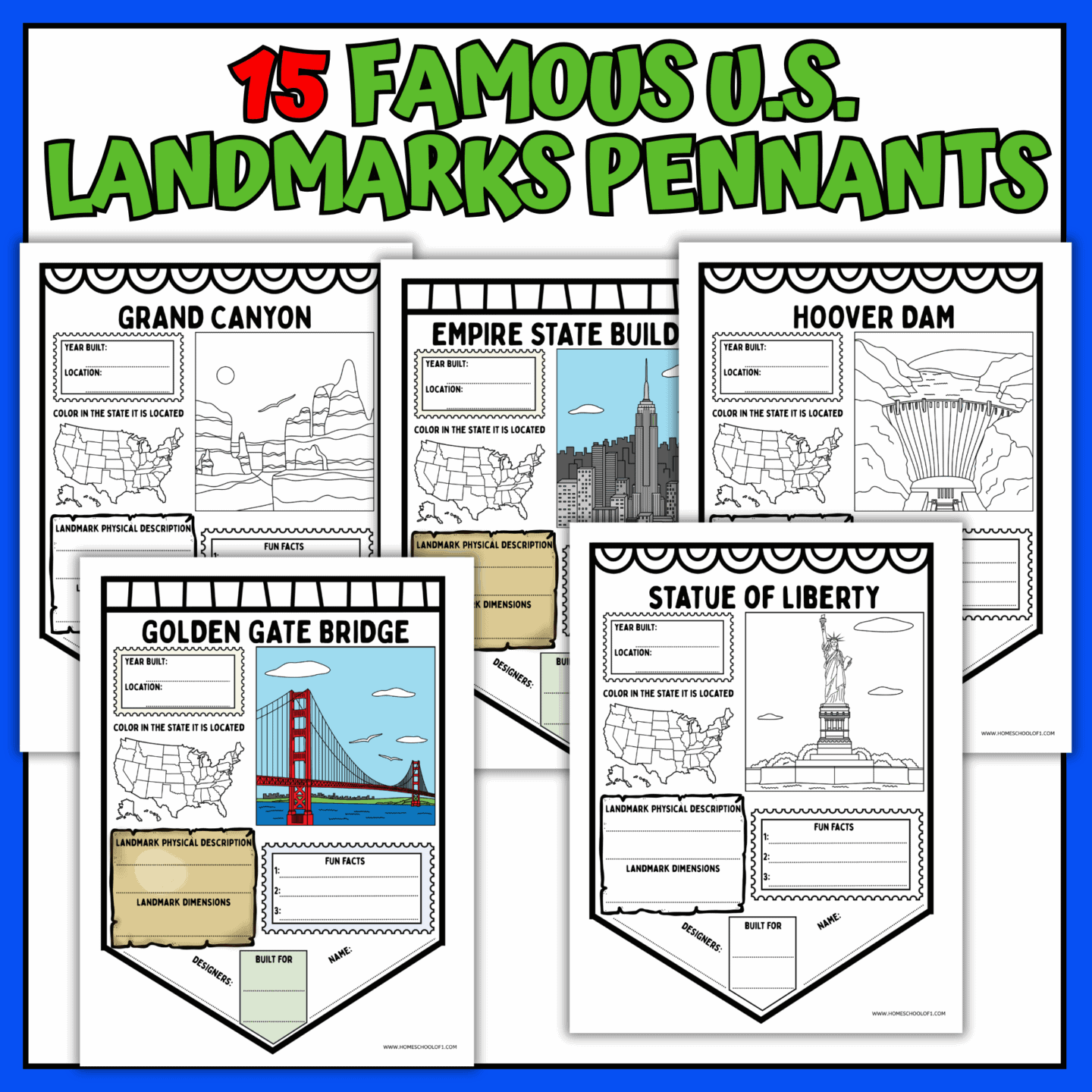
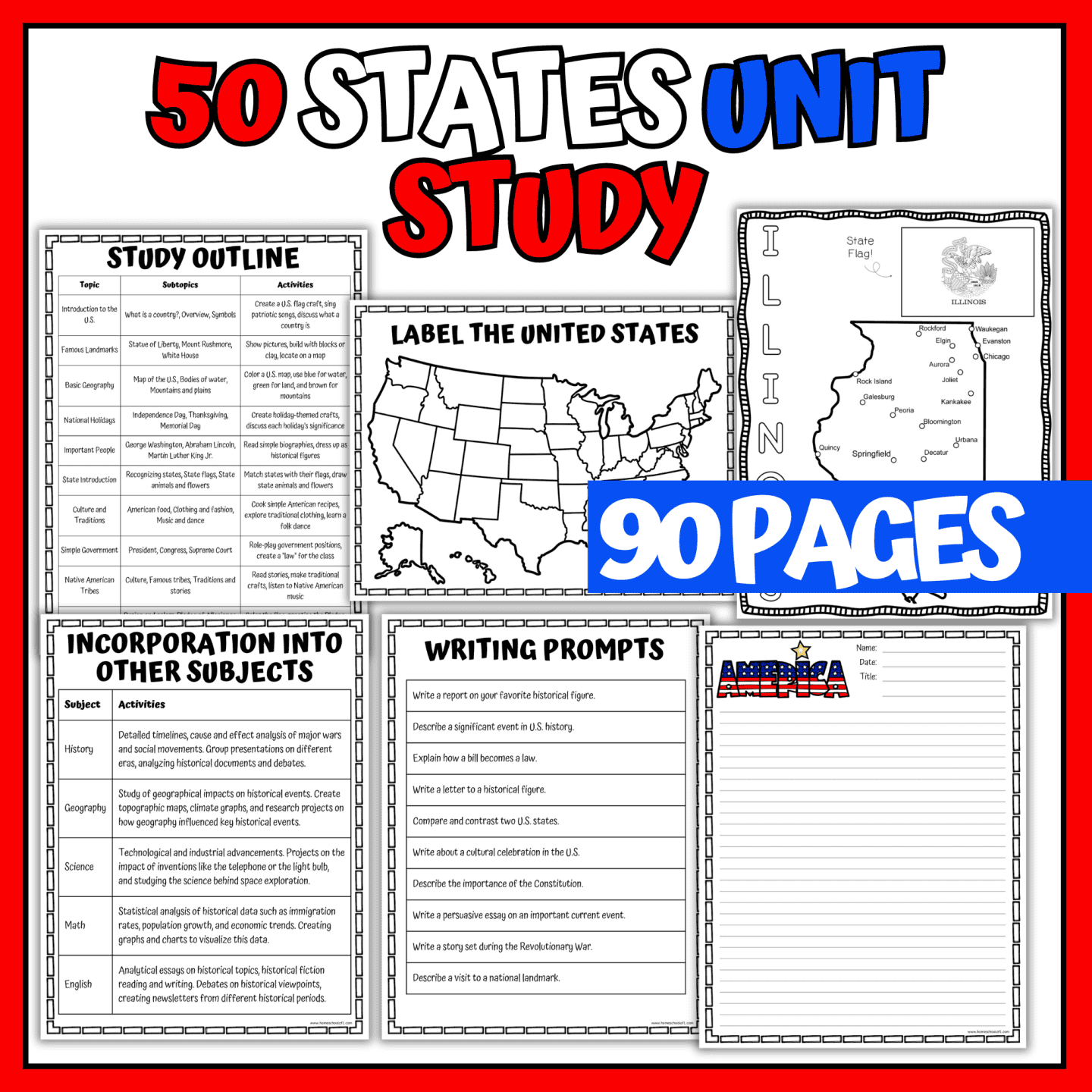
The 50 states unit study was one of our favorites for U.S. geography. We used it over multiple years and adjusted it depending on age.
When my son was younger, it was mostly map labeling, state symbols, and simple facts. As he got older, we added in state history, landmarks, and regional differences. It grew with him instead of feeling like something we outgrew after one year.
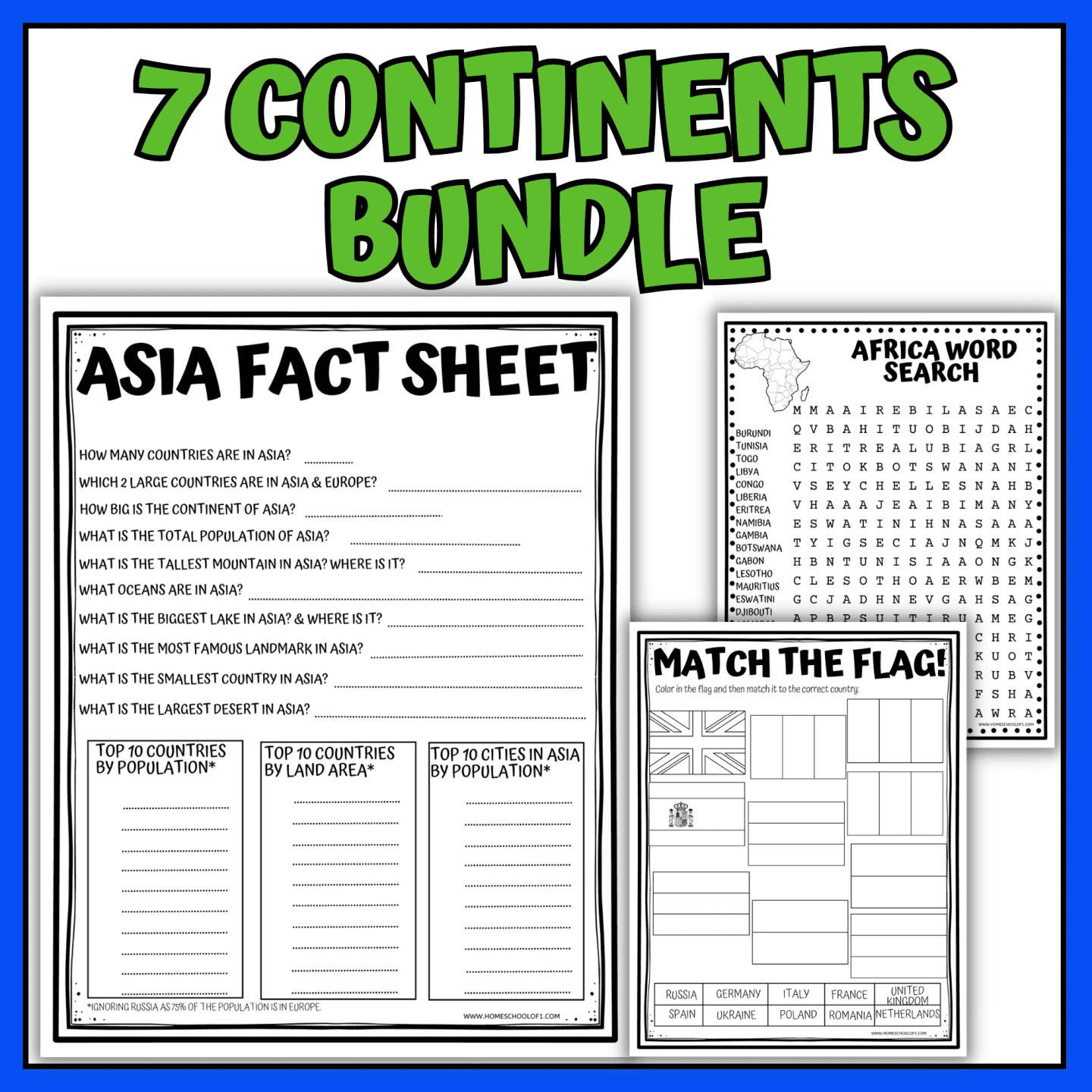
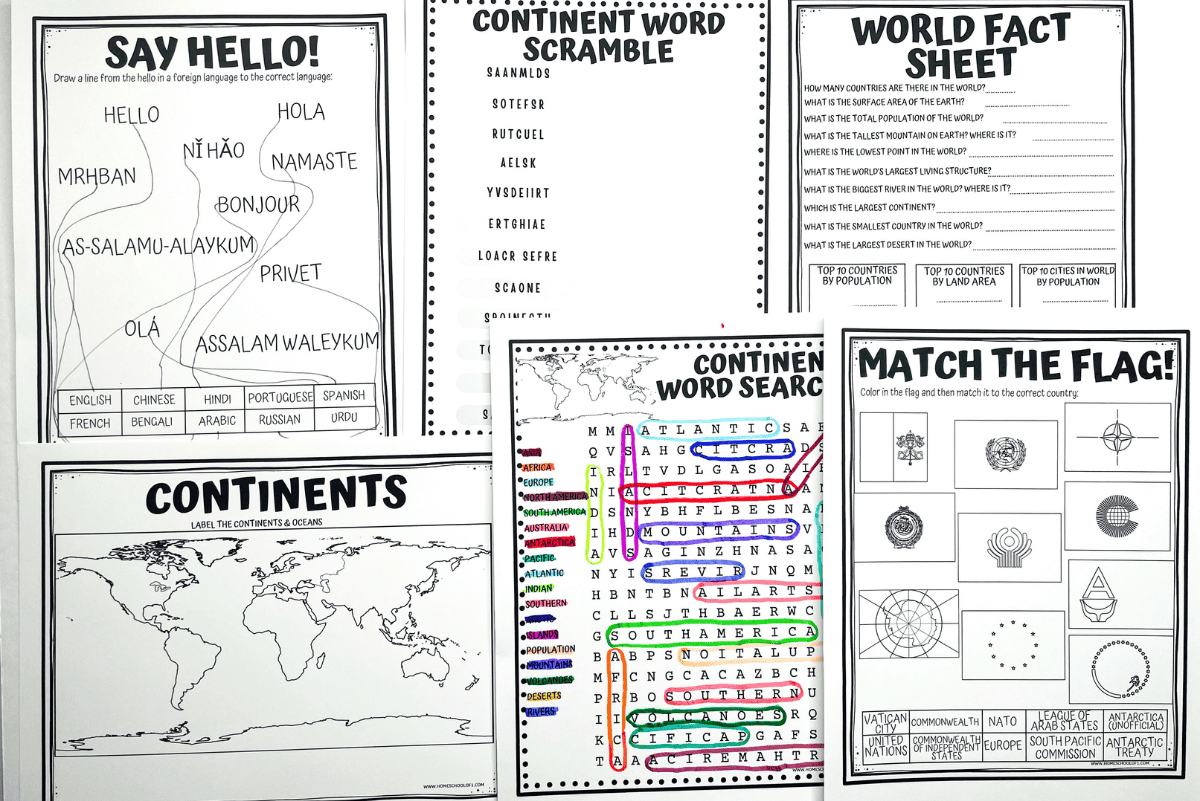
Continent Worksheets Bundle
These continent-focused unit studies worked well when we were focusing on world geography and wanted something structured but not overwhelming.
We’d use the maps, learn about major landmarks and animals, and talk about what daily life might look like on each continent. It was an easy way to cover a lot without turning it into busywork.
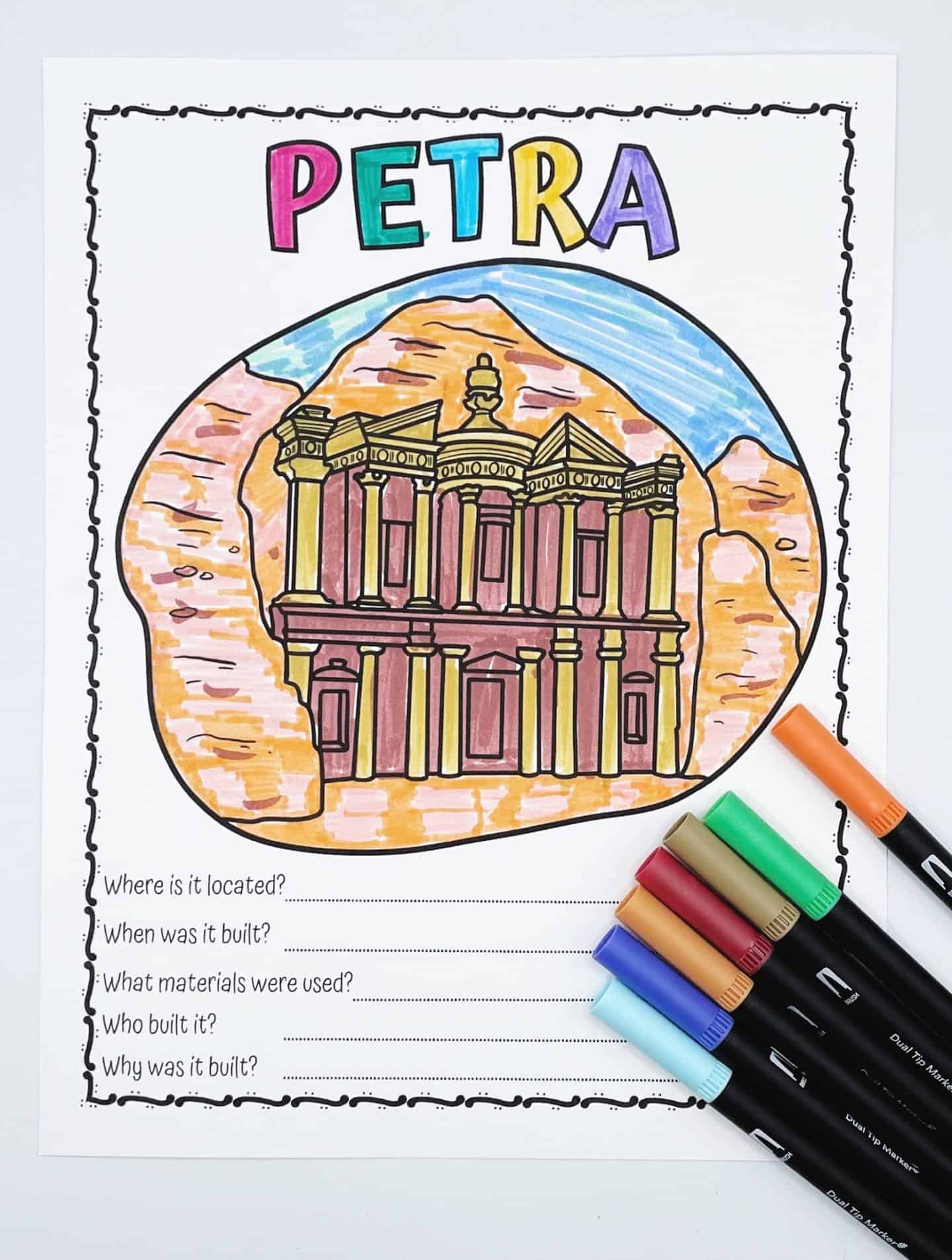
Wonders of the World Unit Study
This ancient and modern wonders worksheets was great for mixing geography with history. Instead of just learning where places were, we talked about why they mattered.
Looking at landmarks like the Great Wall or Machu Picchu naturally led into conversations about ancient civilizations, travel, and how geography shaped those societies. It made everything feel connected instead of separate subjects.
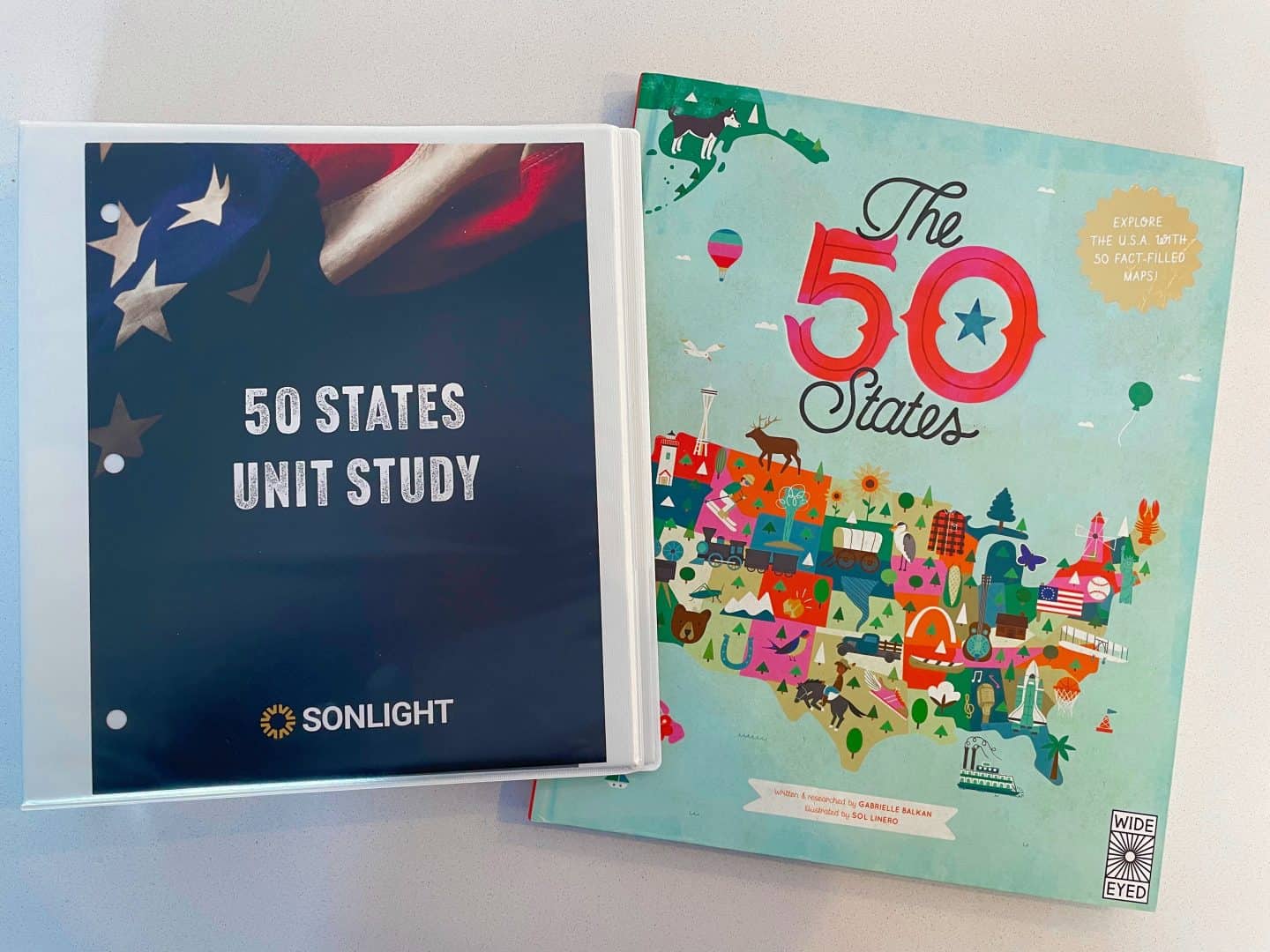
The 50 States Unit Study (Sonlight)
Sonlight’s approach worked well when we wanted more depth and storytelling mixed into geography.
It helped with memorizing states, but also went further into history and interesting details about each region, which kept lessons from feeling repetitive.
Geography Workbooks That Worked for Us
Homeschool workbooks were useful when we wanted extra geography practice without planning a full lesson. We used them alongside our main curriculum for map skills, review, or lighter days when we still wanted something structured.
These are the geography workbooks we actually used and found most helpful at different ages.
180 Days of Social Studies – This was great in the elementary years as a homeschool social studies curriculum when short, daily practice worked best. The lessons are quick, so it was easy to fit in map skills and basic geography without it feeling overwhelming.
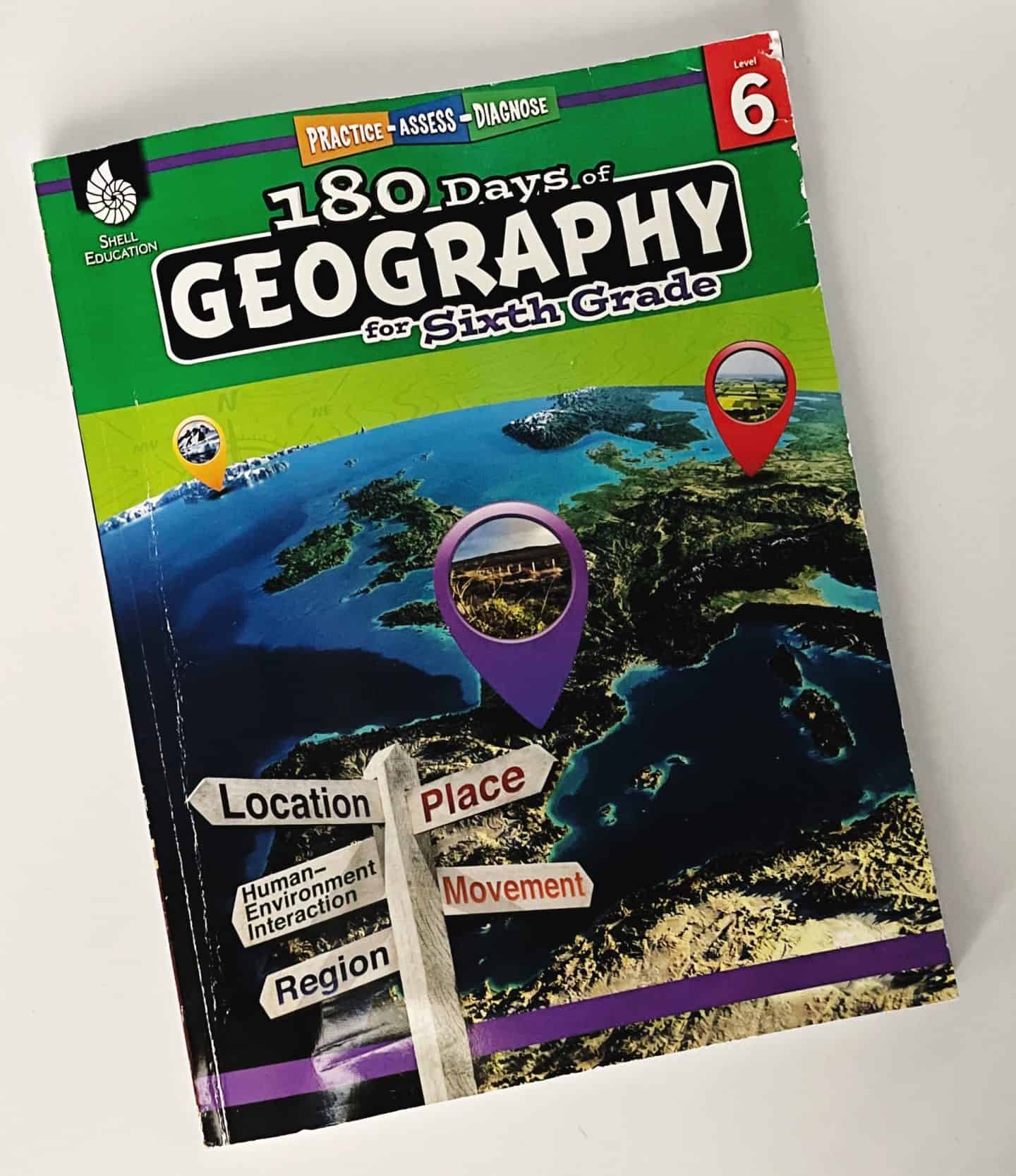
Spectrum World Geography – We used this around middle school when geography started connecting more with current events and world history. It helped my son think about how geography affects people and societies instead of just locations on a map.
Daily Geography Practice: Grade 6 – This one worked well as a quick warm-up. We’d spend a few minutes a day on maps or regions, which helped keep skills fresh without turning geography into a long lesson.
Mark Twain Geography Workbook – We pulled this out when we wanted to go deeper into physical geography and global regions. It was especially helpful for topics like climate, borders, and how different parts of the world are connected.
Geography Through Art – This was a fun change of pace. Mapping and drawing while learning about countries and cultures worked really well on days when sitting with a traditional workbook wasn’t happening.
KS3 Geography Workbook – We used this more in the later years when my son was ready for more detailed topics and review-style practice. It was good for reinforcing physical and human geography in a straightforward way.
Geography Books We Kept Reaching For
We always kept a few geography reference books nearby, even when we were using a full curriculum. They were useful for quick look-ups, following interesting rabbit holes, and exploring countries, cultures, and physical geography beyond the lesson.
These are the books we reached for most often over the years.
The 50 States – This was a favorite during our U.S. geography phase. We’d flip through it while working on state studies, looking up landmarks, fun facts, and little details that made each state feel different instead of just another shape on a map.
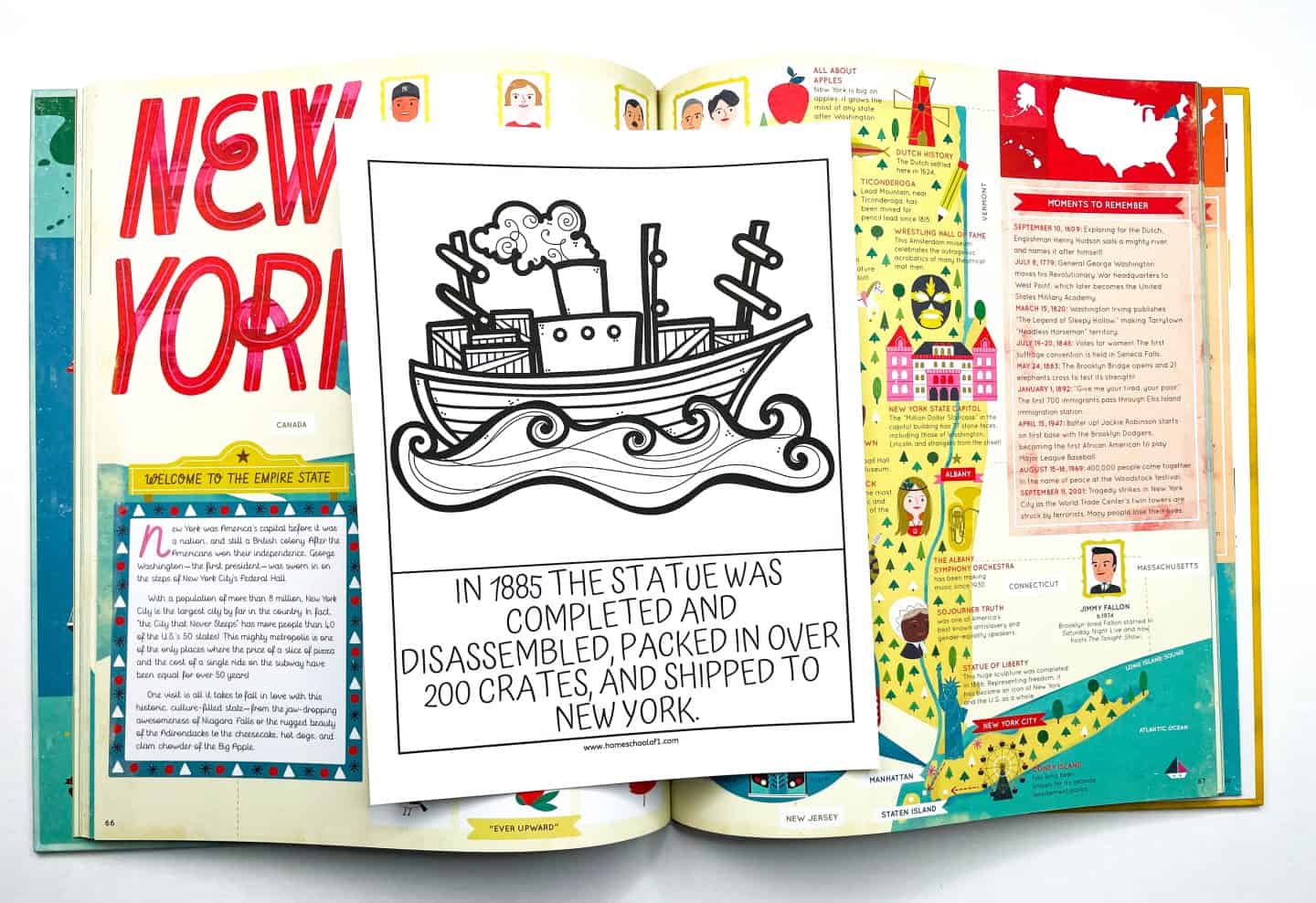
Usborne Geography Encyclopedia – This one stayed on our shelf for years. The maps and photos made it easy to jump into topics like continents, climate, and world regions whenever curiosity hit. It was especially useful when we wanted quick explanations without pulling out a full lesson.
Smithsonian Geography – A Visual Encyclopedia – We used this a lot when talking about physical geography, things like ecosystems, weather, oceans, and how the Earth works. The visuals made big concepts much easier to understand and sparked a lot of side conversations.
Geography of the World – This was great for comparing countries. We’d look up population, languages, culture, and basic facts when studying a new place, which helped put everything into context.
Geography Activities That Helped It Stick
Geography wasn’t something we only learned from books. Games, quick activities, and virtual trips often helped reinforce what we were learning, especially when we needed a break from worksheets.
Sometimes we’d spend 20 minutes playing a geography game; other times we’d follow a rabbit hole on the map. We also used our random country selector to choose a country, find it on the map, and see where the lesson took us.
Geography Games
Geography board games were one of the easiest ways to keep geography fun without feeling like schoolwork.
- Trekking the National Parks: This one tied geography to real places in the U.S. and naturally led to talking about regions, landmarks, and where different parks were located.
- Ticket to Ride: We used this a lot for learning cities and routes across the U.S. and Europe. It didn’t feel like a geography lesson at all, but the locations started sticking.
- Who Knows Where: Great for quick rounds of finding countries and continents on the map. It worked especially well as a warm-up activity.
- The World Game: This helped with countries, capitals, and flags and added a bit of friendly competition.
- 100 Pics Flags of the World: Simple but surprisingly helpful for recognizing flags and remembering which countries they belonged to.
- We also played geography scattergories with categories like countries, landmarks, and capitals, a fun way to review without worksheets.
Explore the World Subscription Box
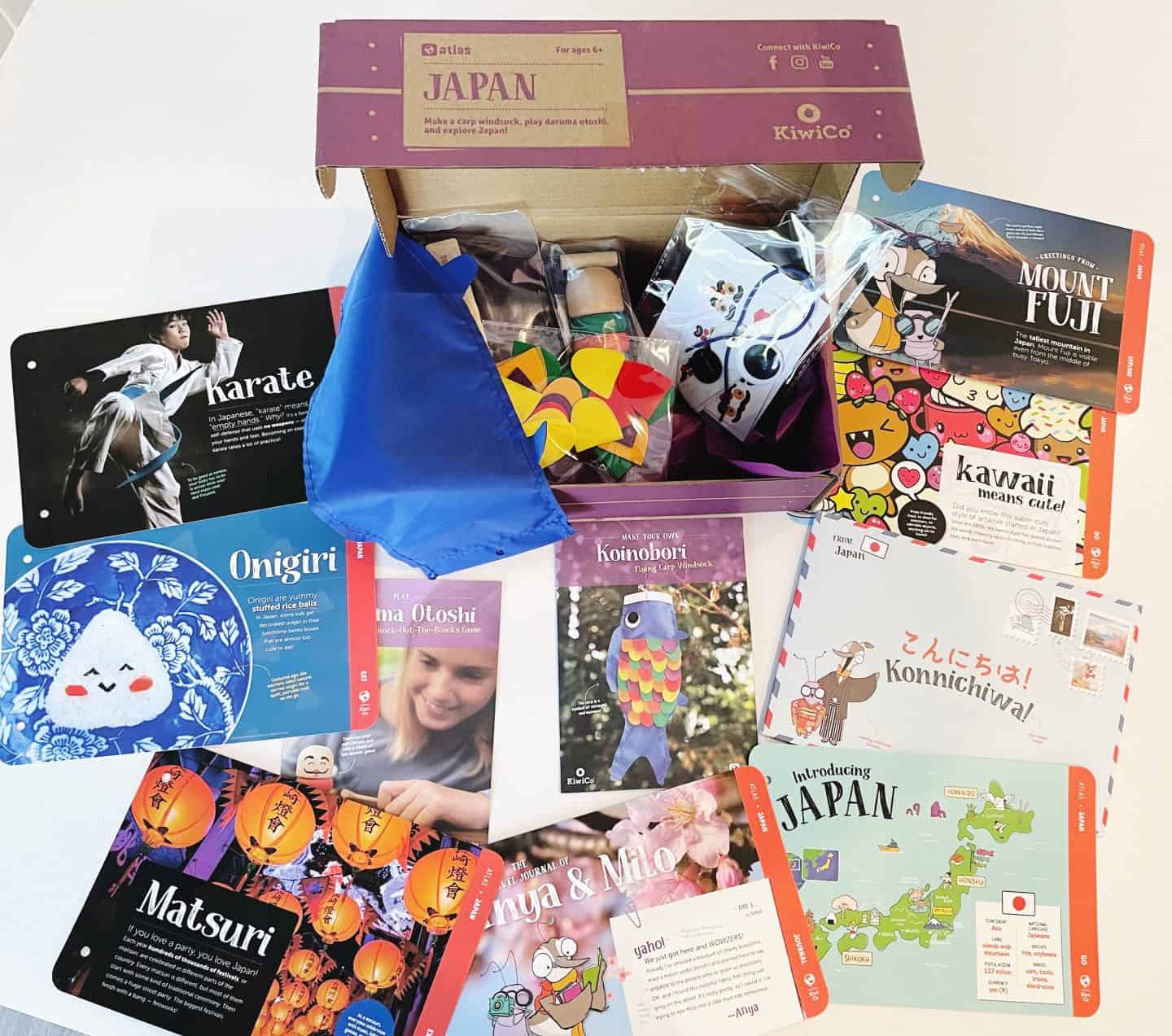
We tried the KiwiCo when we wanted something hands-on without planning a full unit. Each box focused on a different place or culture and included activities that tied into geography naturally.
It worked well as a supplement alongside our regular lessons, especially during lighter weeks.
Free Homeschool Geography Curriculum
We didn’t always need a paid geography curriculum. Free programs, worksheets, and videos worked well when we wanted extra practice, a lighter schedule, or resources to supplement what we were already using.
These are the free homeschooling options we found most useful.
- Easy Peasy All In One Homeschool – This worked well when we wanted something structured without paying for another program. The geography lessons were simple to follow and easy to plug into our routine.
- BBC Bitesize Geography – We used this a lot for short lessons and review. The videos and activities were especially helpful when introducing a new topic or when attention was low.
Free Geography Worksheets
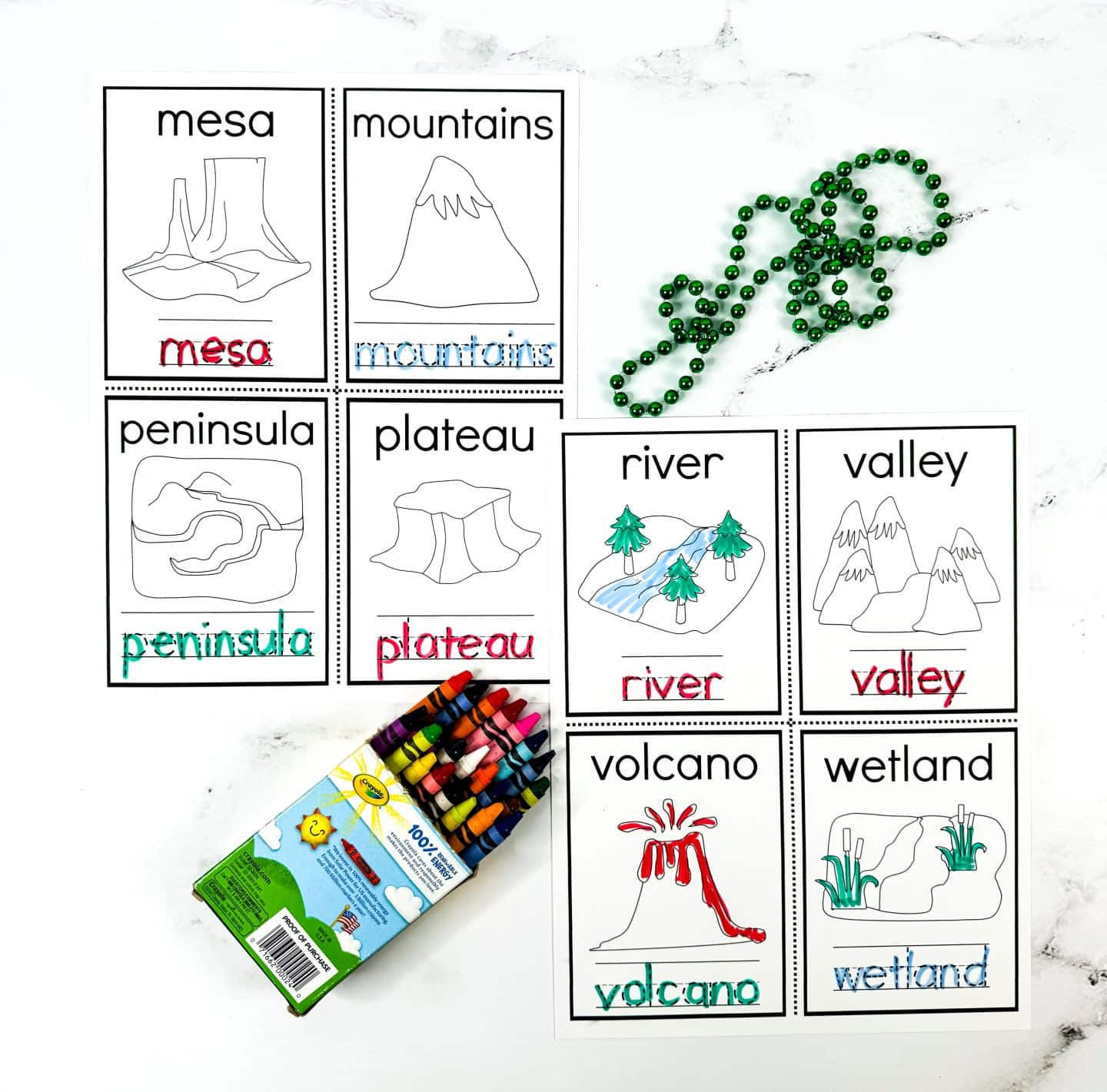
Homeschool geography worksheets were great for quick map work, practice days, and review.
We used them for things like continents, landmarks, landforms, and U.S. geography when we wanted something hands-on but simple. They worked well alongside our main curriculum or on lighter homeschool days.
Geography YouTube Channels
Videos were an easy way to bring geography to life without opening a textbook.
- National Geographic Kids – Great for learning about environments, animals, and different parts of the world.
- Snake Discovery – We watched this when talking about habitats and ecosystems, especially anything involving reptiles.
- Brave Wilderness – This one led to a lot of conversations about where different animals live and why.
- Wild Kratts – A favorite in the earlier years for connecting animals with geography in a fun way.
- Learn the States of America Song – Helpful for memorizing the states when we were in that phase.
- Nations of the World Song – A fun way to introduce countries, especially for younger learners.
Do you have a favorite geography curriculum or activity? Share your recommendations in the comments!
Last Updated on 3 September 2026 by Clare Brown
