Homeschool Curriculum Finder (Find What Actually Works)

A homeschool curriculum finder can save hours of trying to compare programs that all seem to promise the same thing.
I know because I’ve done it, jumping between reviews, trying to compare options, and still not feeling sure I’d chosen the right one.
After years of homeschooling (and changing things when they didn’t work), I’ve learned that there isn’t one “best” curriculum. It just needs to fit your child and your day.
If you’re completely new to this, my how to start homeschooling guide covers what to sort out first, from state laws and withdrawing from school to records and planning your first few weeks.
Once you’re ready to choose curriculum, you can quickly filter by subject, grade, and learning style to narrow things down and find something that actually works.
Homeschool Curriculum Finder
Find homeschool curriculum by subject, grade, style, and provider
Use the filters below to narrow down homeschool curriculum providers by subject, age range, worldview, format, budget, and learning needs.
**This post may contain affiliate links. As an Amazon Associate and a participant in other affiliate programs, I earn a commission on qualifying purchases.**
How to Find the Right Homeschool Curriculum for Your Child
Before using the homeschool curriculum finder above, it helps to know what you’re actually looking for.
Start with how your child learns. This was the biggest shift for us, once I stopped trying to make one style fit everything, things got much easier.
Next, think about independence. If they can work alone, online programs are often easier. If not, you’ll want something more guided.
Finally, be realistic about your time. Some curriculum needs prep, others are open-and-go.
Once you’ve got those basics clear, you can use the filters in the tool to quickly narrow things down and find something that actually fits.
Use the Homeschool Resource Finder to Narrow Your Options
Once you’ve got a rough idea of what you need, the next step is narrowing things down. Trying to compare everything at once is where it quickly becomes overwhelming.
That’s exactly where this curriculum finder tool helps. Instead of jumping between reviews, you can filter by subject, grade, and learning style to quickly get a shortlist that actually makes sense.
It’s especially useful if you don’t want to rely on one program for everything. You can mix and match, like choosing an online math program, something more hands-on for science, and a flexible option for language arts.
I also tend to use this kind of curriculum search tool when something isn’t working mid-year. It makes it much easier to find alternatives without starting from scratch.
Start with one filter (usually subject or grade), then refine from there. You don’t need to fill everything in, just enough to point you in the right direction.
What to Look for Before Choosing a Homeschool Curriculum
Once you’ve narrowed your options, it’s worth taking a closer look before committing. A program can look great on the surface but feel very different once you actually use it.
Start with a sample or free trial if there is one. It’s the quickest way to see how lessons are laid out and whether it feels clear or overwhelming for your child.
Then check the daily workload. Some programs seem manageable until you realise how long each lesson takes. Make sure it fits your day, especially if you’re teaching more than one subject or child.
It’s also important to think about how much teaching is expected from you. Some homeschool programs are very parent-led, while others are more independent. Choosing the right fit here makes a big difference.
I also pay attention to how engaging it is. If my son switches off, I know it’s not going to last, no matter how good it looks.
And honestly, don’t stress about getting it perfect. Most of us tweak things as we go. The goal isn’t the best homeschool curriculum overall, just something that works for your child right now.
Different Types of Curriculum (and how to choose)
Understanding the different types of homeschool curriculum makes it much easier to narrow things down. Most programs fall into a few main categories, and once you know what suits your child, a lot of options can be ruled out quickly.
All-in-one programs are often the easiest place to start. They cover multiple subjects in one package and are usually laid out by grade. They save time, but can feel restrictive if one subject isn’t a good fit.
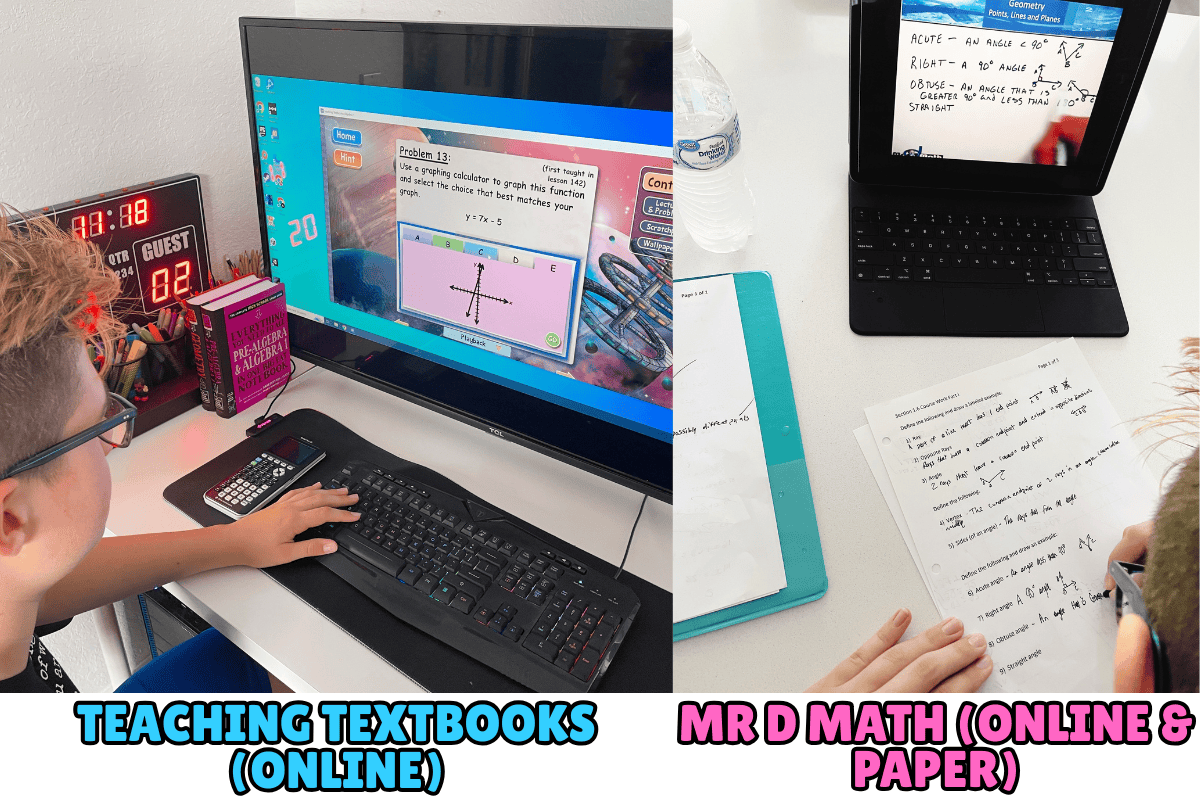
Online homeschool programs work well for more independent learners. They’re usually low prep with built-in lessons and grading, but they do mean more screen time.
Textbook-based curriculum is more structured and works well for subjects like math or science. It’s a good fit for kids who like routine, but not always for those who need something more interactive.
Hands-on programs are more engaging, especially for younger kids. They use activities, projects, and experiments, but they do take more time and involvement.
Literature-based options rely on books and discussion, particularly for history and language arts. These work well if your child enjoys reading.
Most families don’t stick to just one type. It’s much more common to mix things, like using an online math program, a hands-on science option, and something more flexible for language arts. That usually works better than trying to make one approach fit everything.
Finding Homeschool Curriculum by Subject and Grade
Most of my homeschool decisions end up coming down to two things: the subject and where my son is at right now. What worked for us in elementary didn’t always carry over into middle or high school.
I’ve found it much easier to choose one subject at a time rather than trying to make one program cover everything.
Math, for example, has always worked better for us with something structured and step-by-step. Science has been a lot more flexible, sometimes hands-on, sometimes book-based depending on what’s actually holding his interest. History and social studies have often ended up as reading and discussion rather than a strict curriculum.
If you’re not sure where to start, it’s usually easier to break it down by subject and build from there. That’s what made the biggest difference for us, being able to mix and match instead of trying to force one program to fit everything.
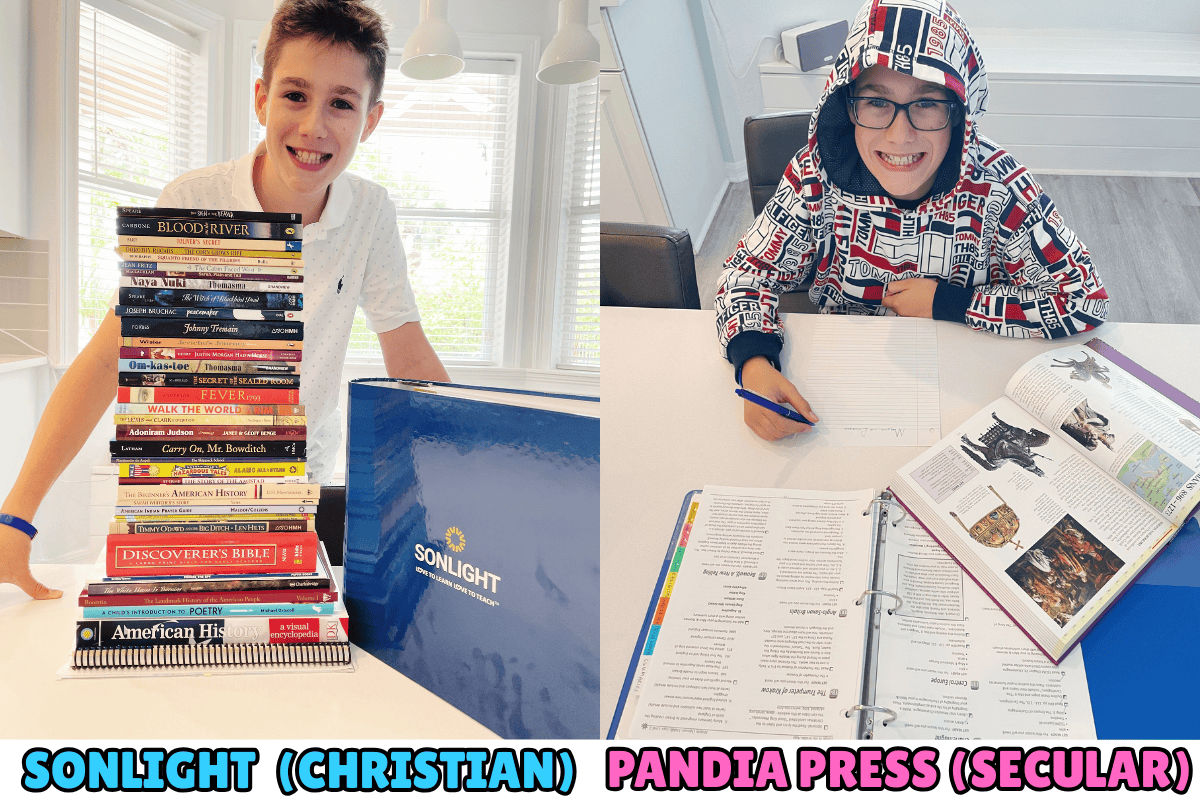
Secular vs Christian Homeschooling Curriculum
One of the first choices you’ll probably make is whether to go with a secular or Christian homeschool curriculum, as it changes how subjects are taught and the overall perspective.
We’ve always leaned towards secular curriculum. For me, it just makes more sense to keep subjects like science and history separate from religion. That said, I know plenty of families who prefer a faith-based approach for exactly the opposite reason.
Secular programs focus purely on academics, while Christian curriculum weaves faith throughout the lessons, so you’re getting that biblical perspective alongside the subject.
In reality, most families don’t stick strictly to one or the other. It’s very common to mix things, like using a secular science program alongside a Christian language arts curriculum.
It really just comes down to what fits your family and how you want your days to look.
How to Test a Curriculum for Homeschooling Before Buying
Before committing to any homeschool curriculum, it’s worth seeing how it actually works in real life. What looks great on a sales page doesn’t always work day to day.
I always start with a free sample or trial if there is one. It’s the quickest way to see how lessons are laid out and whether it feels clear or overwhelming.
If you can, try a full lesson with your child. You’ll quickly see how long it takes, how much help they need, and whether they stay engaged. That tells you far more than reviews.
It’s also worth checking how much teaching is expected from you. Some programs are very parent-led, while others are more independent. Getting that wrong can make things harder than they need to be.
I also like to look at the scope and sequence, especially if you’re switching programs. It helps you spot gaps or repetition early.
And honestly, expect to tweak things. I’ve never stuck with something exactly as planned. The goal isn’t perfect, just something that works well enough to keep things moving.
Common Mistakes When Choosing What to Use
It’s very easy to overthink this, especially at the start. I definitely did, trying to find the “perfect” curriculum straight away.
One of the biggest mistakes is choosing something just because it’s popular. What works for someone else doesn’t always work for your child.
Another is trying to use one program for everything. I’ve found it works much better to mix things, we’ve never stuck to just one program for everything.
It’s also easy to underestimate the time involved. Some curriculum looks simple until you actually start using it. Being realistic about your day makes a big difference.
Switching too quickly can be just as frustrating. Some things take a little time to settle, but if something clearly isn’t working, it’s okay to change it.
And don’t ignore your child’s reaction. That’s usually the biggest clue. The best option isn’t the most recommended one, it’s the one that actually works for your child day to day.
