
Secular Homeschool Math Curriculum

Choosing a secular homeschool math curriculum has been one of the trickier parts of homeschooling for us. Math is probably the subject we’ve changed most often, especially as my son moved from elementary into middle and high school.
We’ve tried everything from traditional workbooks and hands-on programs to live and self-paced online courses. Some were a great fit for a few years, while others were quickly replaced. These are the math programs we’ve actually used, what worked (and what didn’t), and who I think each one suits best.
**This post may contain affiliate links. As an Amazon Associate and a participant in other affiliate programs, I earn a commission on qualifying purchases.**
Secular Homeschool Math Curriculum at a Glance
| Curriculum | Grades | Format | Approach | Best for |
|---|---|---|---|---|
| Mr. D Math | 6–12 | Online | Instructor-led | Middle & high school |
| Teaching Textbooks | 3–12 | Online | Spiral | Independent learners |
| Beast Academy | 1–5 | Books/online | Mastery | Advanced learners |
| Saxon Math | K–12 | Books | Spiral | Repetition & review |
| Singapore Math | K–8 | Books | Mastery | Conceptual learners |
| Math Mammoth | 1–8 | Books/PDF | Mastery | Independent learning |
| CTCMath | K–12 | Online | Spiral | Short, flexible lessons |
| Math-U-See | K–12 | Books/video | Mastery | Visual, hands-on learners |
What Makes a Math Curriculum Secular?
A secular math curriculum teaches math without religious instruction or faith-based content woven into the lessons. This is different from some faith-neutral programs, where the math itself may not include religious teaching but the curriculum is produced by a religious publisher.
For this list, I’ve focused on programs where the math instruction itself is secular. That distinction is worth checking when comparing curricula, as publishers can approach it differently.
How to Choose a Secular Math Curriculum
The right math curriculum depends on how your child learns and how much teaching you want to do yourself. Before choosing, I’d consider three things: the teaching approach, the format, and how independently your child can work.
Spiral vs. Mastery
Spiral programs revisit concepts throughout the year, which can be helpful for kids who need repetition. Mastery programs spend longer on one topic before moving on, which can suit kids who prefer to fully understand a concept first.
Online vs. Workbook
Online programs such as Teaching Textbooks, CTCMath, and Mr. D Math can reduce how much direct teaching you need to do. Traditional books and workbooks are useful for kids who prefer working on paper or need less screen time.
Independent vs. Parent-Led
As my son got older, independent learning became much more important to us. Younger children or those who need more support may do better with a program that allows a parent to be more involved.
Our Favorite Secular Math Curriculum
Over the years, we’ve used a wide range of non religious homeschool curriculum, some worked well for a season, others stuck with us long-term.
The list below includes the ones that stood out the most for us, depending on learning style, flexibility, and overall fit.
Mr. D Math
Mr. D Math has completely changed how my son approaches geometry. It took a subject that was feeling overwhelming and turned it into something he now feels confident about.
We started with the live classes but found the self-paced option fit our schedule better, and it still keeps him engaged. What I appreciate most is how clearly tough concepts are explained. It doesn’t feel watered down, just more approachable.
We plan to stick with Mr. D Math through high school, and we’ve also added their economics and ASL courses to round out our curriculum.
Teaching Textbooks
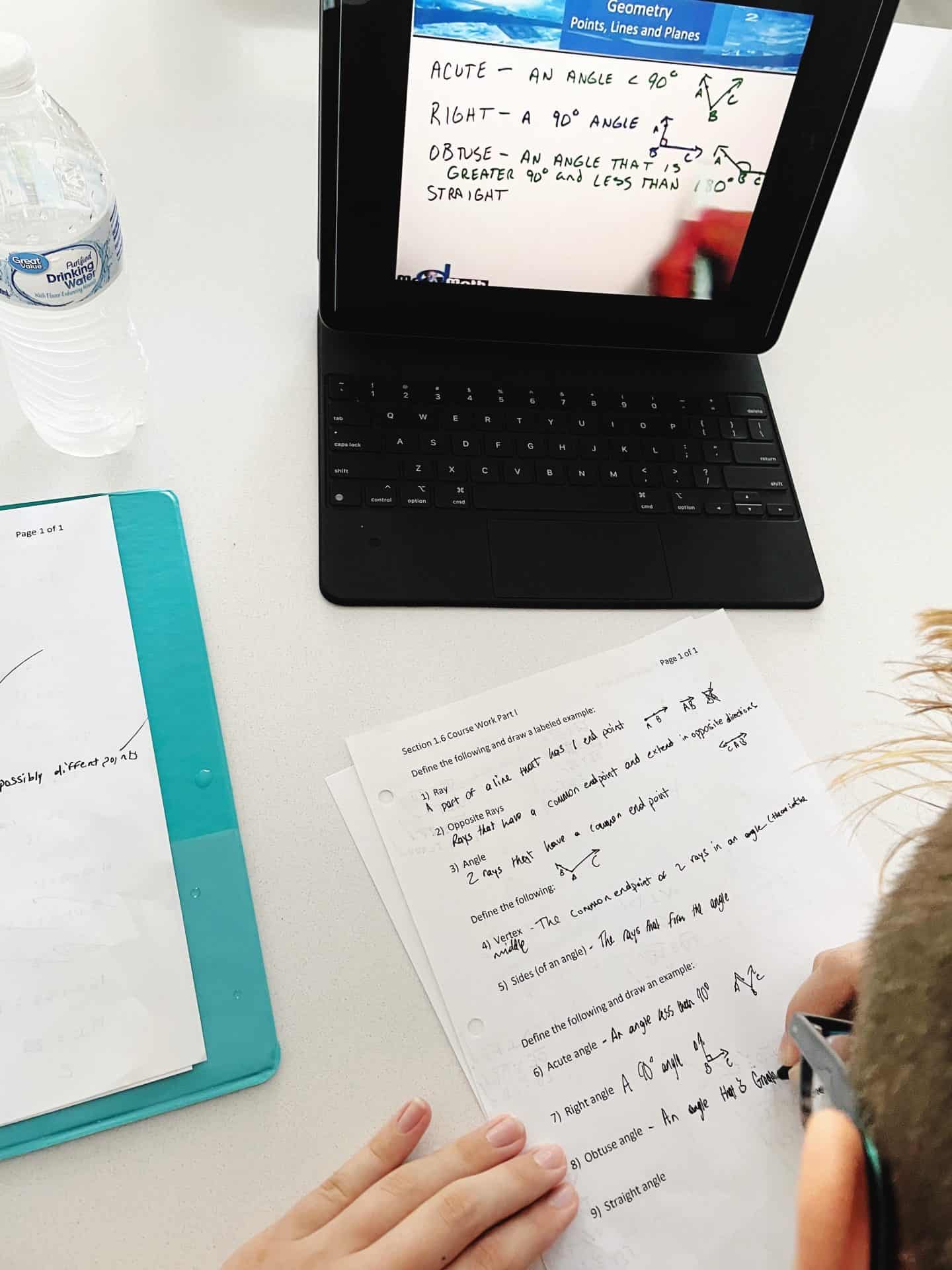
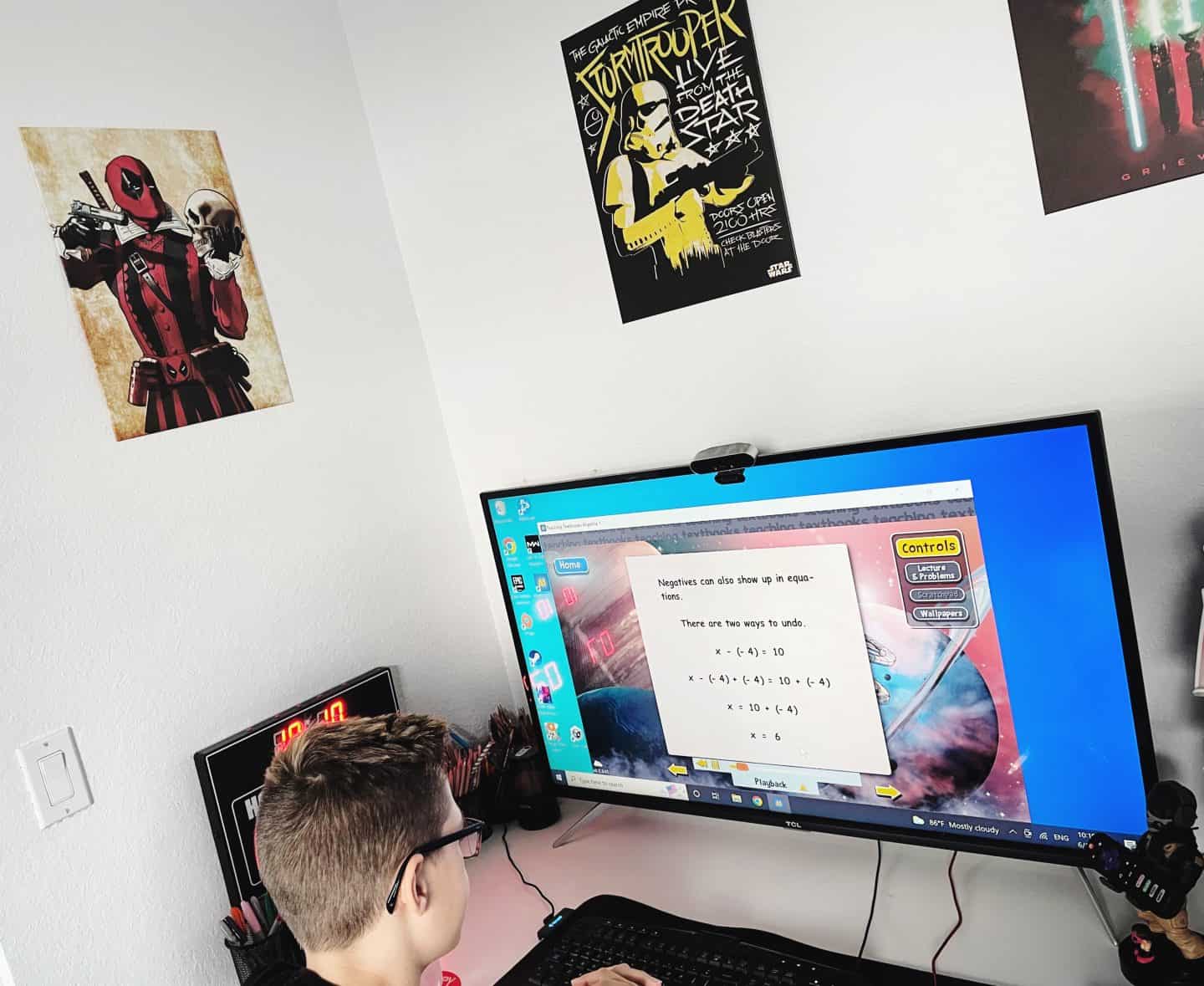
We started using Teaching Textbooks when algebra entered the picture and math suddenly felt more intense. Having the lessons explained on screen first made a big difference, especially on days when I wasn’t confident teaching the topic myself.
We originally used it fully online, but my son ended up learning better once we printed the problems and worked them out by hand before entering answers. That small change helped slow things down and improved accuracy almost right away.
What worked well for us was the built-in pacing. If something was easy, he moved on quickly. If not, he had time to practice without pressure. It kept algebra from turning into a daily battle.
There’s a short free trial, which is how we tested it before committing.
For more details, check out our in-depth Teaching Textbooks Algebra 1 review.
Beast Academy
Beast Academy has been the most challenging math program we’ve used, and also one of the most rewarding. It’s designed for kids who love a good puzzle, and my son has really thrived with it.
We chose the workbooks over the online version since we already had a lot of screen-based learning. The comic book style makes the material feel less intimidating, even when the problems get tough.
Right now, he’s working through the 5th-grade level, though he could’ve moved on to pre-algebra. I wanted him to slow down and enjoy it. If your child finds math tricky, I’d start a level or two below grade to build confidence.

IXL
IXL has been a reliable tool for us, especially during the earlier years of homeschooling. It’s not a full curriculum, but the skill-by-skill breakdown and real-time diagnostics make it a great supplement.
What I like most is how it pinpoints exactly where my son needs more practice, and where he’s already solid. That kind of targeted feedback saved us time and frustration.
We’ve also used the IXL workbooks alongside the online program for extra reinforcement. If you’re looking to fill gaps or strengthen specific areas, IXL is a flexible, easy-to-use option.
They offer a 20% discount through homeschool accounts, which is worth checking out. You can also read our full IXL review for more reasons to give it a try.
Saxon Math
We turned to Saxon Math during a phase when my son needed more structure and a lot of review. New concepts were introduced slowly, then kept coming back again and again, which helped them actually stick.
Some days it felt repetitive, but that repetition is what stopped him from forgetting material as quickly as he had with other programs. It worked especially well when math had started slipping and we needed to rebuild consistency.
It isn’t exciting or screen-based, but it did its job. Over time, lessons felt easier, and fewer concepts had to be re-taught.
We also used the fact cards for quick warm-ups, which were useful when we only had a short window to practice.
Keep math exciting with our favorite middle school math board games, perfect for making learning fun while reinforcing key concepts!
Singapore Math
Singapore Math gave us a fresh way to look at problem solving. It focuses more on how to think about math than just getting the right answer, which worked really well for my son once he moved past the basics.
The visual models, especially the bar diagrams, helped him break down word problems and understand relationships between numbers. It’s definitely different from most U.S. programs, but in a good way.
If your child is more conceptual or gets stuck memorizing steps without understanding why they work, Singapore Math is worth considering. It’s helped us slow down and really focus on thinking through problems.
Math U See
Math U See worked well for us when written explanations weren’t enough on their own. My son understood concepts much faster once he could move the blocks around and actually see what the numbers were doing.
Lessons moved at a slower pace than some other programs we tried, which helped when a topic needed more time to sink in. Instead of rushing ahead, we stayed on one skill until it felt comfortable.
Even when we were using a different main curriculum, this was the program we pulled out whenever something wasn’t clicking. It made hard topics easier to break down and revisit without frustration.
Need a little extra math support?
These homeschool math books helped us review tricky concepts and build confidence between lessons.
CTC Math
CTCMath has been one of the most flexible programs we’ve used. The short, clear video lessons make it easy to follow, and the fact that my son can move at his own pace has been a huge plus.
The lessons don’t drag, the practice is straightforward, and the explanations actually make sense, especially for topics that felt overwhelming in other programs.
It’s also one of the most affordable options out there, especially with the homeschool family discount. If you’re unsure, the free trial is a great way to test it out before committing.
For a detailed look, check out our review of CTC Math.
Spectrum Math
We used Spectrum workbooks mostly when we wanted extra practice away from a screen. They were easy to pull out for short lessons or quick review days without needing to set anything up.
The pages are straightforward and don’t feel crowded, which helped my son focus on the problems instead of getting overwhelmed. We often used them alongside our main curriculum when a topic needed more repetition.
The homeschool workbooks were especially useful during lighter weeks or as a break from online programs, while still keeping math skills moving forward.
Math Mammoth
Math Mammoth has a great balance between structure and depth. It’s a mastery-based program, so each topic is explored thoroughly before moving on, which worked well for my son when he needed to slow down and really understand the “why” behind the math.
What makes it stand out is how clearly everything is explained, there’s no fluff, but it’s never dry either. Maria Miller, the creator, really understands how to teach math in a way that makes sense to both kids and parents.
We’ve found it especially helpful during transitions between grades or when we wanted a more independent approach to learning.
Khan Academy
Khan Academy has been a helpful (and completely free home education curriculum) addition to our homeschool lineup. We’ve never used it as a full curriculum, but it’s been great for review, extra practice, or filling in gaps.
The video lessons are clear and to the point, and the built-in progress tracking makes it easy to see where your child is thriving, or where they might need more time.
It’s also aligned with Common Core, which is helpful if you’re trying to make sure nothing gets missed. For a zero-cost resource, it’s hard to beat the flexibility and depth Khan Academy offers.
Last Updated on 4 September 2026 by Clare Brown
