Free Online Homeschool Programs

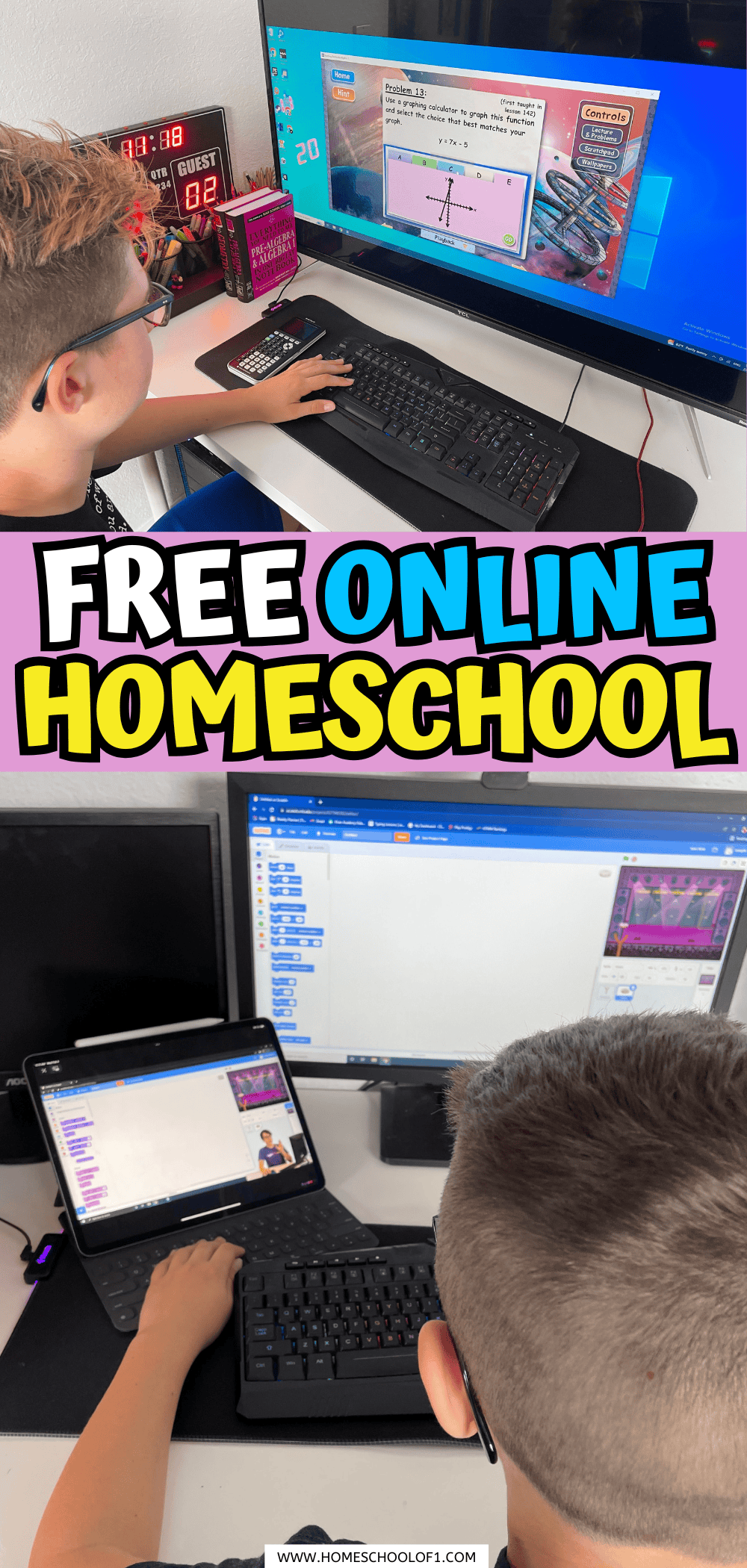
Finding a free online homeschool curriculum that actually works can take some trial and error. Over the years, we’ve used a number of free online homeschool programs for everything from math and reading to history, coding, and music.
Some can be used as a complete curriculum, while others are better for individual subjects or filling gaps. I’ve included the options we found most useful for different ages, along with what each one covers and who I think it works best for.
**This post may contain affiliate links. As an Amazon Associate and a participant in other affiliate programs, I earn a commission on qualifying purchases.**
Free Online Homeschool Programs at a Glance
The options below aren’t all the same type of program. Some can provide most or all of a homeschool curriculum, while others are better for individual subjects or extra practice.
I’ve compared them by grade level, what they’re best for, whether they can be used as a full curriculum, and whether they’re secular or faith-based.
| Program | Grades | Best For | Full Curriculum? | Secular or Faith-Based |
|---|---|---|---|---|
| Khan Academy | K–12 | Math, science & extra practice | No | Secular |
| Easy Peasy All-in-One Homeschool | K–12 | Complete, structured lessons | Yes | Faith-based |
| Ambleside Online | K–12 | Charlotte Mason & literature-based learning | Yes | Faith-based |
| Freedom Homeschooling | K–12 | Finding free curriculum by subject | No – curriculum directory | Both |
| Connections Academy | K–12 | Structured learning with teacher support | Online public school | Secular |
Khan Academy
Khan Academy is something we’ve come back to again and again over the years, especially for math. When my son was younger, he liked the short videos and quick practice questions. As he got older, it became more of a go-to for tougher topics like algebra and science.
We mostly used it to fill in gaps rather than as a full curriculum. If something wasn’t clicking in a workbook, we’d pull up a Khan Academy lesson and work through it together. Being able to pause, rewind, and repeat lessons helped a lot, especially before tests.
It also made it easier for him to work independently as a teen, which was a big win for both of us.
Easy Peasy All-in-One Homeschool
Easy Peasy was one of the few programs we tried that really does lay everything out day by day. On busy weeks, having the lessons already planned made a big difference and saved me a lot of time.
We used it mostly for core subjects when I wanted something more structured without paying for a full curriculum. The electives were a nice bonus, especially when my son wanted to try things like art or basic coding without committing to a separate program.
It does include Christian content, but we were able to skip or swap out parts that didn’t fit what we wanted to cover.
Ambleside Online
Ambleside Online was something we tried when I wanted a more literature-based approach and less screen time. Instead of worksheets and textbooks, it’s built around reading real books and talking about them, which felt very different from most online programs.
We didn’t use it for every subject, but it worked especially well for history and science. The weekly schedules were helpful for keeping some structure, while still letting us slow down when a book really grabbed my son’s attention.
It does take a little more parent involvement than some online platforms, but for us that was part of what made it work.

Freedom Homeschooling
Freedom Homeschooling wasn’t something we followed as a full curriculum, but more like a place I’d go when I needed to find free materials for a specific subject.
If we were switching math programs, adding extra reading practice, or looking for something new in science, I could usually find several solid options in one place. It saved a lot of time compared to hunting around the internet.
We especially liked being able to pull from different programs instead of being locked into one approach. It made it easier to adjust as my son’s needs changed over the years.
Most of the programs we used through Freedom Homeschooling were secular, which worked better for us.
Connections Academy
Connections Academy is closer to an online public school than a typical homeschool setup. It comes with set courses, teachers, and regular feedback, which made it feel much more structured than the other free programs we tried.
We looked at it when we wanted something that followed state standards and handled more of the planning for us. The daily schedule and teacher support were helpful, especially for staying consistent in core subjects.
It’s a good fit if you want the flexibility of learning at home but still prefer a traditional school-style setup with grades, transcripts, and clear expectations.

More Free Online Homeschool Resources
These are a few other free homeschool resources we either tried briefly or looked into when we needed something more specific.
- Discovery K-12 – This worked best when my son was younger and needed something more interactive. The games and short lessons were helpful for practicing basics without feeling like extra schoolwork.
- Mater Amabilis – If you like the Charlotte Mason style, this one is very book-based and structured. We didn’t use it long term, but it’s a good option for families who enjoy literature-focused learning.
- Carnegie Mellon University’s Open Learning Initiative – This is more for older students. It’s useful for extra practice or exploring advanced topics, especially in math and science.
Are Free Online Homeschool Programs Enough?
Yes, it is possible to homeschool using free online programs, but whether one program will cover everything depends on what you need. Some provide a complete K–12 curriculum, while others are designed for individual subjects or extra practice.
We found that mixing different programs worked better than relying on a single option. We might use one for math, another for science, and then add books, printables, or hands-on activities where we wanted something different.
As my son got older, we also paid more attention to state homeschool requirements, record-keeping, high school credits, and transcripts. These aren’t necessarily handled by a free curriculum, so it’s worth checking exactly what a program provides before relying on it for everything.
For us, the biggest advantage of these free online options was flexibility. We could try different approaches, keep what worked, and change what didn’t without having invested in an expensive full curriculum.
Last Updated on 4 September 2026 by Clare Brown
