Best Anatomy Books for Kids



My son went through a phase of asking nonstop questions about how his body worked, from where food goes to why his knees bend the way they do.
We tried everything from lift-the-flap picture books when he was younger to more detailed guides as he moved into middle school. These are the best anatomy books for kids we found along the way, organized by age from preschool through middle school.
**This post may contain affiliate links. As an Amazon Associate and a participant in other affiliate programs, I earn a commission on qualifying purchases.**
Age-Appropriate Anatomy Books for Kids
We’ve grouped these by age so it’s easier to match the book to your child’s level.
Preschool and Kindergarten (Ages 3–5)
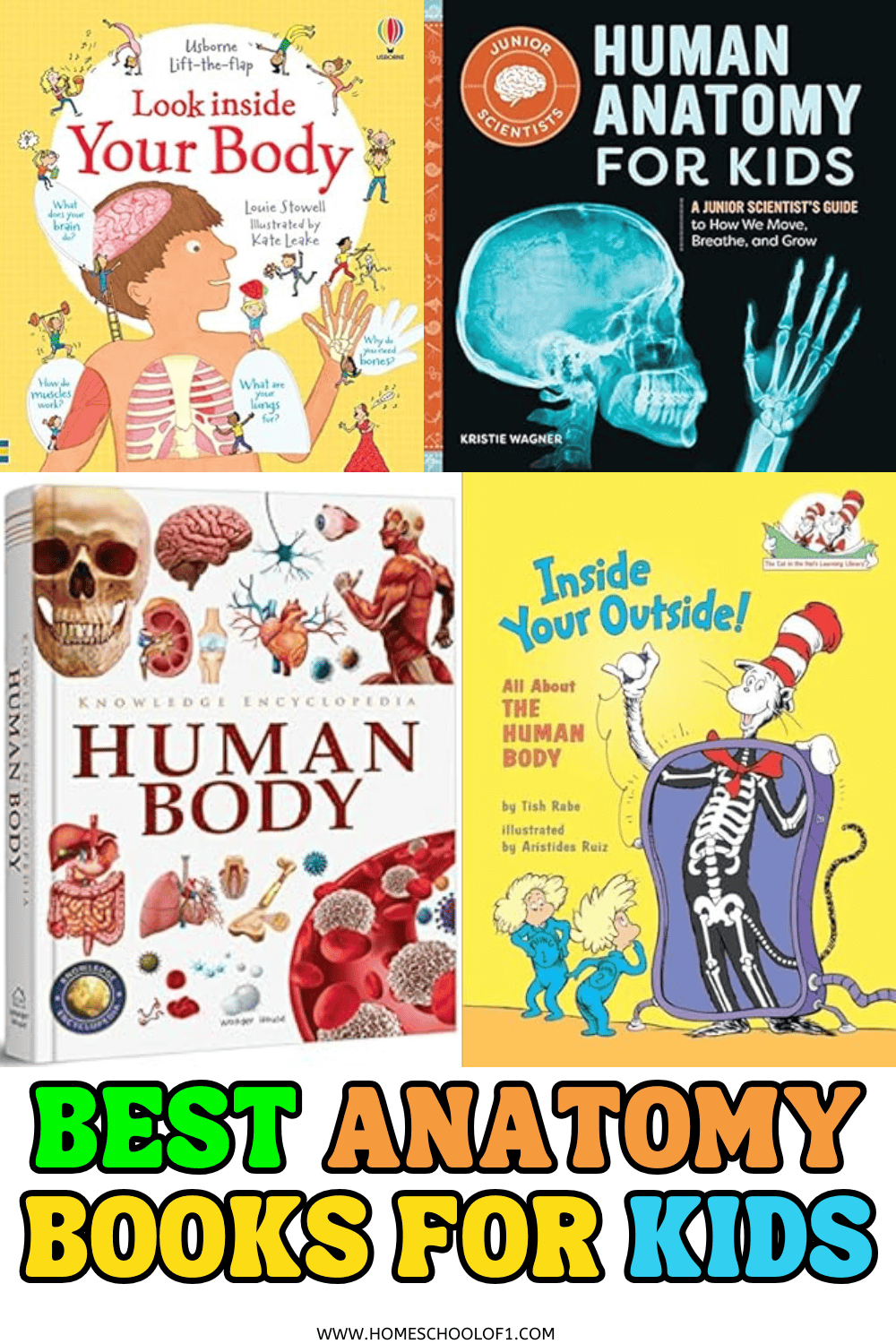
Look Inside Your Body by Louie Stowell – This lift-the-flap board book has been a big hit in our home. With over 100 flaps to explore, it’s simple enough for toddlers but still manages to explain how things like digestion and circulation work in a way they can grasp.
The Human Body by Stephanie Babin – The pull-tabs and layered illustrations make this a good starting point for younger kids who want to see what’s happening inside their bodies. There isn’t too much information on each page, so it introduces organs and body systems without overwhelming preschoolers.
X-Ray Me! by Felicitas Horstschafer – This is more novelty than detailed anatomy guide, but that’s part of the appeal. Kids can hold the book against their bodies to see where different organs would be, which makes it a fun way to introduce what’s happening underneath their skin.
Elementary (Ages 6–9)
The Human Body: Lift-the-Flap Book by Usborne – We used this one alongside our early science lessons because the flaps made it easy to explore one body system at a time. The illustrations explain what’s happening inside the body without throwing too much information at younger readers.
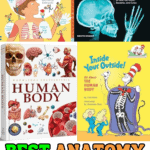
Inside Your Outside by Tish Rabe – Part of the Cat in the Hat Learning Library, it blends fun rhymes with real science. It’s especially great for kids who enjoy storybooks and are just starting to ask questions about how their bodies work.
My First Human Body Book by Donald M. Silver – A coloring book with solid learning value. My son enjoyed labeling parts while coloring the systems, perfect for a quiet activity that still reinforces anatomy basics.
Upper Elementary and Middle School (Ages 9–12)
Human Anatomy for Kids by Kristie Wagner – This is a better fit once kids are ready to move beyond simple body-part books. It goes into the major body systems in more detail, with diagrams and explanations that work well for upper elementary and middle school science.
The Fantastic Body by Dr. Howard Bennett – This one gets into some of the stranger questions kids ask about their bodies, while still explaining the science behind the answers. The humor breaks up the more detailed information, so it doesn’t read like a traditional anatomy textbook.
Kay’s Anatomy by Adam Kay – This was a great step up once my son wanted more detail without losing the fun factor. It explains the body in a very direct, sometimes slightly gross way that kept him engaged, and the short, illustrated sections made it easy for him to read a little at a time without it feeling like a textbook.
Human Body Encyclopedia by DK – This is the most detailed reference book on the list and better suited to older kids who want more than a basic introduction. The photographs, diagrams, and close-up images make it especially useful for exploring individual organs and body systems in more depth.
Want to Go Beyond the Books?
Once we’d read a few of these, my son wanted to see how everything fit together rather than just read about it. These kits and activity books gave him a more hands-on way to explore the human body without turning it into another full lesson.
Hands-On Anatomy Kits and Learning Tools
Squishy Human Body Kit – This one comes with a guidebook and a clear plastic body filled with removable organs. My son loved taking everything apart and figuring out where it all fit. It’s surprisingly detailed for a toy and has been a great conversation starter.
Melissa & Doug Magnetic Human Body – This magnetic set lets younger kids place bones and organs onto the body, helping them see where everything belongs. It’s a simple way to make anatomy more visual and works particularly well for kids who learn by moving and arranging pieces.
Interactive Talking Anatomy Poster – Kids can press different parts of the poster to learn about organs, body systems, and their functions, then test themselves with the built-in quizzes. It’s an easy option for kids who enjoy learning independently and prefer listening to longer explanations.
Activity-Based Books
Montessori Busy Books and Felt Organ Kits – For younger kids, movable pieces make it easier to understand where different organs belong. These sets use Velcro or magnetic body parts that children can position on a body outline, making them a good hands-on companion to the simpler anatomy books above.
Human Body Activity Book for Kids by Katie Stokes – Full of puzzles, mazes, and matching games that focus on major body systems. It’s designed for early elementary grades and has been an easy way to add variety to our anatomy lessons.
Human Anatomy Coloring Book by Margaret Matt – This is considerably more detailed than a typical children’s coloring book, with diagrams covering the circulatory, muscular, skeletal, and other body systems. I’d save this one for older kids who want to study the structures in more detail as they color.
Why We Love the Know Yourself Anatomy Series
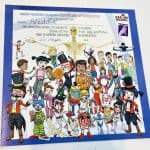
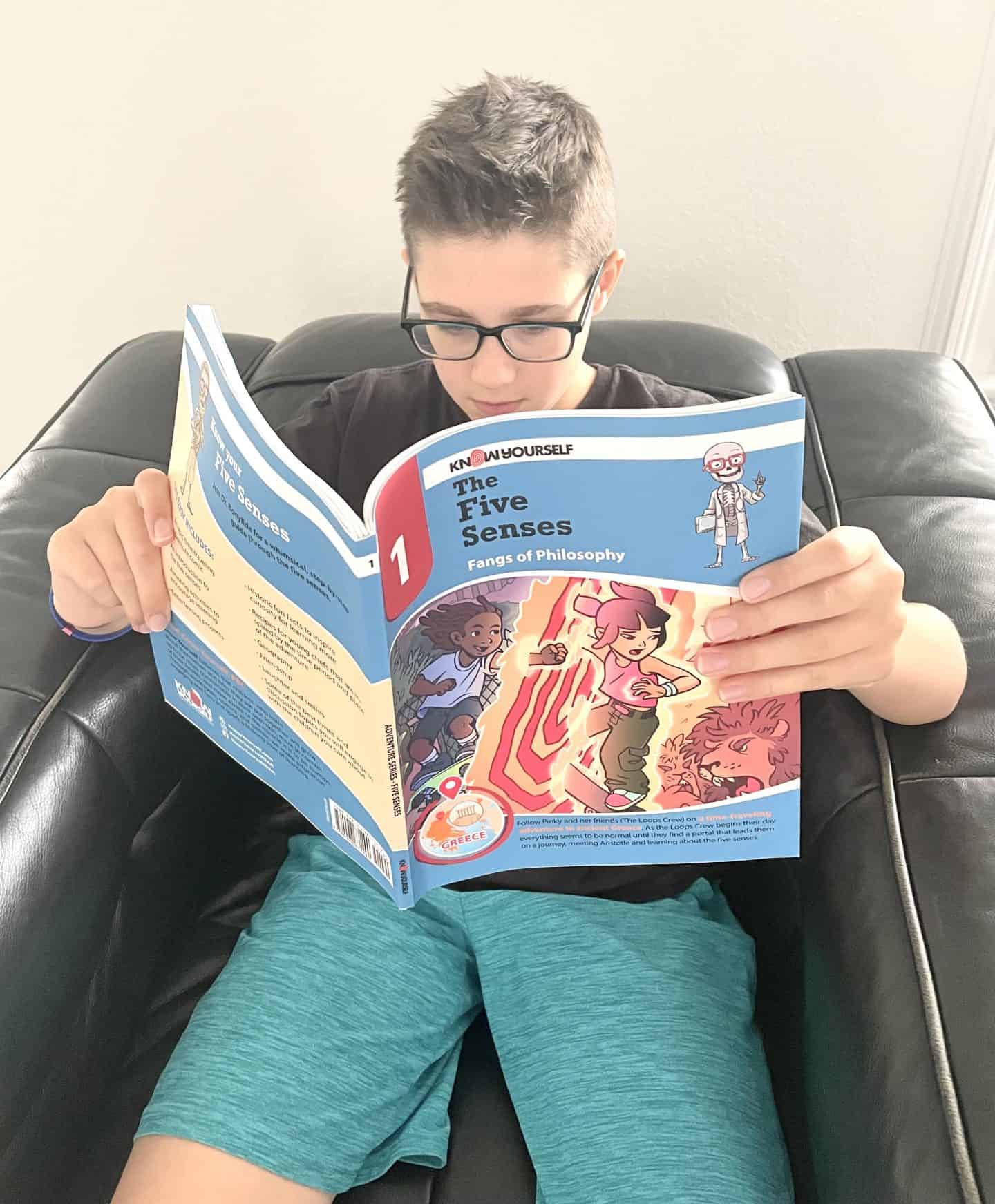
The Know Yourself books were a standout resource in our homeschool when my son was younger. He genuinely enjoyed reading them, and I learned quite a bit from them too.
They’re part story, part workbook, and part comic adventure, which worked well for us because they never felt like traditional textbooks.
We started with the Dr. Bonyfide series, which focuses on different groups of bones in a memorable and funny way. Some of the jokes are a little cheesy, but they stuck, which is what mattered.
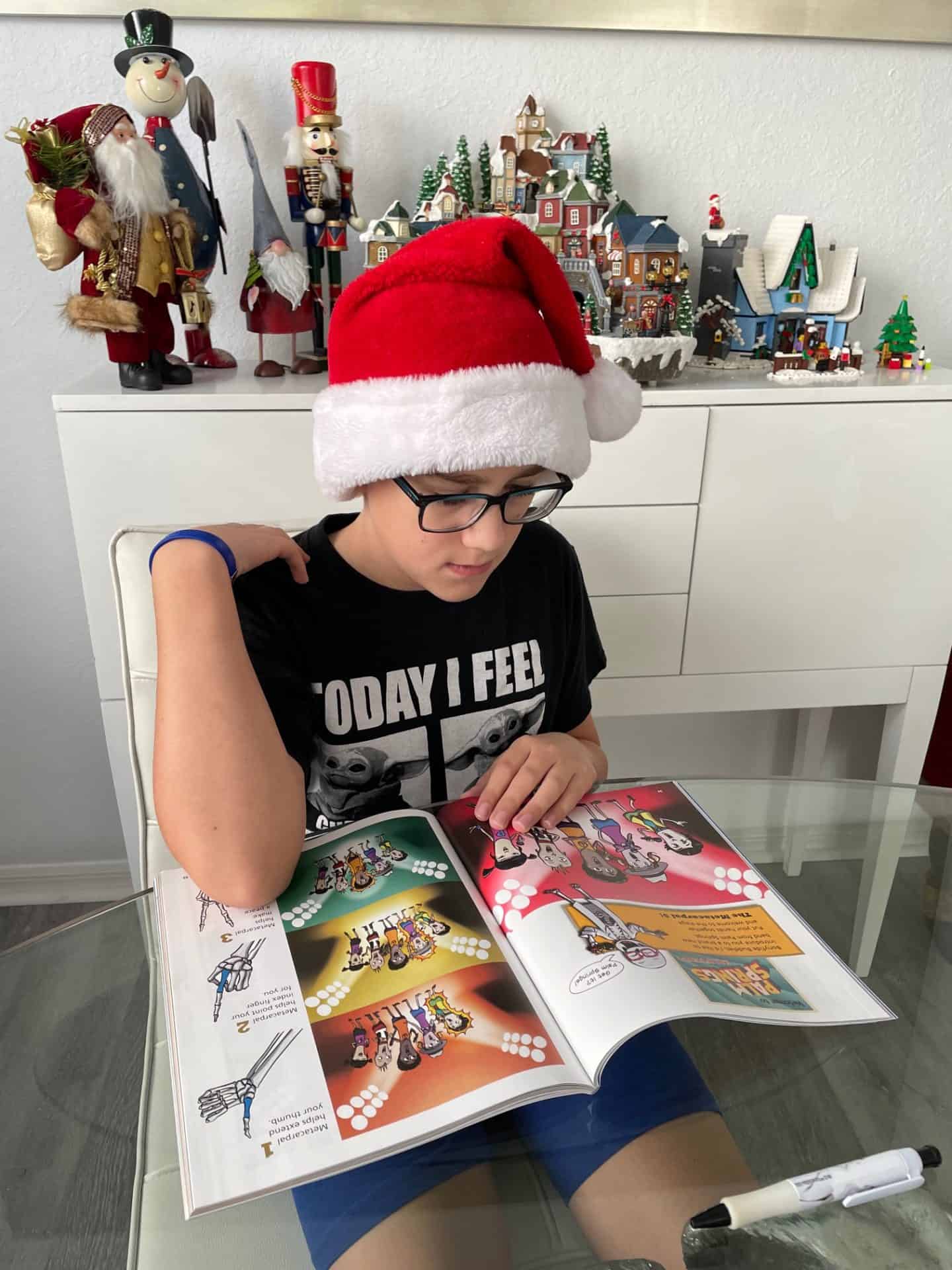
After that, we moved on to the Systems of the Body Adventure series, covering topics including the nervous system, digestion, and the five senses through illustrated adventures.
Each book includes activities and vocabulary, plus a certificate of completion at the end, which was a useful addition to our homeschool records. Some of the material was a stretch for him at first, but that usually led to more questions and conversations.
If your child prefers comics and activities to traditional science books, Know Yourself is well worth considering. It was one of our favorite ways to explore anatomy beyond a standard reference book.
Free Printable Anatomy Worksheets for Kids
We also used anatomy worksheets alongside the books to reinforce what we were learning. They were particularly useful for labeling body parts and reviewing the different systems without adding another full lesson.
For individual topics, we have worksheets covering the skeletal system, muscular system, nervous system, digestive system, and circulatory system.
For a broader review, the body systems worksheets cover several systems together, while the human body organs worksheet focuses on identifying and locating the major organs.
Last Updated on 22 September 2026 by Clare Brown
