15+ Homeschool Planners for an Organized School Year

Staying organized has made a bigger difference in our homeschool than almost anything else. At the start of each school year, I always review our systems and make sure we have planners that actually support how we work day to day.
I use a digital planner for long-term planning, while my son keeps a simple paper planner to record what he completes each day. As he’s moved into middle school, having separate systems has helped us both stay organized without duplicating effort.
Over the years, we’ve tried a mix of paper and digital homeschool planners. Below are the ones that have worked well for us, along with options other homeschool families consistently recommend.
**This post may contain affiliate links. As an Amazon Associate and a participant in other affiliate programs, I earn a commission on qualifying purchases.**
You are also going to love our printable monthly calendar with holidays.
How to Choose a Homeschool Planner
Finding a homeschool planner that actually works for your family takes a bit of trial and error.
Over the years, we’ve used both paper and digital planners. I use one for long-term planning, and my son keeps his own to track what he completes each day. Once he hit middle school, having separate systems made everything run smoother.
In this list, you’ll find options for students and for homeschool parents. Some are simple and budget-friendly. Others are fully customizable. And if you prefer to plan online, I’ve included digital planners as well. I also like using a school calendar calculator at the start of the year to map out milestones and breaks before I transfer everything into our planner.
Student planners are listed first, followed by planners designed for homeschool moms.
Our Top Pick for Homeschool Planning
I’ve listed planners we’ve personally used, along with options other homeschool families consistently recommend.
If you want a fully customizable paper planner with strong layout options, Erin Condren’s teacher lesson planner is one of the most polished choices. The paper quality is excellent, the layouts are flexible, and you can personalize the cover, which makes it feel less generic and more like something you’ll actually use all year.
Academic Planners for Homeschool Students
Teaching kids to use a planner is one of those skills that pays off long-term. Once my son started tracking his own work instead of relying on me to remember everything, our days ran much smoother.
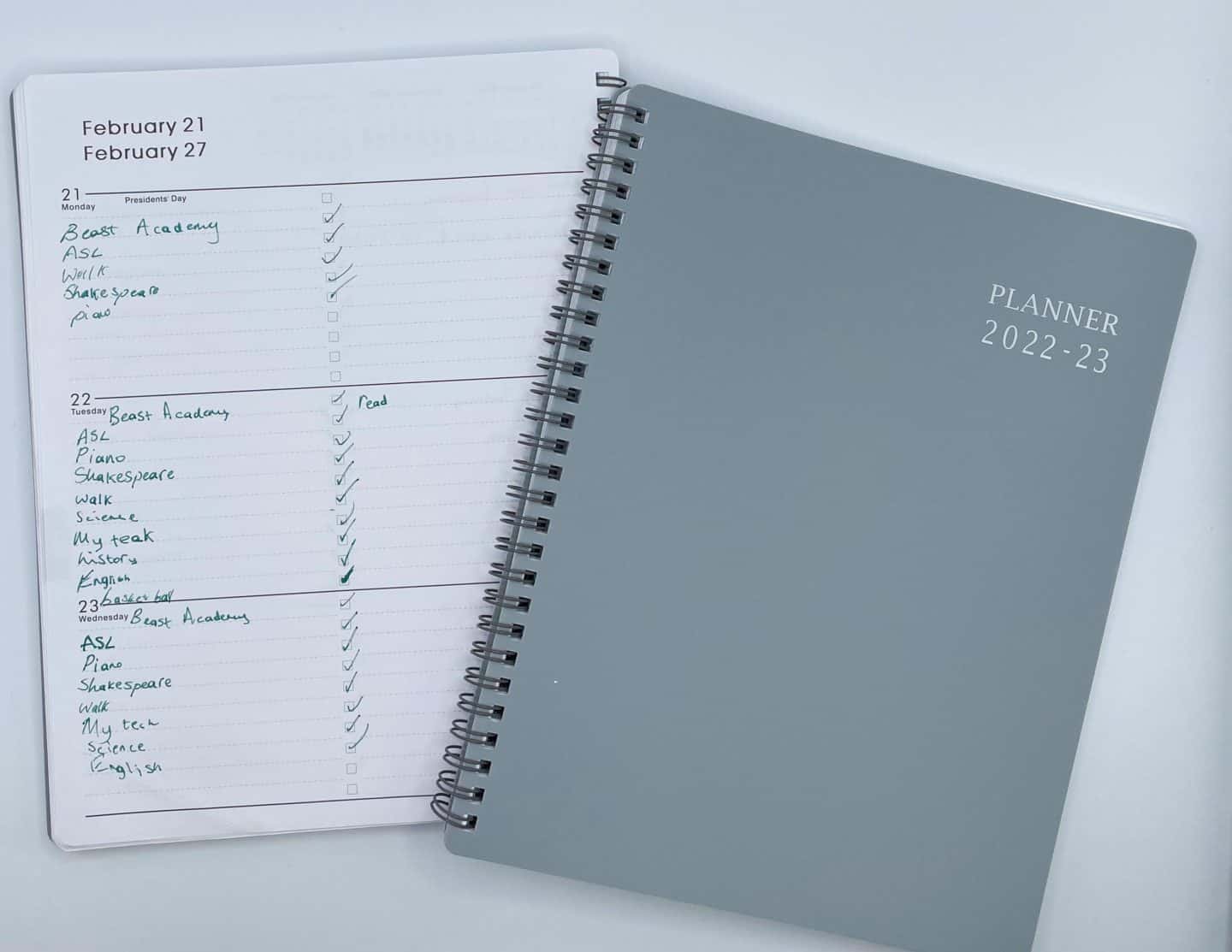
The planner we use for him is honestly very plain. No fancy layout. No inspirational quotes. But it’s affordable and it works. In middle school especially, we use it more as a record of what was completed rather than detailed forward planning.
For kids who care about design, themed planners can make a difference. A Harry Potter Academic Planner works well if you have a fan who wants something that feels personal. Sometimes that small detail is what gets them to actually use it.
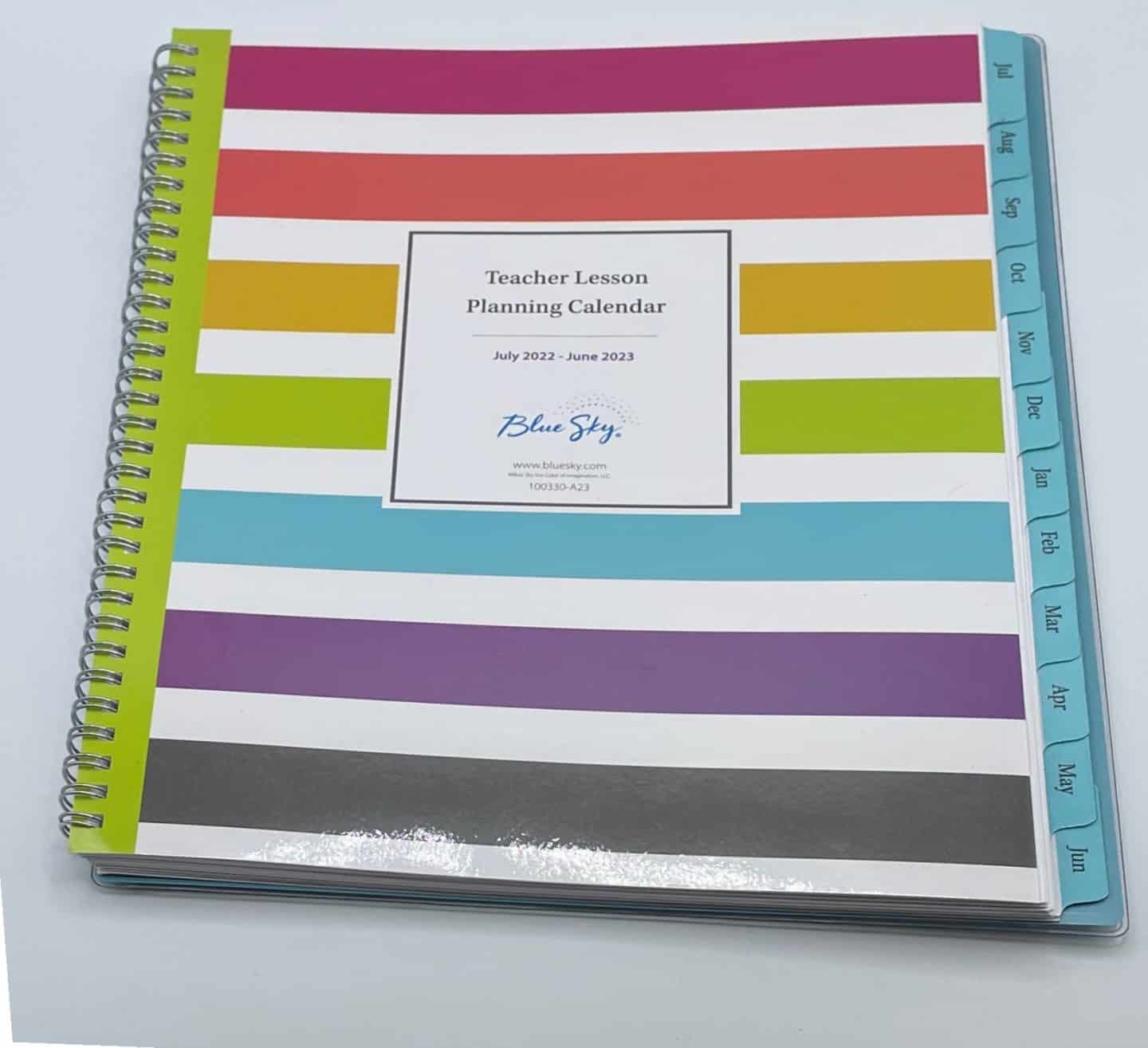
Bluesky Planners are a solid budget-friendly option. I use their teacher version myself, so I’m familiar with the layout and paper quality. They’re simple, functional, and don’t feel overwhelming.
If you want something more customizable, Erin Condren offers a polished academic planner with flexible layouts and personalized covers. It’s more of an investment, but the paper quality and structure feel noticeably premium.
Plum Paper is another customizable option. Their student planners come in versions for elementary through high school, and they include helpful extras like schedule pages, exam planning, and subject reference sheets. If your child likes structure but still wants some personality, this is a nice middle ground.
Find out how to keep homeschool records here, including how we track completed work and calculate homeschool attendance percentages during the year.
Planners for Homeschool Moms
There isn’t one planner that works for every homeschool parent. Some of us want something detailed with space for notes and tracking. Others just need a clear weekly layout that keeps the day moving.
Over the years, I’ve tried both premium and budget options. The biggest difference usually comes down to how much structure you want built in.
Erin Condren Homeschool Planner
If you prefer a polished, fully customizable paper planner, Erin Condren’s homeschool layout is one of the more structured options available. The paper quality is noticeably thick, the layouts are clean, and you can personalize the cover so it doesn’t feel generic.
It’s a larger planner (8.5” x 11”) with monthly and weekly spreads, checklist pages, logs, and extras like folders and sticker sheets. It’s definitely an investment, but it feels durable enough to last the entire year without falling apart.
Blue Sky Academic Teacher Planner
This is the one I personally use.
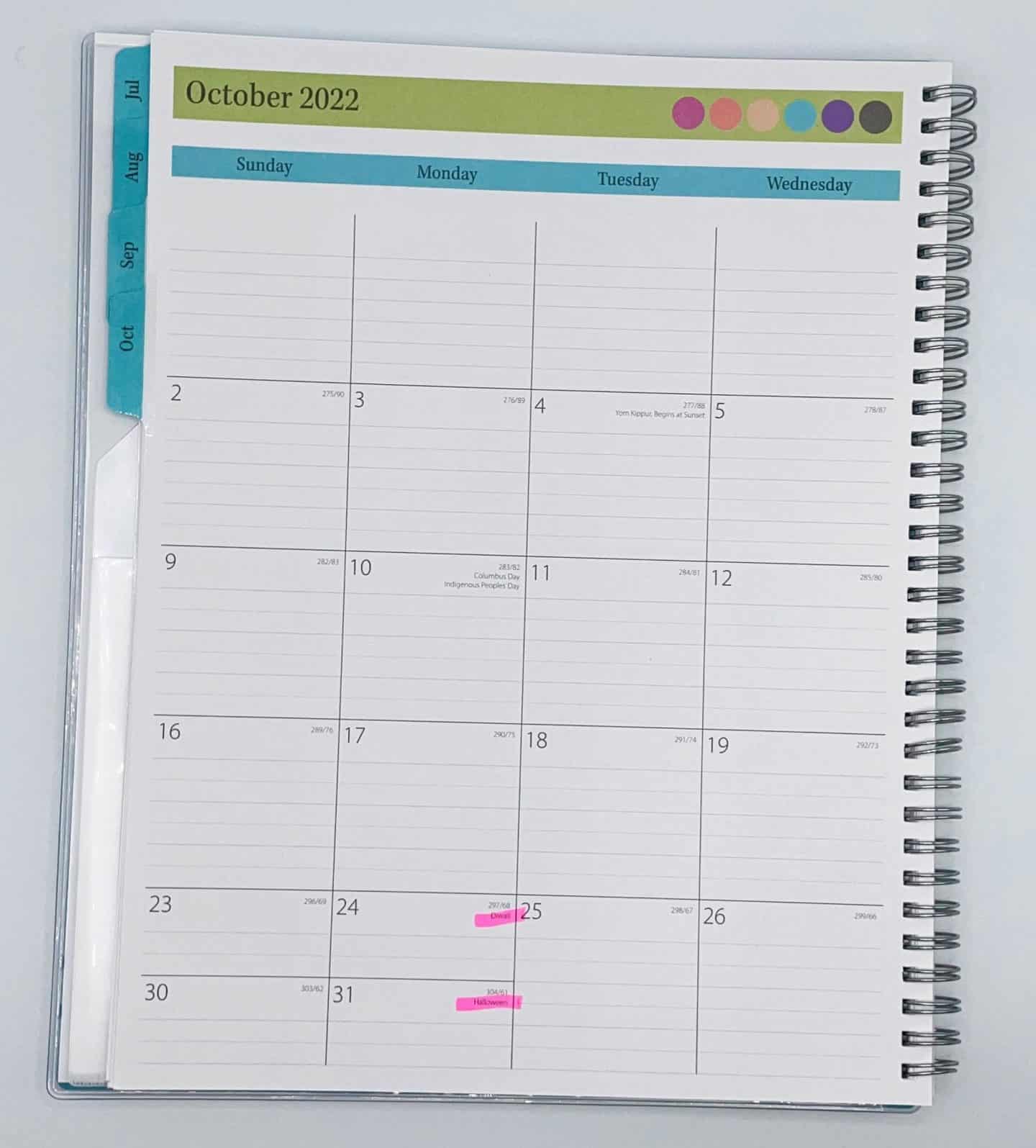
It doesn’t have all the extras, but it’s affordable and straightforward. The monthly and weekly layouts are clear, and it runs on an academic calendar (July–June), which works well for our schedule. If you don’t need customization and just want something functional, this is a solid choice.
The Happy Planner (Teacher Layout)
The Happy Planner offers a larger 12-month academic layout with plenty of writing space. If you like bright designs and a more flexible disc-bound system, this style gives you room to rearrange pages and customize sections.
The A+ Homeschool Planner
This planner is undated, which means you can start anytime during the year. It includes space to plan and track progress for multiple children, which can be helpful if you’re juggling different grade levels.
Plum Paper Homeschool Planner
Plum Paper is a good middle ground between simple and fully custom. You can personalize the cover and select layouts that match how you actually plan.
Their homeschool planner includes space for yearly goals, attendance, reading logs, grading logs, field trips, and extracurricular tracking. It’s available in multiple sizes, which is helpful if you prefer something smaller and easier to carry.
Digital Homeschool Planners
If you prefer planning online instead of using paper, there are several solid options depending on how structured you want your system to be.
Homeschool Planet
Homeschool Planet is one of the more comprehensive online platforms. It allows you to build lesson plans, adjust schedules easily, and automatically reschedule assignments when plans change.
It’s designed as more of a command center than a simple calendar, which can be helpful if you want everything (home, school, activities) in one place. They offer a 30-day trial, and the annual subscription is higher than most other options, so it’s worth testing to see if you’ll use the features consistently.
Schoolhouse Teachers
Schoolhouse Teachers includes a digital planner as part of their broader curriculum membership. If you’re already using their courses, having planning tools built in can simplify things. It’s less of a standalone planning system and more integrated with their curriculum.
Homeschool Tracker
Homeschool Tracker focuses heavily on record keeping and reporting. If your state requires detailed documentation, or you prefer structured reports and transcripts, this platform leans more in that direction. It allows drag-and-drop rescheduling and flexible subject tracking.
Etsy Digital Planners
Etsy has many downloadable digital planners that work with apps like GoodNotes or Notability. These are typically one-time purchases rather than subscriptions. They’re best suited for families who already enjoy planning on a tablet and don’t need automation.
Trello
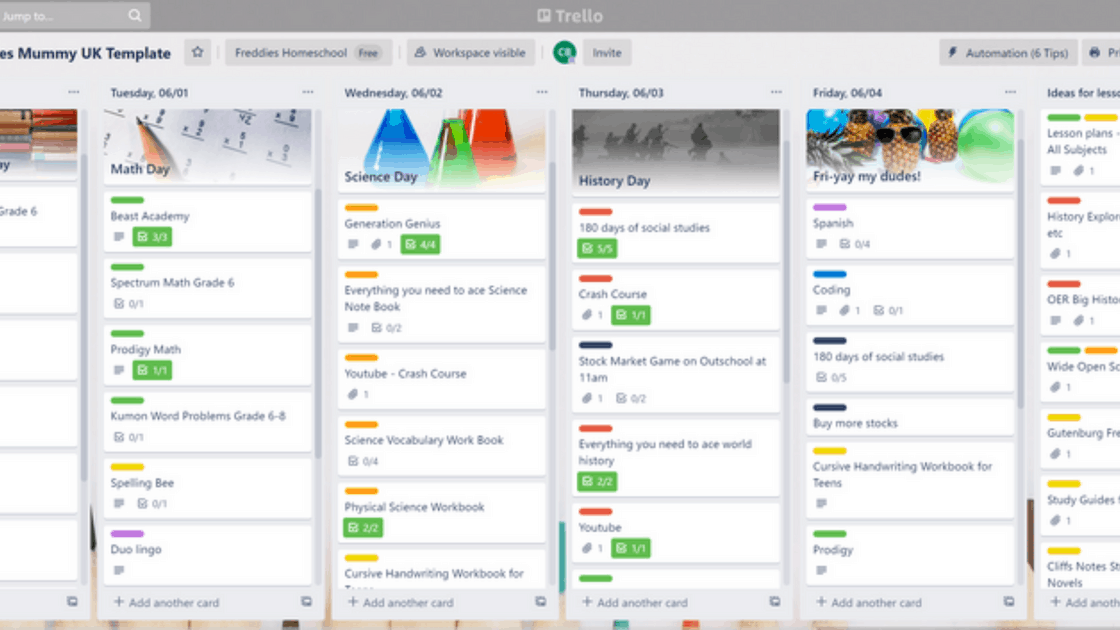
This is what we currently use.
I plan loosely for the year by choosing curriculum, but most of the actual planning happens weekly. On Sunday evenings, I map out the week. My son then updates his tasks daily.
Trello works well for us because it’s flexible. Moving assignments takes seconds, and nothing feels locked in. It’s simple, free to use at a basic level, and doesn’t overwhelm us with features we won’t use.
Planbook
Planbook is technically built for classroom teachers, but it can work for homeschool families who want a straightforward online lesson planner. It’s affordable compared to most homeschool-specific platforms and offers a trial period.
Last Updated on 13 February 2026 by Clare Brown
