No Prep Activities for Kids (Easy Ideas That Actually Work)

No prep activities are the ones I come back to again and again, especially when something finishes earlier than expected or I just need a quick filler.
These easy activities for kids can be used straight away, with no setup, no printing, and nothing extra to organize.
They’re simple, flexible, and work just as well for a quick break as they do for stretching a lesson a little longer without overthinking it.
Why No Prep Activities Matter
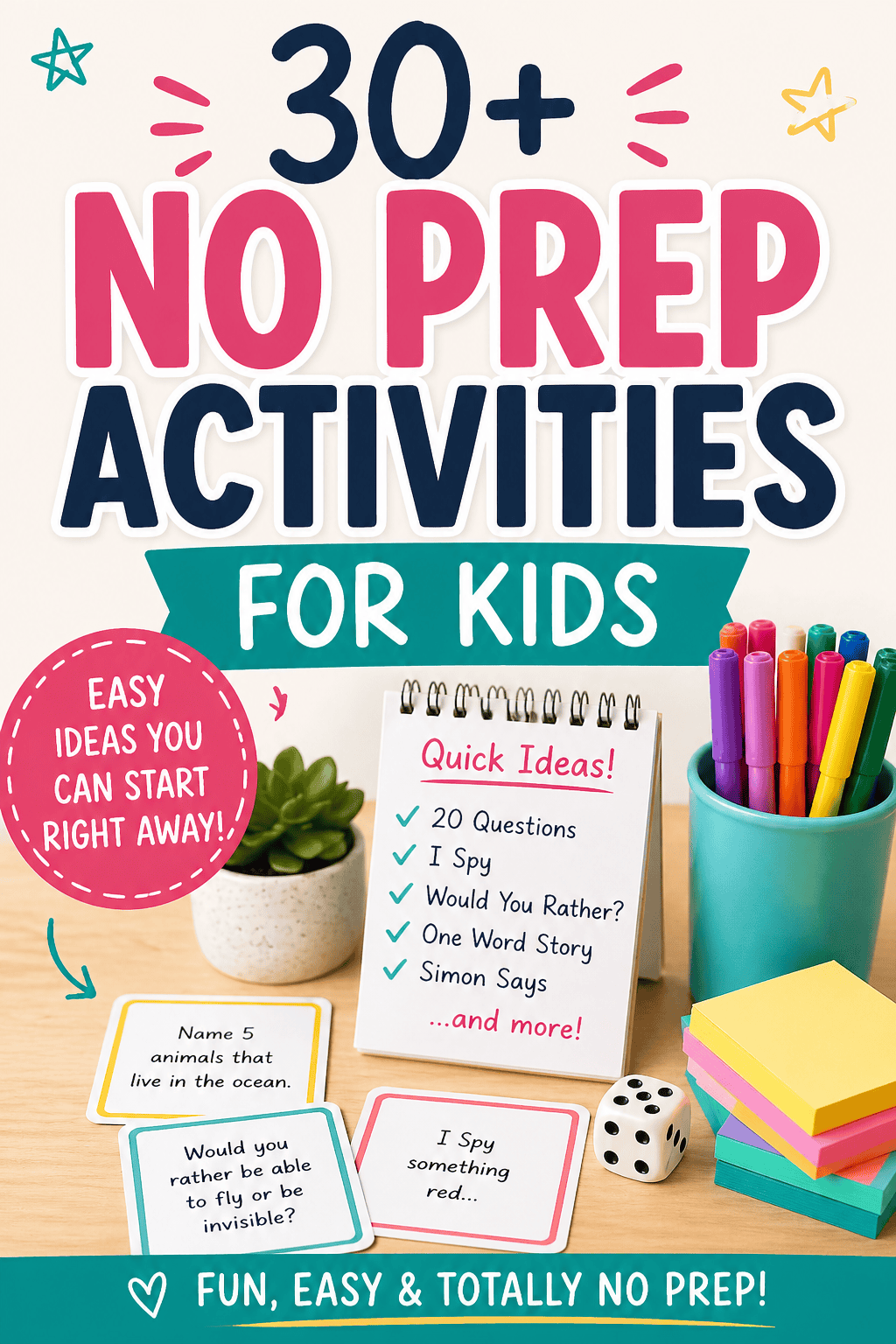
No prep activities matter more than you think, especially on the days that don’t quite go to plan. Whether something finishes early, attention starts to dip, or you just need a quick change of pace, having a few easy ideas ready makes everything feel a lot less stressful.
With just one child, I don’t need anything complicated. These are the activities that fit into real life, the ones you can start straight away without stopping to plan or find materials.
They’re also surprisingly useful for keeping things moving. A quick game or simple activity can reset focus, fill a gap, or give you a bit of breathing room without turning it into a whole new lesson.
Quick No Prep Activities
Sometimes you just need something that works straight away, without stopping to plan or find anything. These are the random activities I reach for when something finishes early or we just need a quick change of pace.
20 Questions
Think of an object and answer yes/no questions until it’s guessed. This is one of the easiest no prep activities to use because it doesn’t need anything at all, not even a starting idea if you use a random animal picker.
If it starts dragging, I usually limit it to 10 questions so it keeps moving.
Would You Rather?
Ask simple or slightly silly questions and take turns answering. This can be quick, or turn into a longer discussion depending on how into it they get.
It’s a good one for getting kids talking without it feeling like a structured activity.
Alphabet Game
Pick a letter and name as many animals, foods, or objects as you can. This works well when you want something repeatable that doesn’t need any setup, especially if you use an alphabet randomizer to keep it different each time.
You can make this harder by sticking to one category, like animals or countries, instead of mixing everything.
Categories
Choose a topic and list as many items as possible in a set time. This works well when you want something a bit more focused but still low effort.
If it feels too easy, I’ll usually shorten the time or make everyone give different answers.
If you want to skip thinking of topics, a Scattergories-style generator gives you instant categories to work with.
One Word Story
Take turns adding one word at a time to build a story. It usually goes completely off track, which is half the fun.
This is one of the easiest ways to get a bit of creativity in without setting up a full writing activity. If it starts to stall, I’ll switch it to one sentence each instead, which keeps it going.
I Spy
A simple classic that works anywhere. You can keep it easy or make it more challenging by giving clues instead of naming the first letter.
It’s especially useful when you don’t want to stop what you’re doing but still need something engaging. If it’s too easy, I’ll stop using letters and only give descriptive clues.
Simon Says
A quick way to reset energy levels when things are getting a bit restless. It works well because it gives clear instructions and brings the focus back straight away.
Good for breaking up sitting time without turning it into a full activity. I usually speed it up after a few rounds so it keeps their attention.
Guess the Rule
Think of a simple rule (like items that start with a certain letter or category) and have them guess it by suggesting ideas.
Once they start spotting the pattern, it usually clicks quickly, which makes it feel more like a game than a learning activity. If they’re struggling, I’ll give one correct example to help them spot the pattern.
Two Truths and a Lie
Say three statements and guess which one isn’t true. This works well as a quick thinking activity and is easy to adapt depending on age.
It’s also a nice low-pressure way to get kids talking. I’ll usually go first so they get the idea without needing it explained.
Freeze Dance
Play music and move around, then stop suddenly so everyone has to freeze. It’s simple, but it works really well for resetting the mood if energy is either too high or starting to dip. If they’re still too energetic, I’ll add a rule like “freeze in a shape” to slow it down.
Line Up By (No Talking)
Pick a category like height, birthday, or favorite color and line up in order without speaking.
This one works surprisingly well for focus and problem-solving, and it keeps things moving without needing any setup. If it gets chaotic, I’ll limit the space or give them a starting point to work from.
Observation Challenge
Look around the room and find 5 things you hadn’t noticed before. You can make it more specific by choosing a theme, like something red, something small, or something that starts with a certain letter.
This works well when you want something calm that still gets them thinking, and it’s easy to repeat with different prompts.
Memory Tray Game (No Tray Version)
Place a few everyday items in front of you (or just point to things already in the room), give a few seconds to look, then turn away and list everything you can remember.
It’s simple, but it’s a good way to build focus without turning it into a formal activity.
Draw From Memory
Look at an object for 10–20 seconds, then hide it and try to draw it from memory. It doesn’t have to be perfect, which usually makes it more fun.
This is a nice quieter option when you want something creative but still completely low effort. If the kids need more inspiration they can use our drawing challenge generator.
Easy Printable Activities (No Prep Needed)
Sometimes you want something just as easy, but a bit more structured. That’s where printable no prep activities come in. They still don’t take any planning, but give kids something focused to work on without you needing to think about it.
These are the ones I tend to keep on hand for those moments when I want something ready to go.
Word Search Printables
These are the ones I reach for most often because they’re just easy. No explanation, no setup, and they can dip in and out of them without needing to finish straight away.
I’ve built up quite a few over time, so I’ll usually just pick one from my collection of word searches depending on what we’ve been working on.
I Spy Worksheets
These always end up being more engaging than I expect, especially when attention is starting to drift a bit. It feels more like a game than a worksheet, which helps.
I tend to switch between different ones rather than repeating the same one, usually pulling from the I Spy pages I already have.
Scattergories Worksheets
This is a nice middle ground when you want something that feels a bit more active without turning it into a full group game. A letter and a few categories is usually enough to get them thinking.
If I don’t want to set it up myself, I’ll just use one of my Scattergories worksheets instead.
Color by Number
I keep these for when I want something quieter. They’re easy to start, easy to pause, and don’t need any input from me once they’ve got going.
They’re also one of the few things that consistently buy me a bit of breathing room, especially the color by number pages I’ve used before.
Writing Prompt Pages
If I want to steer things back towards something more structured, this is usually where I go. One prompt is normally enough to get things started without needing to plan anything else around it.
Some days it turns into more, other days it doesn’t, and that’s fine with the writing prompt worksheets I keep on hand.
Word Scramble Worksheets
These are a good option when I want something quick but not too easy. They don’t take long to explain, and there’s just enough challenge to keep it interesting.
I tend to use these when I want something that feels a bit more “thinking” without making it into a full lesson, usually from my word scramble worksheets.
How to Use No Prep Activities (Without Overthinking It)
The hardest part with no prep activities isn’t finding them, it’s knowing when to actually use them without it feeling like you’re just filling time.
Most of these end up working best in the gaps you don’t plan for. When something finishes early, when attention starts to drop, or when you just need a quick reset before moving on.
I tend to use them in three main ways.
When something finishes early
This is probably the most obvious one. Instead of trying to stretch what you’re doing, it’s usually easier to switch to something quick and come back to it later.
A short activity like 20 Questions or a quick category game works well here because you can stop and start without losing anything.
When attention starts to dip
This is where something like Simon Says or Freeze Dance works better than anything written. It shifts the mood quickly without needing to explain anything new.
If I try to push through at this point, it usually just takes longer.
When you don’t want to start something new
Sometimes there’s just not enough time to begin another task properly. That’s where things like word searches or a quick writing prompt work better because they don’t need a full setup.
They’re easy to pick up and put down without it turning into a whole new lesson.
When you need something repeatable
A lot of these work because you can use them again without it feeling exactly the same.
Changing the letter, the topic, or even just using a generator for ideas is usually enough to keep it fresh without adding any extra effort.
More No Prep Activity Ideas to Try
Sometimes it’s just easier to have a few extra ideas ready rather than trying to think of something in the moment. These are all simple to start and easy to adapt.
Telephone
Whisper a sentence and pass it along. It almost never comes out the same at the end, which is usually the best part.
Fortunately / Unfortunately
Take turns continuing a story, alternating between “fortunately” and “unfortunately.” It tends to go off in completely unexpected directions.
Categories race
Pick a topic and set a timer to list as many as possible. You can keep it simple or make it more competitive.
3-word story
Pick three random words and use them to build a short story. It’s quick, but still gets them thinking.
Odd one out
Give three or four items and decide which doesn’t belong. What makes it better is that there’s often more than one right answer.
Silent drawing
Draw something while the other person guesses, but without talking. It’s slower than Pictionary, but usually funnier.
Finish the sentence
Start a sentence and take turns finishing it in different ways. You can keep it silly or steer it towards something more structured.
Pattern spotter
Look around and find patterns, colors, shapes, or repeated objects. It’s simple, but works well when you want something calmer.
Quick debate
Pick an easy topic and argue both sides. Even something like “cats vs dogs” works surprisingly well. Use our fun debate topic generator for even easier prep.
Clap pattern
Create a simple clap or tap pattern and have it repeated. Then make it gradually harder.
Question chain
Start with one question, and each answer has to lead to a new question. It keeps the conversation going without much effort.
Name 5 things
Pick a category and name five things as quickly as possible. You can speed it up or slow it down depending on the mood.
Act it out
Think of something simple (an animal, action, or job) and act it out. No prep needed, and easy to repeat.
What’s missing?
Look at a few objects, then remove one and guess what’s gone. Works well even with everyday things already around you.
This or that
Give two options and choose one, then explain why. It’s simple, but can turn into a longer discussion if you let it.
