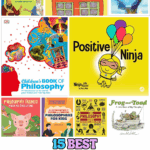
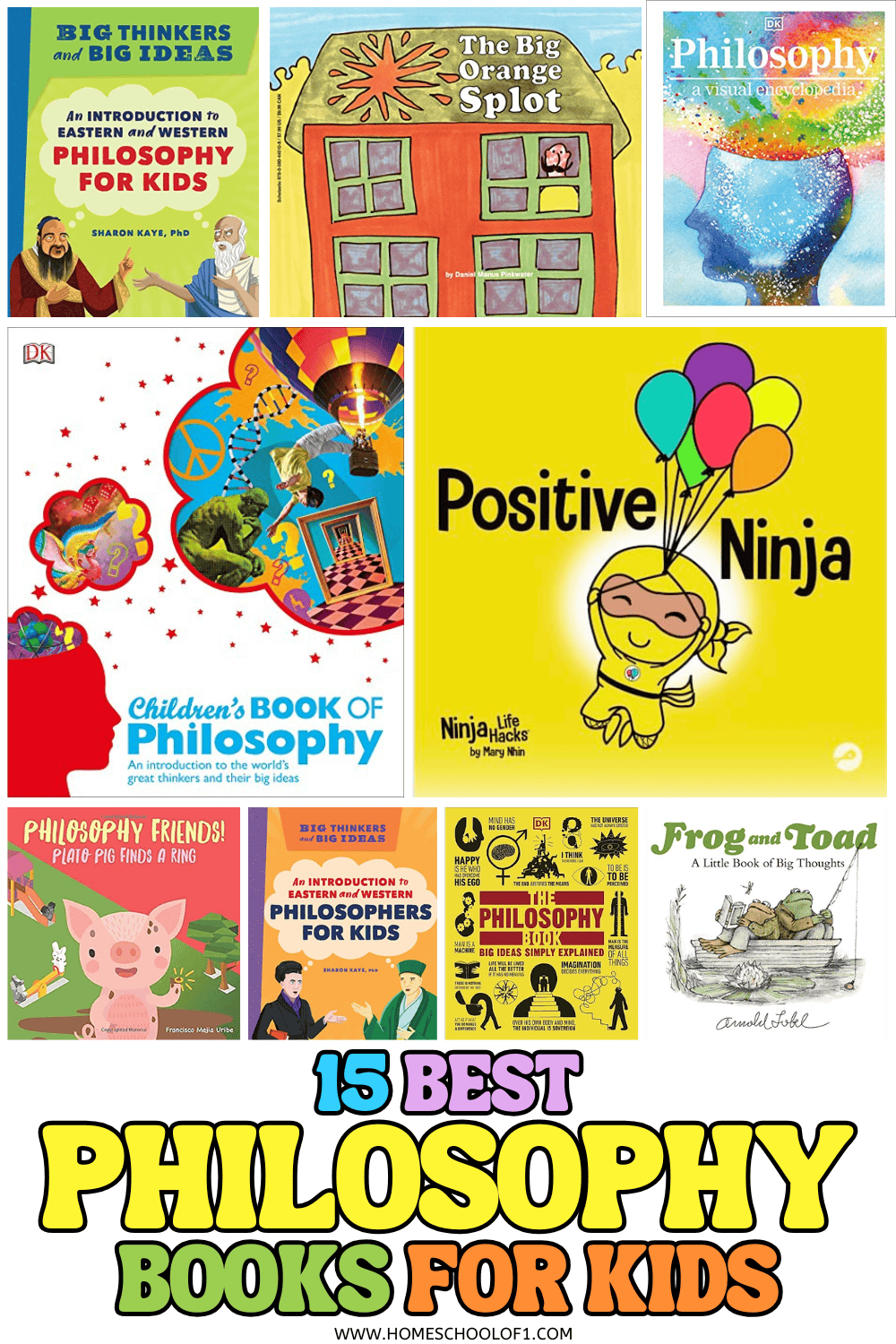
Philosophy books for kids weren’t something I planned to add to our shelves. They just sort of crept in after one too many “but why?” conversations at the dinner table.
When Freddie was younger, he’d ask questions that didn’t have neat answers, things about fairness, friendship, or why people believe different things. I didn’t always have a perfect response, but I realized a good book could help us explore the question together instead of me trying to solve it on the spot.
Some of the titles below sparked quick chats before bed. Others turned into proper homeschool discussions that lasted half the morning. What they all have in common is this: they help kids slow down, think, and feel safe asking bigger questions about themselves and the world around them.
Whether you’re homeschooling or just want something a little deeper than the usual bedtime read, these are the ones that genuinely led to conversations in our house.
**This post may contain affiliate links. As an Amazon Associate and a participant in other affiliate programs, I earn a commission on qualifying purchases.**
Books That Spark Big Questions
The books below vary in style and depth. Some are picture books that introduce thoughtful themes in simple ways. Others explore well-known philosophers or break down bigger concepts like logic, fairness, and truth.
You’ll find story-driven reads, visual encyclopedias, interactive question books, and graphic-style explanations, so you can choose what fits your child’s reading level and personality best.
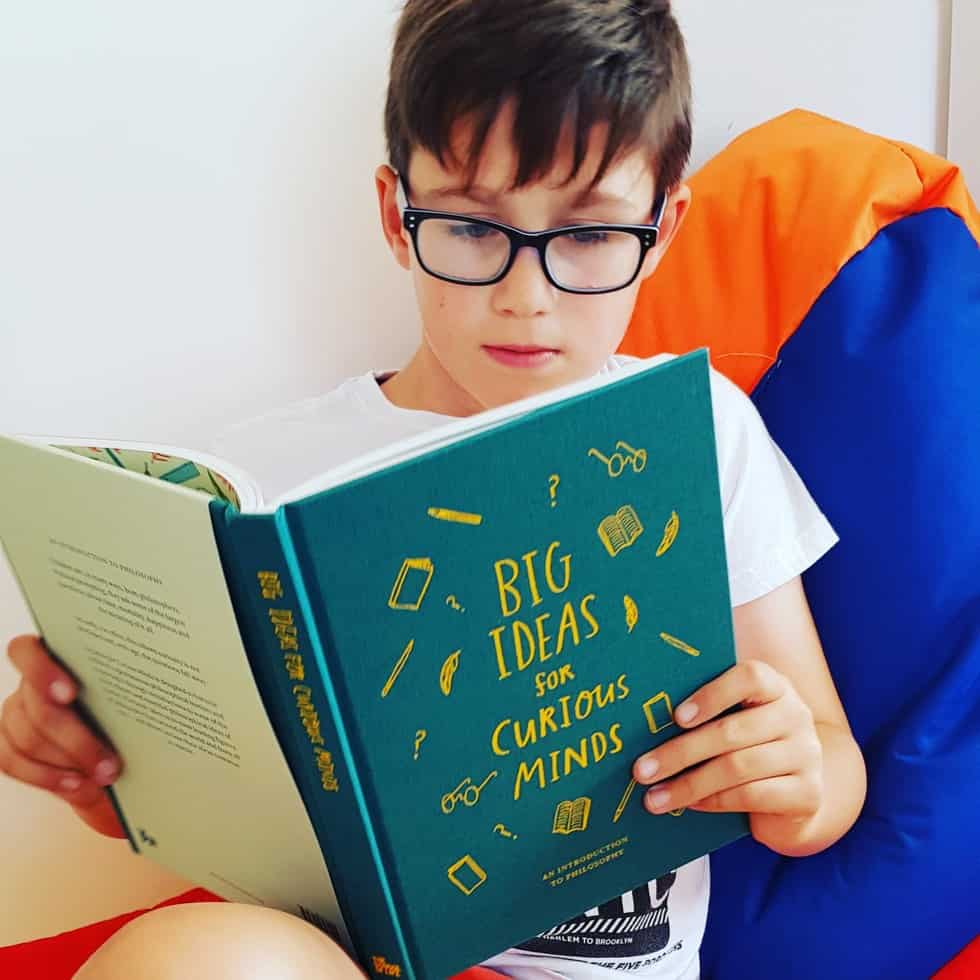
Big Ideas for Curious Minds
This is the book that first got Freddie hooked on philosophy. It introduces big ideas like kindness, fairness, and courage through short, relatable examples, no heavy theory, just thoughtful storytelling. We used it for morning discussions, reading a few pages at a time and talking about how those ideas showed up in real life. It’s perfect for ages 8–12 who love asking “why” about everything.
Read More
Big Thinkers and Big Ideas
This one broadened the conversation for us. Instead of circling around the same familiar names, it pulls in voices from different cultures and time periods, which shifts the tone immediately.Freddie noticed pretty quickly that many of the questions overlap, even when the thinkers don’t. That realization alone changed how he saw the subject. We’d usually read one chapter and sit with the final question rather than rushing on.
Read More
Children’s Book of Philosophy
DK always does an amazing job with visuals, and this one’s no exception. The bright pages and clear explanations make big ideas, like truth and justice, feel accessible. When we read it together, Freddie enjoyed flipping through and choosing which topic to talk about that day. It’s also a fantastic resource for visual learners who prefer bite-sized bits of information over long chapters.Related: Books about history for kids
Read More
Positive Ninja
While not traditional philosophy, Positive Ninja does a beautiful job teaching emotional awareness and resilience, important parts of how kids understand themselves and others. It’s been one of our favorite bedtime reads because it opens up easy, honest talks about feelings. For younger children (ages 5–8), it’s a gentle introduction to mindfulness and self-reflection.
Read More
Philosophy A Visual Encyclopedia
This isn’t a sit-down-and-read-it-cover-to-cover book in our house. It lives on the coffee table and gets dipped into. Freddie would flip to a timeline, then jump to a philosopher he’d never heard of, then circle back to something about logic that made him pause.The layouts are busy in a good way, diagrams, quotes, snapshots from history, which makes harder ideas feel less intimidating. It works well for kids who like browsing and making their own connections rather than following a straight narrative.
Read More
The Big Orange Splot
This doesn’t announce itself as philosophical, and that’s part of the charm. It’s just a story about a man painting his house differently than everyone else, until you realize you’re actually talking about conformity and courage.When Freddie was little, he focused on the colors. Later, the idea of choosing your own path became the part we lingered on. The meaning sort of grows as kids do.
Read More
Philosophy Friends! Plato Pig Finds a Ring
Plato Pig keeps things simple. The dilemma at the center of the story is small enough for younger kids to follow, but it still nudges them to think about fairness and responsibility.I used it during elementary years when we were starting to talk about reasoning more intentionally. It didn’t feel heavy or academic, just a gentle introduction to weighing choices instead of reacting to them.
Read More
What’s the Point of Philosophy?
What I appreciated about this one is that it doesn’t feel heavy. It takes questions kids already ask, about fairness, truth, rules, and gently stretches them.Freddie liked that it tied ideas back to ordinary situations instead of keeping everything abstract. It felt less like “studying philosophy” and more like realizing he was already doing it.
Read More
The Cartoon Introduction to Philosophy
This was the book that proved humor helps. The comic format lowers the barrier immediately. Instead of dense explanations, you get conversations, exaggerations, and visual jokes that make the ideas stick.It’s especially helpful for kids who glaze over at textbook-style explanations. The tone stays light, but the thinkers themselves aren’t watered down.
Read More
An Introduction to Eastern and Western Philosophers for Kids
This one leans more structured than story-based. It sets thinkers beside each other instead of presenting them in isolation, which makes comparison almost unavoidable.What stood out to us was how similar the core questions were, even when the cultures were completely different. It shifted the conversation from “who’s right?” to “why do people think this way?”, which felt like a much more useful place to land.
Read More
The Philosophy Book: Big Ideas Simply Explained
This lives more on the reference shelf than the bedtime stack. We tend to reach for it when a question comes up and we want a quick, grounded explanation.The layout helps. You can open it anywhere and get enough context to understand the idea without wading through pages of setup. It works especially well once kids are ready to see how philosophical ideas connect to history and real events.
Read More
Frog and Toad: A Little Book of Big Thoughts
Frog and Toad feels gentle on the surface, but slowing down with it reveals more than you expect. The small disappointments and quiet acts of loyalty hit differently as kids grow.We didn’t frame it as philosophy. We just read it. The discussions came later, usually in simple comments about fairness or friendship that turned out to matter more than the plot itself.
Read More
Philosophy for Kids: 40 Fun Questions That Help You Wonder About Everything!
This one turns thinking into an activity. Instead of explaining ideas, it throws out questions and lets kids wrestle with them.We used some of the prompts as writing starters. Others turned into debates that lasted far longer than expected. It’s particularly good for kids who enjoy having their opinions challenged.
Read More
Big Ideas for Little Philosophers Box Set
These board books are simple on purpose. Each centers on one concept, truth, equality, happiness, and explores it in a way that feels approachable for younger children.When Freddie was six, the short length worked perfectly. We’d read one, pause, and let the question linger rather than overexplaining it.Related: Social emotional learning homeschool
Read More
Big Ideas For Young Thinkers
This one feels slightly more contemporary in tone. The questions are broader and often tied to real-world issues.Freddie connected with the sections on justice and fairness most. It encouraged him to articulate what he believed rather than just nod along, which, in my view, is where philosophy becomes genuinely useful.
Read More
More Book Lists for Curious Kids
If your child enjoys books that make them think, you might also like:
Last Updated on 13 February 2026 by Clare Brown