Best Homeschool History Curriculum

Finding the right homeschool history curriculum took us some trial and error. Over the years, we’ve used secular and Christian programs, literature-based curricula, traditional workbooks, unit studies, and plenty of books and documentaries.
Some worked much better for my son than others. We found that history was far more interesting when it went beyond memorizing dates and connected people and events through stories, primary sources, discussion, and hands-on activities.
These are the history curricula that worked best for us from elementary through high school, along with who I think each one is best suited to and the extra resources we used along the way.

**This post may contain affiliate links. As an Amazon Associate and a participant in other affiliate programs, I earn a commission on qualifying purchases.**
Secular History Curriculum Options
Secular history took us a while to figure out. Some programs felt dry and textbook-heavy. Others leaned so discussion-based that we lost momentum halfway through the year.
If you’re looking for a homeschool history curriculum without a religious framework, these are the ones we actually spent time with.
Pandia Press
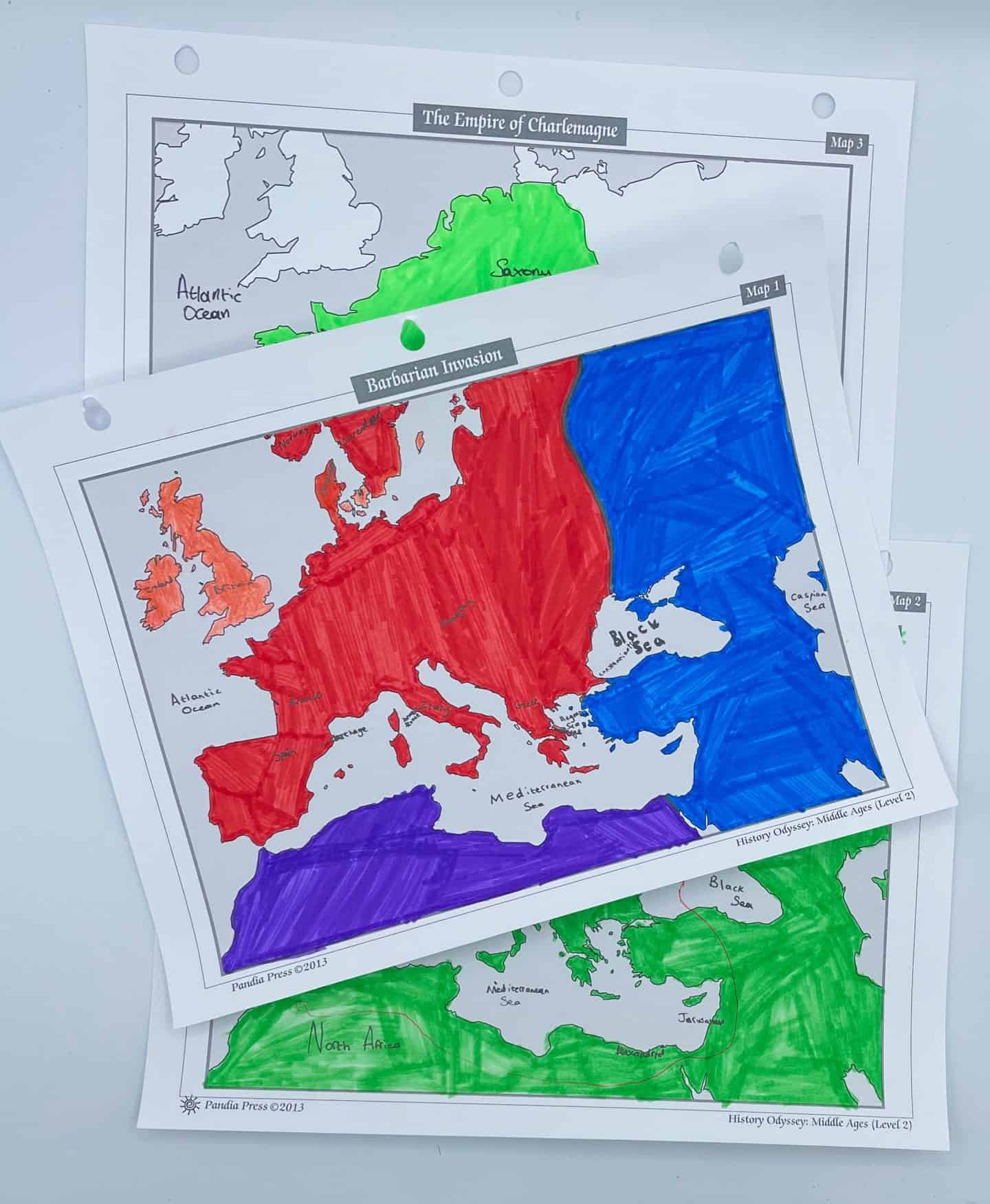
Pandia Press worked well for us, especially in the middle years when I wanted something more analytical but not overwhelming.
- History Quest felt manageable in elementary. The storytelling style made it easier to get through daily lessons without resistance, and the activities weren’t busywork.
- History Odyssey was more demanding. It leans into primary sources and writing assignments, so it’s better suited to independent learners. I liked that it expected more from him, but it does require consistency.
The “try before you buy” samples helped us decide without committing blindly, which I appreciated.
Other Secular History Programs We Considered
If Pandia isn’t your style, these are worth a closer look:
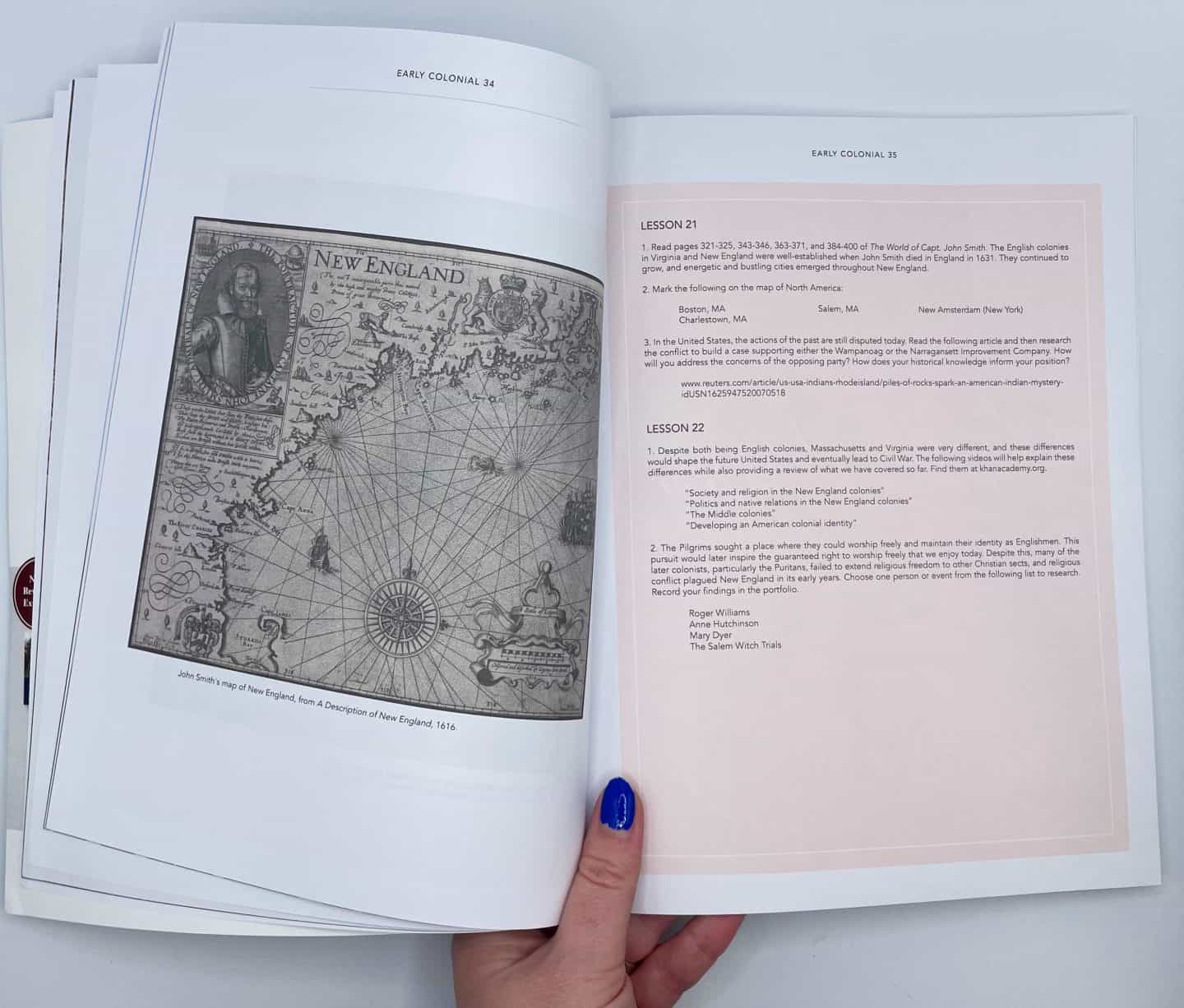
- Curiosity Chronicles – More conversational. It reads almost like a dialogue, which can work really well for kids who tune out traditional narration.
- Moving Beyond the Page – This one blends subjects together, so history isn’t isolated. That can be a strength if your child likes seeing connections, but it does mean planning feels different from a traditional spine.
- Blossom & Root: A River of Voices – More discussion-driven and intentionally inclusive. It opens space for conversations you might not get from older-style curricula.
Each of these leans in a slightly different direction. The right choice depends less on “secular vs Christian” and more on whether your child prefers narrative, structure, or open-ended discussion.
Christian History Curriculum We Used
Even though we’ve used secular programs, we also tried faith-based history. For some families, that integration matters. For others, it doesn’t. It really comes down to how you want history framed in your home.
Sonlight
Sonlight was one we spent a significant stretch with, and it surprised me.
Instead of relying on a traditional textbook, it builds the year around literature. We read historical fiction, biographies, and primary source excerpts, then talked through them. That format worked well for us because my son connected more with stories than summaries.
The four-year history cycle means you cover world and U.S. history chronologically, which helped everything feel connected instead of random. The faith perspective is woven in, not just added as a side note, so it’s important to be comfortable with that before committing.
What made it work in our homeschool wasn’t just the book list. It was the discussion prompts. Some of our best conversations about ethics, leadership, and consequences came from those readings.
It isn’t light. It requires reading stamina. But if your child enjoys books and you prefer a literature-based approach, it can be a strong option. If you’re considering it, you can read our full Sonlight history curriculum review to see exactly how it worked in our homeschool.
If you want to compare a few other social studies programs, I’ve shared more detailed thoughts on them separately.
History Curriculum for High School
High school changed everything for us. What worked in middle school suddenly felt a bit light. The reading needed to be harder. The writing needed to count. And I had to start thinking about transcripts instead of just whether he understood the material.
We used History Odyssey for secular high school history because it didn’t let him coast. There were primary sources, actual essays, and real analysis. Some weeks felt heavier than I liked, but that’s also when I knew it was doing its job.
With Sonlight’s upper levels, the workload stepped up too. The book list alone makes it clear it’s meant for older students. The discussions went deeper, sometimes into uncomfortable territory, which I actually appreciated. It felt less like “covering history” and more like wrestling with it.
We also leaned more on documentaries during high school than we had before. Pairing a Ken Burns series with Civil War readings made the timeline stick in a way the textbook alone didn’t.
History Unit Studies
We didn’t always use a full-year history curriculum. Some years, especially when motivation dipped, unit studies worked better.
Instead of moving chronologically through a textbook, we focused on one person or period at a time. A random historical event generator can be useful here too, especially when students need inspiration for a new unit study or research project.
Unit studies also made it easier to teach across ages. We could read together, then adjust writing or project expectations based on level.
Here are a few history worksheets that held my son’s attention:
Famous Leaders & Their Impact
- Fidel Castro research project – Worked well for discussing politics and long-term impact rather than just memorizing dates.
- Genghis Khan unit study – Good for understanding how empires expand and why they eventually decline.
- Napoleon Bonaparte unit study – Helped connect military strategy with broader European shifts.
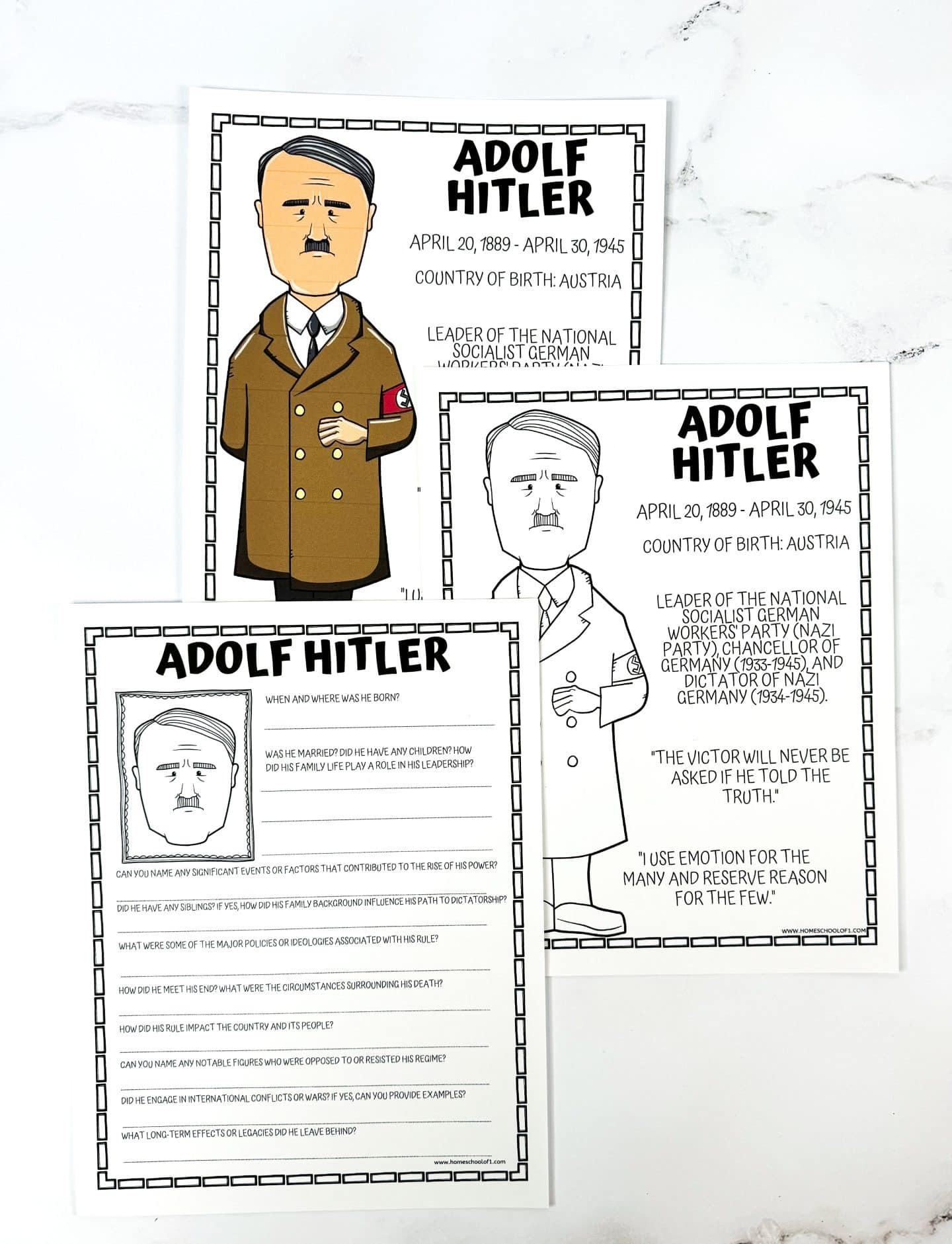
- Famous dictators in history worksheet – Encouraged analysis rather than simple biography.
World History
- The Middle Ages – Focused on systems (feudalism, trade, daily life), not just castles.
- Ancient Egypt – A good entry point into primary sources and archaeology.
- World War II – Better suited for older students because discussions naturally become heavier.
U.S. History
- Presidents unit study – Worked well alongside biography reading.
- The Civil War – Required more context, so we paired it with maps and documentaries.
- The American Revolution – Easier to anchor with timelines and cause-and-effect discussions.
Unit studies gave us breathing room. When a full curriculum felt rigid, focusing deeply on one topic made history feel less like coverage and more like understanding.
History Books
Even when we were using a structured curriculum, history books were what made the difference.
Some years we relied heavily on a spine. Other years, we built around biographies and reference books instead. Mixing formats kept history from feeling repetitive.
Here are the ones that stayed on our shelves the longest.
Reference Books
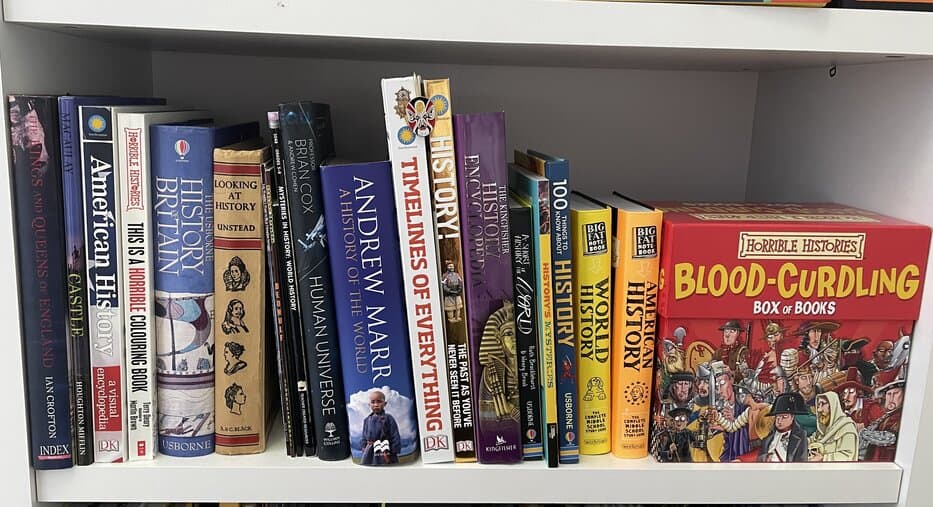
- The Big Fat Notebook For History – This worked well as a review tool. It breaks down big topics into manageable sections, which helped when something didn’t stick the first time.
- Kingfisher History Encyclopedia – We used this constantly for quick fact-checking and timelines. It’s not flashy, but it’s reliable.
- Timelines of Everything – Helpful for visual learners who need to see how events connect across time.
Best for Elementary & Middle School
- Horrible History Books – Probably the most re-read in our house. Humor made harder periods easier to approach.
- History the Past as You’ve Never Seen it Before – Very visual. Good for kids who glaze over with dense text.
- 100 Things to Know About History – Short entries made it easy to dip in without committing to a long chapter.
High School
- History’s Mysteries – These worked better once analytical thinking was stronger. They prompted discussion more than memorization.
- Mysteries in History – A critical-thinking book that challenges students to analyze history’s biggest unanswered questions.
- The Usborne History of Britain – Dense but thorough. Better suited for focused readers.
Classic History Books
- Beowulf – We treated this more as literature tied to history than as pure history study.
- Castle – Still one of the clearest explanations of medieval life.
- Kings & Queens – Useful for understanding how leadership shaped different eras.
Books didn’t replace curriculum for us, but they often deepened it. When a program felt dry, adding the right book changed the tone of the whole week.
History Workbooks
We didn’t rely on homeschool workbooks every year, but they were useful during transition periods, especially when I needed something structured without committing to a full new curriculum.
They worked best for review or for reinforcing a specific time period, not as our main spine.
American History
- US History Workbook for Middle School (1865 to Present Day) – Helpful for middle school review. It kept post–Civil War events organized when the timeline started feeling crowded.
- Mark Twain History Workbook for Middle School (1607–1865) – More traditional in style. Good for students who like clear sections and direct questions.
- Slavery, Civil War, and Reconstruction – Best paired with reading and discussion. On its own, it can feel heavy.
World History Workbooks
- World War II History Book – Better for older students. WWII is complex, and this works more as reinforcement than introduction.
- World Civilizations and Cultures – Useful as an overview, especially when jumping between eras.
- World History Quick Stats – More of a reference tool than a teaching book.
Comprehensive Social Studies
- 180 days of social studies – This was helpful during busier seasons. Short daily practice kept momentum going without overloading the week.
Workbooks didn’t replace discussion or reading for us, but they helped keep progress measurable when we needed structure.
History Documentaries & Video Resources
We didn’t rely on documentaries as our main curriculum, but they helped when a topic felt abstract or distant.
Sometimes watching a well-produced series clarified in one hour what a textbook struggled to explain.
YouTube Channels
- Crash Course – Best for middle and high school. The pace is quick, so it works better once students can pause, rewind, and take notes.
- Horrible Histories – Still one of the easiest ways to make history stick. Humor lowers resistance.
- History Channel (YouTube & Streaming) – Useful for short topic overviews, though we treated these as supplements, not primary instruction.
Streaming Documentaries
- Ken Burns’ Documentaries (PBS) – Strong for high school. Dense, discussion-heavy, and best paired with note-taking.
- Liberty’s Kids – Worked well in the elementary years when we were covering the American Revolution.
- Empire of the Tsars – Better for older students who can handle political nuance.
- The Men Who Built America – Helpful for connecting industrial history to modern economics.
Last Updated on 3 September 2026 by Clare Brown
