Meaningful Early Finisher Activities Kids Can Do Independently

We’ve all been there. A student (or in my case, Freddie) finishes their work, looks up, and immediately the productivity evaporates. If you’ve ever scrambled for early finisher activities in that exact moment, this list is for you.
Whether you’re managing a classroom of 30 or a homeschool of one, the problem is the same: now what?
These are real, practical options, not activities that sound good in theory but fall apart in practice.
Why Early Finishers Are Tricky
Fast finishers aren’t a problem to solve, they’re an opportunity you need to be ready for. The issue is that without a clear system, one of two things happens:
- The early finisher becomes a distraction (for themselves or everyone else)
- They learn that finishing fast = more busywork, so they start dragging their feet
Neither is good. What you need are activities that feel like a reward but still keep their brain ticking. The ideas below do exactly that.
No-Prep Early Finisher Activities
These require nothing from you except a list on the wall or a laminated card on their desk. Set them up once, and they run themselves.
Silly Sentence Challenge – Give students a list of vocabulary or spelling words and challenge them to write one sentence using as many as possible. Freddie calls this “word Tetris.” It works.
Shape Art – Students draw a picture using only geometric shapes, triangles, circles, rectangles. Sounds simple. Gets surprisingly creative and keeps them genuinely busy.
Make Up a Word Problem – Ask them to write a maths word problem for a friend or for you to solve. They have to actually understand the maths to do this well. Sneaky learning.
Riddles & Jokes – Keep a joke notebook going. Students write their own riddles or knock-knock jokes. Light, fun, and genuinely something they look forward to.
Map Drawing – Challenge students to draw a detailed map of their bedroom, home, or street, and include a proper key. Great for geography skills without it feeling like geography.
Measure Everything – Give them a ruler or tape measure and a recording sheet. How many things in the room can they measure in 10 minutes? Simple, independent, and oddly satisfying. Print out our free measurement worksheet to make it even easier to plan.
Make a List – Pick a topic, “animals I’d want as a pet,” “things I’d pack for a desert island,” “foods I’d eat if I had to eat one thing forever”, and have them list as many as they can think of. A good one for reluctant writers because there’s no pressure.
Write Step-by-Step Instructions – Ask them to explain how to do something they’re good at. How to tie your shoes. How to make a sandwich. How to beat a level in Minecraft. Forces real thinking about sequence and clarity.
Journaling – Free writing time. No prompts required (though having a list of prompts available helps the kids who freeze up). This builds writing habits quietly, without any performance pressure.
Rainbow Writing – Students practise high-frequency or spelling words by writing each letter in a different colour. Simple. Effective. Genuinely enjoyable for most kids.
Printable Early Finisher Activities
Sometimes you want something with a bit more structure, something they can pick up, work through, and feel accomplished when it’s done.
Good printable options include:
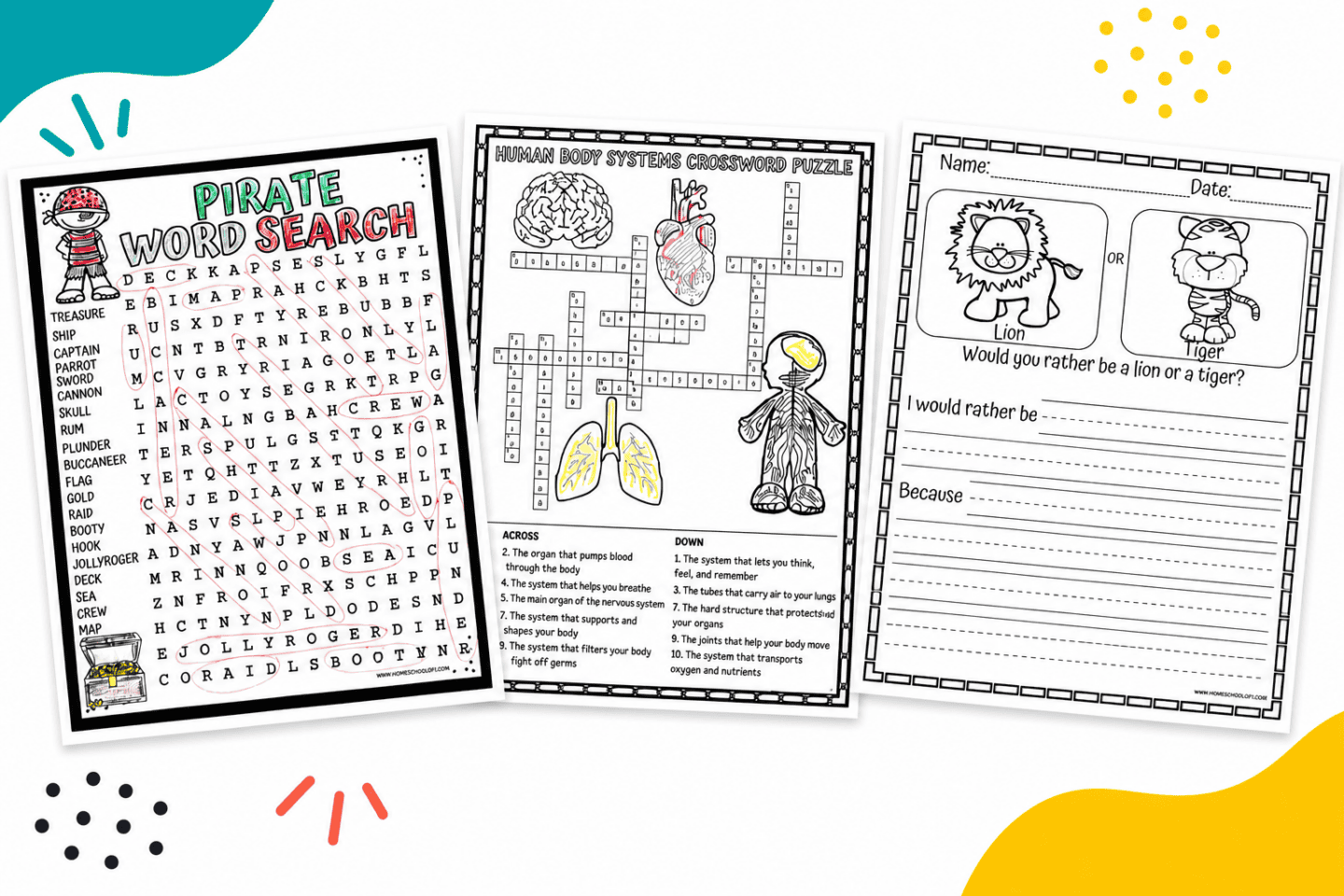
- Word searches – a reliable quiet activity that works for almost any age
- Poetry templates – scaffolded frames for haiku, acrostic, or cinquain poems
- Writing prompts – open-ended, imaginative, or topic-based
- Crossword puzzles – good for vocabulary practice without it feeling like revision
- Scattergories – can be done solo or saved for a pair activity
The key with printables is accessibility. Keep them somewhere students can grab independently, a tray, a folder, a shelf. The less you have to manage the handover, the better.
Interactive Tools for Fast Finishers
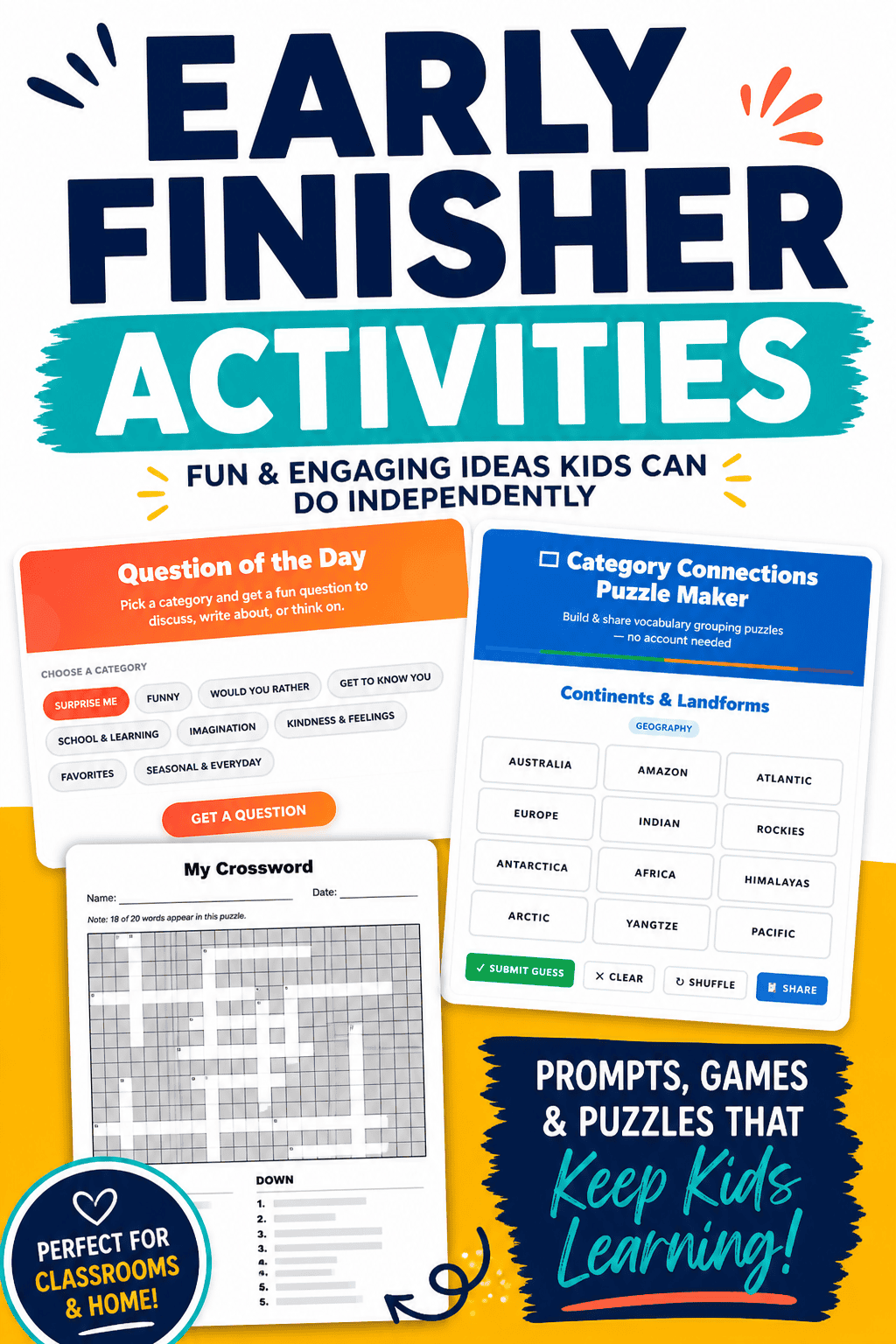
If you’ve got access to devices, this is where things get really easy. I’ve built a collection of free online tools that students can use completely independently, no login, no setup, works on any device. That last part matters. You don’t want to be managing the handover while also helping someone else.
Here’s what’s actually useful for early finishers, grouped by type:
Writing & Creative Prompts
Fun Writing Prompt Generator – Over 100,000 combinations. Students who freeze up when told to “just write something” tend to do well with this because the decision is made for them.
Free Drawing Prompt Generator – Generates a random art idea instantly. No faff, straight into creating.
Random Object Generator – A random object to draw, write about, or build a story around. Simple and surprisingly effective.
Random Word Generator – Useful for story starters, silly sentence challenges, or just getting the brain moving.
Letter Generator – Good for word building games, alphabet challenges, or Scattergories-style activities.
Superpower Generator – Generates a superpower with prompts. Good for creative writing, or honestly just a bit of fun.
Random Debate Topic Generator – Generates a topic with for and against arguments. Better suited to older students who need something with a bit more substance.
Games & Challenges (Solo or Pairs)
Funny Would You Rather Generator – Works in pairs or small groups. Low-stakes, high engagement.
Online Scattergories – Classic game, no materials needed. Can be played solo or together.
Icebreaker Question Spin the Wheel – Spin for a random question. Good for pairs or as a classroom settling activity.
Free Sudoku Generator – Printable sudoku at whatever difficulty level you need. A solid, quiet, independent activity.
Random Color Generator – Gives students a random colour to use as a creative constraint, draw only using that colour, write a poem inspired by it, etc.
Research & Exploration
Pick an Animal Generator – Generates a random animal to draw, research, or write about.
Random Country Generator – Students can research it, find it on a map, draw the flag, a genuinely open-ended geography task that runs itself.
US City Generator – Same idea at city level.
Random Holiday Generator – Picks a surprise holiday to learn about, make a card for, or research.
The best early finisher system is one that’s predictable, independent, and requires nothing from you in the moment. Get the options in place, explain the expectations once, and then let it run.
Whether you’re teaching a class of 30 or, like me, a very enthusiastic class of one, the goal is the same: keep the momentum going and make finishing feel like the beginning of something, not the end.
Last Updated on 9 June 2026 by Clare Brown
