Usborne Books for Homeschooling | 10 Titles We Actually Use

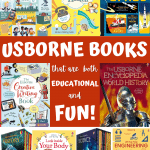
Usborne books have been part of our homeschool for years, long before I realized how many educational titles they publish.
We started with the usual picture books when Freddie was little, but as his interests grew, so did our collection. History, science, engineering, even politics, their nonfiction especially has worked well for us because it’s clear, visual, and easy to dip in and out of.
These are the books we’ve actually used in our homeschool and why they’ve earned a permanent place on our shelves.
**This post may contain affiliate links. As an Amazon Associate and a participant in other affiliate programs, I earn a commission on qualifying purchases.**
Usborne Books We Use in Our Homeschool
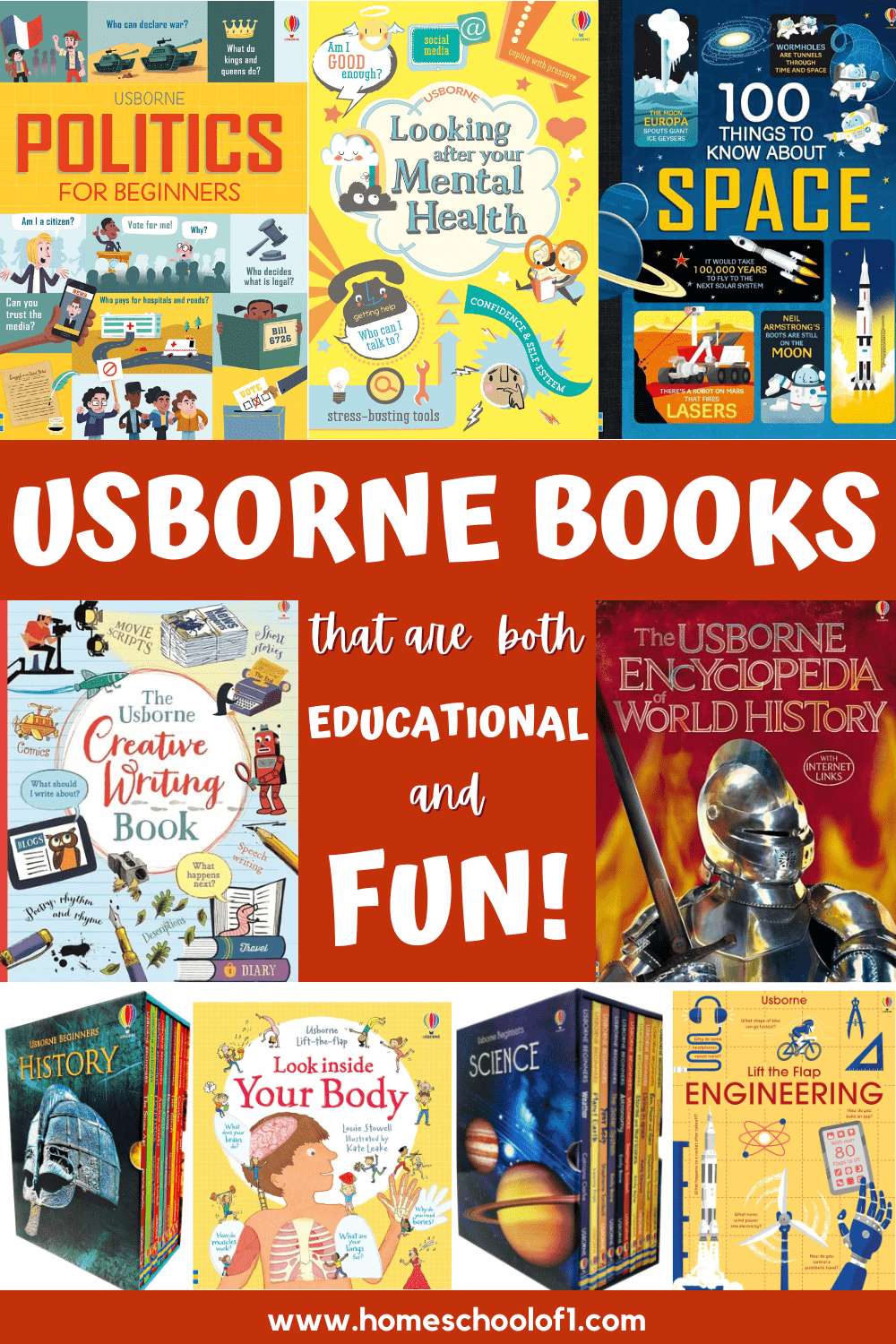
Here are the 10 Usborne titles and series that have worked well for us across history, science, engineering, and writing:
- A Short History of the World
- Politics for Beginners
- 100 Things to Know About Space
- Looking After Your Mental Health
- Creative Writing Book
- Look Inside Your Body
- Encyclopedia of World History
- Usborne Beginners Series Science Books
- Lift the Flap Engineering
- Usborne Beginners Series History Books
If your child enjoys anatomy topics, you might also like our favorite human anatomy books for kids.
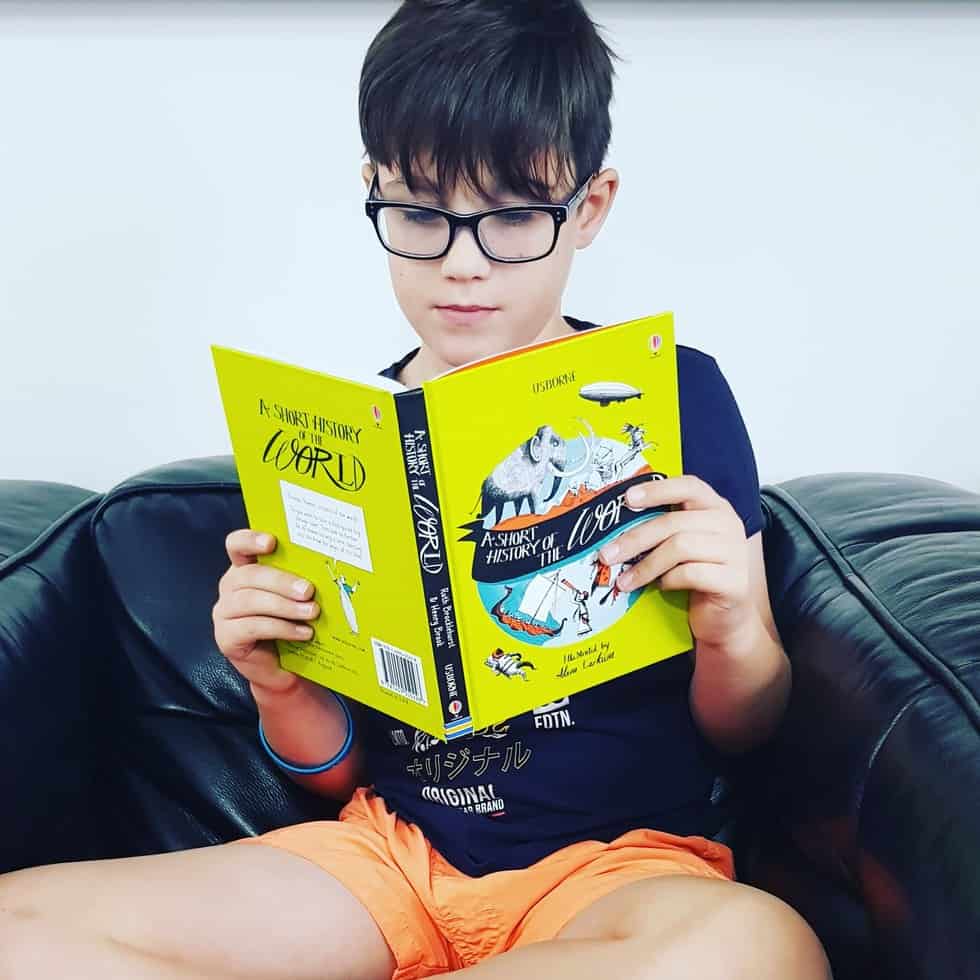
A Short History of the World
A Short History of the World was the first book Freddie picked up from the stack, which didn’t surprise me. Since we started homeschooling, history has easily been his favorite subject. He went through a Tudor phase, then Ancient Greece, and now he’s more interested in seeing how everything connects across time.
The book moves clearly through major periods, starting with the Ice Age and Ancient civilizations, then covering the Medieval era, the Early Modern period, and into more recent history. It gives a strong overview without feeling heavy or textbook-like.
The illustrations really help here. They break up complex ideas and make big timelines easier to follow, which is why it’s become one of the homeschool history books we reach for when we want context without overwhelm.
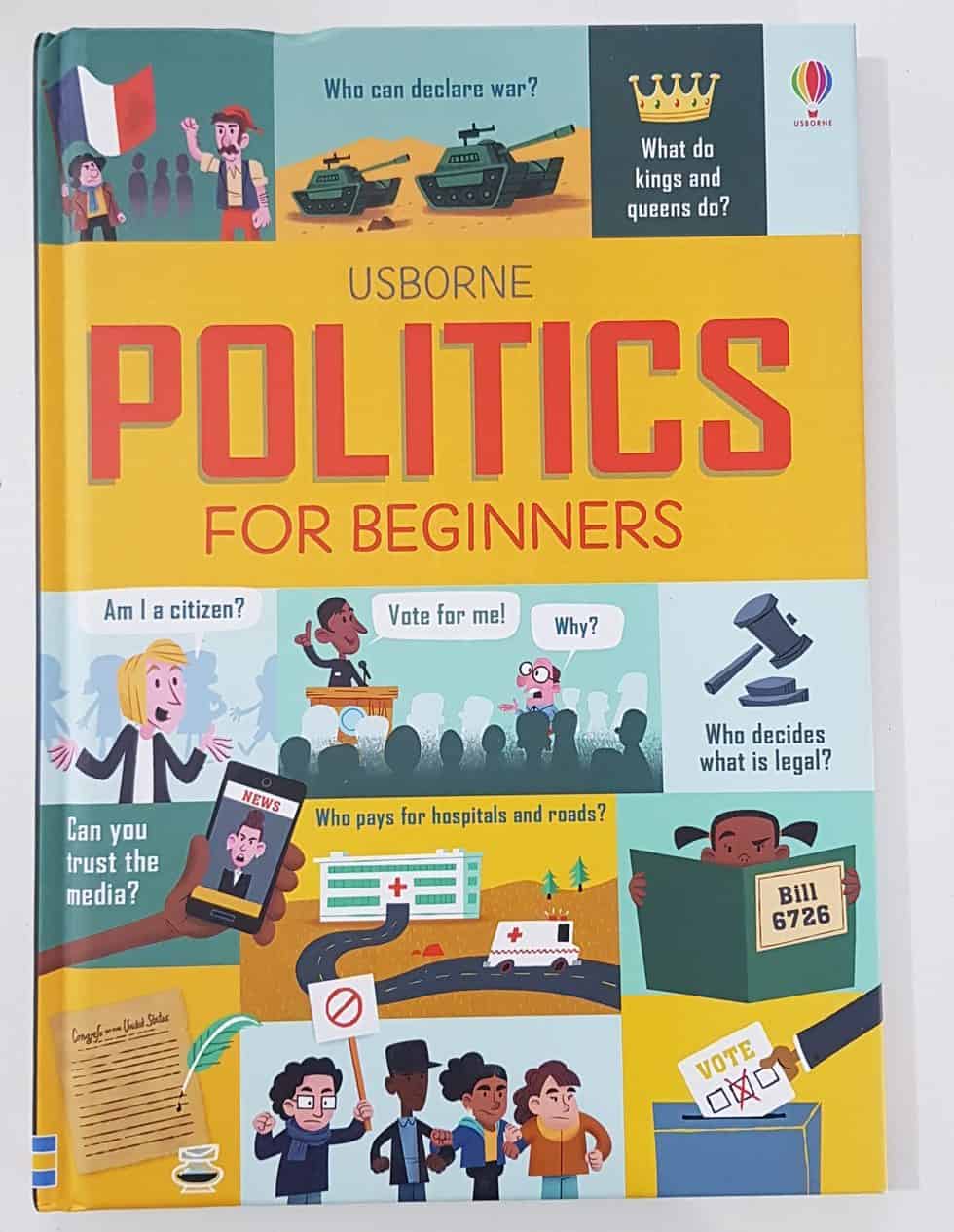
Politics for Beginners
Politics for Beginners has been one of the most unexpectedly useful books in our homeschool. It breaks down big ideas like democracy, power, voting, and rights into short, manageable sections that don’t feel overwhelming.
What I appreciate most is how it shows that politics isn’t just something happening “out there.” It connects decisions, rules, and responsibilities to everyday life, which made it easier for Freddie to engage with it.
Even at eight, he was able to understand the basics and start forming opinions, which led to some thoughtful (and sometimes lively) discussions around the table.
If you’re putting together homeschool civics lessons, this works well as a foundation without feeling like a formal textbook.
100 Things to Know About Space
100 Things to Know About Space was meant to be a quick flip-through, but we ended up sitting with it for nearly an hour.
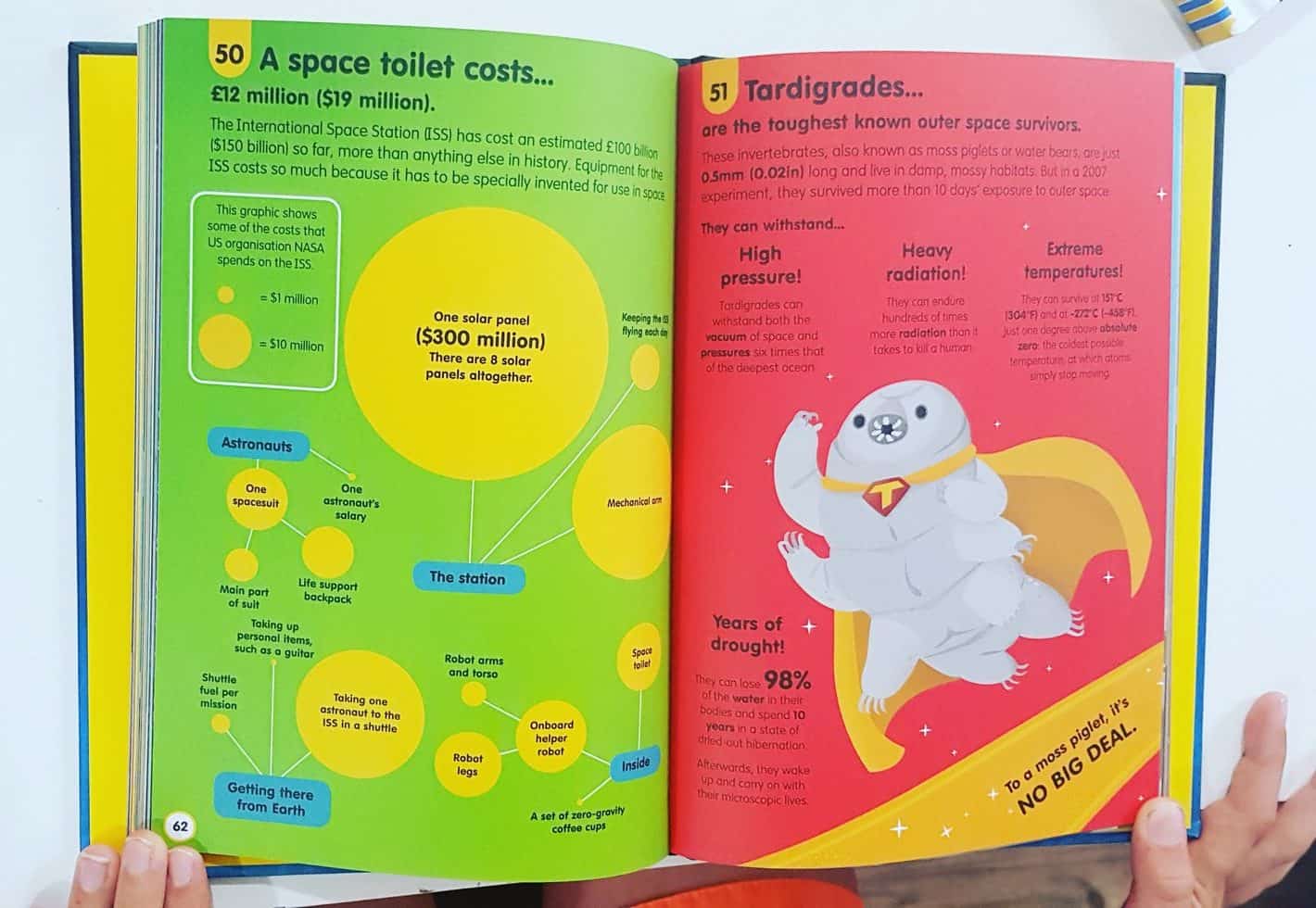
Within minutes Freddie was reading facts out loud: the cost of a space toilet, the training astronauts go through, even the height requirements. It’s packed with those slightly surprising details that make kids stop and say, “Wait… really?”
What works well is the format. Each fact is short, clear, and supported by visuals, so it never feels dense. You can read it straight through or dip in when a space topic comes up in your lessons. It’s easily one of the educational science books we’ve used when we want high-interest content without a heavy textbook feel.
Lift the Flap Engineering
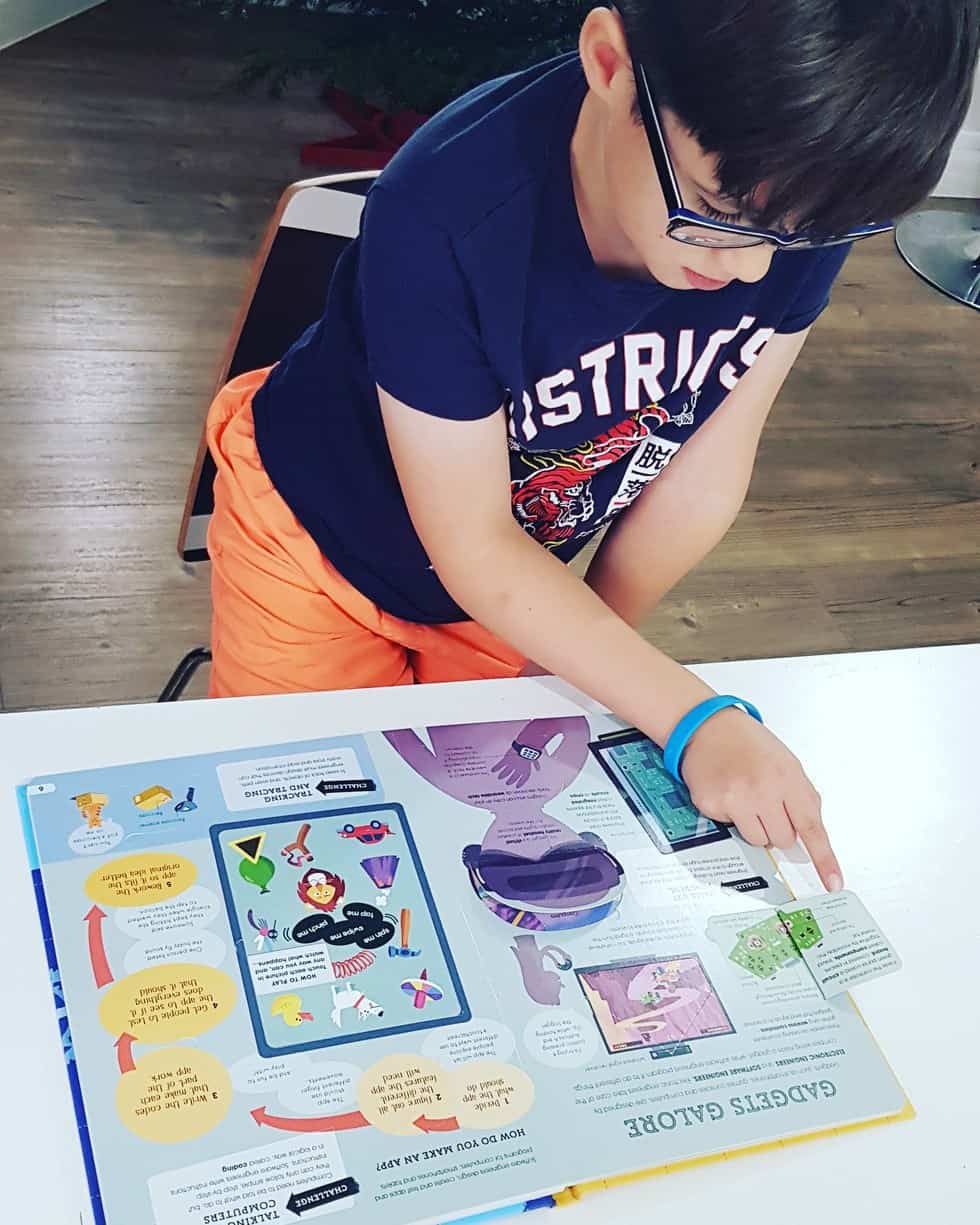
Lift the Flap Engineering looks simple at first glance, but it covers far more than you’d expect. I initially wondered if the flap format might feel too young, but the content is solid and genuinely informative.
Because Freddie’s dad is an engineer, this one naturally caught his attention. The flaps help break down how things work, layering explanations in a way that makes technical ideas easier to follow without oversimplifying them.
The section on flight stood out, especially the explanations of lift, thrust, and drag. Since we travel often, it was interesting for him to connect those concepts to something he sees regularly.
If you want engineering introduced in a hands-on, visual way, this works well without feeling like a textbook.
Looking After Your Mental Health
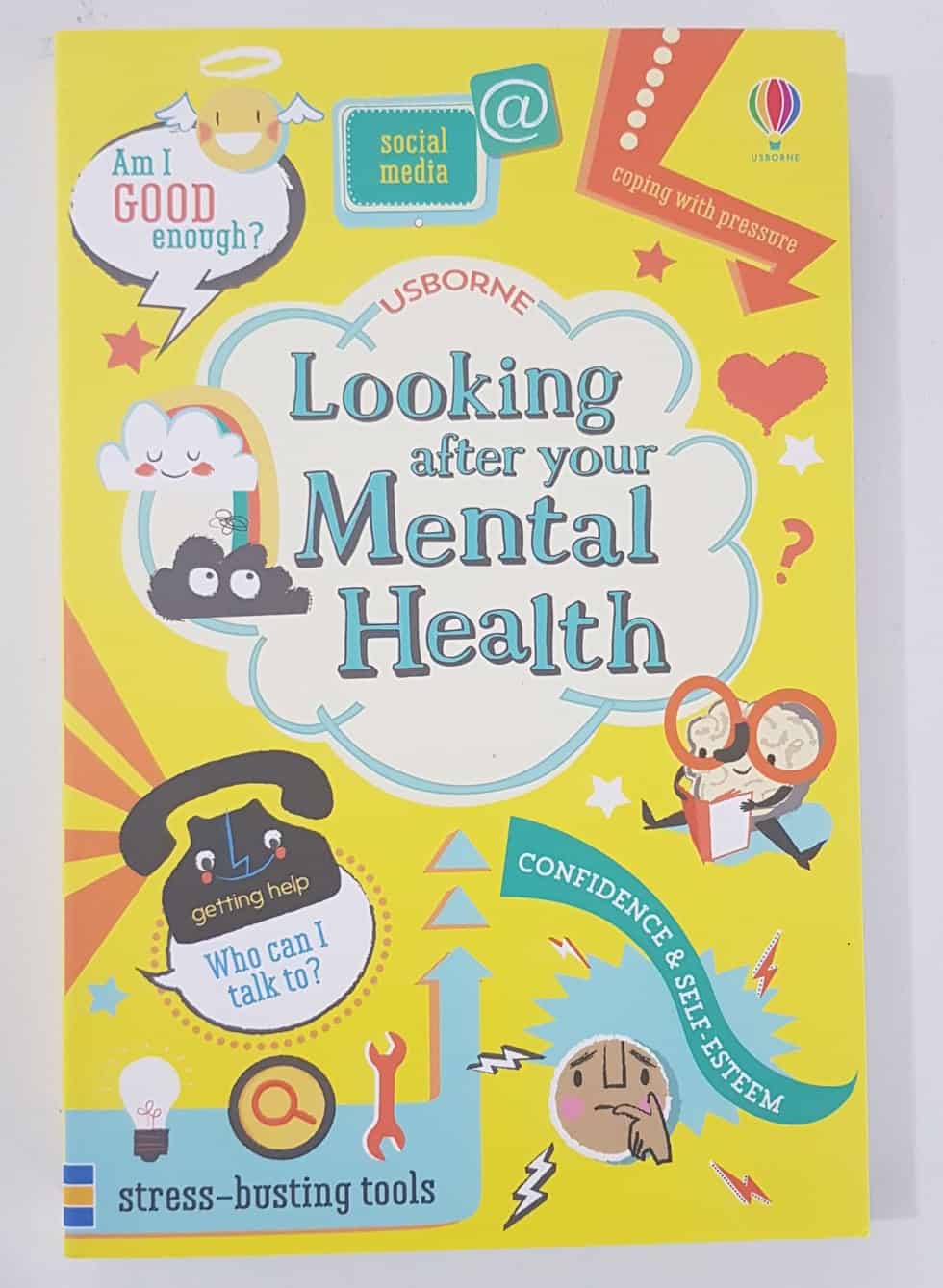
Looking After Your Mental Health covers topics that weren’t openly discussed in children’s books when I was growing up. It’s a broad guide that touches on emotions, friendships, social media, relationships, puberty, and the pressures kids face today.
Freddie hasn’t read this one yet, but I’ve looked through it carefully. In my opinion, it’s better suited to older children, probably around middle school age and up, as some sections go into more mature territory.
That said, there are chapters that introduce emotional awareness and self-care in an accessible way, which makes it a useful book to keep on hand as kids grow into those conversations.
If you’re building a wider plan around emotional wellbeing, it can also complement a structured social-emotional learning approach at home.
Last Updated on 13 February 2026 by Clare Brown
