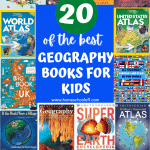
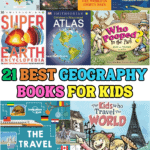
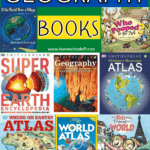
Geography books ended up being one of those things we used far more than I ever expected when we started homeschooling.
It usually wasn’t part of a formal lesson. More often it was an atlas left on the table after breakfast, or my son asking where a country was after hearing it mentioned somewhere. We’d start with one map and somehow end up ten pages later comparing climates, flags, or the strangest place names we could find.
When he was younger, anything with detailed maps or quirky facts kept him hooked far longer than a worksheet ever did. Even now, we still pull a few of these out just to explore somewhere new without planning an entire unit study around it.
These are the geography books that actually stayed on our shelves and got used more than once.
**This post may contain affiliate links. As an Amazon Associate and a participant in other affiliate programs, I earn a commission on qualifying purchases.**
Children’s Geography Books
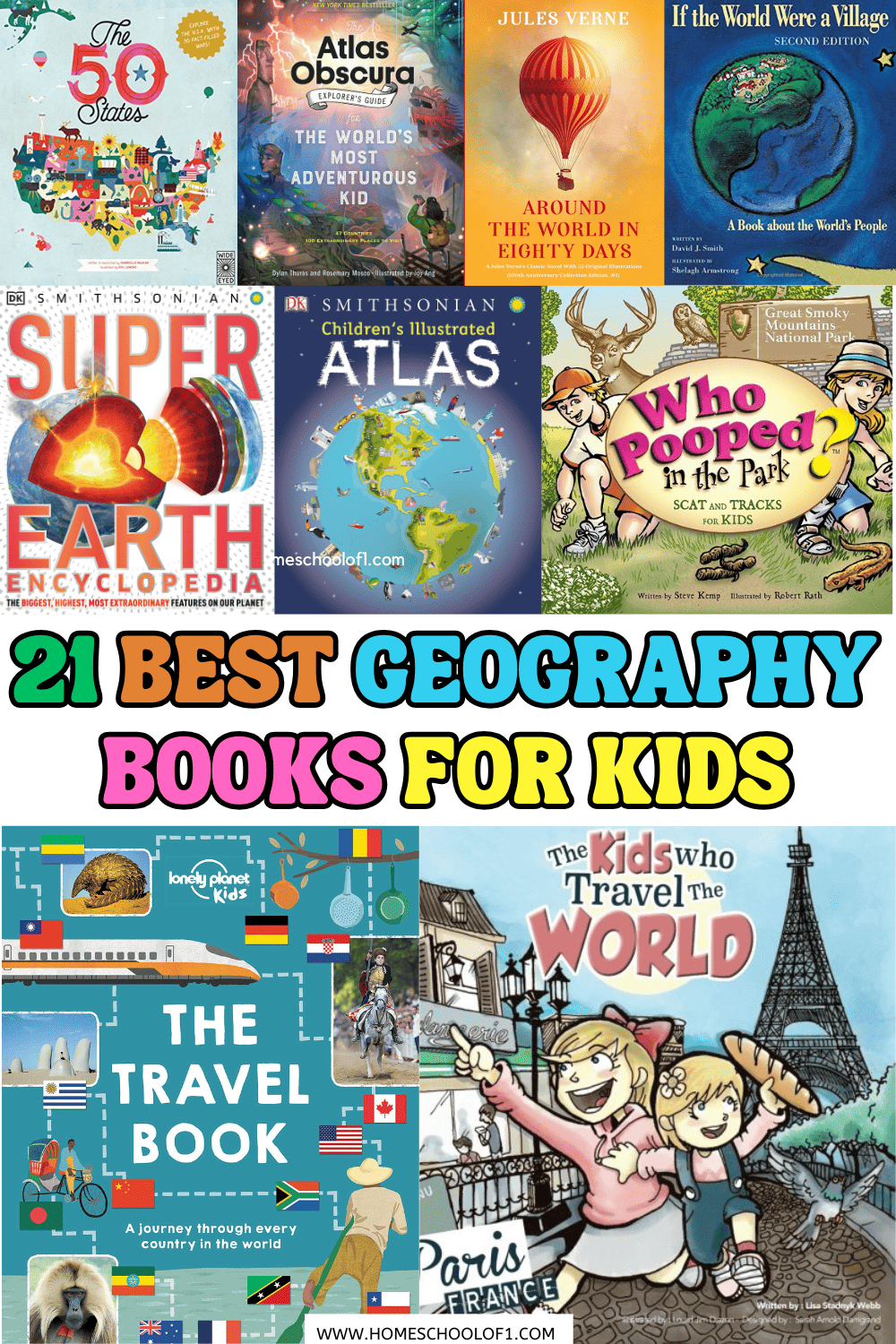
This collection leans heavily toward books we actually reached for more than once, not the ones that looked good but gathered dust on the shelf. You’ll find everything from visual atlases to story-based titles that quietly teach geography through setting, culture, and travel.
Some are better for younger kids who like pictures and quick facts, while others work well for independent readers who want to dig deeper into places around the world.
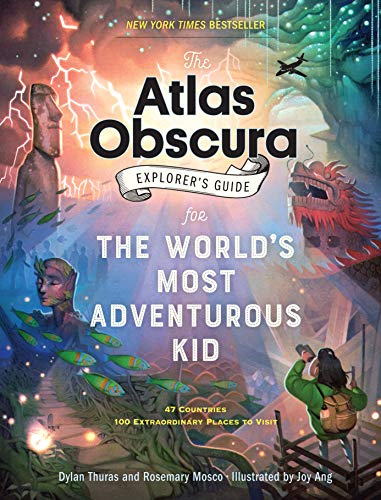
The Atlas Obscura Explorer’s Guide for the World’s Most Adventurous Kid
This was one of those birthday gifts that didn’t get read once and shelved, it stayed on the coffee table for weeks. My son kept jumping from page to page calling me over to look at places I’d never even heard of, from strange festivals to hidden caves. It isn’t something you sit and read cover to cover, but it’s brilliant for curious kids who like opening a book and immediately finding something weird or surprising.
Continue Reading
Around The World in Eighty Days: A Jules Verne’s Classic Novel
This is one of the few classics that actually held his attention longer than I expected. We ended up keeping a map nearby while reading so we could track Phileas Fogg’s route together, which made the story feel much more real. It turned into less of a “reading assignment” and more of a shared challenge, especially when he tried to guess where the journey would go next.Related: Learn more with our free continent worksheets.
Continue Reading
Who Pooped in the Park?
The title alone was enough to hook him when he was younger. What I liked was that it naturally led to conversations about habitats and national parks without feeling like a lesson. He treated it almost like a guessing game, trying to work out which animal each clue belonged to, and yes, there was a lot of laughing involved.
Continue Reading
The Kids Who Travel the World: Paris
I picked this up when I was looking for something that showed everyday life in another country rather than just landmarks. The format worked really well because it feels like you’re tagging along with the children as they explore the city. It was one of those books that quietly introduced new vocabulary and culture without him realizing he was learning anything at all.
Continue Reading
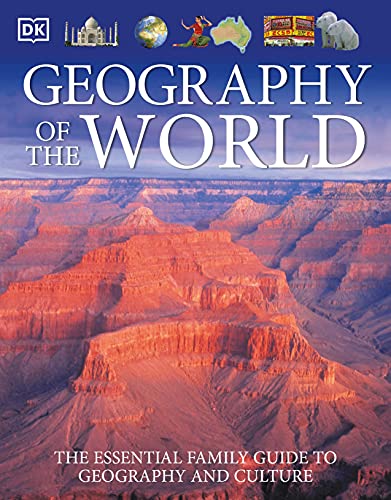
Geography of the World: The Essential Family Guide to Geography and Culture
This became one of our “dip in and out” reference books during geography topics. It’s detailed enough that we could use it alongside lessons, but not so heavy that it felt like a textbook. More than once we started looking up one country and ended up wandering through several pages just comparing how people live in different regions.Pair this with a geography board game for a hands-on learning experience.
Continue Reading
National Geographic Kids World Atlas
This atlas has been one of the few reference books that never stayed on the shelf for long. The maps are busy enough to keep kids interested without being overwhelming, and my son used to spend ages tracing borders or checking how far apart countries actually were. It’s also one of those books I still catch myself flipping through when something random comes up in conversation.
Continue Reading
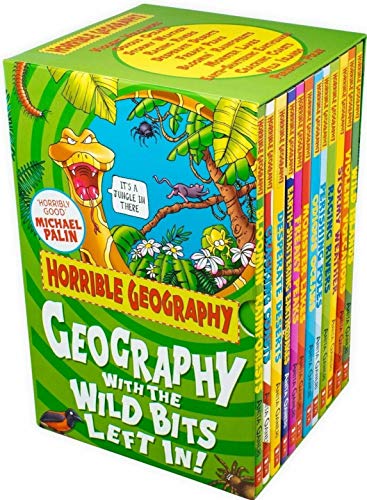
Horrible Geography Collection
If traditional geography books ever felt a bit dry, this series completely fixed that for us. The humor is exactly the kind that keeps kids reading even when the topic is something like deserts or coastlines. My son liked that it didn’t feel like schoolwork at all, but somehow he’d still come out with a surprising amount of actual knowledge.
Continue Reading
If the World Were a Village – Second Edition: A Book about the World’s People (CitizenKid)
This one led to some genuinely interesting conversations at home. The idea of shrinking the entire world’s population down to 100 people makes big statistics easier to picture, even for adults. We ended up rereading certain sections just to wrap our heads around how uneven things like language and resources really are.
Continue Reading
The Big Book of the UK
We had to include this one purely because of our connection to England, but it turned out to be more useful than I expected. It’s packed with the kind of details kids tend to remember, traditions, odd facts, and cultural bits that don’t usually show up in standard geography books. We even caught ourselves debating whether a few things were accurate based on our own experience.
Continue Reading
The Travel Book: A journey through every country in the world
This is the book we tend to open when we just want to “go somewhere” without planning anything formal. My son liked randomly picking a country and reading whatever was on that page, which often led to him asking questions I wouldn’t have thought to cover otherwise. It’s a nice way to keep geography casual and curiosity-driven instead of structured.This would make a great geography gift for kids who love to read.
Continue Reading
Where on Earth? Atlas: The World As You’ve Never Seen It Before
This one worked well once my son started asking more “why” questions instead of just “where is it?” It isn’t just maps, it pulls in things like tallest buildings, extreme environments, and unusual global records, which kept him flipping pages longer than I expected. We often ended up reading one section and then jumping somewhere completely different because something caught his eye.
Continue Reading
Children’s Illustrated Atlas
This was one of the atlases we relied on when he was younger and still preferred lots of visuals over dense text. The maps are clear without being overly simplified, which made it easier for him to actually understand what he was looking at instead of just scanning pictures. It’s the kind of book that gets pulled out during quick “Where is that?” moments.Use this book with one of our favorite map games for kids for hands on fun.
Continue Reading
All Countries, Capitals and Flags of the World
This turned into more of a challenge book than a sit-down read in our house. My son went through a phase of trying to memorize as many flags and capitals as possible, and this gave him something concrete to test himself with. It’s straightforward, but if you have a child who likes trivia or competition, it gets used a lot more than you’d expect.
Continue Reading
The 50 States: Explore the U.S.A.
We’ve used this one repeatedly when covering U.S. geography because the layout makes it easy to jump between states without feeling overwhelming. The two-page format keeps everything contained and readable, which worked well when we were short on time but still wanted to cover something meaningful. It’s also one of those books we’ve revisited more than once as interests changed.Related: How to remember the states
Continue Reading
National Geographic Kids U.S. Atlas
Compared to lighter state books, this one felt more like something he could “grow into.” The photography and detail kept him engaged even as the content became more in-depth. When we wanted something beyond quick facts, especially for older elementary or middle school, this was usually the one we reached for.Use this alongside a state game for kids.
Read More
If America Were a Village
I haven’t read this one cover to cover yet, but after how much we both liked If the World Were a Village, it felt worth adding to our shelf. That earlier book sparked some of our longest conversations about population, language, and resources, so I’m expecting this to do something similar but with a U.S. focus. It’s the kind of format that makes big ideas easier to picture without needing a full lesson around it.Carry on learning with the 50 States unit study.
Read More
Geography: A Visual Encyclopedia
This one quickly became the book we reached for whenever a geography topic overlapped with science. The visuals do most of the heavy lifting, which helped when explanations like plate movement or climate patterns started getting more complex. We didn’t read it straight through, it worked much better as something to open alongside whatever question came up that day.Use this book with our free printable geography worksheets.
Read More
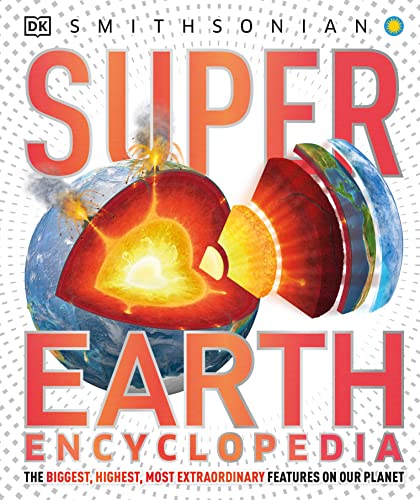
Super Earth Encyclopedia (Super Encyclopedias)
If your child likes dramatic facts and big visuals, this one definitely holds attention. The sections on extreme weather and natural disasters were the ones my son kept coming back to, especially anything involving volcanoes or hurricanes. It feels slightly more advanced than some of the earlier books on the list, but that’s also why it stayed useful longer.Treat the kids to our favorite geography subscription box for more fun.
Read More
Where on Earth?
This was another one that encouraged more wandering than structured reading. We’d open it intending to look up one landform and end up several pages away comparing completely different regions. It’s particularly good for kids who like seeing how physical features connect across the world rather than just memorizing names.Use this with our free Landforms coloring worksheet.
Read More
How to Ace the National Geographic Bee
Even though the competition itself isn’t running anymore, the format still works well for kids who enjoy quizzes or testing themselves. My son treated it almost like a challenge book, dipping in and out to see what he already knew. It covers a wider range of topics than you’d expect, which made it useful beyond just trivia practice.Related: Geography games for middle school students
Read More
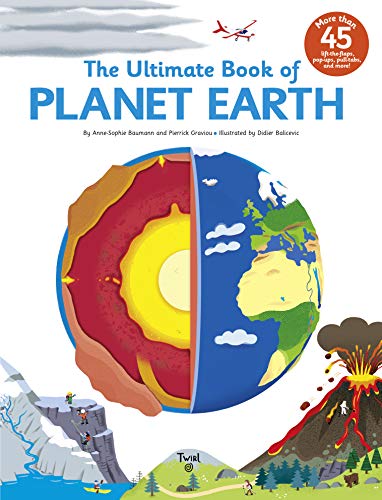
The Ultimate Book of Planet Earth
This one got the most use when he was younger because the interactive parts made it feel more like a toy than a reference book. The pop-ups and moving pieces kept him engaged long enough to actually absorb the information about mountains, oceans, and weather. It’s a good reminder that sometimes the format matters just as much as the content.
Read More
Over the years, these are the geography books that actually held our attention and got used more than once. Some worked best for quick map checks, others turned into longer rabbit-hole reading sessions.
Adding even one or two to your shelf is usually enough to make geography feel a lot more real and less abstract. They also work well as supplements to a more structured homeschool geography curriculum if you’re building out a full social studies plan.
Last Updated on 9 February 2026 by Clare Brown