Free Financial Literacy Worksheets for Kids K-12


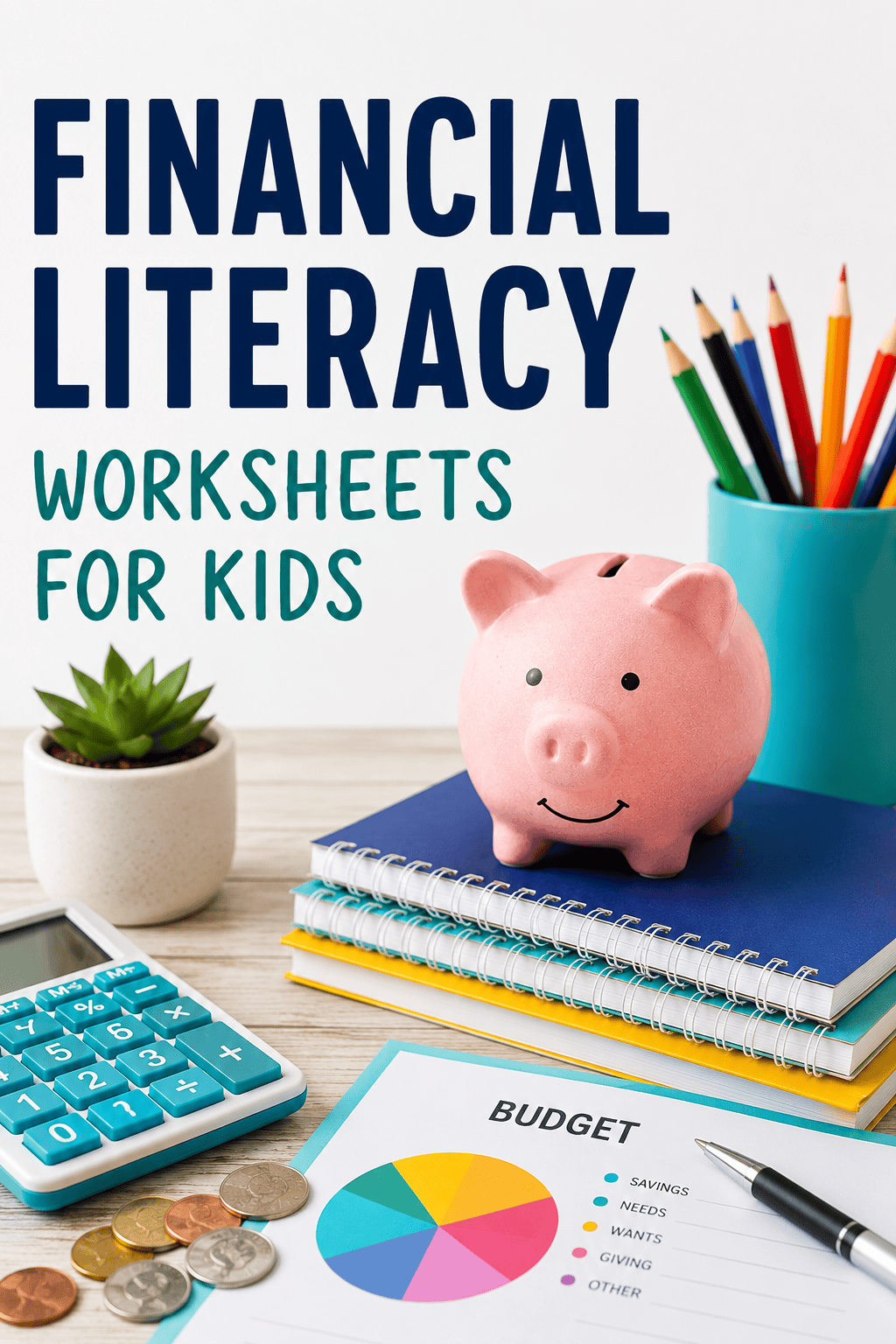
Free financial literacy worksheets can make teaching money skills much easier, especially when they cover real-life topics kids will actually use. From coin recognition and saving money to budgeting and spending decisions, these printable activities work for kindergarten through high school.
Before running Homeschool of 1, I spent years as a finance director, and one thing that always stood out was how many adults struggle with basic money skills. That’s why I’m careful about the activities included here, they focus on practical understanding rather than just filling out worksheets.
Whether you’re teaching at home or in the classroom, these low-prep financial literacy printables make it easier to introduce money concepts in a way that feels useful and age-appropriate.
**This post may contain affiliate links. As an Amazon Associate and a participant in other affiliate programs, I earn a commission on qualifying purchases.**
Financial Literacy Worksheets by Age
Financial literacy doesn’t need to wait until high school. Kids usually understand money skills best when concepts are introduced gradually using simple, real-life examples that match their age and experience.
For ages 5–7, focus on recognizing coins, understanding that money is exchanged for goods, and introducing saving in a visual way.
For ages 7–11, kids can begin building habits like budgeting, distinguishing between needs and wants, and setting small money goals.
For ages 12+, financial literacy activities can introduce more real-world concepts like bank accounts, budgeting for expenses, credit, and debt.
The printable financial literacy worksheets below are grouped with this in mind, making it easier to find activities that fit your child or students without overcomplicating things.

Financial Literacy Activities for Kids
If you’re teaching money skills, the biggest difference I’ve found is using the right level at the right time. Worksheets that are too basic get ignored, and ones that are too advanced just frustrate kids.
These are grouped by age so you can quickly find something that fits, whether you need a quick activity or something a bit more structured.
Kindergarten Financial Literacy Worksheets
At this stage, the focus is mostly on helping kids recognize money and understand what it’s used for. Simple, visual activities usually work best.
- Coin identification worksheets – A simple way for younger kids to recognize coins and start understanding basic values. These work well as quick math warm-ups or independent practice.
- Needs vs wants game (Consumer Finance) – Introduces one of the earliest money concepts in a way that’s easy for young children to understand.
- Earning money activities (Practical Money Skills) – Helps kids connect work, chores, and rewards using everyday examples they can relate to.
- Saving and spending basics (TD Bank) – A gentle introduction to saving money, spending choices, and why people use money in different ways.
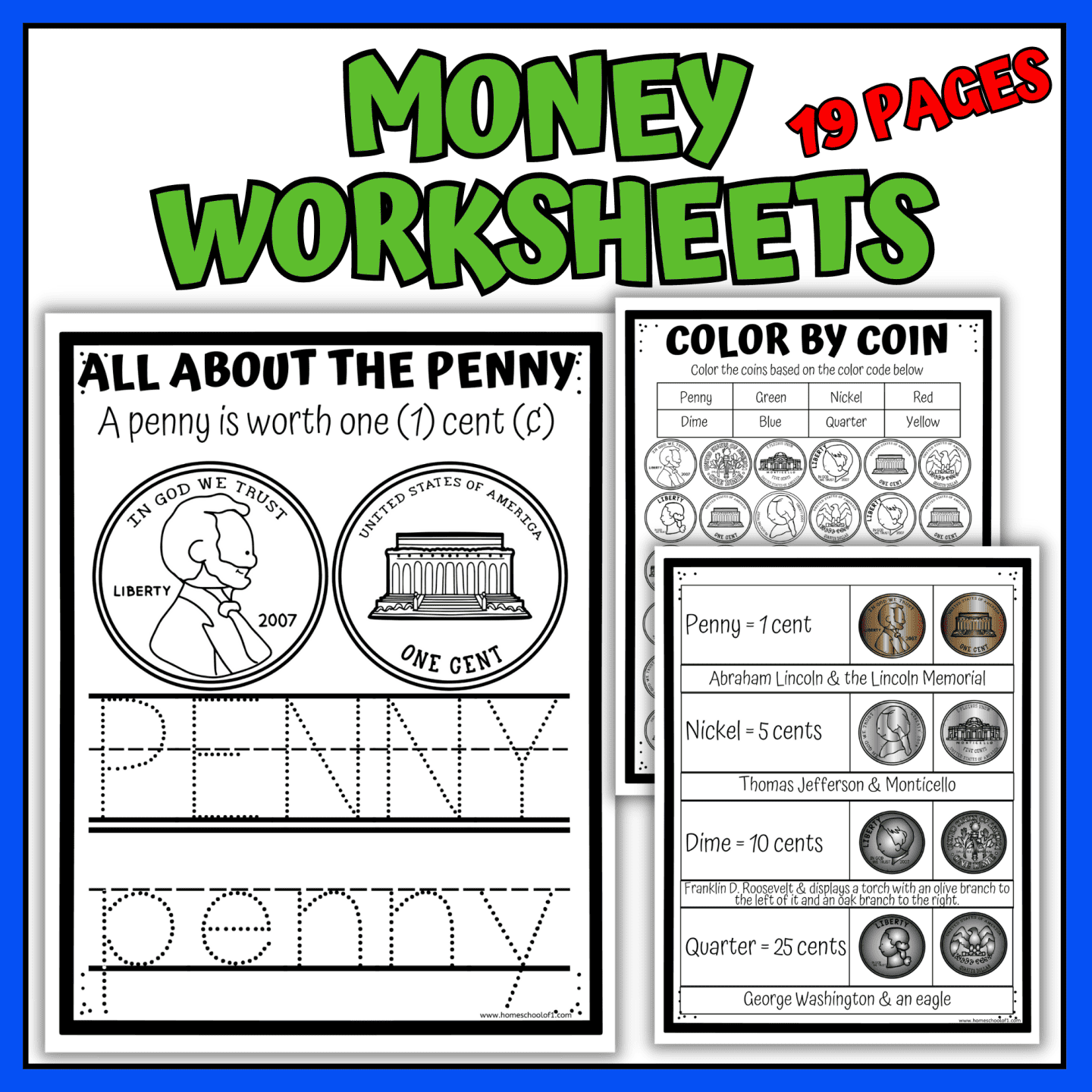
Need more than just a few worksheets?
These printable money worksheets are laid out as a complete mini unit, so kids don’t just recognize coins, they actually learn how to count and use them with confidence.
With 19 no-prep pages covering tracing, matching, and real coin practice, it’s a much easier way to build understanding without piecing activities together.
Financial Literacy Worksheets for Grades 1–3
This is usually the stage where kids begin making stronger real-world connections. It becomes easier to introduce basic budgeting, spending decisions, and the idea that money needs to be managed rather than simply spent.
- Shopping math worksheets – Combines math practice with real-life scenarios so kids can work with prices, totals, and everyday spending choices.
- Printable chore cards – A practical way to connect responsibility with earning money at home or in the classroom.
- Money worksheets (counting and spending) – Reinforces coin values while introducing simple spending decisions and money management skills.
Money Skills Activities for Grades 4–5
By this age, most kids are ready for more realistic money conversations. They start noticing prices more, asking questions about spending, and understanding that money runs out eventually.
- Financial literacy crossword puzzle – Good for reinforcing money vocabulary without it feeling too much like schoolwork.
- Managing your money journey (Consumer Finance) – Covers saving and spending using situations kids will actually recognize.
- Making spending choices (Consumer Finance) – Helps kids think through purchases instead of automatically buying the first thing they want.
- How to write a check (TD Bank) – Checks may not be common anymore, but this still helps explain how payments and bank accounts work.
- Allowances and responsibility (Practical Money Skills) – One of the easiest ways to introduce the idea that money needs to be managed, not just spent immediately.
Middle School Financial Literacy Worksheets
Middle school is where things start to click. Kids can handle more independence and begin understanding consequences.
- Smart consumer activities (Biz Kids) – Teaches how to evaluate choices and avoid impulse decisions.
- Fraud and identity theft basics (Consumer Finance) – Introduces online safety and awareness in a way that’s age-appropriate.
- Balancing a checkbook (TD Bank) – Builds attention to detail and understanding of tracking money.
- Credit card basics (Practical Money Skills) – A simple introduction to borrowing, interest, and responsibility.
High School Budgeting and Money Management Activities
At this stage, the focus shifts to real-life readiness. These are the skills they’ll actually need soon.
- Budget planning worksheets (TD Bank) – One of the most useful activities, helps teens plan for real expenses and manage money realistically.
- Building your financial future (Young Minds Inspired) – Encourages long-term thinking around saving and goals.
- Rate of return worksheets (Consumer Finance) – Introduces basic investing concepts in a structured way.
- Building wealth lesson plans (Dallas Fed) – Helps connect everyday decisions with long-term financial outcomes.
- Managing salary and avoiding debt (Practical Money Skills) – Focuses on real-world scenarios teens are about to face.
- Understanding taxes (Consumer Finance) – A practical introduction to something they’ll deal with very soon.
Financial Literacy Games
Educational worksheets are useful, but games are usually where kids start paying attention properly. Once money becomes part of a decision they’re making themselves, even something simple like choosing what to spend or save, the concepts make a lot more sense.
We used games a lot more than formal lessons for this kind of thing, especially in upper elementary. They’re an easy way to practice money skills without kids feeling like they’re doing extra schoolwork.
- Financial literacy quiz – Test money knowledge with our interactive financial literacy quiz for kids and teens. Questions cover budgeting, saving, spending, credit, investing, and other real-world money skills. It’s a fun way to check understanding after completing the worksheets and lessons above.
- Printable money matching pairs game – A quick activity for younger kids who are still learning coin names and values. This works well for centers, early finishers, or short math practice.
- Board games that teach money skills – Honestly one of the easiest ways to teach spending, saving, and decision-making without turning it into a full lesson. Kids usually learn more from playing a few rounds than from another worksheet.
- Income and expenses game (FDIC) – Helps kids see how money comes in and goes out using simple real-life scenarios that are easier to understand than abstract budgeting examples.
- Managing debt online game (FDIC) – Better suited for older students, this builds awareness around borrowing and consequences in a more interactive format.
Financial Literacy Books for Kids
Worksheets help with practice, but books are usually what make bigger money concepts easier to understand. Some kids also just respond better to reading about money in a more natural way instead of filling in another activity page.
We used a mix of worksheets, games, and books depending on attention span that day. The books below work especially well once kids start asking bigger questions about saving, investing, jobs, or how money actually works in real life.
- The Economics Book: Big Ideas Simply Explained – Probably better for older kids and teens, but the visuals make some surprisingly complicated ideas much easier to follow.
- The Infographic Guide to Personal Finance – A good option for visual learners because everything is broken into short, manageable sections instead of huge blocks of text.
- Investing for Kids – One of the easier introductions to investing for beginners. It explains the basics without assuming kids already understand financial terms.
- Finance 101 for Kids – Covers a little bit of everything, so this works well if your child is just starting to learn about budgeting, saving, and money management.
- How to Turn $100 into $1,000,000 – This one tends to grab kids’ attention quickly because it focuses on realistic ways to earn and grow money rather than just theory.
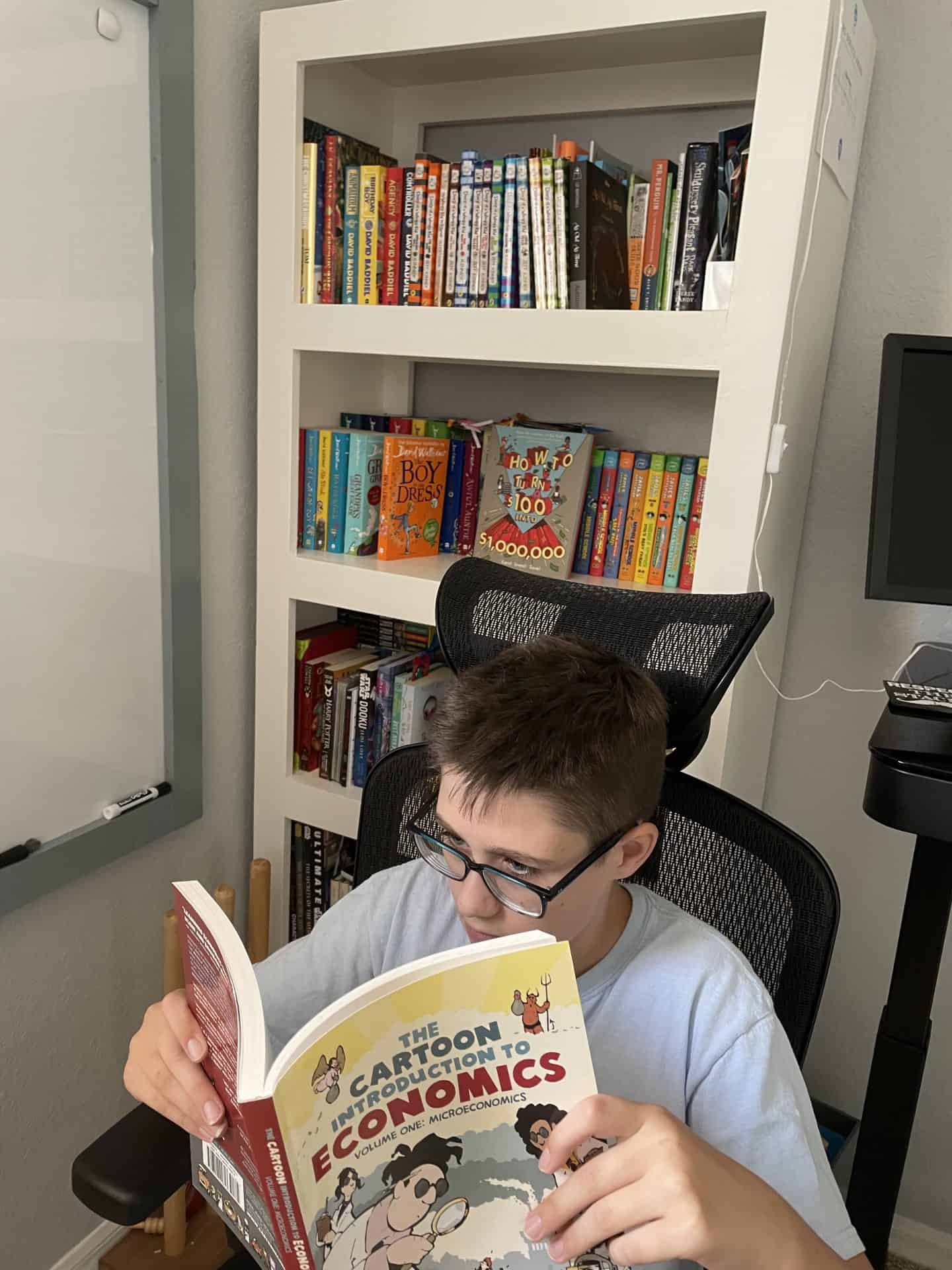
- Cartoon Introduction to Economics, Volume I – A much more approachable option for kids who would rather read something visual and story-based than a traditional finance book.
Financial Literacy Curriculum
Sometimes worksheets are enough, but for older kids especially, it can be easier to use a full curriculum instead of trying to piece everything together yourself.
We found this worked much better once financial literacy moved beyond coins and spending choices into topics like budgeting, investing, credit, and long-term planning. Having lessons already laid out also makes it easier to stay consistent.
Moneytime (full review) – A good fit for younger students because it keeps money concepts simple and interactive instead of making them feel too academic too early.
High school economics with Mr. D. Math – Better suited to teens who are ready for more realistic discussions around budgeting, investing, and financial decision-making. This feels much closer to real-world personal finance than most basic money worksheets.
Beyond Personal Finance (financial literacy for teens) – One of the stronger options for teaching practical life skills like credit, debt, saving, and financial independence in a way teens can actually connect with.
Last Updated on 18 May 2026 by Clare Brown
