Free Homeschool Science Curriculum (Pre-K–12)

Finding a free homeschool science curriculum can feel overwhelming when so many options are scattered across the internet.
When we first started homeschooling, I wasn’t looking for more worksheets, I wanted science lessons that encouraged curiosity and hands-on learning without adding to our budget.
Over time, we’ve used a mix of full programs, online courses, and simple activities that cover everything from biology and chemistry to earth science and space.
Below you’ll find free science homeschool curriculum and online resources for Pre-K through high school that work well at home, whether you’re planning a full year or just supplementing.
**This post may contain affiliate links. As an Amazon Associate and a participant in other affiliate programs, I earn a commission on qualifying purchases.**
Free Online Science Curriculum
You don’t need an expensive program to teach science well at home.
These free online curriculum options work especially well for homeschoolers who like mixing videos, simple labs, and self-paced lessons across different grade levels.
- Khan Academy Science offers full science courses in biology, chemistry, physics, and earth science with short videos and built-in practice for independent learning.
- Math Science Nucleus focuses on hands-on science units and simple experiments that work well for elementary and middle school.
- The Magic School Bus includes videos and activities that introduce topics like space, weather, and the human body in a way younger kids understand.
- Easy Peasy All-In-One Homeschool provides daily science lessons as part of a complete homeschool program from elementary through high school.
- Super Charged Science shares free lessons and experiment ideas that focus heavily on learning by doing.
- The Wonder of Science offers simple lesson plans and nature-based activities built around observation and curiosity.
- Science Coloring Pages are useful for introducing concepts visually, especially with younger learners.
- Virtual Museum let kids explore science exhibits, fossils, space displays, and ecosystems without leaving home.
- American Museum of Natural History – provides videos, articles, and virtual exhibits on dinosaurs, space, ecosystems, and earth science topics.
- Learning Resources Science Museum share interactive activities, games, and short educational videos across science subjects.
- NASA offers free astronomy and weather lessons using real satellite data and space science.
- Berkeley Education Evolution hosts clear, student-friendly evolution resources and interactive timelines.
- Human Origins by the Smithsonian shares human origins lessons, videos, and classroom activities.
- Science Fair Project Libraries provide step-by-step experiments that encourage testing ideas and recording results.
- National Zoo includes animal science guides and learning activities focused on wildlife and habitats.
- Interactive Elements Table help students visualize elements and understand basic chemistry concepts.
- NASA Weather Adventures use real-world data to explain storms, climate, and weather patterns.
Looking for science activities for younger learners? Check out our free preschool science worksheets for hands-on discovery and early STEM learning!
Free Science Curriculum for Elementary Grades
Elementary science works best when kids can explore, test ideas, and see concepts in action. Instead of relying on textbooks alone, these free elementary science curriculum resources use simple experiments, videos, games, and real-world examples to make topics like chemistry, biology, and engineering easier to understand.
They’re ideal for homeschool families who want hands-on learning without buying full programs or expensive kits.
- YAPA Kids shares simple science lessons designed specifically for elementary learners.
- National Geographic Kids offers videos, articles, and activities that connect science to animals, nature, and real-world topics.
- 24/7 Science uses interactive games to reinforce basic science concepts for K–6 students.
- American Chemical Society provides free chemistry lessons and hands-on experiments that work well for upper elementary grades.
- National Wildlife Federation focuses on animal science and environmental topics kids can explore through activities and short lessons.
- Sublime Science shares easy experiment ideas using everyday materials, making hands-on learning simple at home.
- BBC Terrific Science includes short videos and lesson ideas that explain concepts clearly.
- Teach Engineering offers real-world engineering challenges that build problem-solving skills.
- School Science hosts a wide mix of science topics across elementary subjects.
- Periodic Table Videos break down chemistry concepts in short, easy-to-follow clips.
Looking for more educational resources? Explore our favorite free health and safety homeschool curriculum for practical, real-world learning!
Free Science Resources for Middle School
Middle school is when science starts to shift from simple observation to deeper thinking and real problem-solving. These free middle school science resources focus on hands-on activities, interactive tools, and real-world topics that help students understand how science connects to everyday life.
They work well for grades 6–8, whether you’re adding extra practice, exploring a specific topic, or building out a full science plan at home.
- Anatomy Arcade uses games and activities to help students learn body systems in a hands-on way, especially for upper elementary through middle school.
- Natural Inquirer shares real research stories written for kids, making it great for building critical thinking and reading skills alongside science.
- Integrated Agricultural Systems introduces topics like farming, ecosystems, and food production through science-based lessons that connect learning to the real world.
Looking for a complete curriculum? Check out our top picks for middle school homeschool curriculum to support well-rounded learning!
Free Science Lessons for High School
High school science is where subjects get more detailed and skills become more independent. These free high school science resources focus on clear explanations, practice problems, and interactive learning to support biology, chemistry, and physics at home.
They work well for full courses or for reinforcing topics that need extra review in grades 9–12.
- MIT Open Course shares free science lectures, assignments, and course materials that motivated high school students can work through independently.
- Modern States offers free science courses designed to support high school learning and exam preparation.
- The Physics Classroom breaks down physics concepts with tutorials, simulations, and practice activities that make harder topics easier to understand.
Free Printable Worksheets
At Homeschool of 1, you’ll find a growing collection of free science worksheets that make it easier to teach topics at home without extra materials. From life cycles and human anatomy to earth science and space, these printables work well for quick lessons, review days, or hands-on learning.
Here are five of the most popular science worksheets families use:
- Discover how organisms grow and change with our free life cycle worksheets, covering butterflies, frogs, plants, and more.
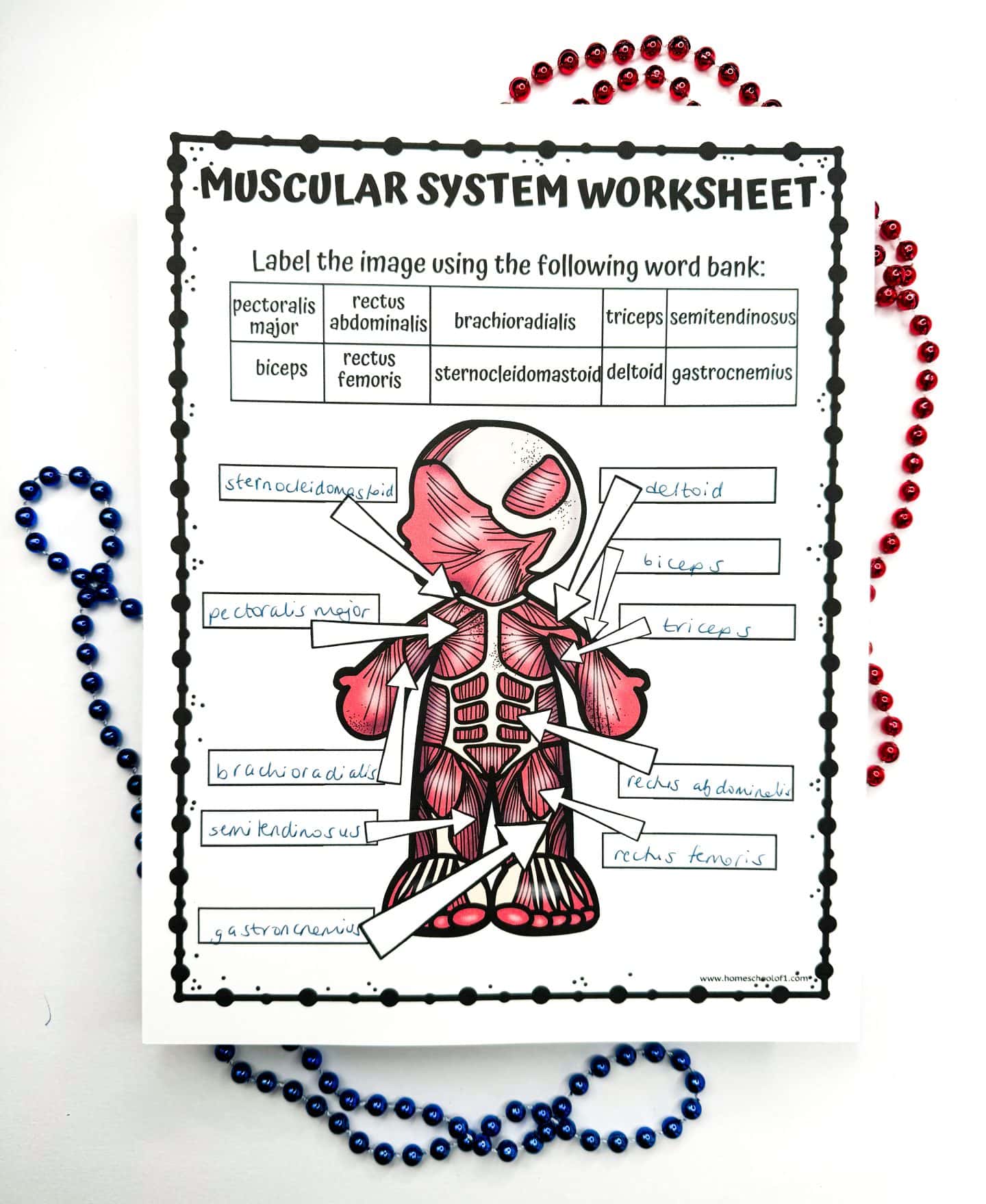
- Learn about the body’s major systems with a human body worksheets pdf, designed to help kids identify organs and their functions.
- Track the moon’s changing appearance with a printable phases of the moon worksheet, perfect for space and astronomy lessons.
- Introduce weather concepts with printable weather worksheets, featuring engaging activities on clouds, seasons, and temperature.
- Identify different types of rocks with a science worksheet on rocks, helping kids classify igneous, sedimentary, and metamorphic rocks.
- Reinforce chemistry skills with a periodic table word search, giving kids a fun way to review element names and symbols through puzzle play.
These earth science worksheets are completely free and designed to support your homeschool science curriculum with easy-to-use, engaging activities!
Last Updated on 6 February 2026 by Clare Brown
