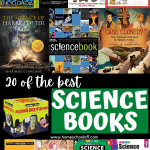
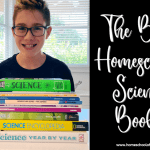
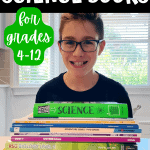
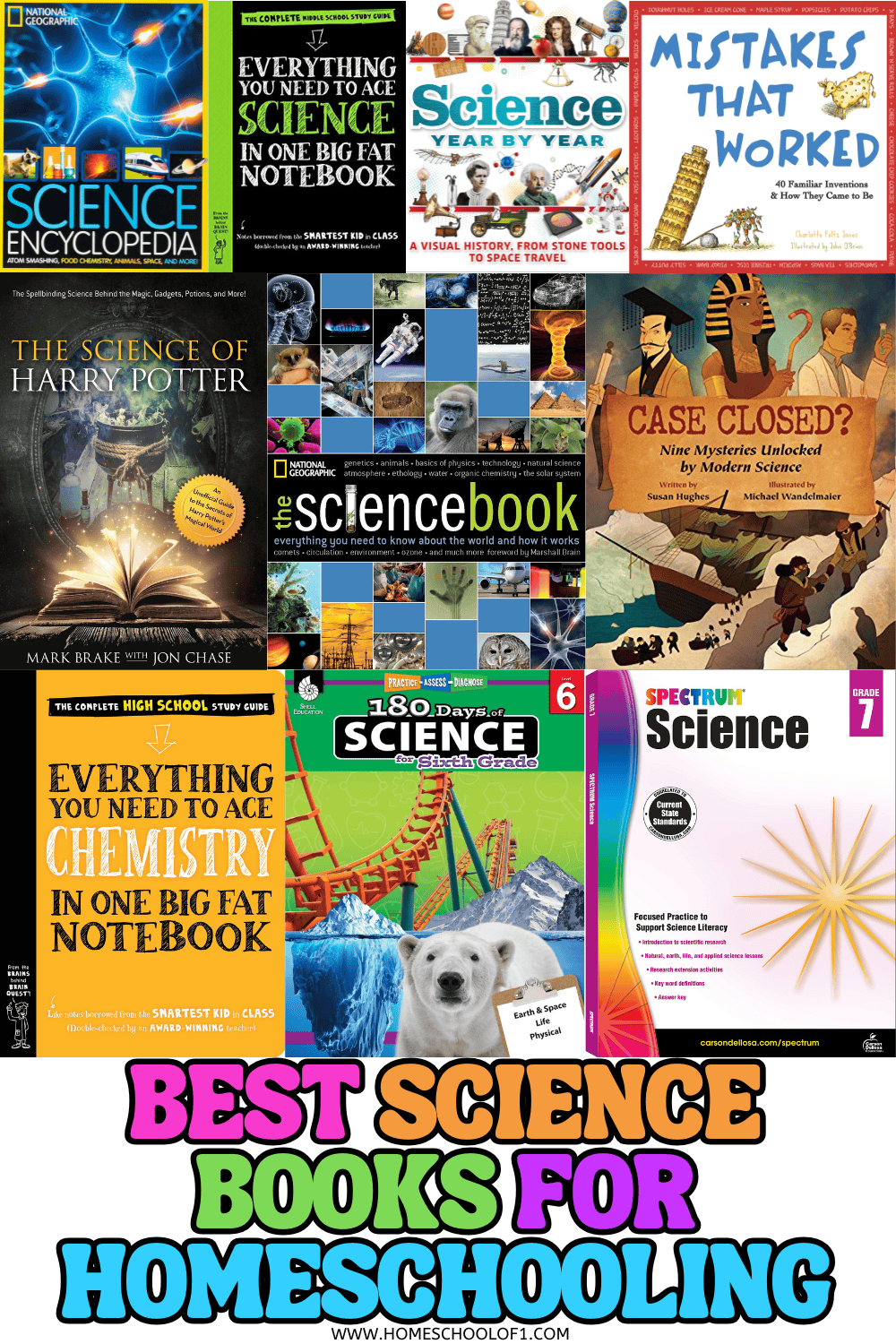
Science books for homeschooling have played a bigger role in our lessons than I expected when we first started.
We tried encyclopedias, living books, workbooks, and full curriculum texts, and some quickly gathered dust while others became part of our weekly routine.
The books below are the ones we returned to repeatedly, either to explain a concept more clearly, reinforce something we’d already covered, or give my son something meaningful to explore independently.
Rather than replacing our science curriculum, these have worked best as supporting pieces, reference guides, review tools, and engaging reads that made science feel less like a separate subject and more like something we used throughout the week.
**This post may contain affiliate links. As an Amazon Associate and a participant in other affiliate programs, I earn a commission on qualifying purchases.**
Science Books That Supported Our Homeschool Curriculum
These titles worked best as companions to our main science program, helping reinforce concepts, answer questions quickly, and keep curiosity going between lessons.
We returned to them often because they were easy to use, visually engaging, and didn’t require extra prep to be useful.
Science Encyclopedia
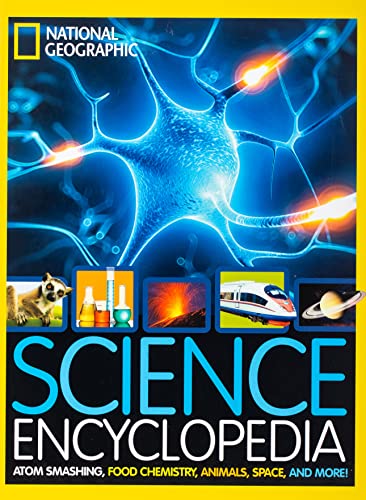
This has ended up being our default “quick answer” book when a question comes up mid-lesson. Instead of stopping to search online, we usually grab this first because the explanations are short, clear, and supported by strong visuals.What I like most is that it works across ages. When he was younger, he used it to browse topics he was curious about, and later it became a reliable reference to review key ideas before moving deeper into a unit.
Read More
Everything You Need to Ace Science in One Big Fat Notebook
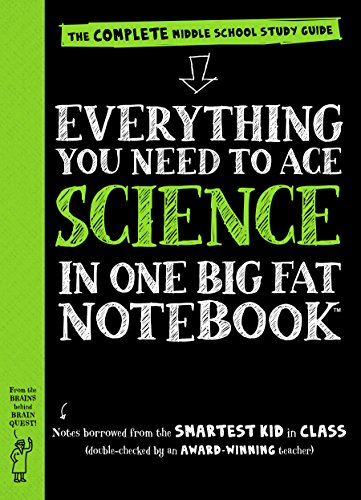
We used this most heavily during middle school when concepts were starting to stack on top of each other. The note-style layout makes it feel less formal than a textbook, which helped when motivation dipped.It worked well as a review resource alongside videos and hands-on activities. He could flip to a topic quickly, skim the explanation, and move on without needing to reread an entire chapter.
Read More
Everything You Need to Ace Chemistry in One Big Fat Notebook
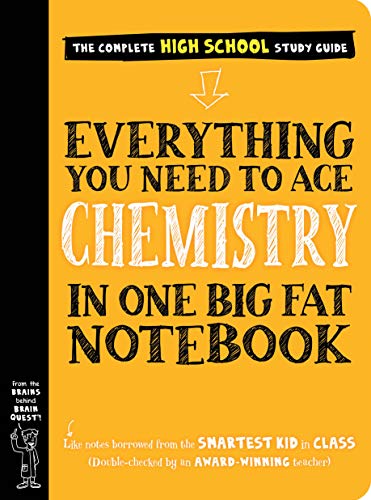
This version has been helpful once chemistry moved beyond the basics. The summaries break larger ideas into smaller sections, which made it easier to revisit topics that didn’t stick the first time.I wouldn’t treat it as a full course, but it’s been useful for independent review, especially before quizzes or when we needed a simpler explanation than the main curriculum provided.
Read More
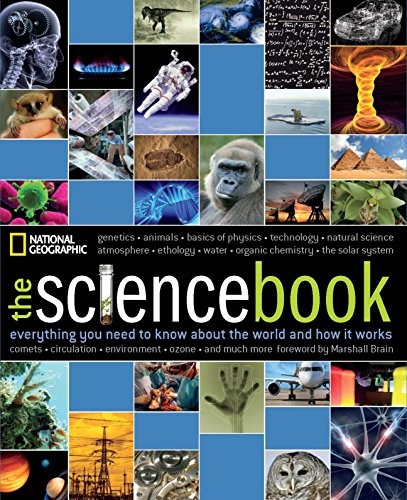
The Science Book
This is one of those books that stays within reach rather than getting shelved after a unit ends. The layout makes it easy to open anywhere and still find something worth reading, which works well on days when we’re not following a strict lesson plan.It’s broad rather than deeply detailed, but that’s exactly why it’s useful, it gives enough context to spark new questions without overwhelming the reader.
Read More
Science Year by Year: A Visual History, From Stone Tools to Space Travel
We’ve used this most often when linking science to history topics. Seeing discoveries placed along a timeline helped make connections that are easy to miss when subjects are taught separately.It works well for big-picture understanding rather than daily instruction, especially for kids who like seeing how ideas developed over time instead of studying topics in isolation.
Read More
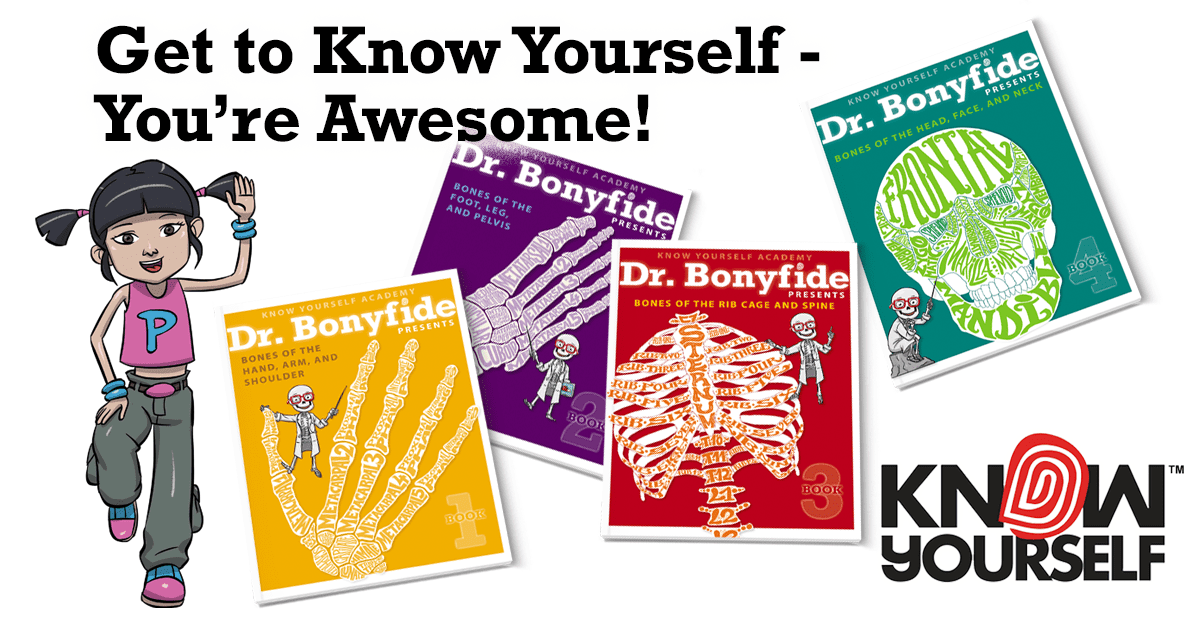
Know Yourself Anatomy Books
These were one of the easiest ways we introduced human body systems without it feeling heavy. The mix of cartoons, humor, and short explanations made anatomy much less intimidating at the elementary level.We used them as a starting point before moving into more detailed study, and they were especially useful for revisiting specific systems when he needed a refresher rather than rereading an entire textbook chapter.
Read More
Horrible Science
This series worked because it never felt like assigned reading. The humor and slightly gross facts kept him engaged, even with topics he wouldn’t normally choose on his own.Most of the time he picked these up independently, which made them a good way to reinforce concepts we’d already covered without scheduling extra lesson time.
Read More
The Science of Harry Potter
This was an easy bridge between something he already loved and the science behind it. Instead of introducing new topics in a traditional way, the book uses familiar scenes to explain real-world principles.It worked best as curiosity-driven reading rather than structured coursework. After finishing sections, it often led to questions or short research tangents we wouldn’t have planned otherwise.
Read More
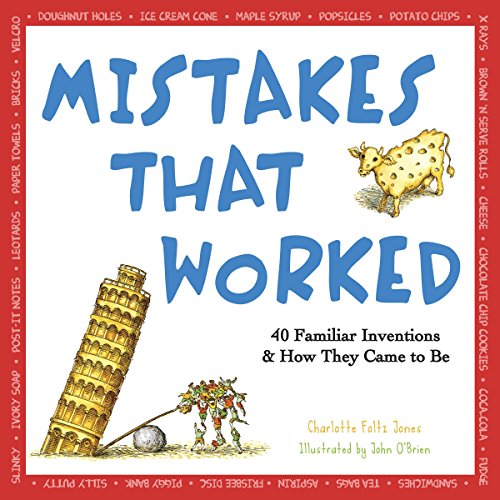
Mistakes That Worked: 40 Familiar Inventions & How They Came to Be
We used this more as short, occasional reading rather than part of a full unit. Each invention story stands on its own, which made it easy to add into the week without needing extra setup.It also helped shift his mindset a bit, seeing how often discoveries happened by accident made science feel less about getting everything right the first time.This is one of our favorite books about inventions for kids.
Read More
Case Closed?: Nine Mysteries Unlocked by Modern Science
This one held attention better than most traditional science texts because it reads like a set of investigations. Each chapter walks through how evidence and modern techniques changed what we thought we knew.It worked particularly well for discussion-based learning, especially with a child who prefers real stories and problem-solving over abstract explanations.
Read More
REAL Science Odyssey – Biology Level Two
This was our main biology program for a full year, and it ended up being one of the few structured curricula that didn’t feel overwhelming. The lessons build concepts gradually, and the activities make it easier to see how ideas connect instead of just memorizing terms.What worked best for us was the balance between reading, discussion, and hands-on work. It gave enough structure to stay on track while still leaving room to explore topics in more depth when interest was high.
Read More
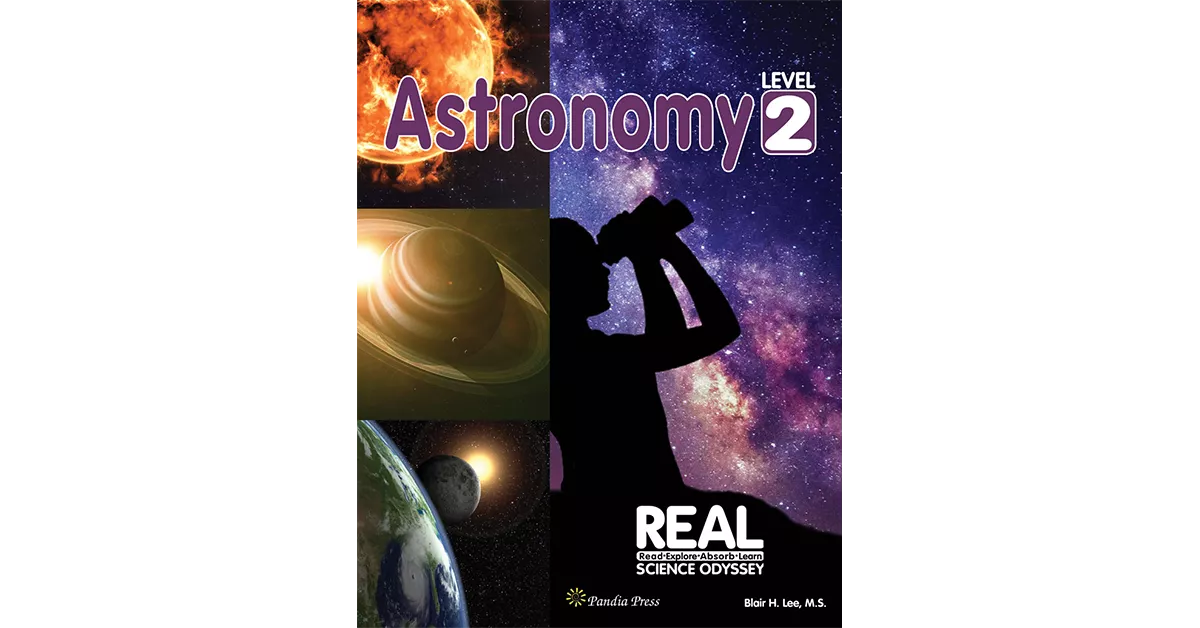
Astronomy Level 2 | High School Astronomy
We haven’t started this one yet, but it’s already on our plan because it approaches astronomy as a connected science rather than just a list of facts. The way the course links space topics back to physics and chemistry was what convinced me it would be worth the time investment.The observational components were also a big factor. Knowing there were built-in activities encouraged us to add a telescope so the lessons could be applied outside rather than staying entirely book-based.
Read More
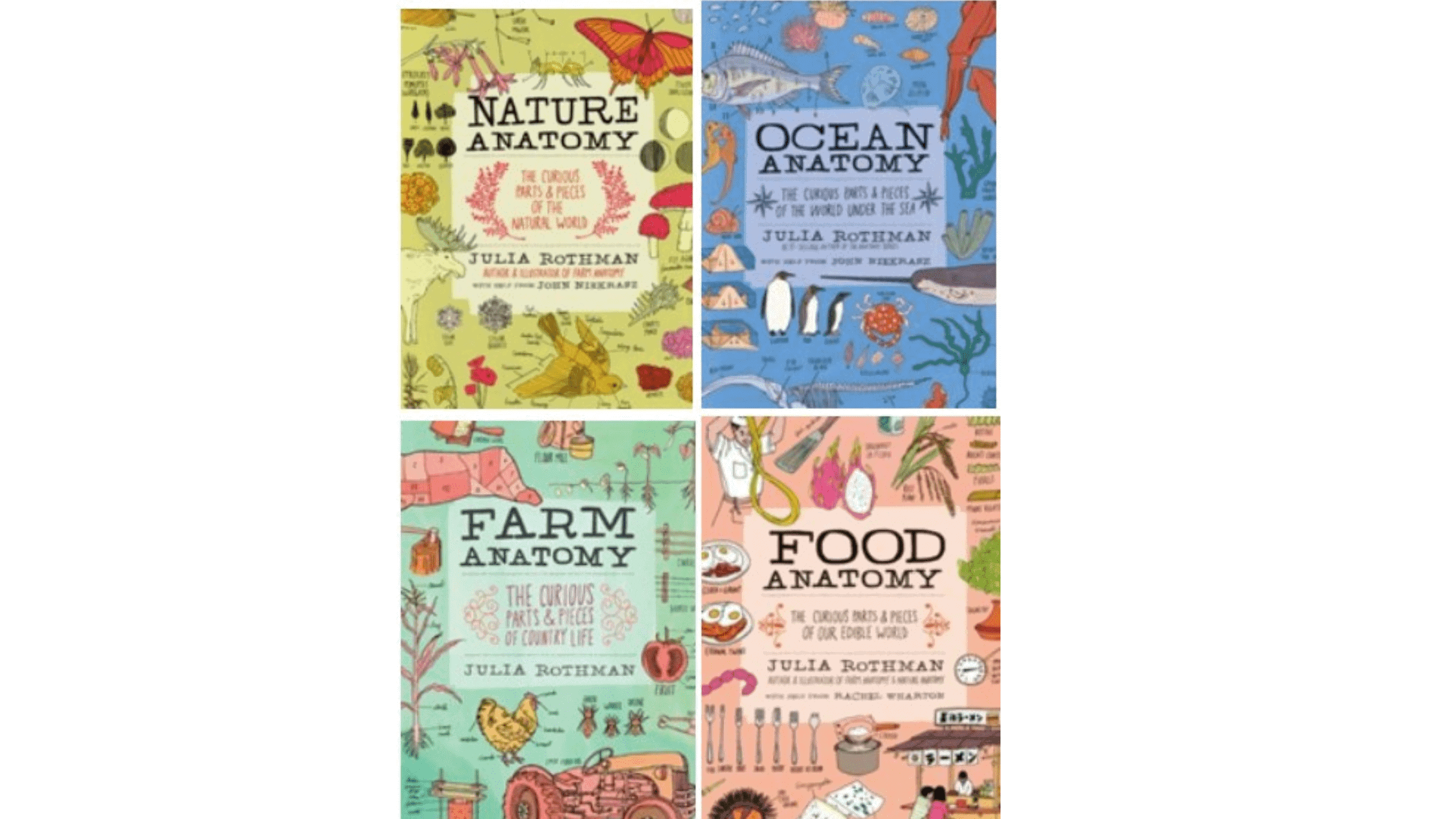
Julia Rothman Nature Anatomy Books
These tend to come out when we want something quieter or more observational rather than lesson-driven. The illustrated format invites browsing, and the mix of sketches and facts makes it easy to spend ten minutes or an hour depending on the day.We’ve used them most during nature study weeks or when adding science into art time, since they naturally encourage slowing down and paying attention to details in the environment.
Read More
Spectrum 7th Grade Science Workbooks, Natural, Earth, and Life Science,
This has been a dependable supplement rather than a primary teaching tool. The layout is straightforward and predictable, which made it easy to assign a page or two for reinforcement without needing to explain directions each time.We paired it with our main curriculum to review topics like earth science and life science, especially when I wanted written practice without creating additional worksheets.
Read More
180 Days of Science
This series ended up being our “keep things moving” option on busy weeks. The lessons are short enough that it’s easy to stay consistent, even when we didn’t have time for a full experiment or deeper dive.Compared with some of the more detailed workbooks, this one felt lower pressure, which is probably why he was more willing to complete it without resistance. We mostly used it for regular review rather than introducing brand-new topics.
Read More
Mark Twain – Science Vocabulary
We used this alongside whatever main science program we were working through at the time. The short daily exercises made it easy to reinforce terminology without turning vocabulary into a separate subject that required extra planning.It only takes a few minutes per lesson, but over time it noticeably improved how comfortable he was using scientific terms correctly.
Read More
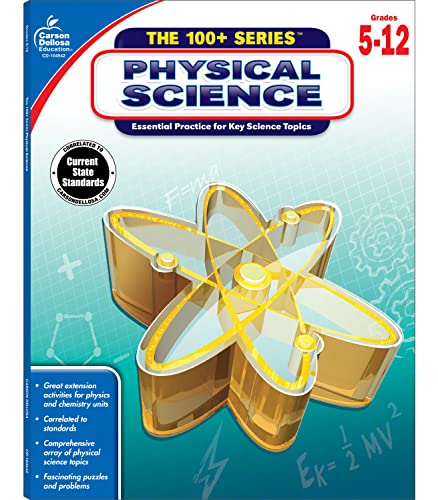
Carson Dellosa | The 100 Series: Physical Science Workbook
This one took a bit of trial and error with timing. We first tried it earlier and quickly realized the math-heavy questions were more challenging than expected, so we set it aside and came back to it later.Once the timing was right, it became a solid review tool for physical science concepts, especially for a student who doesn’t mind working through more structured problem sets.
Read More
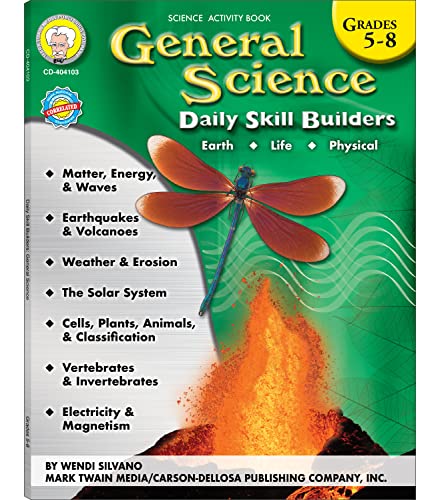
Mark Twain General Science Activity Book
We’ve mostly treated this as extra practice rather than a full teaching resource. It doesn’t walk through complete lessons, so it works best when paired with another book or curriculum that introduces the concepts first.We tend to use it on lighter days as a way to reinforce material without repeating the exact same assignments.
Read More
Daily Science: Grade 6+
This has been helpful for keeping a steady rhythm with science without needing to plan every detail. The mix of short reading, questions, and occasional hands-on prompts makes it manageable even when attention is limited.It’s not something we rely on for deep coverage, but it does a good job reinforcing general science knowledge over time.
Read More
More Ways We Explore Science at Home
Books have never been our only approach to science. Some weeks we lean heavily on reading, other weeks we switch things up with kits, games, or quick hands-on activities, especially when attention starts dropping or we just need something less worksheet-based.
These have worked well alongside the books above:
- Science gifts for older kids – ideas that still feel fun but tie back to real topics they’re learning.
- STEM board games – the few that actually get requested again rather than played once and forgotten.
- Mel Chemistry – subscription kits that include proper materials and structured experiments without much prep.
- KiwiCo – monthly projects that are easy to set up and useful when we want something hands-on without planning a full lesson.
- Homeschool science kits – open-and-go options we’ve used when time was tight but we still wanted something practical.
- Science printable worksheets – quick reinforcement when we need review or an easier activity day.
We tend to rotate between these depending on the week, using them to support whatever topic we’re already covering rather than replacing our main science work.
Last Updated on 9 February 2026 by Clare Brown