100 Best Books for 9 Year Old Boys



At nine, my son’s reading choices were all over the place. One week he wanted funny books he could finish quickly, and the next he was willing to tackle a much longer adventure.
Finding books for 9 year old boys became less about reading level and more about figuring out what would make him want to keep going. Graphic novels and funny series were still easy choices, but this was also the age when fantasy, history, science, and longer chapter books started getting much more attention.
I’ve included the books that worked best for him, along with plenty of options for different interests and reading abilities.
**This post may contain affiliate links. As an Amazon Associate and a participant in other affiliate programs, I earn a commission on qualifying purchases.**
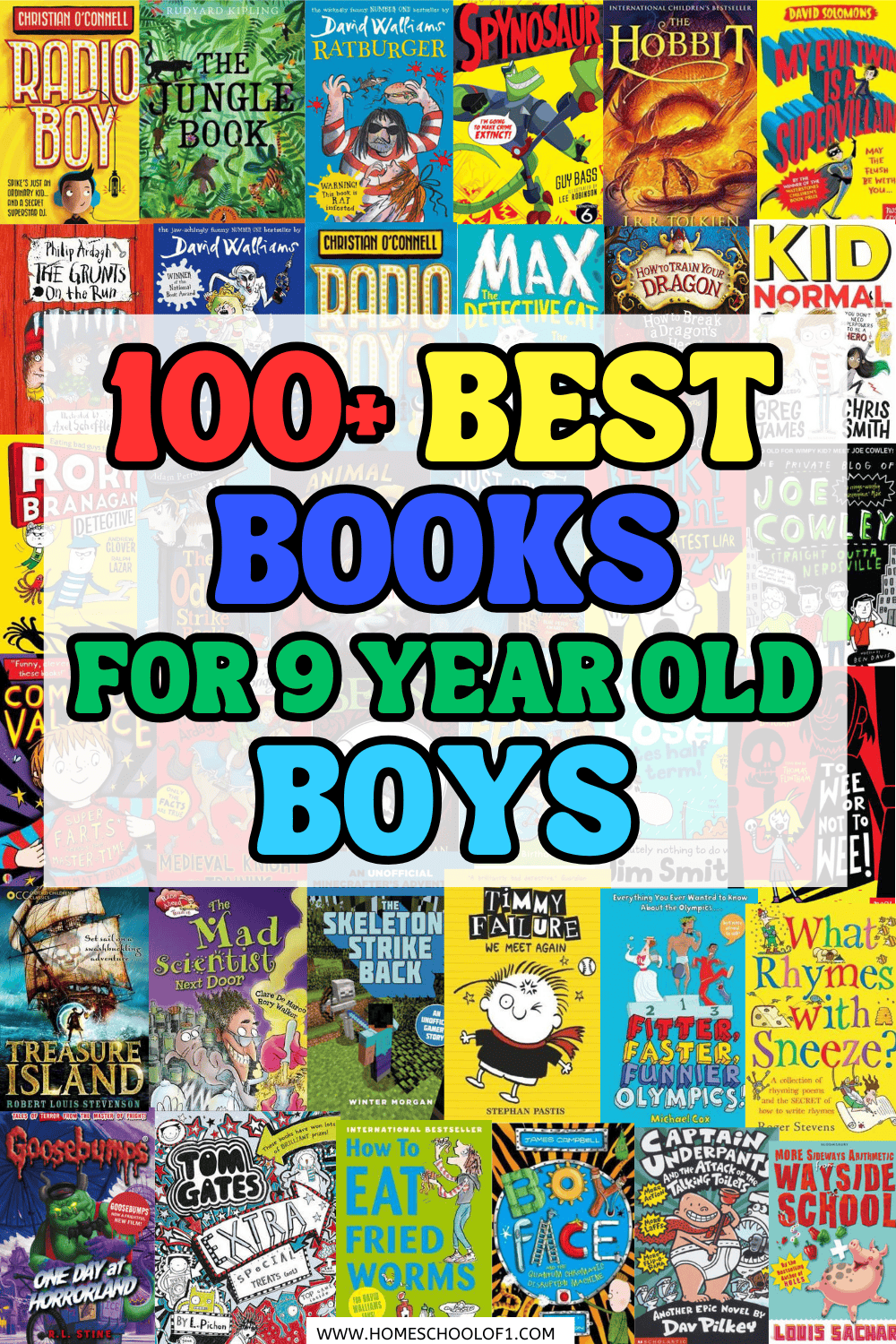
Top 10 Books for 9 Year Old Boys
Before the full list, these are the books that got the most reading time in our house at age nine. They’re the ones my son finished, reread, or kept bringing up in conversation days later.
Every kid’s different, but if you’re not sure where to start, these were our most reliable choices at nine.
- Harry Potter (J.K. Rowling) – Once he started, he stopped asking for screen time at night so he could “just finish one more chapter.”
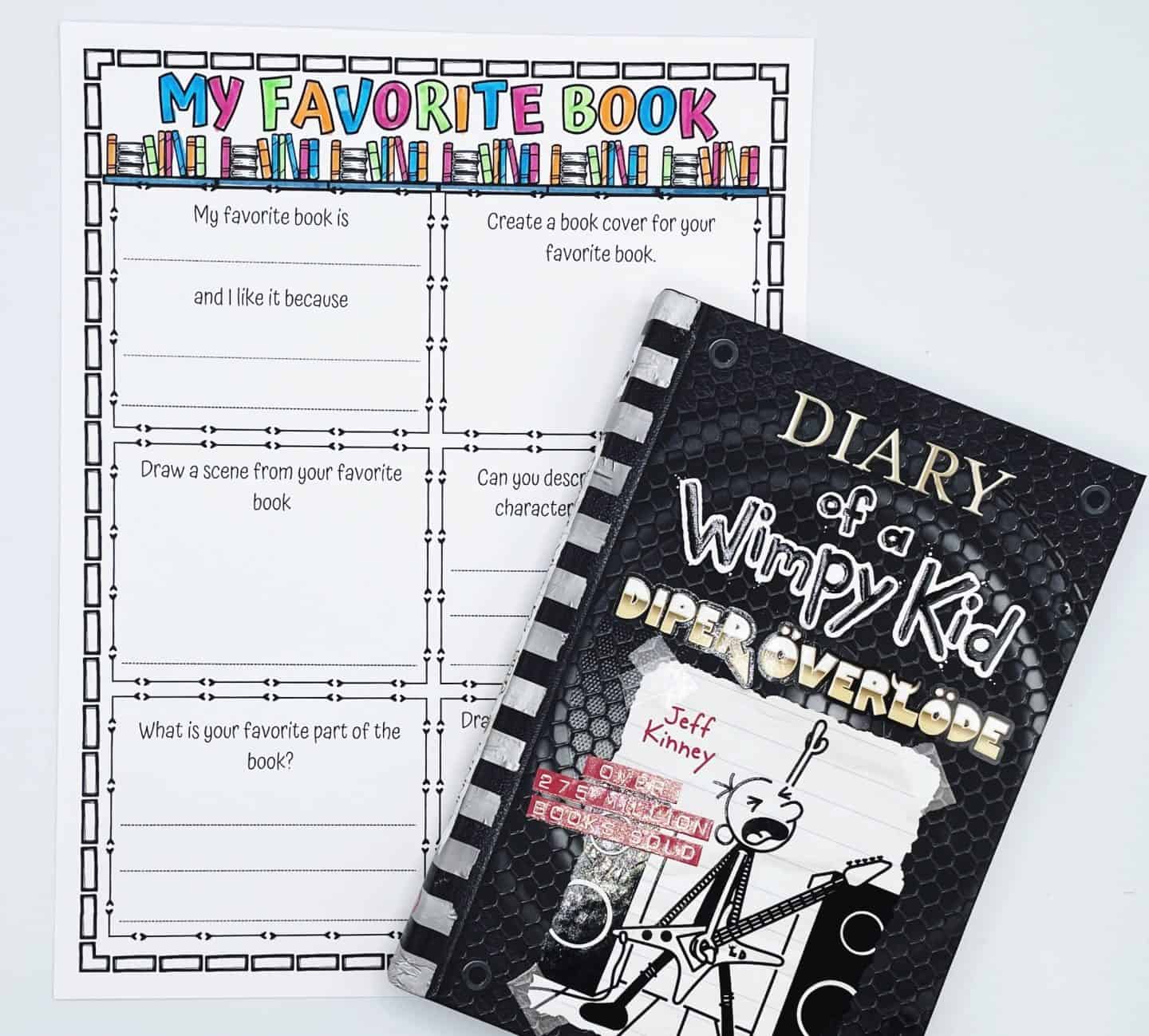
- Diary of a Wimpy Kid (Jeff Kinney) – The fastest win when motivation dipped, he’d fly through one in a day or two.
- Percy Jackson (Rick Riordan) – The mix of mythology and humor hooked him immediately, especially the action scenes.
- The Last Kids on Earth (Max Brallier) – Felt more like a graphic novel experience, which made longer reading sessions easier.
- The Treehouse (Andy Griffiths) – Completely ridiculous, which is exactly why he loved them. Lots of laughing out loud.
- Horrid Henry (Francesca Simon) – Short, mischievous stories that worked well when attention span was low.
- Roald Dahl (collection) – These became “safe picks” he’d go back to when he couldn’t decide what to read next.
- The Hobbit (J.R.R. Tolkien) – Slower start, but once he settled into the world, he was fully invested.
- The Jungle Book (Rudyard Kipling) – The animal survival angle really clicked with him at that age.
- Deadly 60 (Steve Backshall) – The nonfiction option he kept picking up between other books just to read random sections.
Every kid’s different, but if you want the quickest path to a book they’ll enjoy, these were our most reliable choices at nine.
Best Book Series for 9 Year Old Boys
At nine, finding a series he loved made everything easier because I didn’t have to start from scratch every time he finished a book. Once he liked the characters and knew what to expect, he was usually happy to move straight on to the next one.
These were the series that worked particularly well for him at this age, from funny school stories and illustrated books to fantasy and adventure.
- Middle School Box Set by James Patterson – A good pick for kids who like school-based humor. The chapters are short and the cartoon illustrations help it feel less like a “big” book.
- Roald Dahl Collection – These ended up being reliable fallback reads when nothing else sounded appealing. The stories are weird enough to stay interesting but still easy to follow.
- Harry Potter by J.K. Rowling – Book one in particular worked well at this age. Once the world made sense, he wanted to keep going just to see what happened next.
- The World of David Walliams – Very similar energy to Roald Dahl, lots of exaggerated characters and gross humor that tends to land well with this age group.
- Diary of a Wimpy Kid by Jeff Kinney – Still one of the easiest ways to get a reluctant reader to keep going independently. The format does most of the heavy lifting.
- Michael Morpurgo – These lean more emotional, but the animal-focused stories were easier to get into than some other classics.
- The Treehouse Storey Books by Andy Griffiths – Pure chaos. The illustrations and ridiculous plots made these ones he’d happily pick up without prompting.
- Beast Quest – A good transition series if a child wants something that feels like epic fantasy but is still quick to read.
- Horrid Henry by Francesca Simon – Short, slightly rebellious stories that work well when attention span is low.
- Percy Jackson by Rick Riordan – Action every few chapters, plus humor. One of the easiest “longer” series to stick with.
- Captain Underpants by Dav Pilkey – Great bridge between comics and chapter books. The silliness keeps kids turning pages.
- The Last Kids on Earth by Max Brallier – Monster survival story mixed with illustrations, worked well for kids who like graphic novels.
- Big Nate by Lincoln Peirce – Another reliable option when motivation dips. Fast, funny, and very relatable school situations.
- Tom Gates That’s Me by Liz Pichon – Heavy on doodles and visual jokes, so it doesn’t feel like hard reading.
- Theodore Boone by John Grisham – Better for stronger readers at this age who want something that feels a bit more grown-up.
- Goosebumps by R.L.Stine – Great if a child likes spooky stories but still wants something they can finish quickly.
- Wayside School by Louis Sachar – Short, oddball stories that are easy to read in small chunks.
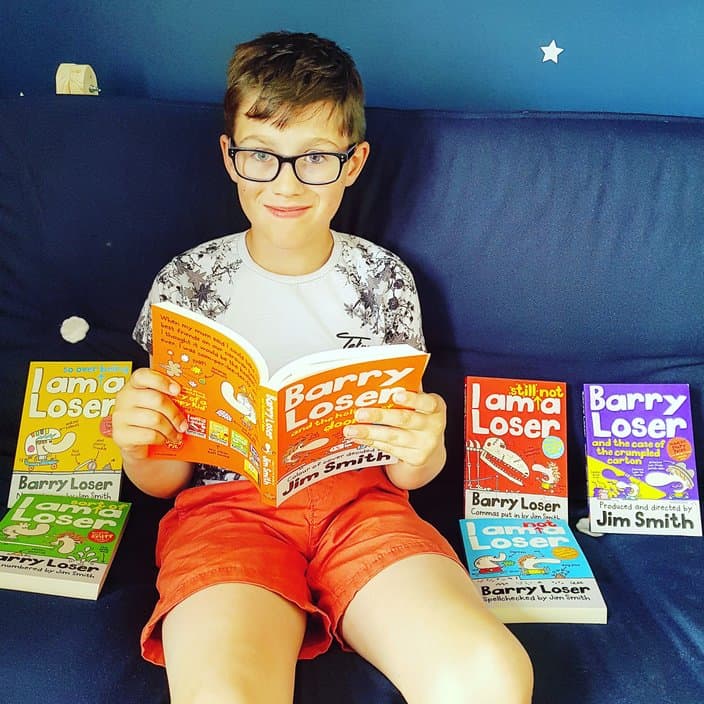
- Jim Smith’s Barry Loser – Lots of humor and awkward situations, usually a safe bet for kids who like Wimpy Kid–style books.
Chapter Books for 9 Year Old Boys
At nine, chapter books either grabbed my son quickly or were abandoned halfway through. The ones that worked best had humor, action, short chapters, or a story interesting enough to make him want to find out what happened next.
These are the chapter books that worked particularly well for him at this age, with a few more challenging choices mixed in.
- Supergifted by Gordon Korman – Fast-moving and funny. Works well for kids who like school stories but still want some chaos.
- The One and Only Ivan by Katherine Applegate – Short chapters and an emotional storyline make it easier than it looks on the page.
- Restart by Gordon Korman – A good choice for stronger readers ready for something with a bit more depth but still very readable.
- To Wee or Not to Wee (Part of the “Pamela Butchart Baby Aliens” series) – Very silly humor and quick pacing, useful when motivation is low. This is one of our favorite books for introducing Shakespeare to younger children.
- The Jungle Book by Rudyard Kipling – Better for confident readers who enjoy animal stories more than comedy.
- The Hobbit by J.R.R Tolkien – A stretch book at nine, but some kids love the adventure once they settle into the language.
- My Evil Twin is a Super Villain by David Soloman – Short, funny, and very easy to pick up independently.
- How to Train Your Dragon: How to Break a Dragon’s Heart by Cressida Cowell – Lots of action plus illustrations, which helps bridge into longer books.
- Kid Normal by James Greg – Feels modern and fast-paced, good for superhero fans who aren’t ready for heavier novels.
- Rory Branagan Detective by Andrew Clover – Works well for kids who like mystery but still want humor mixed in.
- The Private Blog of Joe Cowley by Ben Davis – Diary-style format makes it less intimidating.
- Treasure Island by Robert Louis Stevenson – Classic adventure, but usually better as a read-together or for advanced readers.
- Timmy Failure by Stephan Pastis – One of the easiest independent reads, lots of humor and illustrations.
- How to Eat Fried Worms by Thomas Rockwell – Short chapters and a gross-out premise that tends to grab attention quickly.
- The Boy Who Lost His Face by Louis Sachar – A slightly more thoughtful story that still reads quickly.
History Books for 9 Year Old Boys
History could completely grab my son’s attention at this age, but only if the book approached it in the right way. Strong visuals, strange facts, timelines, battles, and stories about real people worked much better than pages filled with dates.
These were the history books he found easiest to pick up independently and return to when something caught his interest.
- History Year by Year – This became a “flip through” favorite. The layout makes it easy to jump between time periods without having to read it cover to cover.
- Everything You Need to Ace American History – More of a reference book than something you’d read straight through, but useful when he wanted quick answers or timelines.
- American History – A straightforward overview that works well for filling in gaps when a specific period comes up in conversation or schoolwork.
- 50 American Heroes – Short biographies made this easier to dip into a few pages at a time instead of committing to a long chapter.
- Interesting Stories for Curious People – Good for the random “did you know?” facts that kids love bringing up later.
- Case Closed? 9 Mysteries – The mystery angle helped keep attention longer than a typical history book.
- Great Battles for Boys – Appealed during the phase where anything related to strategy or battles was automatically interesting.
- Timelines of Everything – The visual timelines made it easier to connect events instead of memorizing isolated facts.
- 20th Century American History for Kids – Helpful for understanding more recent history in smaller, manageable sections.
- Horrible Histories – The gross facts and ridiculous humor were what made these work so well for him. He remembered far more from these than from more traditional history books, especially the strange details he could repeat back to us later.
You can also explore themed collections like President-focused biographies or pirate history when they become interested in a specific topic, those niche interests tend to spark the most curiosity at this age.
If you’re looking for more structured learning options alongside these, there’s also a separate list of homeschool-friendly history titles.
Geography Books for 9 Year Old Boys
Geography stuck best for us when it felt connected to real places rather than just memorizing maps. The books that got used the most were the ones he could flip through, compare countries, or pull out when a question came up about somewhere we’d heard about.
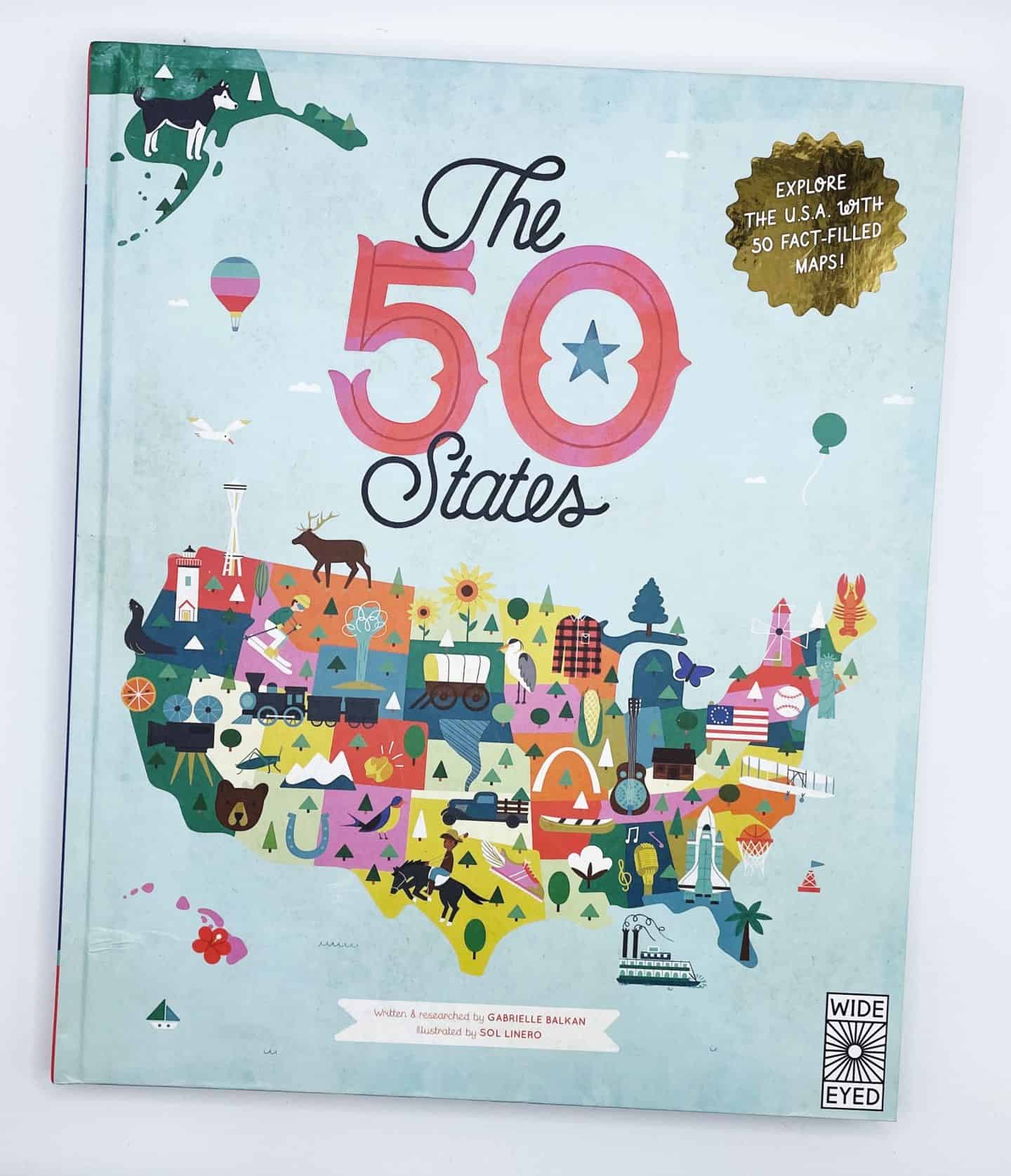
- The 50 States – This became a quick reference whenever we talked about a state we hadn’t visited yet. The bite-sized facts made it easy to read a page or two at a time.
- Road Trip Atlas for Kids – We kept this nearby during travel planning because it made routes and landmarks feel more real than looking at a plain map.
- Geography A Visual Encyclopedia – The visuals were the main reason this worked for him. He could explore continents, landscapes, and ecosystems without feeling as though he was sitting down with a textbook.
- Student World Atlas – More detailed than the others, but useful once he started asking specific “where is that?” questions.
- Countries of the World – This stayed useful whenever a country came up that he didn’t know much about. He could find it, look through the photos and facts, and compare it with places he already knew.
- Scrambled States of America – Much lighter than the atlases and reference books, but the humor made the states far more memorable. It was an easy one to pick up when he didn’t want anything that felt educational.
- All Countries Capitals and Flags – Not something you read straight through, but helpful for quick lookups and flag recognition.
Nature Books for 9 Year Old Boys
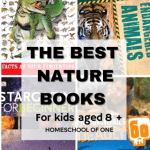
Books about animals and the outdoors worked best for us when they were visual or easy to dip in and out of rather than read straight through. These were the ones he returned to more than once.
- Dinosaur! by DK Publishing – Mostly used as a browse-and-return book. The big illustrations made it easy to jump in for five minutes and still learn something new.
- Deadly 60 by Steve Backshall – This was one he kept bringing back to the table just to share a random animal fact. The real-life adventure angle made it feel less like a typical nonfiction book.
- Last Chance to See by Douglas Adams and Mark Carwardine – Better for confident readers, but the stories about endangered animals led to some good conversations about conservation.
- 101 Outdoor Adventures by Stacy Tornio and Ken Keffer – This gave us plenty of ideas for things to do outdoors rather than simply reading about nature. It was especially useful when we needed something different to do outside.
- Exploring Nature Activity Book by Kim Andrews – Worked well for quieter afternoons, something he could complete independently without needing a full lesson planned.
Science Books for 9 Year Old Boys
Science books tended to work best for us when they answered the random questions that come up during the day, rather than something meant to be read cover to cover. The ones below were the easiest to pick up, browse, and return to later.
- Horrible Science -This was about as far from a school textbook as we could get. The strange facts, gross details, and humor were what kept him coming back to the series.
- Science Encyclopedia – More of a reference than a sit-down read, but useful when a specific topic came up and we wanted a quick explanation.
- Bacteria – Anything microscopic fascinated him for a while, so this was an easy one to leave out for him to browse. The close-up images and strange facts were the biggest draw.
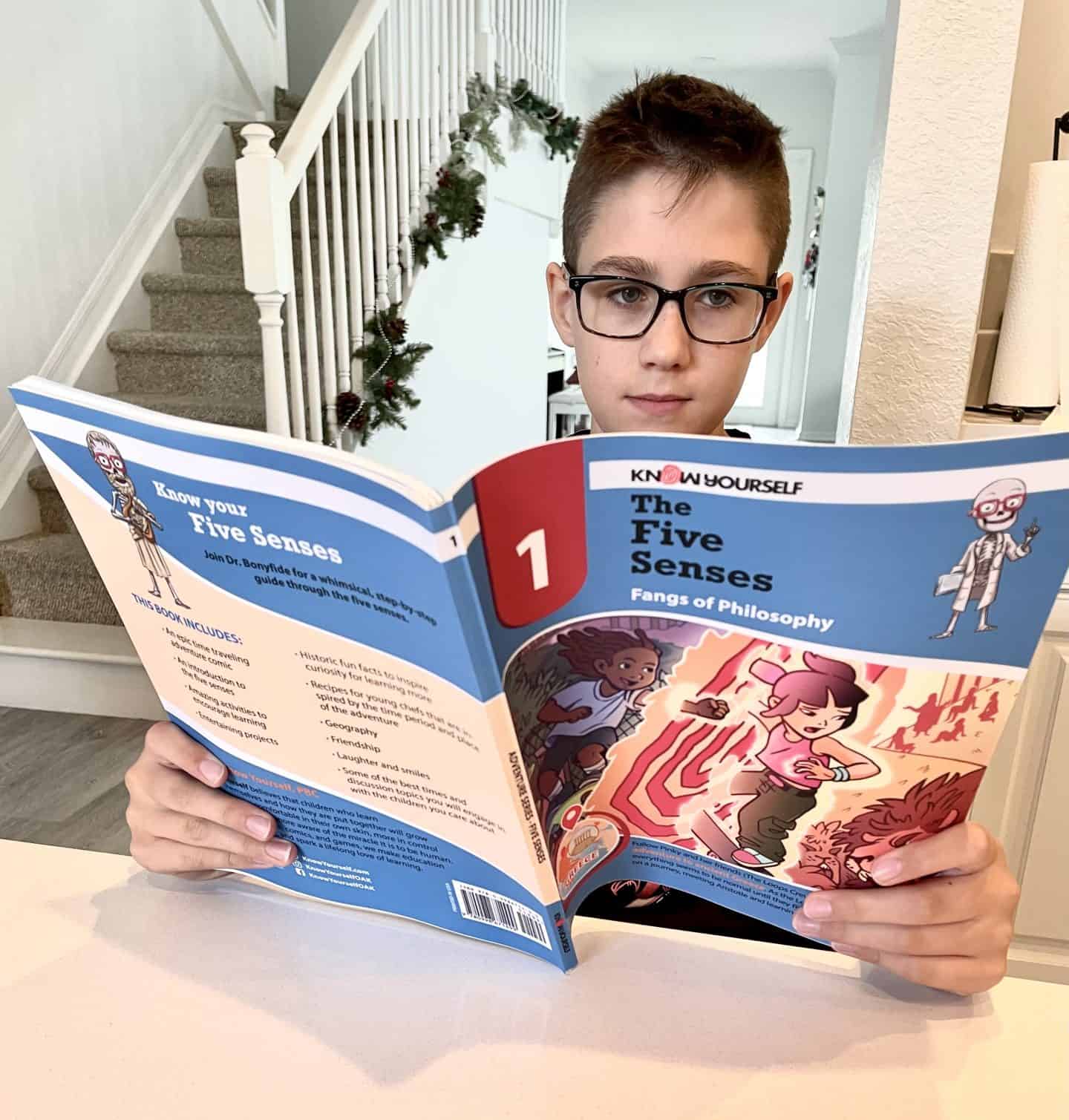
- Know Yourself (human anatomy books for kids) – The hands-on activities helped make anatomy and body systems much easier to understand. He could explore one part at a time without it turning into a long science lesson.
- The Fascinating Science Book for Kids: 500 Amazing Facts! – A classic “pick it up and read a few pages” book, lots of short facts that sparked follow-up questions.
- The Highlights Book of How – This was useful for all those random “how does that work?” questions. He could look up one thing, get an explanation he understood, and then inevitably find something else he wanted to know about.
Art Books for 9 Year Old Boys
Art books worked best for us when they were visual enough to browse rather than something that had to be read straight through. These were the ones that sparked questions or led to trying something creative afterward.
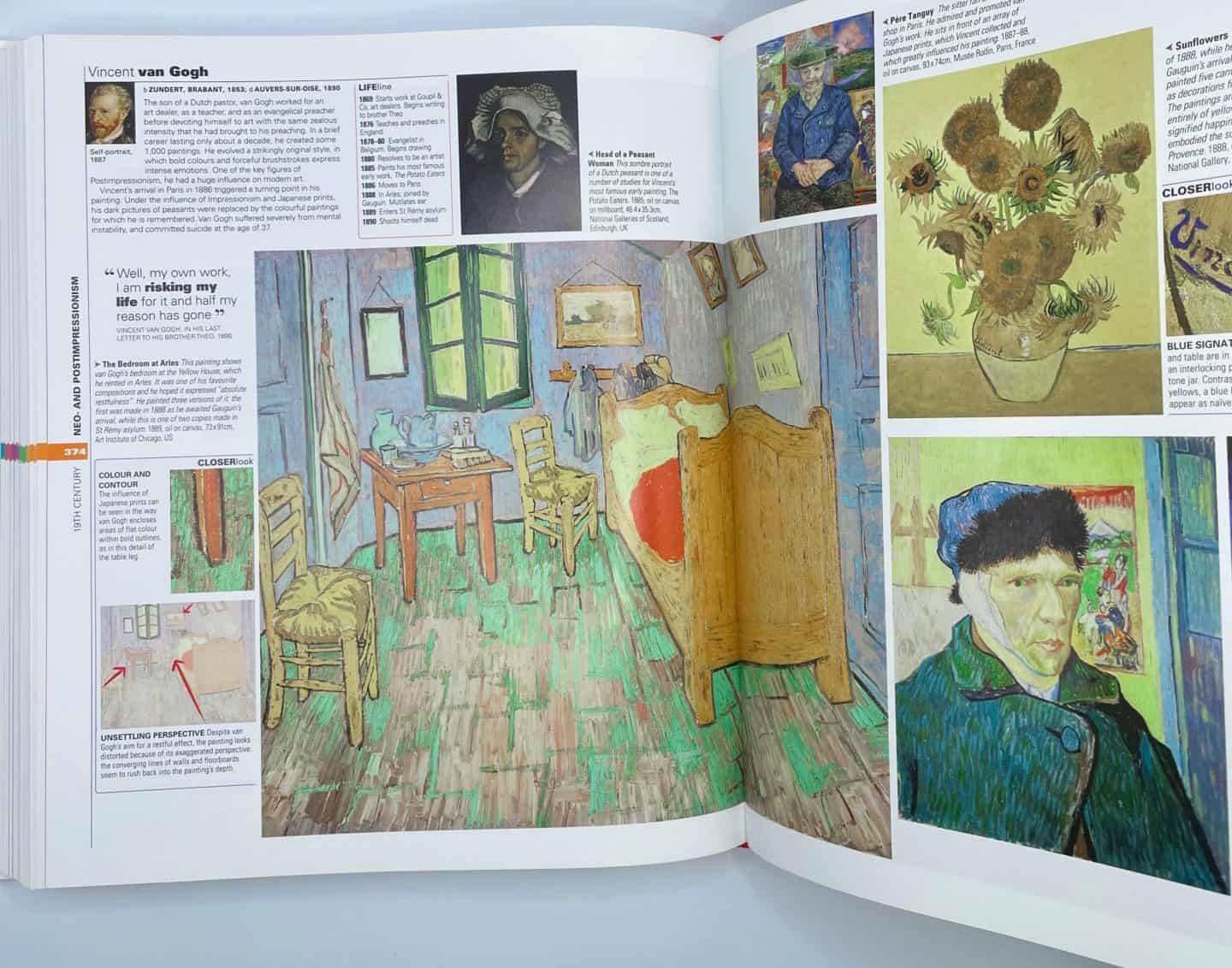
- The Arts A Visual Encyclopedia – Easy to flip through together. The layout made it simple to compare styles without needing a long explanation first.
- National Geographic Kids Guide to Photography – Helpful when he wanted practical ideas for taking better photos, not just looking at examples.
- The Story of Paintings: A History of Art for Children – The short backstories behind each artwork kept attention longer than a traditional art history format.
- The Met Vincent van Gogh: He saw the world in vibrant colors – The artwork was what pulled him into this one. It gave him enough background about Van Gogh to understand what he was looking at without burying him in art history.
- A Child’s Introduction to Art – This was useful when his attention jumped between different artists and styles. He could browse whatever caught his eye rather than having to work through it in order.
Educational Books for 9 Year Old Boys
We’ve always kept a mix of “learning without it feeling like a lesson” books around, especially ones he could pick up independently when something caught his interest. These were the types that tended to stay on the shelf within reach rather than getting put away after one read.
- Arms & Armor – This stayed on the shelf long after his medieval phase started. Whenever knights, battles, or weapons came up, he’d pull it out to look at the detailed illustrations and see how everything worked.
- Inventions – This was the book he reached for whenever he wanted to know who invented something or how an everyday object developed. It was much more of a browsing book than one he read from beginning to end.
- Knight – Another dip-in-and-out book that worked well during the phase where anything medieval automatically held attention.
- Politics for Beginners – We used this more as a conversation starter than a book he sat down and read cover to cover. The short explanations gave us an easy way into bigger topics when questions came up.
- Business for Beginners – This introduced ideas such as profit, costs, customers, and how businesses work in a way he could understand without turning it into a formal lesson.
- What’s Happening to Me? – A practical reference that’s easy to keep available as questions start coming up.
- You Are Awesome – The short sections suited him well at this age. He could read a little at a time, and the focus on persistence and learning from mistakes never felt too heavy.
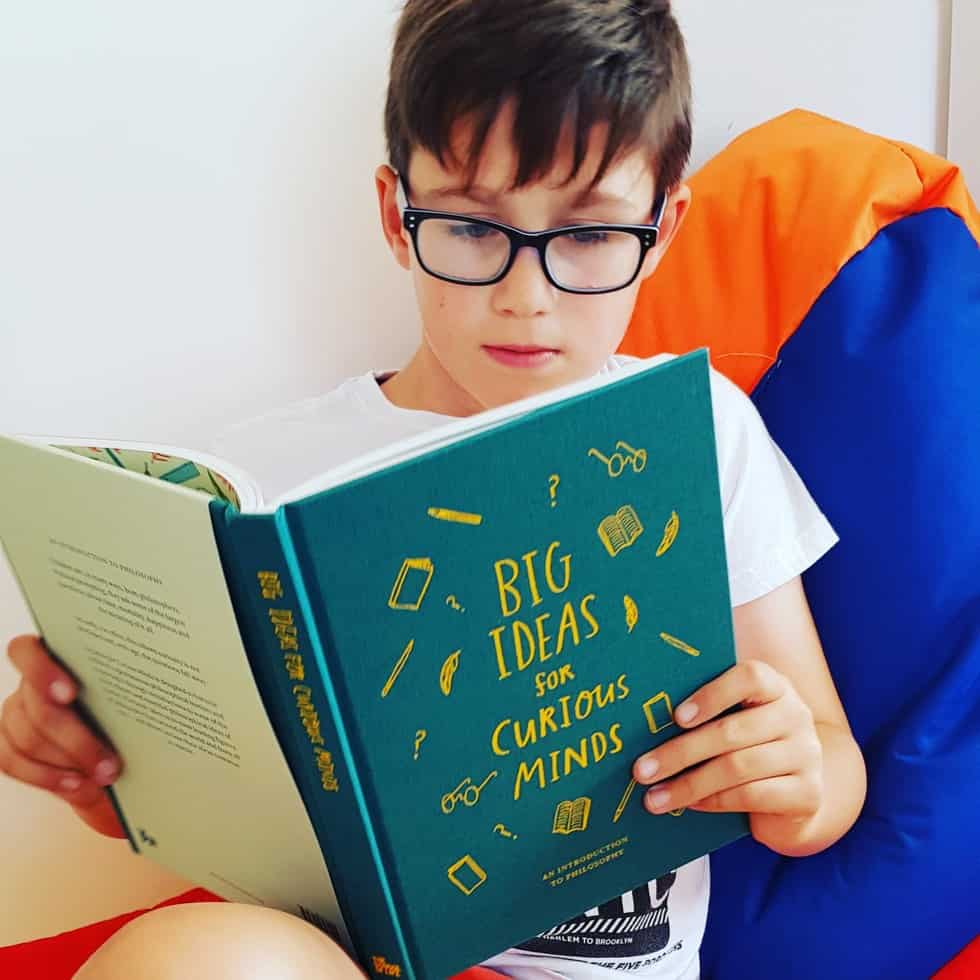
- Big Ideas for Curious Minds – A good philosophy book for children when he was in the phase of asking bigger “why” questions about how the world works.
- The Way Things Work Now – This is brilliant for kids who constantly want to know how things work. The detailed illustrations explain everything from simple machines to modern technology, and it’s easy to spend ages browsing without reading it in order.
- How to Be a Math Genius by DK – A much more visual approach to math than a workbook. The puzzles, diagrams, and real-world examples make it easy to dip into, especially for kids who enjoy figuring out how numbers and patterns work.
Reference Books for 9 Year Old Boys
Reference books ended up being the ones that stayed out on the coffee table the longest. Instead of reading them start to finish, he’d flip through for a few minutes, find something interesting, and then come back later.
- If the World Were A Village – This made huge population numbers much easier for him to picture by shrinking the world down to a village of 100 people. It led to some interesting conversations about how differently people live around the world.
- Weird But True World – One of those books that gets opened just to read a random fact and share it out loud.
- The Book of Comparisons – The visual comparisons made abstract ideas (size, speed, distance) much easier to understand.
- Bet You Didn’t Know 2 – The short, strange facts made this perfect for reading in small bursts. He could open it anywhere, read for five minutes, and usually come over to tell me whatever he’d just discovered.
- Guinness World Records – This one was picked up repeatedly, mostly to look up unusual achievements.
- That’s Fact-tastic! – Another browse-friendly option when he wanted interesting facts without a long explanation.
- Merriam-Webster’s Elementary Dictionary – Useful during writing time when spelling or word meaning questions came up.
- Life Skills for Kids – This became more useful as questions about everyday things started coming up. Rather than reading it in order, we could turn to the relevant section when he wanted to know how to do something.
- Super Interesting Facts for Smart Kids – Another one he could open anywhere and immediately find something interesting. It worked particularly well for those times when he wanted to read but didn’t want to commit to a story or full chapter.
- The Big, Fun Kids Cookbook – Got used the most when he wanted to try something independently in the kitchen.
- Mistakes That Worked – The accidental invention stories made history feel less formal.
- The World Almanac – We treated this as a general reference book rather than something to read in order. It covered enough different subjects that there was usually something relevant whenever a random question came up.
- Star Wars Encyclopedia of Starfighters and Other Vehicles – This stayed within reach for a long time, more browsing than reading cover to cover.
- What A Waste – This led to some surprisingly good conversations about rubbish, recycling, plastic, and where everything goes after we throw it away. It made everyday environmental issues much easier for him to understand.
- The Dragon Grammar Book – A lighter way to review grammar rules without opening a workbook.
Activity Books for 9 Year Old Boys
Puzzle books were especially useful during quiet afternoons, travel days, or anytime we needed something engaging that didn’t require much setup. The ones below were the easiest for him to pick up and work through independently.
- The Everything Kids Puzzle Book – The variety was what made this useful. He could switch between different types of puzzles rather than getting bored doing pages of the same thing.
- Brain Games for Clever Kids – Worked well when he wanted something slightly more challenging than basic puzzles.
- Brain Games – More of a dip-in book, easy to complete one or two pages at a time.
- Coloring Books for Boys – These tended to get used the most during downtime when reading felt like too much effort.
- Perfectly Logical – He enjoyed having to work these out step by step rather than simply guessing. It was challenging enough to make him think without becoming frustrating.
Joke Books for 9 Year Old Boys
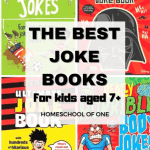
Joke books were one of the easiest ways to get him reading without it feeling like reading practice. Most of the time they were used to find something to tell at dinner or share with friends rather than being read straight through.
- The Big Book of Silly Jokes for Kids – The short jokes were easy for him to remember, which meant we heard the same favorites at dinner more times than I could count.
- Would You Rather? Eww Edition – This one got the biggest reactions, slightly gross questions always seemed to hold attention longer.
- Laugh out Loud Jokes for Kids – Short enough to flip through and pick a few favorites without committing to a whole section.
- Awesome Jokes That Every 9 Year Old Should Know! – This was another one he dipped into whenever he wanted a new joke to try on us. He usually only read a few at a time before finding one worth remembering.
What are your favorite books for 9 year old boys? I’m always looking for new titles worth adding to the shelf, so if your child has a book they’ve read more than once, share it in the comments.
More Books for Different Ages
If you’re looking for books for siblings or planning ahead, I’ve put together reading lists for each age based on the books that worked best for us over the years.
- Books for 5 year old boys
- Books for 6 year old boys
- Books for 7 year old boys
- Books for 8 year old boys
- Books for 10 year old boys
- Books for 11 year old boys
- Books for 12 year old boys
- Books for 13 year old boys
If you’re shopping for a girl the same age, I also have a separate list of unusual gifts for 9 year old girls.
Last Updated on 22 September 2026 by Clare Brown

The book intends to help kids build up a positive bond with mathematics! Maths mastermind grade Pre-Primary is an attractive activity based book that aims to promote math proficiency in children. This book does not merely teach a child how to add and subtract, instead it incorporates series of exciting activities focused on pattern learning, number value and counting series. The book has numerous activities like count and draw, match dot-to-dot, shape-color matching and the like to make math fun.
Such a brilliant, comprehensive list! My son is 7 but is a good reader and we’re always looking for new types of books to encourage him to read even more. I’m sure there are several books on this list that he would love.
This is great, my daughter is 7 but really good at reading so am always looking for new book ideas!
Some great book choices here – I have several friends with children in this age bracket – these will make great presents! Thank you
Wow, lots and lots of books!! Love the sounds of the nature books, reference and history books. Right up our 8yo’s street! And I reckon I could learn something too!
This is an awesome list! I am going to save on Pinterest because there are so many good ideas for Christmas gifts!
This is a great list of books!! My oldest isn’t quite old enough for these yet, but I am going to bookmark it for when he gets a little older.
What an awesome list! my son is much younger but he does enjoy books. he is less keen with reading at school but he enjoys reading the ones he wants to with us !