
21 One Player Games for Kids (Board & Logic Picks)

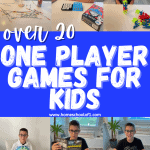


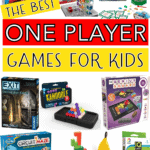
One player games for kids have been a staple in our house for years. As an only-child family, we’ve always looked for activities that are fun, challenging, and can be enjoyed independently without needing a sibling, friend, or parent to join in.
The best solo games do more than simply keep kids busy. They encourage problem-solving, critical thinking, creativity, and perseverance while giving children the confidence to work through challenges on their own.
Over the years we’ve tried everything from classic puzzles and word games to logic-based board games and brain teasers. Some were played once and forgotten, while others became favorites that came out again and again during quiet time, travel, waiting rooms, and homeschool breaks.
If you’re looking for the best one player games, solo board games, and educational puzzles for kids, these are the ones that genuinely stood the test of time in our home.
**This post may contain affiliate links. As an Amazon Associate and a participant in other affiliate programs, I earn a commission on qualifying purchases.**
When One Person Games Come In Handy
One player games are great to have on hand when kids need something engaging they can do independently. Over the years, we’ve reached for these games during:
- Quiet time: A calming activity that encourages focus and independent thinking.
- Travel: Compact games and puzzles are perfect for road trips, flights, and hotel stays.
- Waiting rooms: A great way to pass the time during appointments without relying on screens.
- Sick days: Low-energy activities that keep kids occupied while they rest and recover.
- Homeschool breaks: An easy way to keep learning fun while taking a break from lessons.
Best Solo Games for Kids
EXIT Escape Room Puzzles
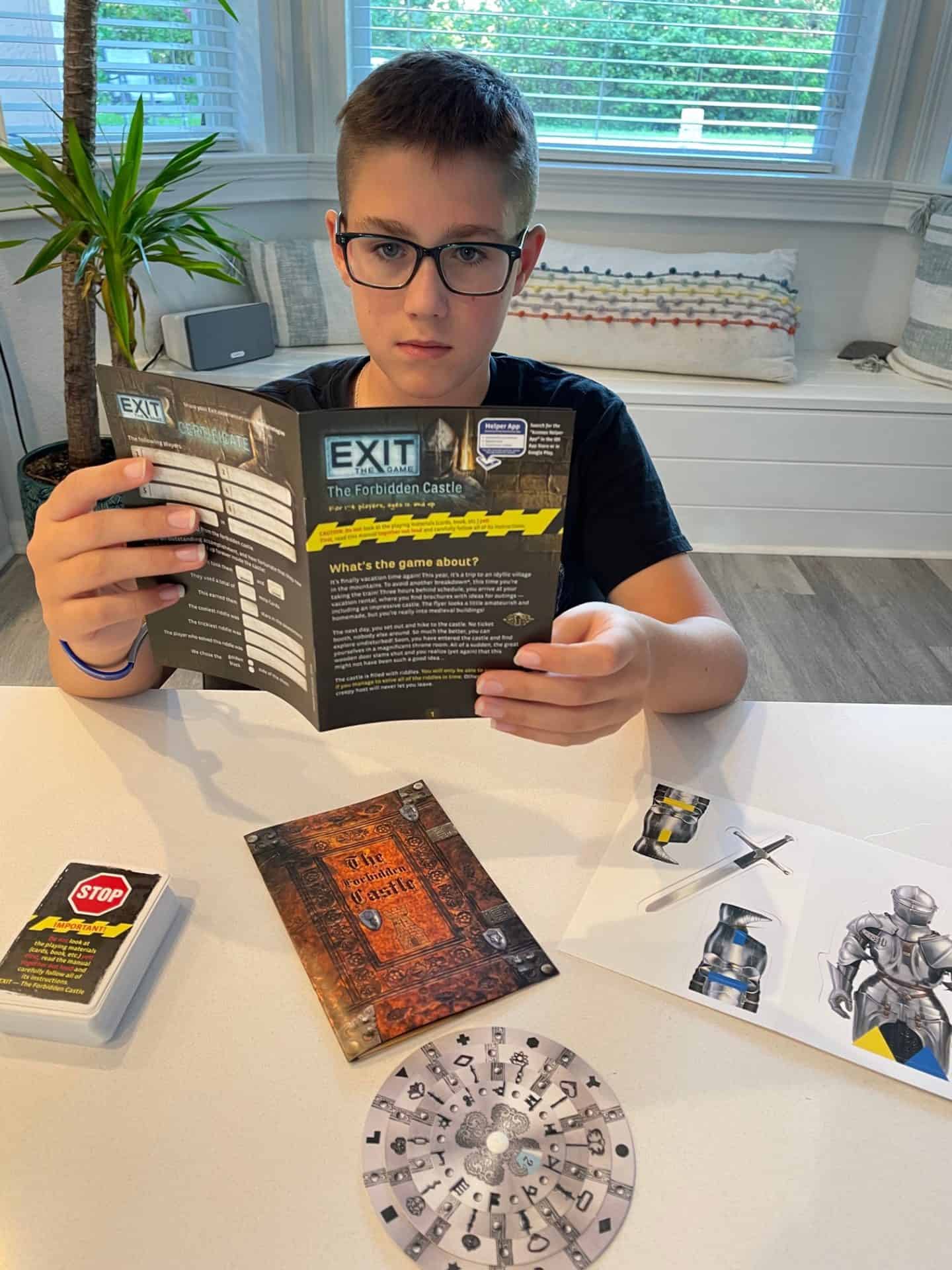
We love escape rooms, both in person and at home, so these were always going to be a hit. Although we often work through them together, Freddie has completed several on his own and enjoys trying to solve the clues before anyone else.
The Forbidden Castle and The Sunken Treasure have been two favorites, but there are loads to choose from. If your child is new to escape room games, I’d start with one of the easier versions before moving on to the more difficult challenges.
Enjoying puzzle-based challenges? Take a look at our favorite at home escape room board game for even more clue-solving fun.
Rush Hour
This has probably been one of our most-played logic games over the years. The goal is simple: move the vehicles around the board to free the red car. The early challenges seem easy enough, but the harder cards can keep kids occupied for quite a while.
Rush Hour is one of those games that encourages kids to slow down, think ahead, and try different approaches when they get stuck.
Boggle
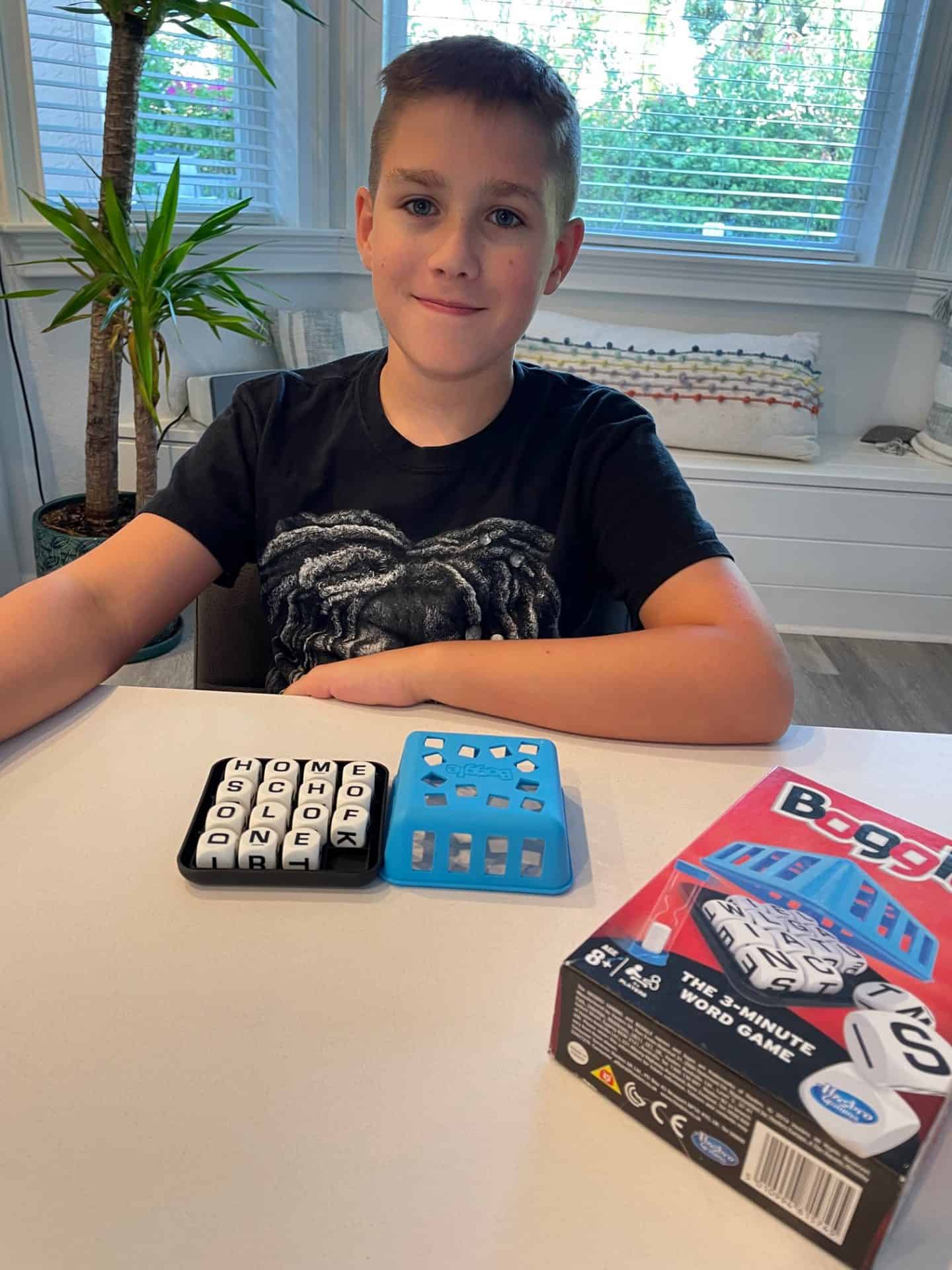
We’ve owned this for years and still pull it out regularly. Although the official rules use a timer, we rarely bother. Freddie usually prefers trying to beat his previous score rather than racing against the clock.
I love that Boggle sneaks in spelling and vocabulary practice without feeling educational. It’s quick to set up, easy to play almost anywhere, and never seems to get old.
Laser Maze
Anything involving lasers was always going to get attention in our house. The challenge cards gradually increase in difficulty as players use mirrors and beam splitters to guide the laser to its target.
Some of the solutions look impossible at first, which is probably why this one gets played so often. There’s something really satisfying about finally figuring Laser Maze out after a few failed attempts.
Rubiks Cube
The Rubik’s Cube became popular again in our house after Freddie attended a science camp where everyone seemed determined to solve one faster than their friends. Since then, he’s spent hours learning different techniques and challenging himself to improve his time.
What I like most is that it can be picked up for a few minutes or an hour. It’s small enough to take anywhere and challenging enough that there’s always another goal to work towards.
Kanoodle
Kanoodle is one of the games that seems to end up everywhere with us. It’s small enough to throw in a bag, making it perfect for appointments, travel, and those times when you need a quick activity away from home.
With hundreds of puzzle combinations, it never feels repetitive. Freddie has always enjoyed trying to work through the more difficult challenges, and I like that it keeps him thinking without needing any help from me.
Gravity Maze
Building towers and creating a path for the marble was enough to hook Freddie immediately. Every challenge feels a little different, and there’s a lot of satisfaction in watching the marble finally reach its destination after a few failed attempts.
The difficulty increases gradually, so Gravity Maze grows with kids rather than becoming too easy after a few plays. It’s one of those games that feels more like fun than learning, even though it’s constantly developing problem-solving skills.
Genius Star
We only discovered Genius Star fairly recently, but it quickly became a favorite. The challenge changes every time, which means no two games ever feel exactly the same.
What I like most is how quickly a simple-looking puzzle can become surprisingly difficult. It’s easy to learn but challenging enough that both kids and adults enjoy trying to beat the clock.
Chairs
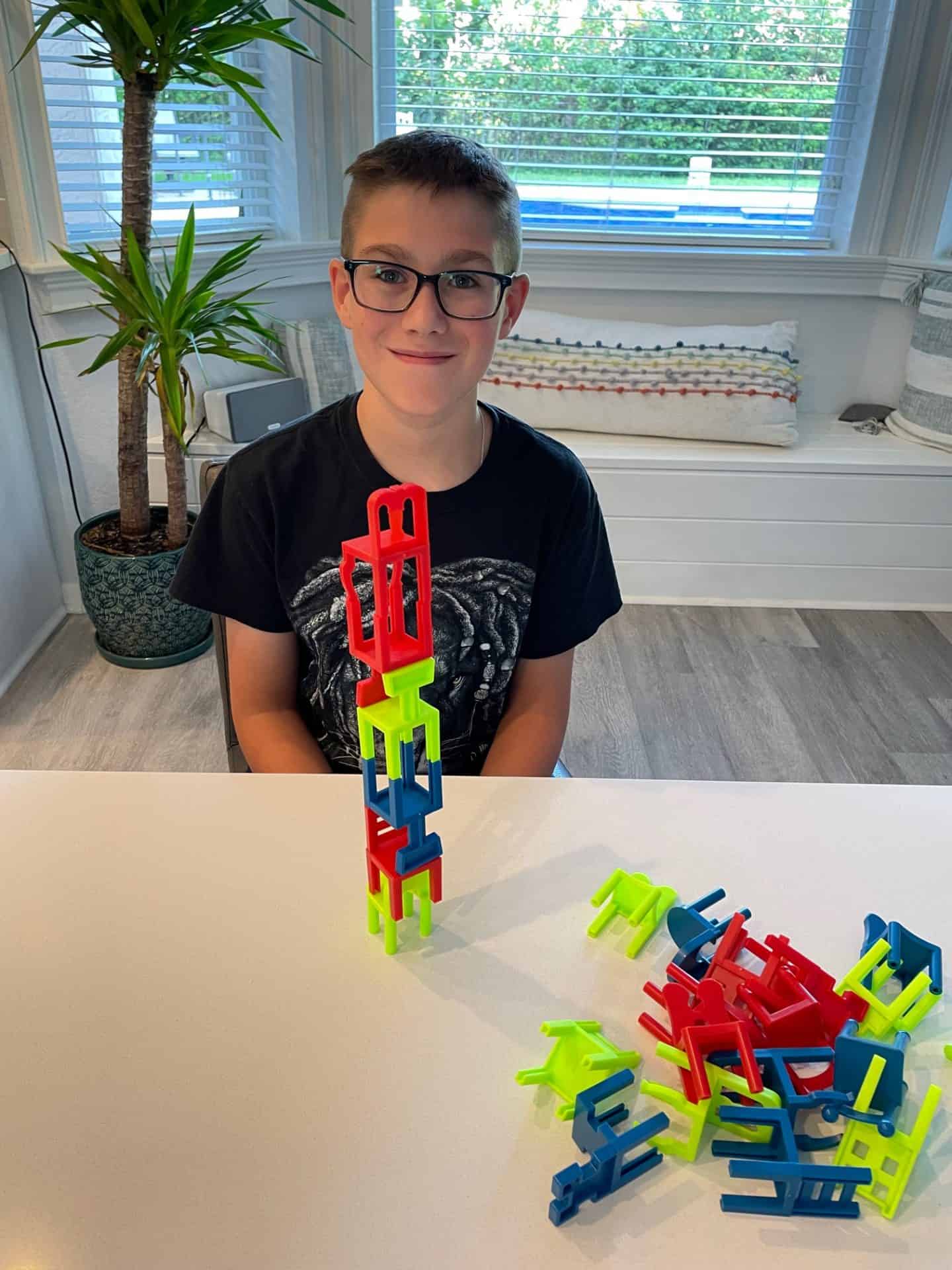
This always gets underestimated. Tiny plastic chairs don’t sound particularly exciting until you’re desperately trying to balance one more on top without the whole thing collapsing.
We’ve had plenty of laughs playing this over the years, especially when a tower comes crashing down just as it looks secure. It’s simple, portable, and much harder than it first appears.
Circuit Maze
Circuit Maze was one of the first games that made Freddie genuinely interested in how circuits work. The goal is to build a complete circuit that lights up the LEDs, but getting there requires a lot of planning and experimentation.
I like that it introduces real science concepts in a hands-on way. Kids are learning about circuits and electricity while focusing on solving the puzzle in front of them.
The Game
The Game looks incredibly simple when you first open the box, but it quickly becomes surprisingly addictive. Freddie enjoys trying to beat the game itself by finding the best place to play each card while keeping his options open for later turns.
Every game feels a little different, which is probably why it keeps getting pulled off the shelf. It’s easy to learn but requires enough strategy to stay interesting.
Katamino
This has always been one of the more satisfying puzzle games in our collection. With hundreds of challenges to work through, there’s always another puzzle waiting once you’ve completed the previous one.
The wooden pieces give Katamino a nice quality feel, and it’s one of those games that encourages patience and persistence. Some solutions come quickly, while others take much longer than expected.
Playing Cards
A simple deck of cards probably offers more one-player game options than almost anything else on this list. Solitaire has always been our favorite, but there are plenty of other games that can be played independently too.
I also love how easy they are to take anywhere. A deck of cards barely takes up any space, making it one of the easiest travel-friendly options for older kids.
Bananagrams
Bananagrams has been a favorite for years because it’s quick to set up and easy to play almost anywhere. Freddie enjoys challenging himself to build his crossword grid faster each time, turning it into a race against his previous best effort.
It’s one of those word games that quietly builds spelling and vocabulary skills while still feeling like fun. The portable pouch means it often gets packed for trips and days out too.
Find it Games
The Sports Edition has saved more than a few car journeys over the years. There’s something strangely addictive about searching through the tube trying to find the hidden objects mixed in with everything else.
I like that there’s no setup, no pieces to lose, and no mess to clean up afterwards. It’s one of the easiest options to hand over when you need a child occupied for a while.
Need more one-player ideas? These card games for one person are perfect for travel, quiet time, and independent play.
ColorKu
If your child enjoys Sudoku but finds rows of numbers a little intimidating, Colorku is a fun alternative. Instead of numbers, players use colored wooden balls to complete the puzzles, making it much more visual and hands-on.
Freddie enjoyed working through the different challenge cards, and I liked that it encouraged logical thinking without feeling repetitive. It’s one of those games that quietly exercises the brain while still being relaxing to play.
Code Master Programming Logic Game
Code Master has always felt more like solving puzzles than learning to code, which is probably why Freddie enjoyed it so much. Players guide their avatar through increasingly difficult maps using logic and sequencing to reach the crystal.
It’s a clever introduction to programming concepts without needing a screen. The challenges gradually become more difficult, giving kids plenty of opportunities to build confidence as they progress.
Suspend
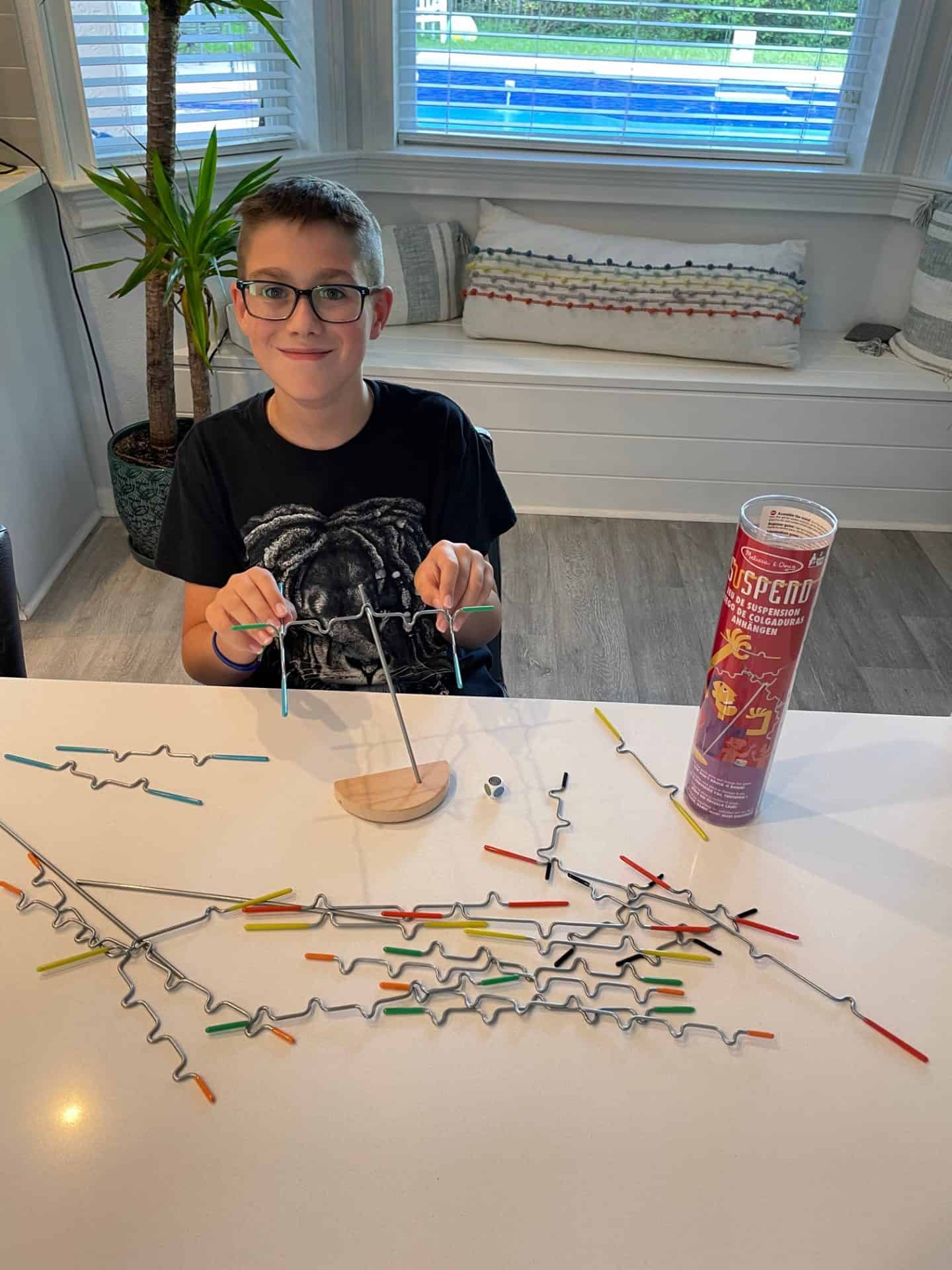
Suspend has been in our house for years and still gets pulled out regularly. The idea is simple: hang metal rods from the frame without causing everything to collapse. In reality, it’s much harder than it sounds.
Every game ends differently, which keeps it interesting, and there’s always plenty of laughter when a carefully balanced structure suddenly falls apart. It’s great for developing patience, concentration, and a surprisingly steady hand.
Simon Electronic Memory Game
Simon the classic memory game has survived for decades for a reason. The flashing lights and sounds grab kids’ attention immediately, but remembering increasingly long sequences is what keeps them coming back.
Freddie always enjoyed trying to beat his previous score, and it’s one of those games that’s easy to pick up for a few minutes without needing lots of setup or space.
Lego
I know Lego isn’t technically a game, but it has been one of the most-used solo activities in our house for years. Whether Freddie is following instructions or creating something completely from scratch, it keeps him occupied far longer than most toys ever have.
Some of his best creations have come from simply sitting down with a pile of bricks and seeing where his imagination takes him. It’s creative, screen-free, and never seems to lose its appeal.
Looking for more screen-free solo activities? Browse our favorite Lego gifts and building challenges for kids who can’t get enough of creating and problem-solving.
SmartGames IQ Twist
IQ Twist has been one of our favorite travel games for years. It’s small enough to fit in my handbag, which means it often comes along to appointments, restaurants, and anywhere else we might have some waiting around to do.
The challenge is to fit all of the pieces onto the board while following the puzzle clues, which sounds simple until you try some of the harder levels. It’s one of those games that keeps kids quietly focused for much longer than you’d expect.
Puzzles
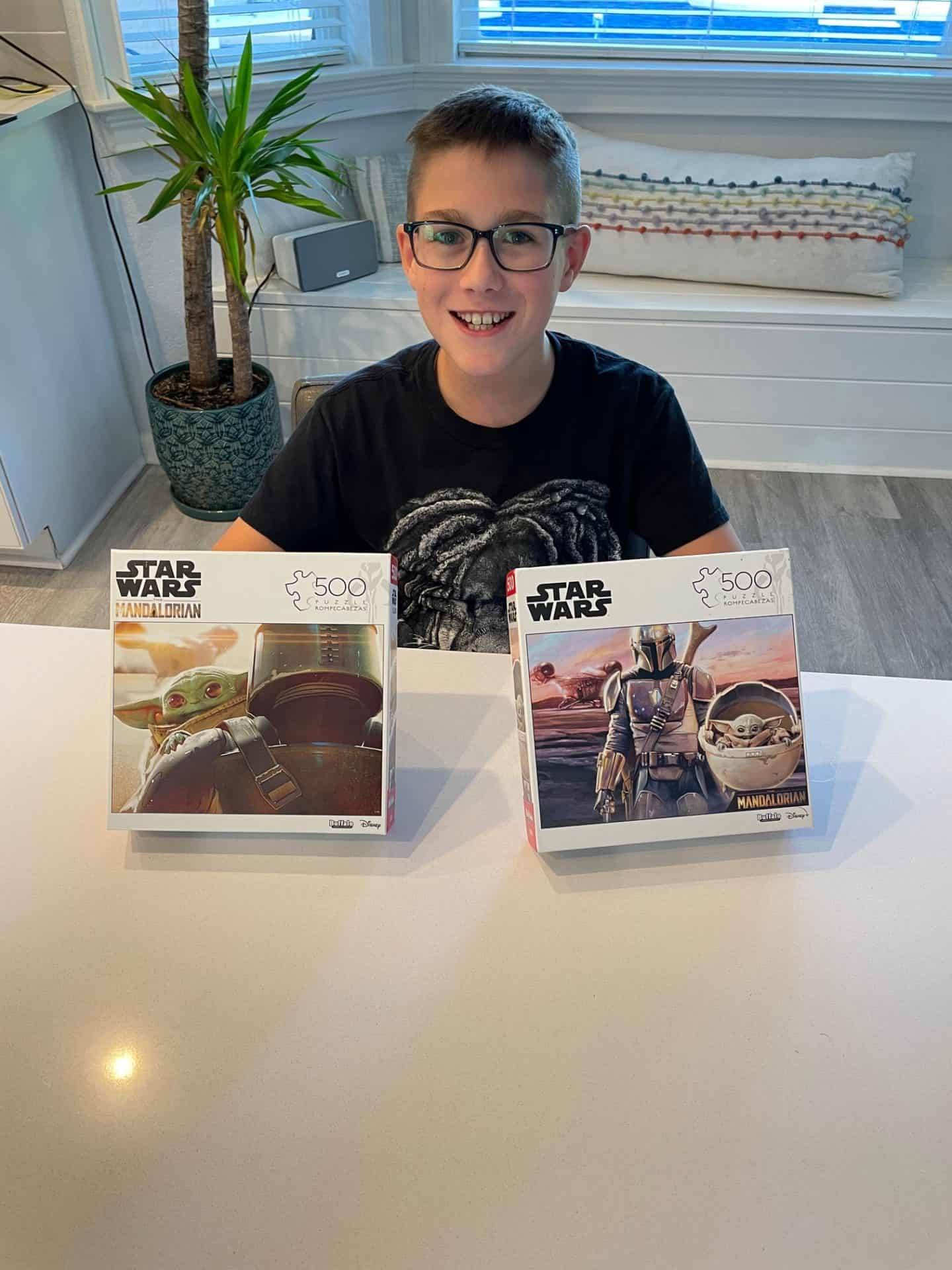
Jigsaw puzzles have always been a regular part of our week. Freddie enjoys working through them independently, whether it’s a traditional jigsaw or a more challenging brain teaser.
What I like most is that they teach patience without kids really noticing. Some can be completed quickly, while others take several sessions, but there’s always a sense of accomplishment when the final piece goes in.
Last Updated on 11 June 2026 by Clare Brown

Great list! I appreciate the variety of games you included. It’s always a challenge to find engaging one-player games for my kids, and these suggestions are perfect! Can’t wait to try a few of them out. Thanks for sharing!
Thanks so much! Solo games are great for focus and independence. For quick wins, try logic puzzles or open-ended building; for movement, solo scavenger/maze cards work well.
Clare
What I love about this list is the variety of games included, from classic board games to digital options. And with games suitable for a range of ages and interests, there’s something for everyone to enjoy.