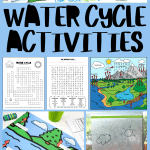
Water cycle activities help kids understand how water moves through the environment through evaporation, condensation, precipitation, and collection.
Instead of simply memorizing the stages of the water cycle, kids can see these processes in action with simple experiments, models, worksheets, puzzles, and hands-on projects.
These activities work well for elementary science lessons at home or in the classroom, with options for younger learners as well as more challenging activities for older kids.
How to Teach the Water Cycle
The water cycle describes the continuous movement of water between Earth’s surface and the atmosphere. The four main stages kids typically learn are:
Evaporation: Heat from the sun turns liquid water into water vapor.
Condensation: Water vapor cools and forms tiny droplets, creating clouds.
Precipitation: Water falls from clouds as rain, snow, sleet, or hail.
Collection: Water gathers in oceans, lakes, rivers, and the ground before the cycle begins again.
Hands-on water cycle activities make these stages much easier to visualize. Kids can observe evaporation and condensation, build models of the cycle, and reinforce important science vocabulary through games and printable activities.
Water Cycle Activities and Experiments
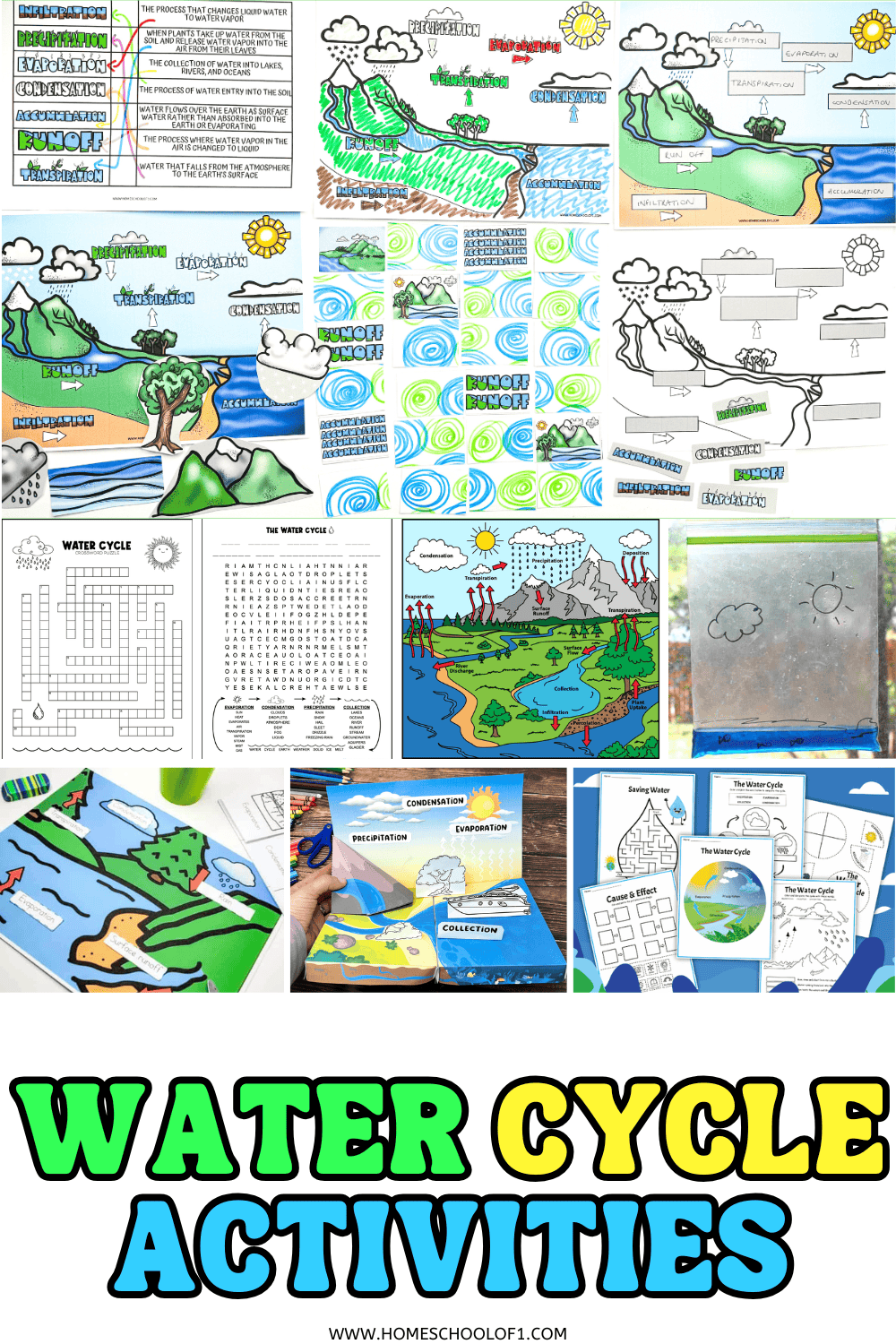
Try one or more of these activities as part of a water cycle science unit. I’ve included printable resources, simple experiments, crafts, and puzzles so you can choose activities that suit the age of your students.
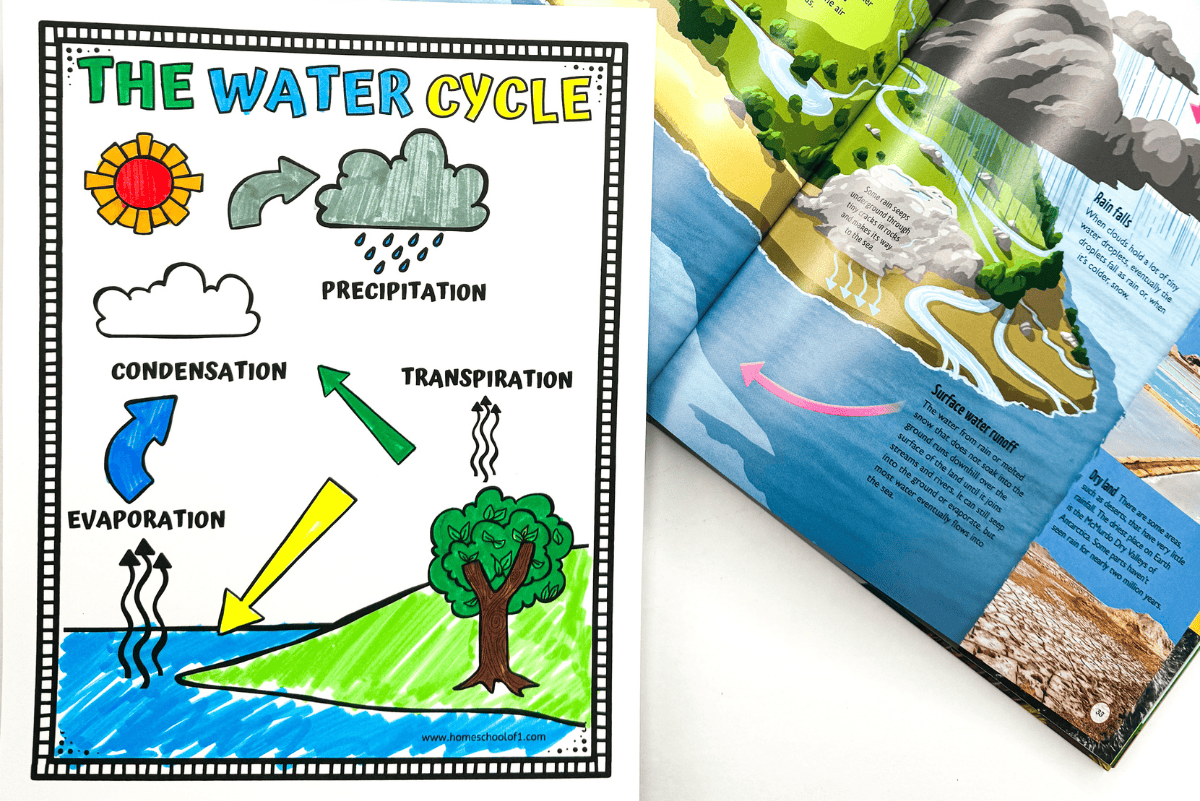
Free Water Cycle Coloring Page For Kids
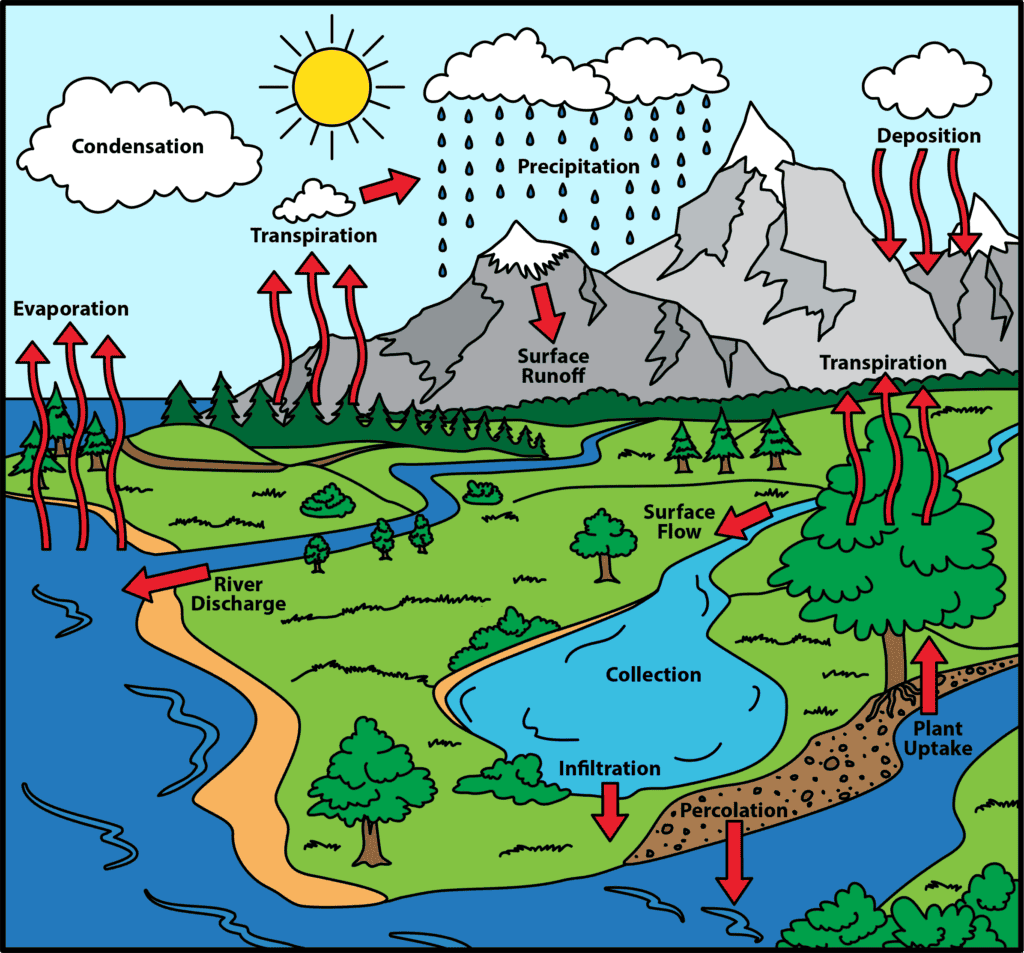
Our water cycle coloring page gives younger students a simple visual introduction to how water travels through the cycle.Kids can color the diagram while reviewing the different stages, making this an easy addition to an elementary science lesson.
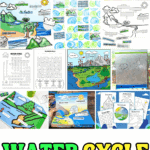
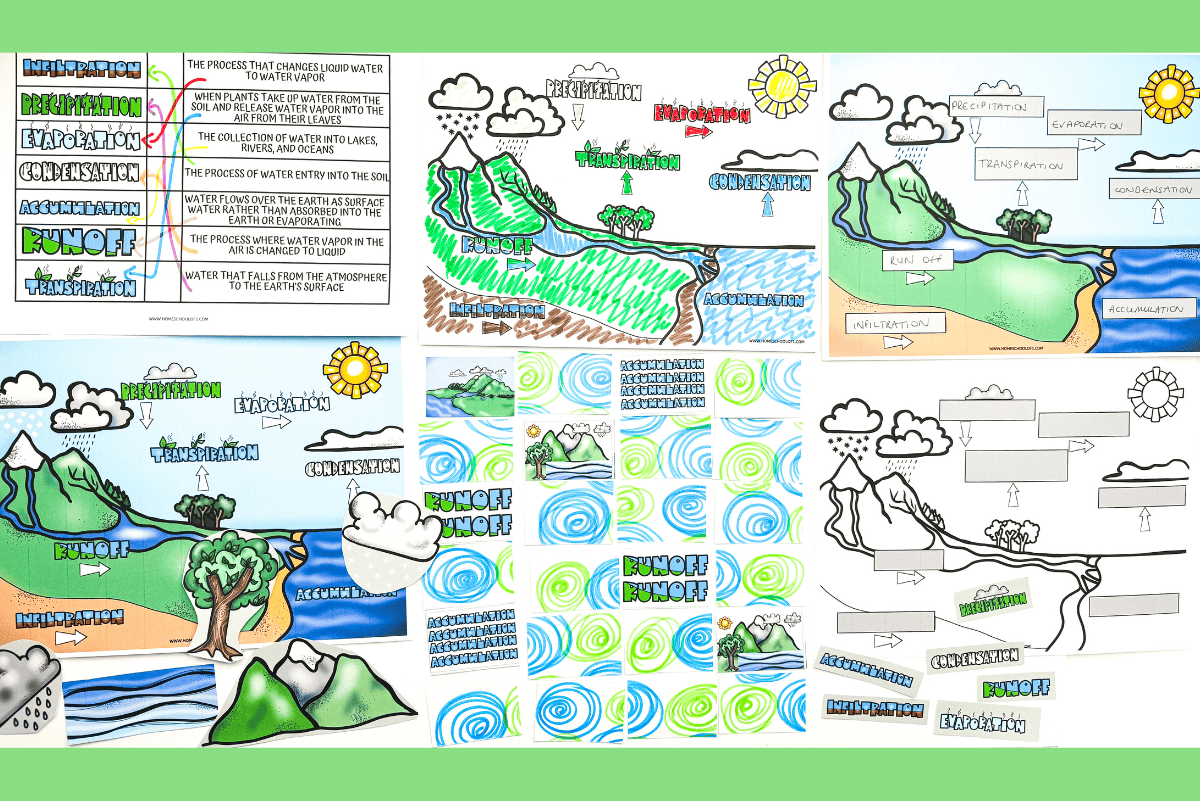
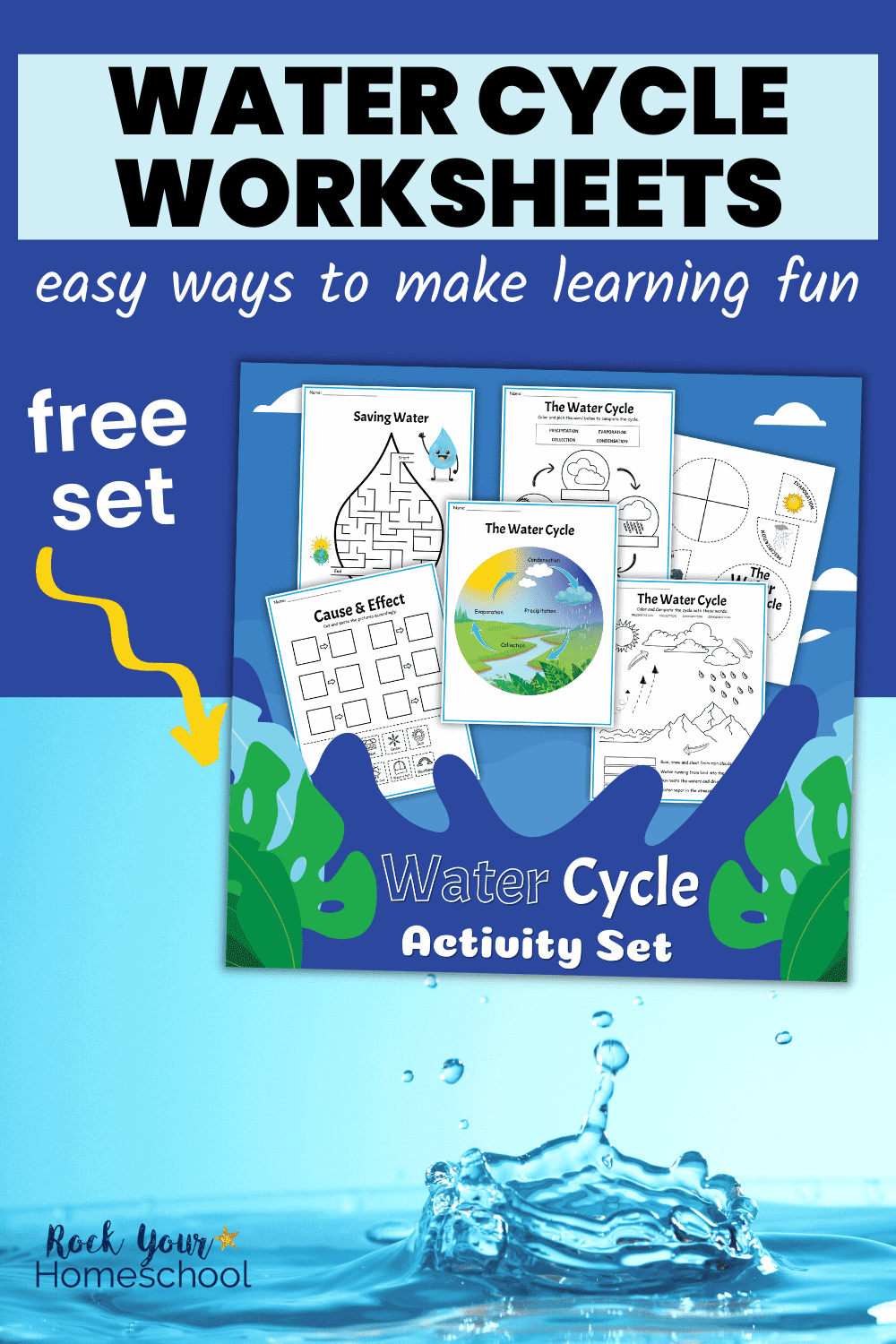
Our water cycle worksheets include several activities for exploring the stages of the cycle, including coloring, labeling, cut-and-paste activities, and puzzles.They're useful for reinforcing evaporation, condensation, precipitation, and collection after you've introduced the basic concepts.
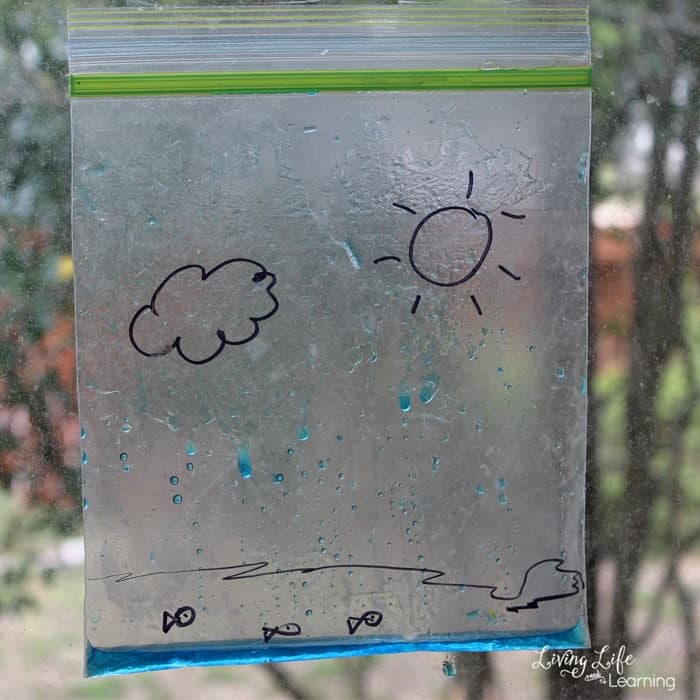
Create a miniature water cycle using a zip-top bag, water, and a sunny window.As the water warms, kids can observe evaporation before watching condensation form inside the bag. Eventually, droplets become heavy enough to fall, creating a simple demonstration of precipitation.
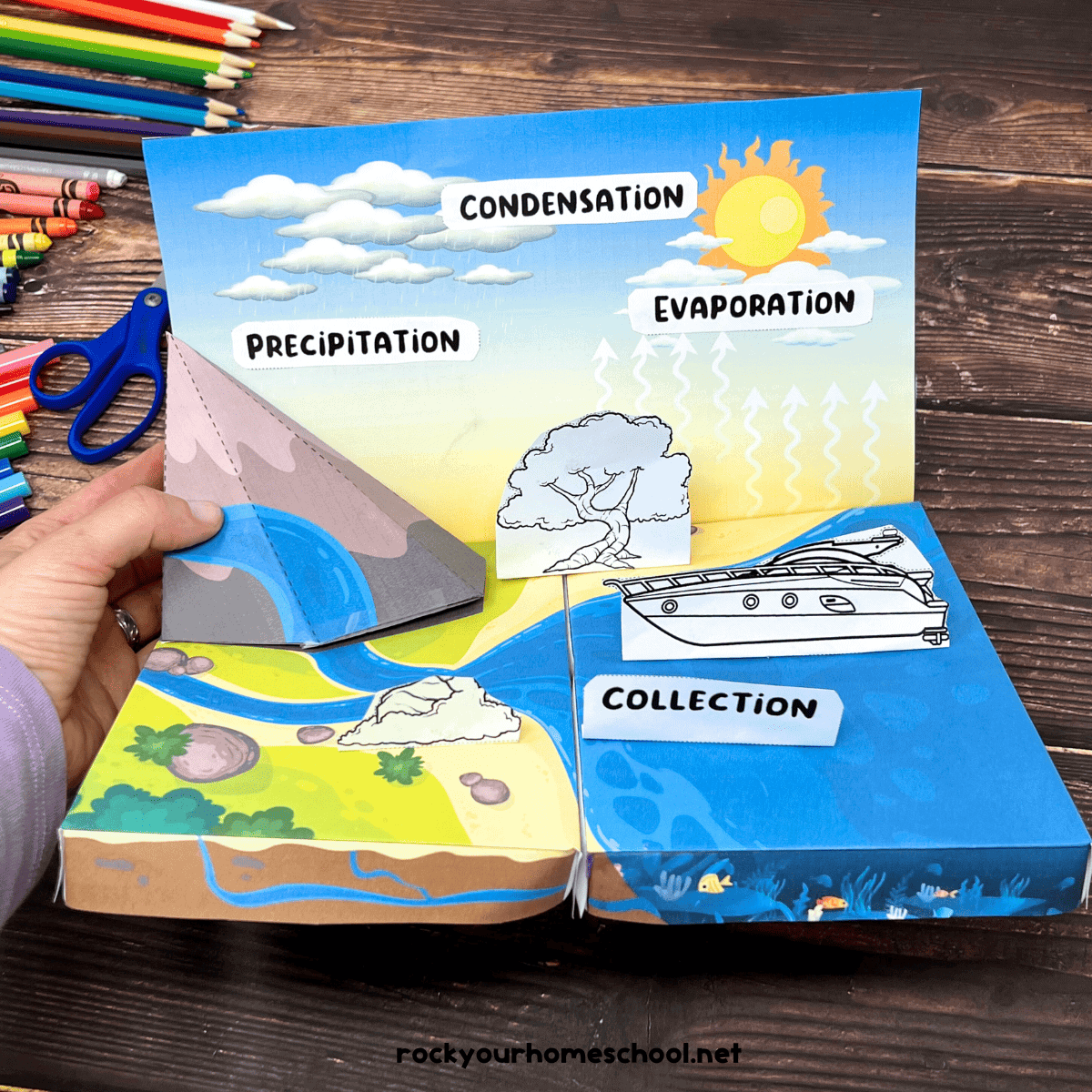
Building a 3D water cycle model gives kids another way to visualize how water moves between the Earth's surface and atmosphere.This project works particularly well for visual and hands-on learners and can be used alongside a science notebook or water cycle presentation.
This water cycle lesson explores how the sun provides the energy that drives the cycle and causes water to continually change form.It's useful for helping kids understand that evaporation, condensation, and precipitation are connected parts of one continuous process.
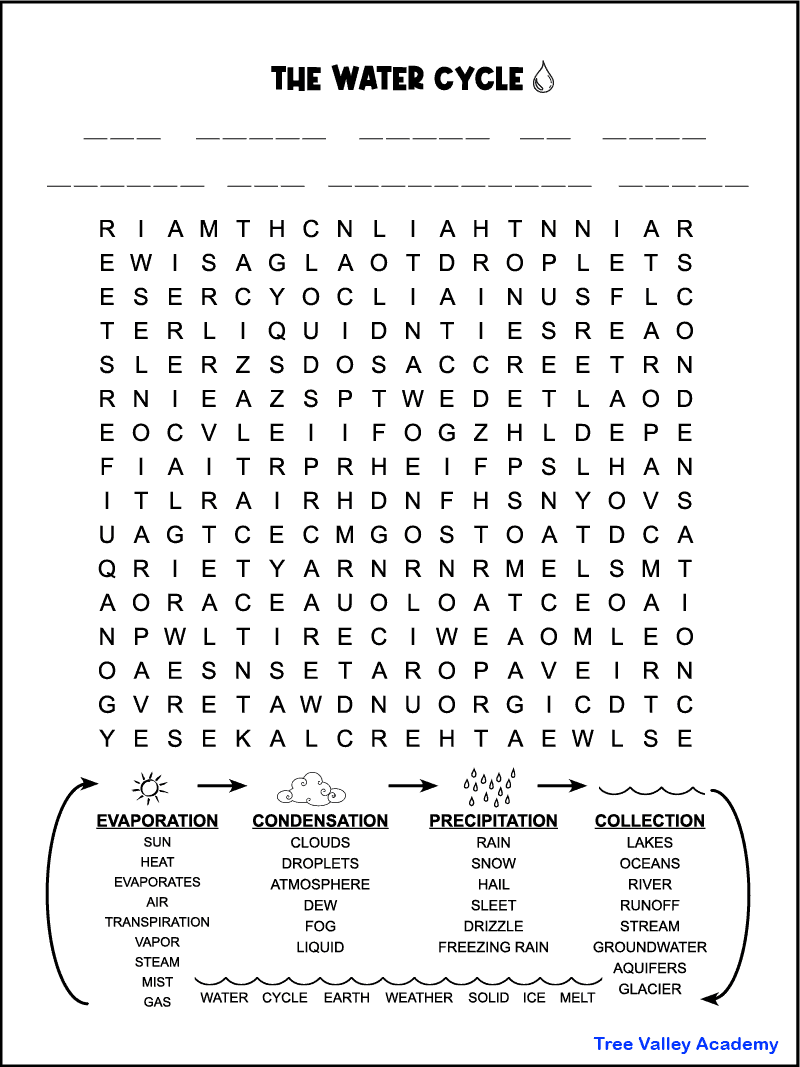
Use a water cycle word search to reinforce science vocabulary after kids have learned how the cycle works.With 40 hidden terms, this activity is better suited to older elementary students and works well for independent review, early finisher work, or a science center.
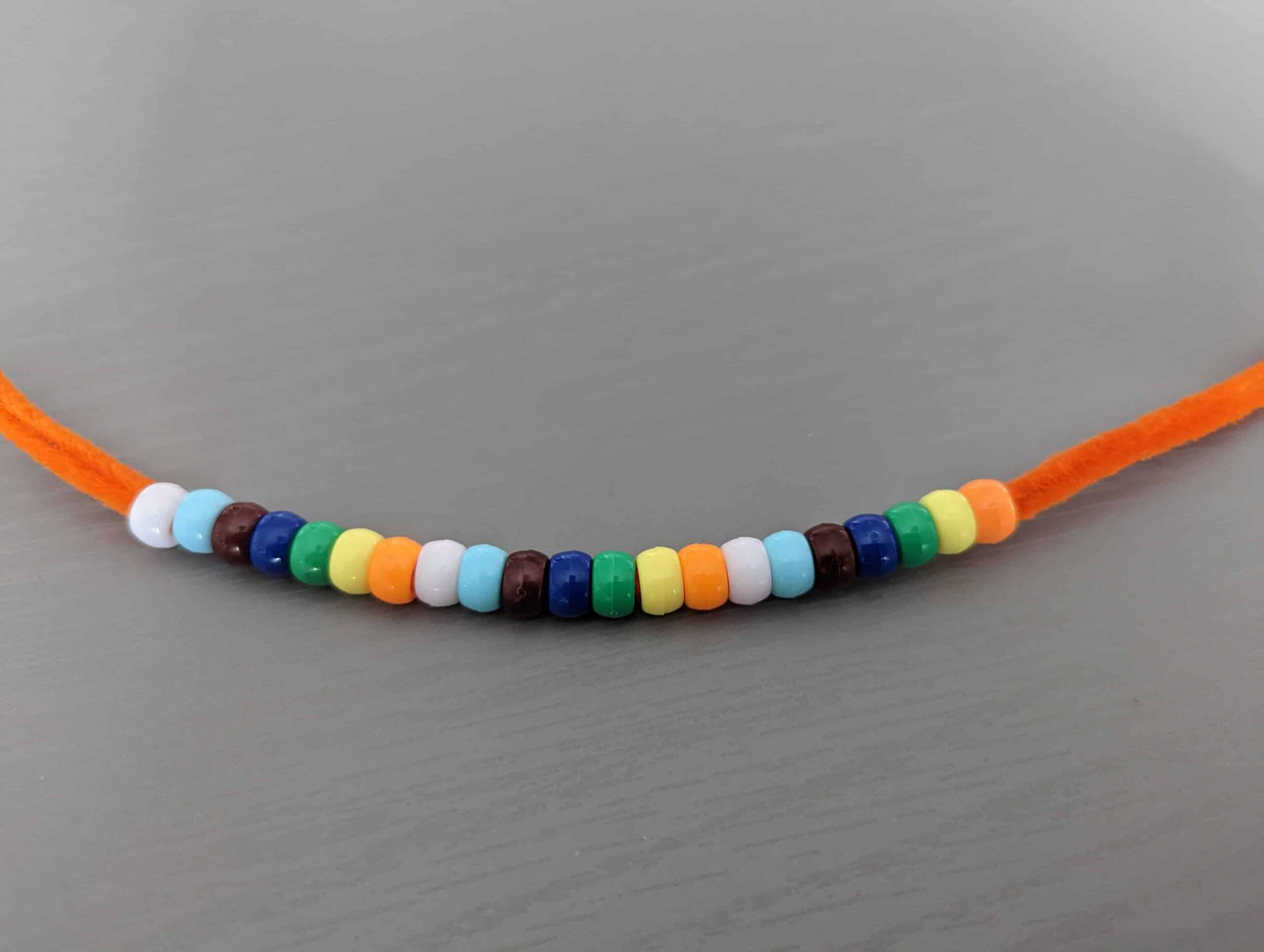
Turn the stages of the water cycle into a hands-on model using colored beads.Each bead represents part of the cycle, giving kids a physical reminder of the sequence and important water cycle vocabulary.
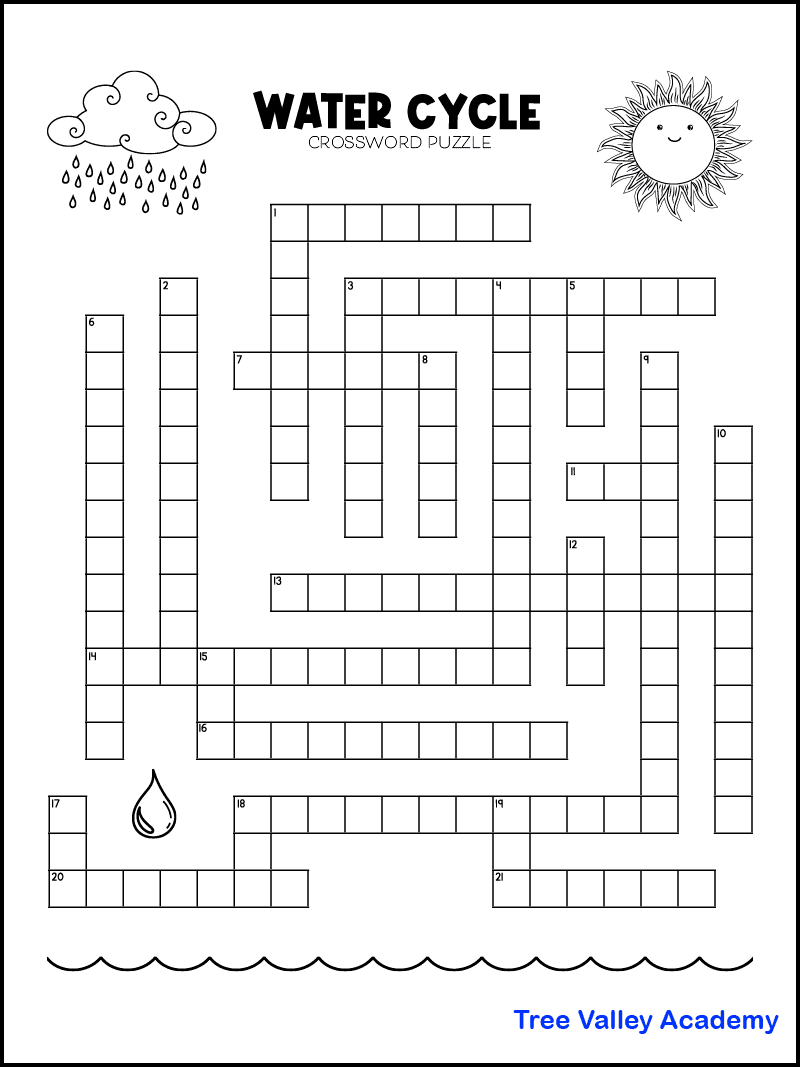
This water cycle crossword provides another way for older students to practice important vocabulary.It can be used after a lesson as independent practice or as a quick review of terms associated with the different stages of the cycle.
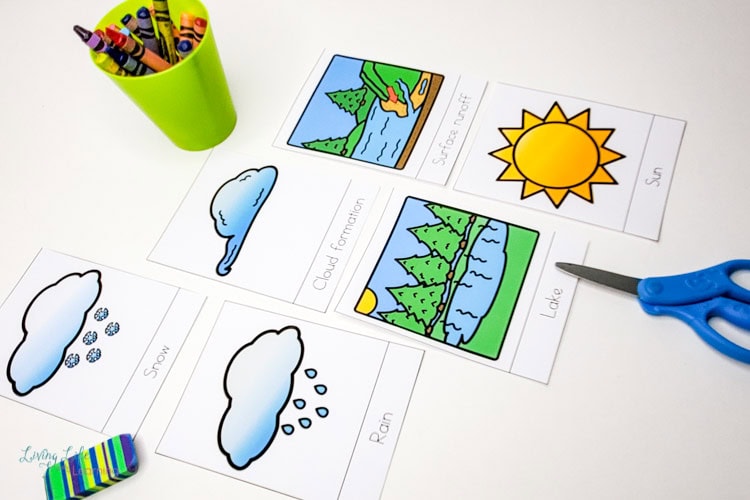
These printable water cycle activities introduce the basic cycle while also exploring related environmental topics, including water pollution.They're a useful option if you want to connect a water cycle lesson with a broader discussion about Earth's water resources.
This collection combines water cycle learning with mazes, spinners, coloring, and other printable activities.The variety makes it easy to add extra practice to a water cycle unit without relying entirely on traditional worksheets.
You don’t need a complicated science experiment to teach the water cycle effectively. Even simple activities can help kids connect terms such as evaporation, condensation, precipitation, water vapor, and collection with processes they see in everyday life.
Try combining a visual activity, such as a diagram or coloring page, with a hands-on experiment. Kids can then reinforce what they’ve learned with a worksheet, word search, or crossword.
Water Cycle Books for Kids
These three books are good additions to a water cycle unit, especially if you want to combine hands-on activities with reading.
A Drop Around the World follows a single drop of water as it travels through the water cycle. The story format makes the science easy to follow while introducing evaporation, clouds, rain, and other ways water moves around Earth.
The Great Big Water Cycle Adventure uses colorful illustrations and clear explanations to explore where water comes from, how it changes, and why the water cycle is so important.
Water Is Water follows water as it changes from liquid to vapor, clouds, rain, ice, and back again. It’s an especially good choice for younger elementary students learning about the different forms water can take.
Clare Brown is the founder of Homeschool of 1. She creates free printables and interactive learning tools for kids, helping parents and teachers generate activities instantly with no prep. Her work has been featured in Parade, HuffPost, Business Insider, Motherly, AOL, and Yahoo. Read more.