Free Musical Instrument Coloring Pages

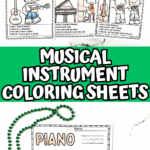
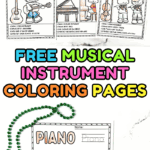
Musical instruments coloring pages have been a favorite in our homeschool, not just for coloring, but for sparking real conversations about music.
You don’t need fancy lessons or instruments to teach kids about music. Sometimes a crayon is enough.
This printable pack introduces a variety of instruments while giving kids a creative, screen-free way to connect with sound, rhythm, and musical vocabulary.
Whether you’re teaching at home or in a classroom, it’s an easy way to mix art, music, and learning all in one.
**This post may contain affiliate links. As an Amazon Associate and a participant in other affiliate programs, I earn a commission on qualifying purchases.**
A Look Inside the Printable Pack
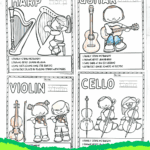
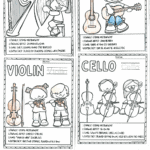
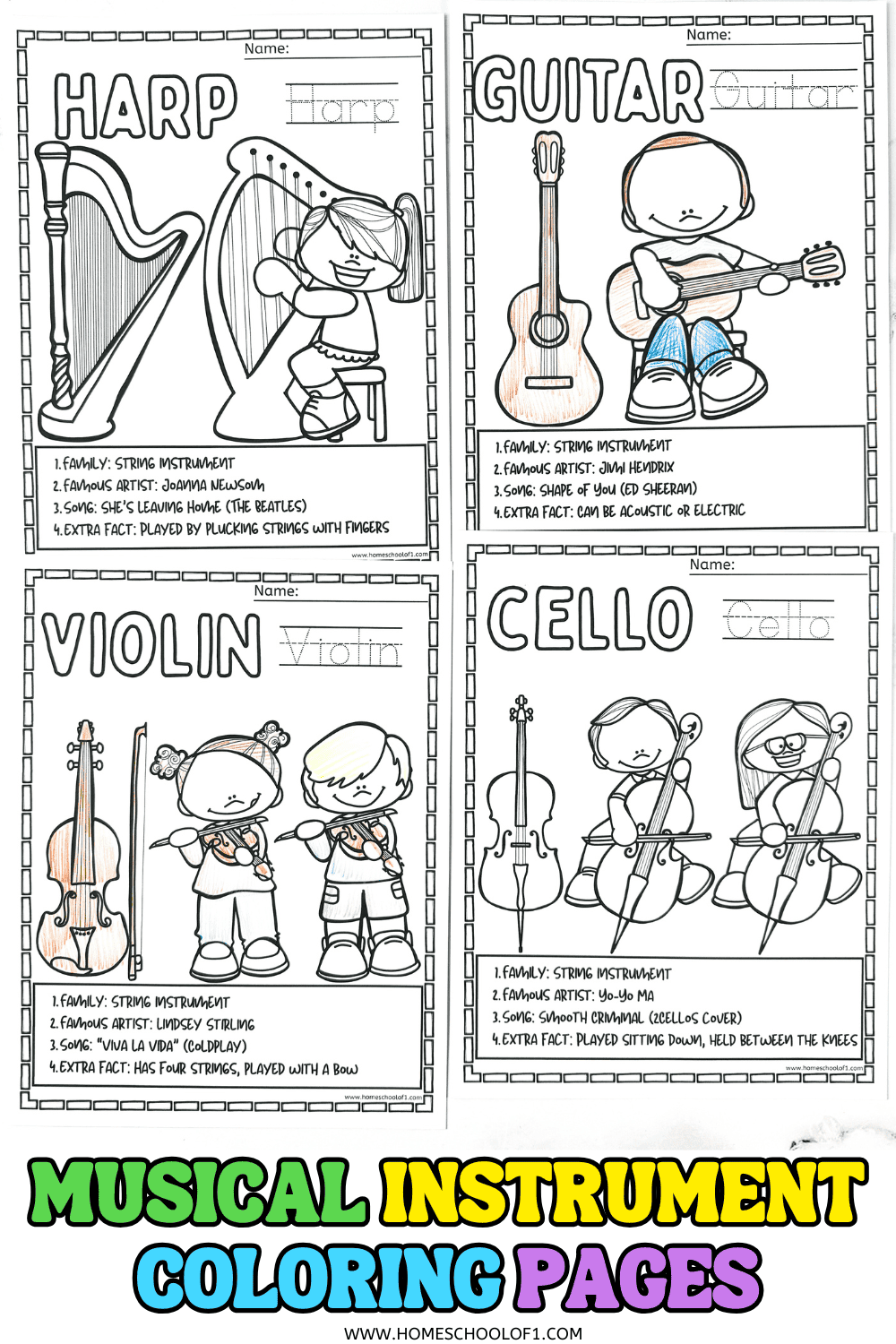
The PDF includes 10 pages, each one focusing on a different musical instrument. But these aren’t just for coloring, they also give kids a simple way to connect with real music.
Each page features:
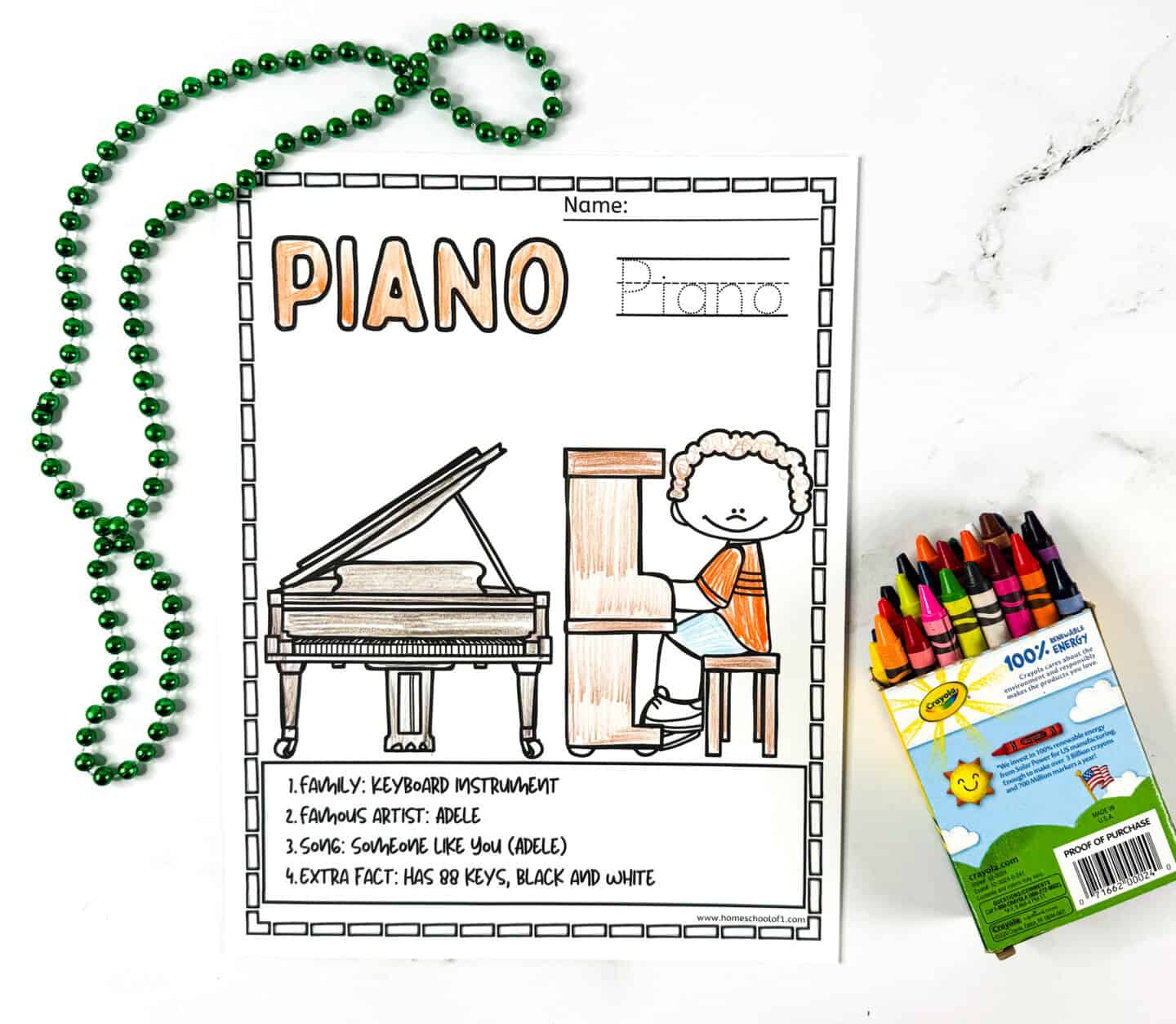
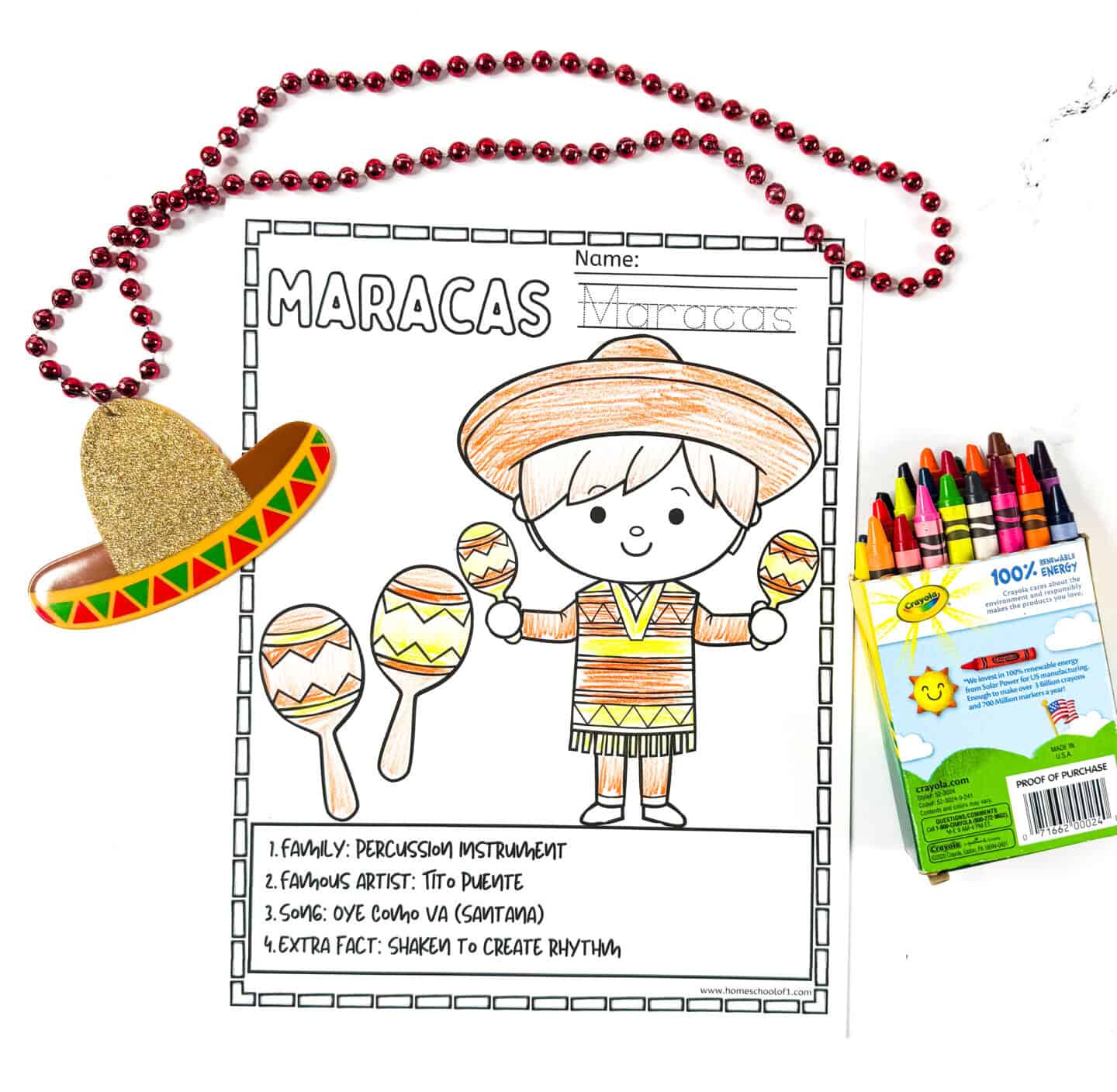
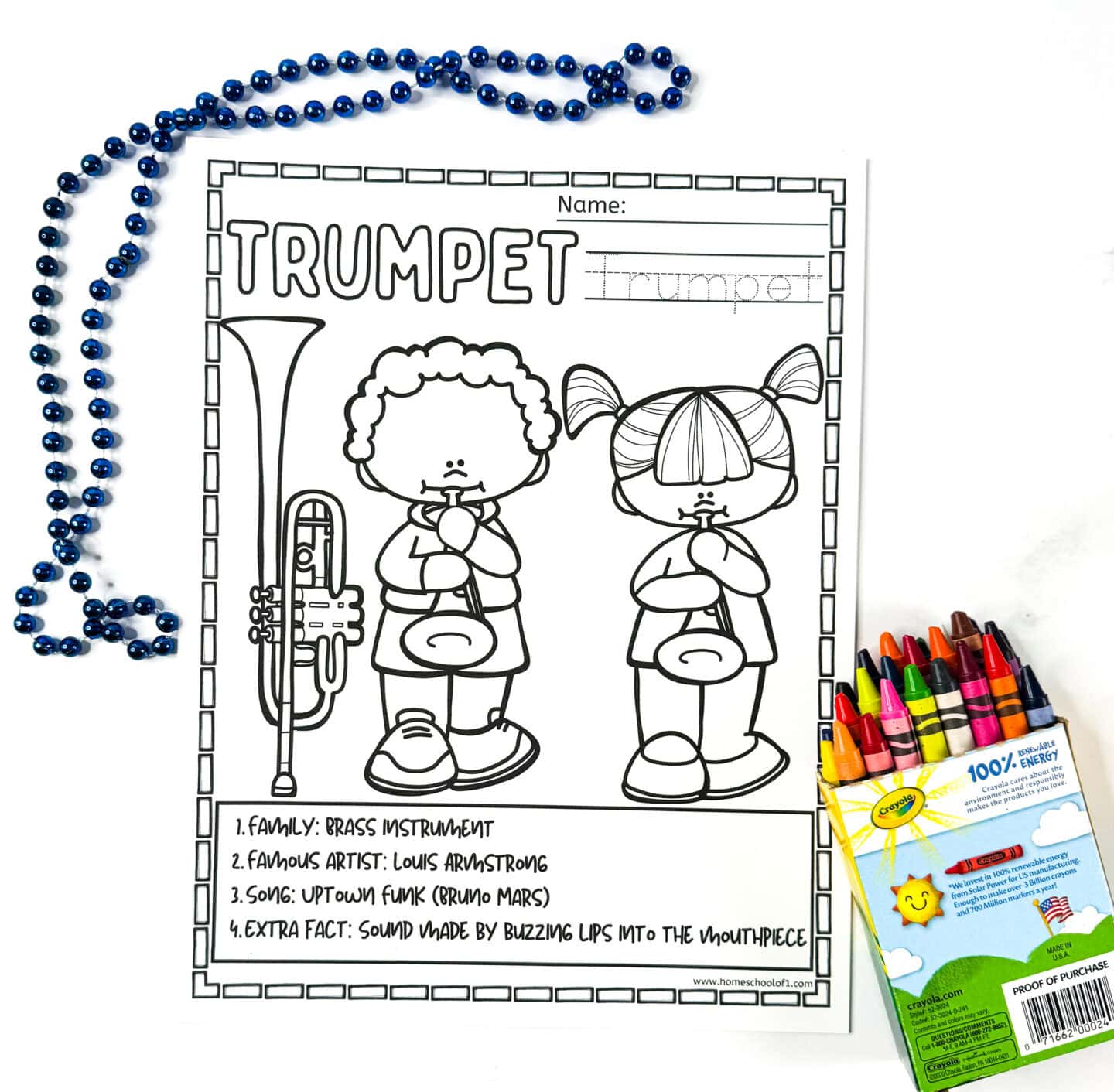
- The instrument’s name
- The instrument family (like strings, brass, or percussion)
- A famous musician who plays it
- A popular song that features the instrument
- One short, interesting fact
- A big, bold outline drawing for kids to color
The mix of visuals and quick facts makes it easy for kids to remember what they’re learning, and makes the pages feel more meaningful than a typical coloring sheet.
Instruments Covered:
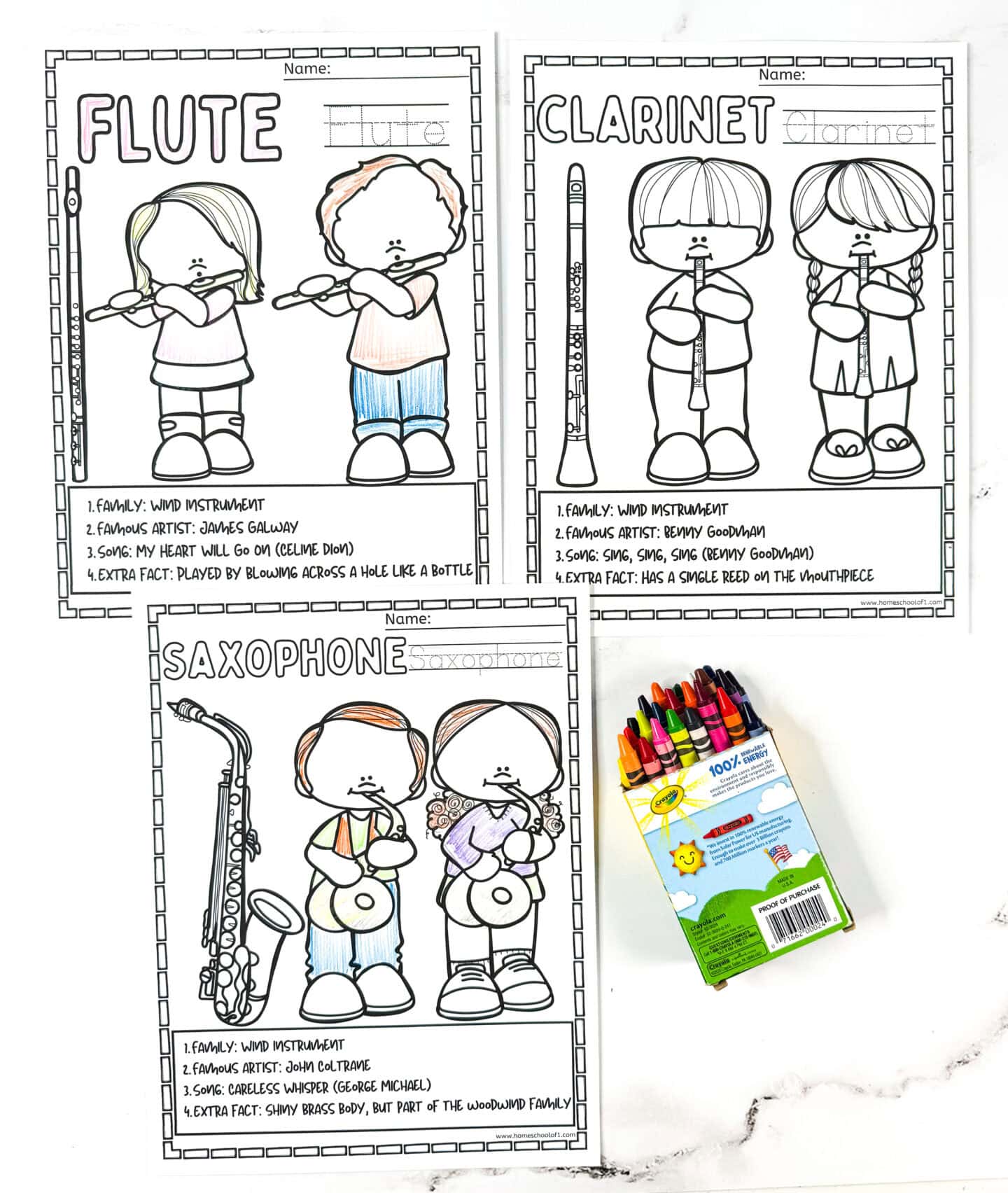
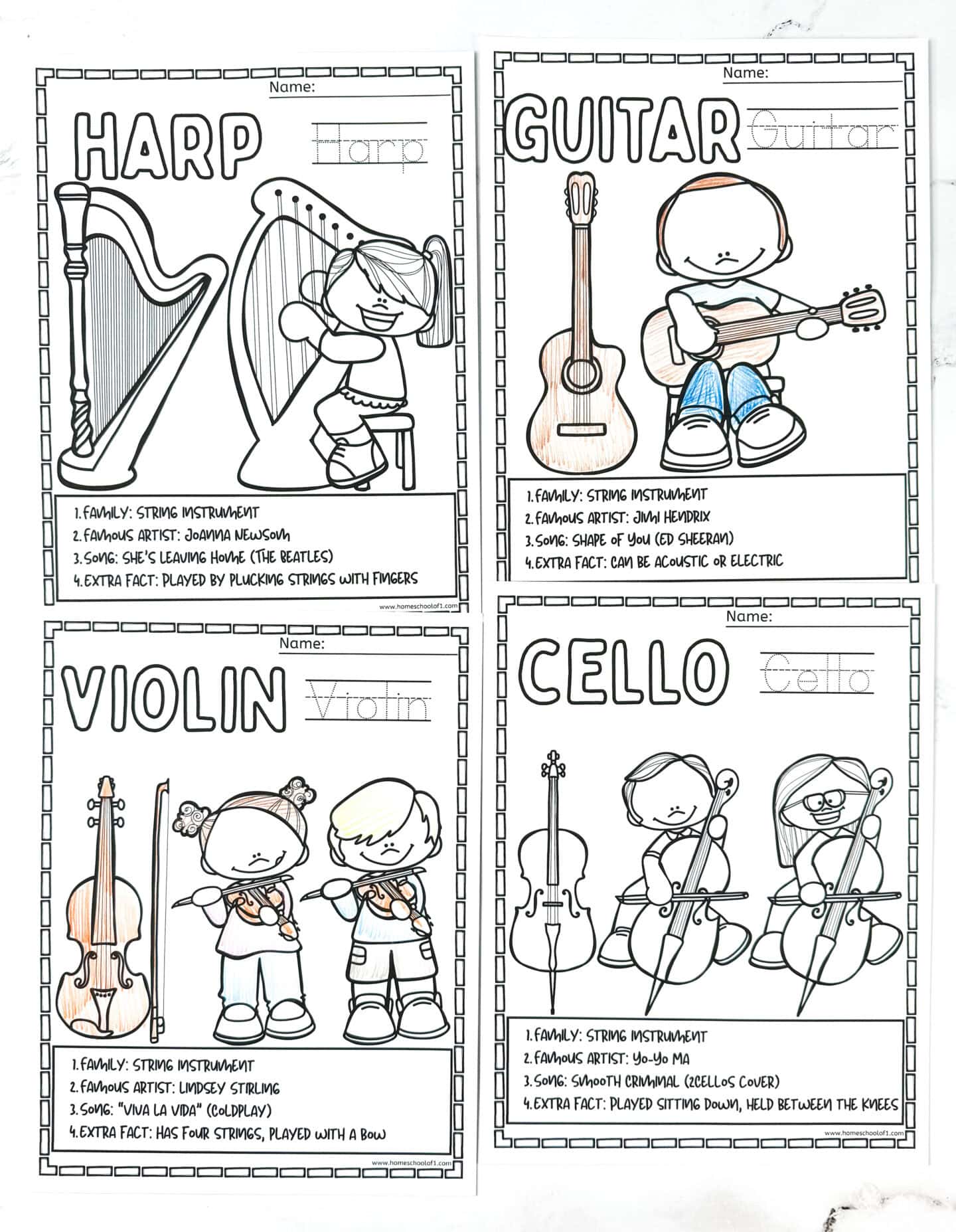
These coloring pages introduces 10 well-known instruments across all the main families, great for helping kids recognize both the look and sound of each one.
- Violin – A classic string instrument, featured in songs like “Viva La Vida”
- Cello – Rich and deep, famously played by Yo-Yo Ma
- Guitar – Acoustic or electric, it shows up in almost every modern genre
- Harp – Elegant and graceful, with strings you pluck by hand
- Piano – One of the easiest instruments for kids to recognize and try
- Trumpet – Bright, bold, and a staple in brass bands
- Flute – Light and melodic, like in “My Heart Will Go On”
- Clarinet – A woodwind with a smooth reed tone and wide range
- Saxophone – Technically a woodwind, but with the look and flair of brass
- Maracas – Easy to shake, perfect for learning about rhythm and beat
My son especially loved connecting each instrument to songs or artists he already knew, those little musical “aha” moments made it all click.
What Kids Really Learn While They’re Coloring
This isn’t just busywork. As kids color each instrument, they’re picking up real knowledge, no formal lesson required.
They begin to notice the difference between strings, brass, and percussion. The short facts are simple enough for early readers, but still introduce real music vocabulary like reed, bow, and mouthpiece, words that stick because they’re tied to something visual and hands-on.
It’s also a great confidence booster for emerging readers. The text is short, clear, and repetitive enough to feel approachable for kids just starting to read on their own.
And coloring itself? Still valuable. It builds fine motor skills and focus, especially for kids who benefit from calm, tactile activities. But what I’ve found most helpful is how often this sparks real curiosity:
“Can we hear what a cello sounds like?” or “What’s the difference between a flute and a clarinet?”
That kind of interest doesn’t usually come from a worksheet. It comes from connection.
Ideas for Making It Even More Fun
We’ve found a few simple ways to make these pages more engaging, and they don’t take much extra time.
- While your child colors, play a song that features the instrument. Hearing it while seeing it helps the learning stick.
- Try making it a “musical instrument of the day.” Focusing on just one page at a time keeps things fresh and manageable.
- After coloring, have your child show you how the instrument is played, bowing, plucking, tapping, or blowing.
- Use the finished pages to create a display wall, bulletin board, or even a mini music gallery at home or in your classroom.
- Add a simple writing prompt like: “What would it feel like to play this instrument on stage?” It’s a great way to combine music and literacy.
Just a few of these ideas can turn a quiet coloring session into a full, memorable learning experience.
More Music Worksheets
If your kids liked these musical instruments color pages, there are plenty of other music printables to explore next.
Composer coloring pages – This free printable set introduces six modern composers, like John Williams, George Gershwin, and Leonard Bernstein. Each page includes a hand-drawn caricature, a short bio, and space to color. It’s an easy way to add a bit of music appreciation to any lesson.
Musical instrument matching game – A simple, hands-on game that helps kids match instrument names to pictures or instrument families. It’s low-prep, fun, and reinforces what they’ve already learned while coloring.
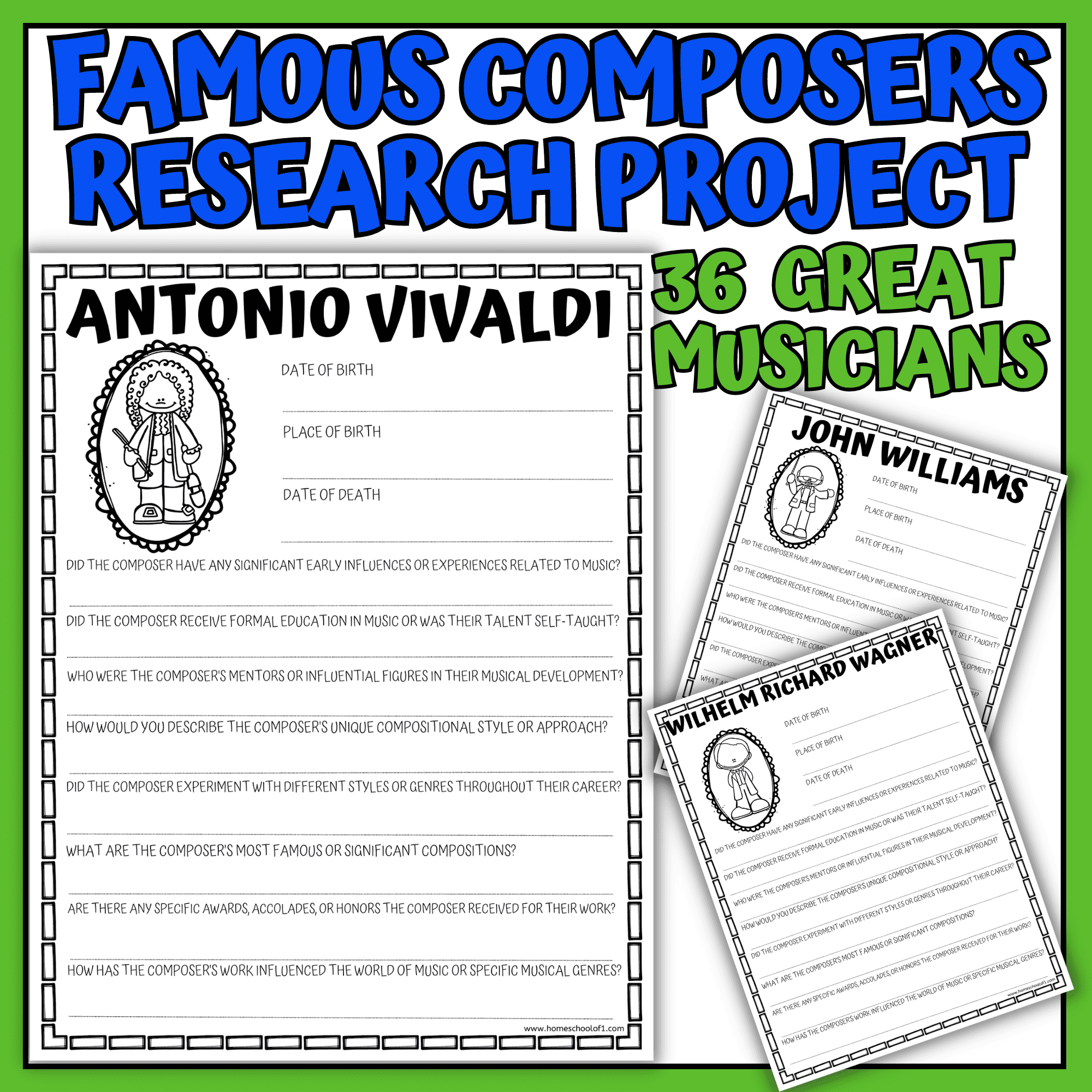
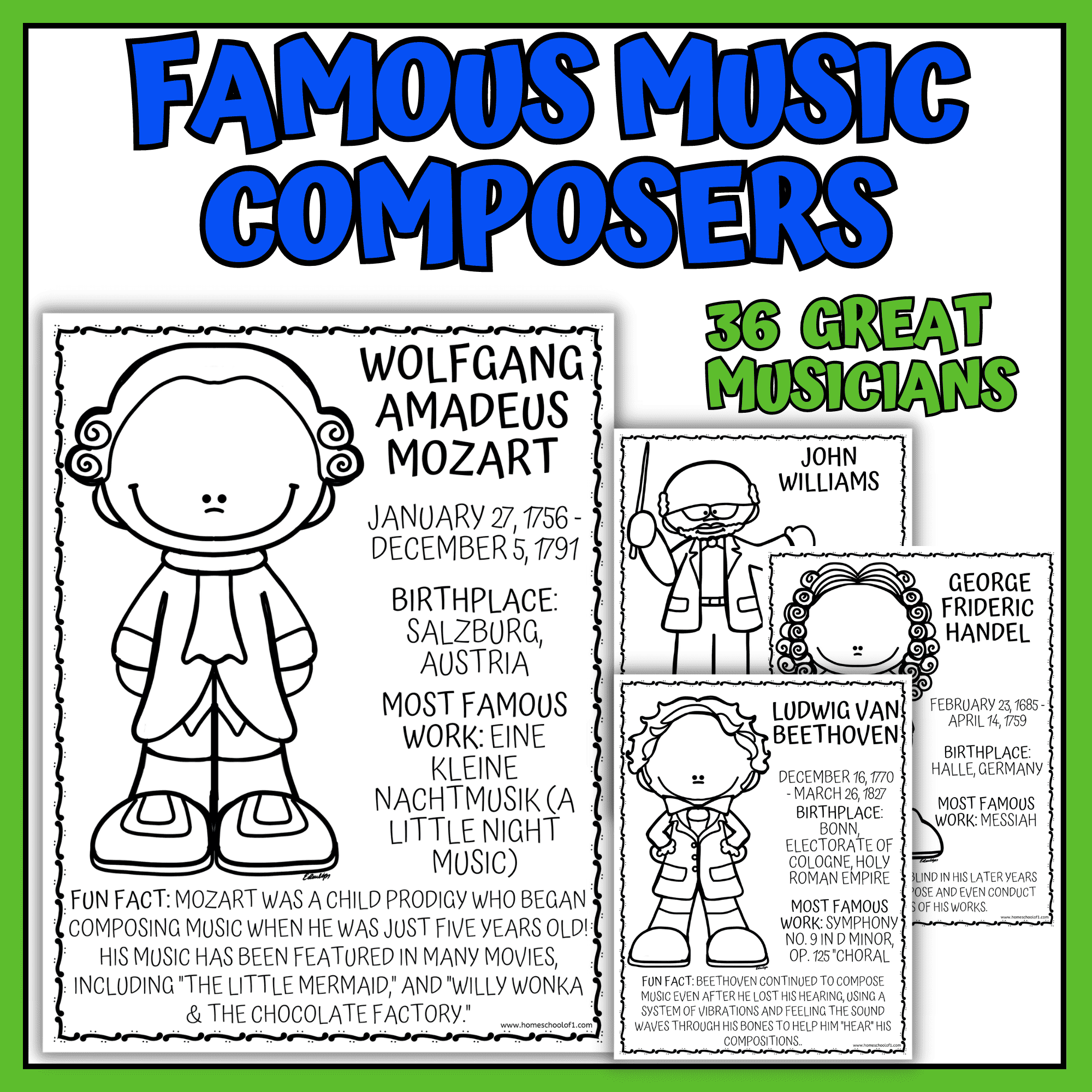
Music composers unit study – If your child is ready to explore more deeply, this bundle includes 36 composer posters and matching research pages. From Mozart and Beethoven to Clara Schumann and Tchaikovsky, it’s designed to help kids dig into each composer’s life, music, and lasting impact.
Famous composers research projectFamous music composers coloring pages
First Musical Instruments for Kids to Try at Home
After finishing the musical instruments coloring pages, my son immediately wanted to try playing a real one. I always try to nurture that kind of curiosity, and there are plenty of beginner-friendly instruments that won’t break the bank.
We started with a soprano ukulele. It’s small, simple, and just right for little hands. A roll-up piano or mini keyboard also works well, especially if the piano page sparked interest.
For wind instruments, recorders and harmonicas are a fun way to experiment with breath and sound. And if your child loves rhythm, maracas or a small percussion set can be a great place to start.
These simple instruments help kids make the leap from learning about music to actually experiencing it for themselves.
For even more structure check out these kid-friendly piano lessons that actually work.
Get Your Free Music Instrument Coloring Sheets Here!
Ready to grab your free printable? Just pop your name and email into the form below, and it’s all yours!
Tip: Use a personal email address (like Gmail), school or work emails sometimes filter printable links.
If you don’t see the form below, click here to get the free PDF.
Last Updated on 23 October 2025 by Clare Brown
