
Free Printable Antarctica Worksheets for Kids

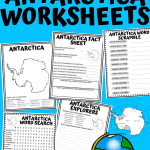
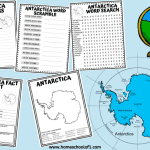
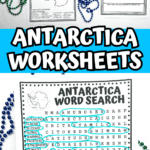
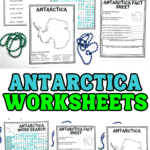
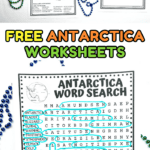
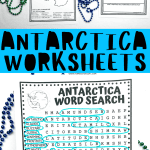
These free printable Antarctica worksheets for kids make it easy to explore the world’s coldest continent through maps, facts, puzzles, and research activities.
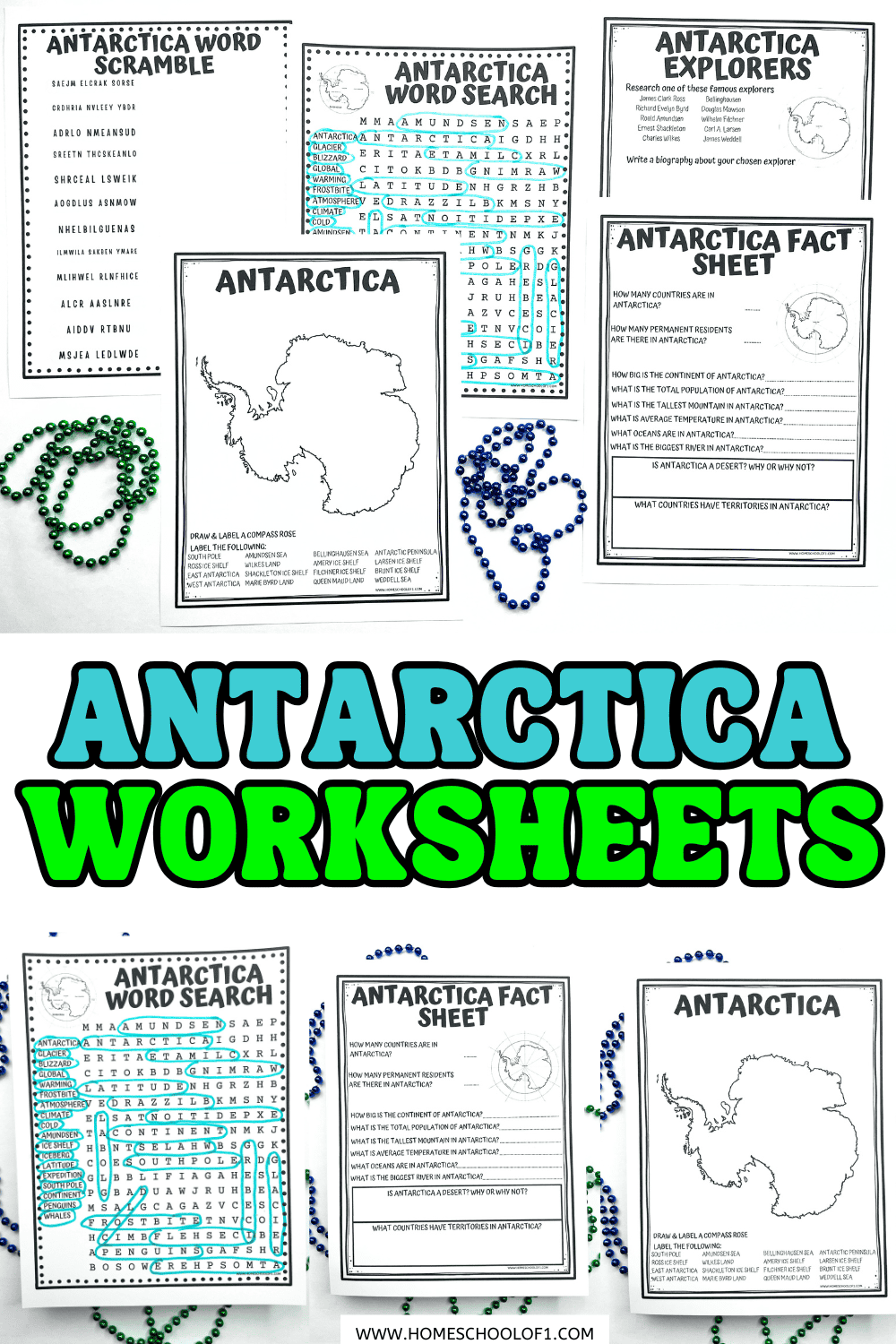
The printable pack includes an Antarctica map for kids, fact sheet, word search, word scramble, and Antarctic explorer activities. They’re ideal for elementary and middle school geography lessons, homeschool units, or classroom activities.
Kids will learn about Antarctica’s geography, climate, wildlife, landmarks, and famous explorers while completing a mix of research and hands-on activities.
**This post may contain affiliate links. As an Amazon Associate and a participant in other affiliate programs, I earn a commission on qualifying purchases.**
Printable Antarctica Map for Kids
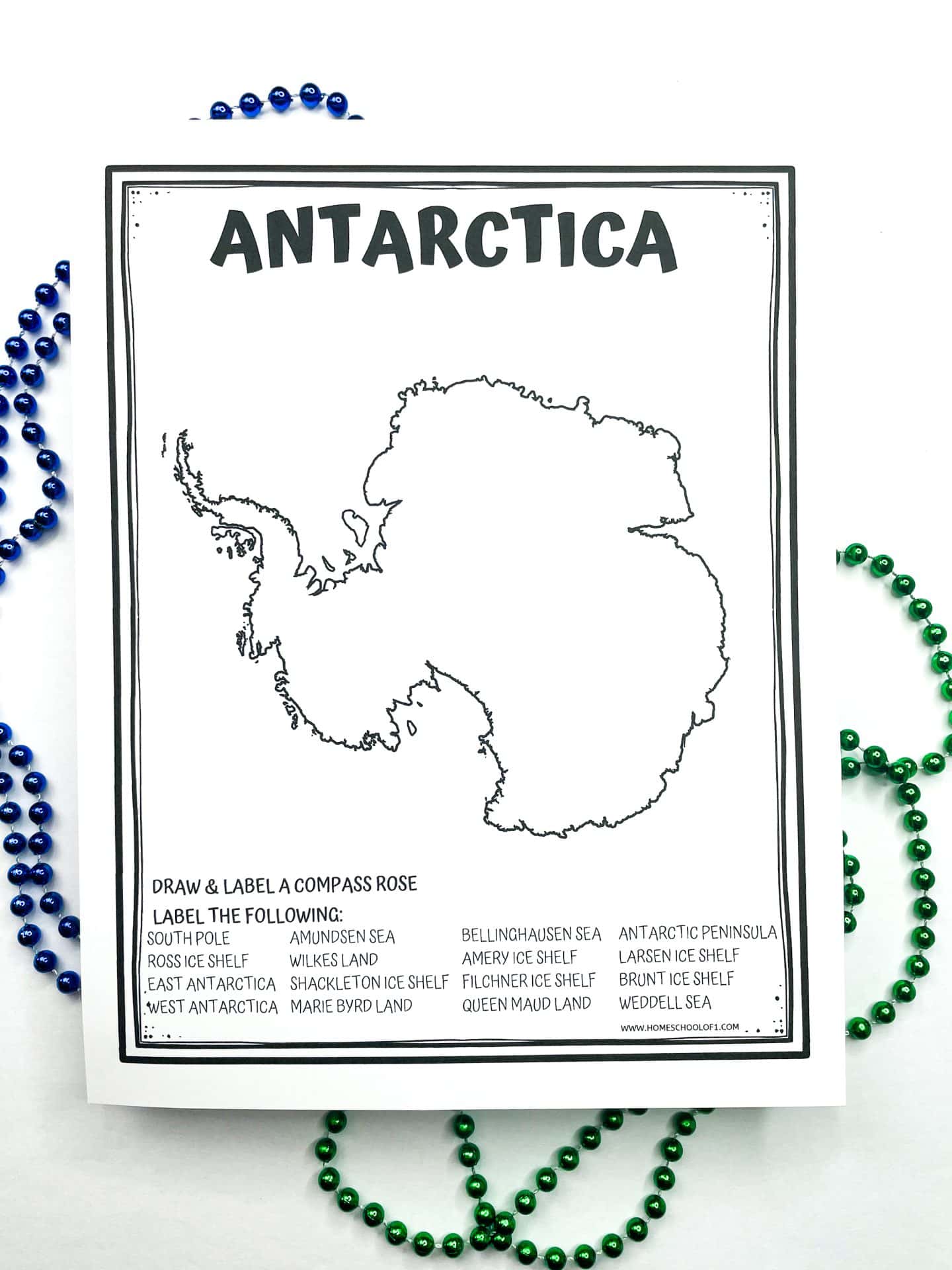
Label the map of Antarctica by identifying major ice shelves, seas, and regions, many of which are named after famous explorers.
Students will also add a compass rose to reinforce directional skills.
To build on this activity, try the Mapology World Map game or explore some of our favorite geography board games for more hands-on learning.
Choose How to Get Your Antarctica Worksheets
INSTANT ACCESS
Want the worksheets now? – No email signup required.
Instant access – just $2.49
FREE VERSION
Prefer to get the worksheets free?
Keep reading to get it by email.
Antarctica Fact File for Kids
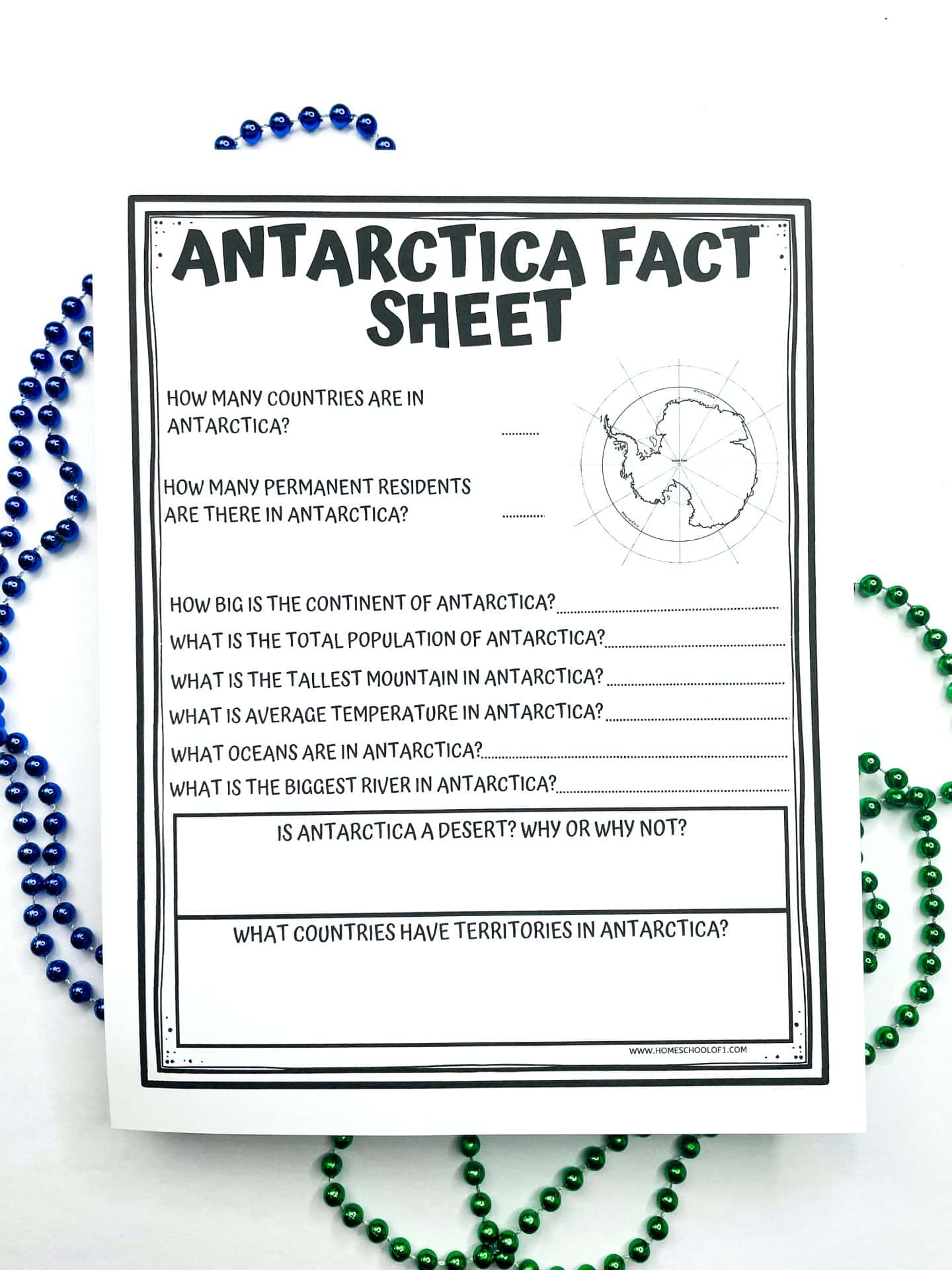
This printable Antarctica fact file includes 10 research questions to help kids learn about the continent’s size, climate, geography, population, and physical features.
It’s a simple addition to an Antarctica geography unit and gives students a chance to practice research and reading comprehension skills.
- How many countries are in Antarctica? 0
- How many permanent residents are there in Antarctica? 0
- How big is the continent of Antarctica? 5.275 million mi²
- What is the total population of Antarctica? at any given time up to 5,000 scientists
- What is the tallest mountain in Antarctica? Mount Vinson
- What is the average temperature in Antarctica? -71 degrees Fahrenheit
- What oceans are in Antarctica? Southern (Antarctic) Ocean.
- What is the biggest river in Antarctica? The Onyx River
- Is Antarctica a desert? Why or why not? YES. A desert is defined by the amount of precipitation (rain, snow, mist, and fog) in an area.
- Seven countries (Argentina, Australia, Chile, France, New Zealand, Norway, and the United Kingdom) maintain territorial claims in Antarctica, although the United States and most other nations do not formally recognize those claims.
To continue exploring the Southern Hemisphere, compare Antarctica’s geography and climate with our Australia worksheets.
Looking to expand this lesson? The World card game is another fun way to test your geography knowledge.
Antarctica Word Search
This printable Antarctica word search is a fun way for kids to review key vocabulary about the continent while building spelling, focus, and pattern recognition skills.
Words are hidden horizontally, vertically, diagonally, and backward for an extra challenge. An answer key is included.
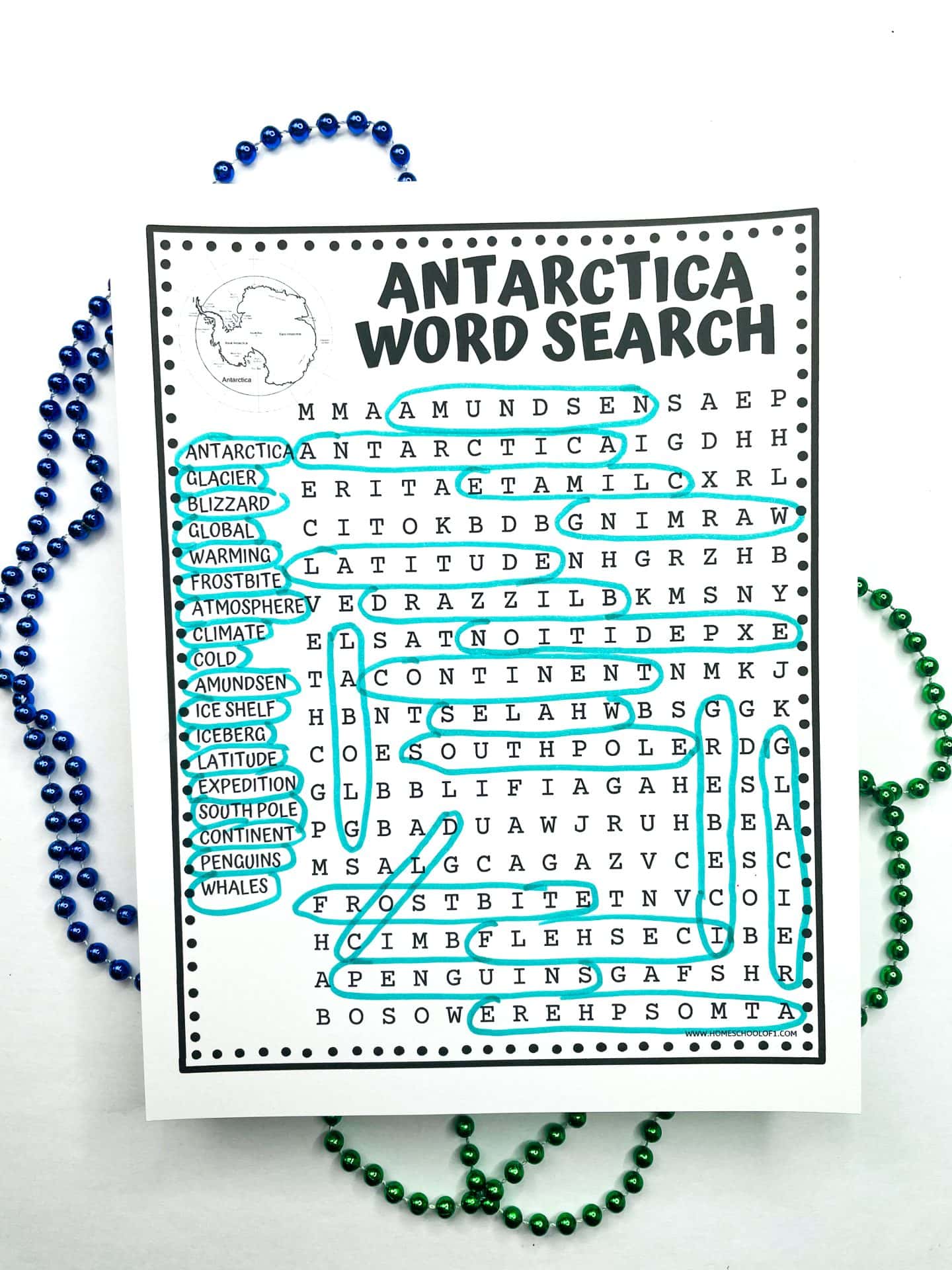
Tip: Use a highlighter or circle the words rather than crossing them out, as some letters appear in more than one word.
The 18 words to find are:
- Antarctica
- Glacier
- Blizzard
- Global
- Warming
- Frostbite
- Atmosphere
- Climate
- Cold
- Amundsen
- Ice Shelf
- Iceberg
- Latitude
- Expedition
- South Pole
- Continent
- Penguins
- Whales
Printable word searches like this are a great option for classroom transitions, early finishers, or quiet time.
Antarctica Explorer Word Scramble
This Antarctica word scramble challenges kids to unscramble the names of 12 famous figures connected to Antarctic exploration.
It’s a fun way to combine history and geography while learning about the explorers and individuals connected to places across Antarctica. An answer key is included.
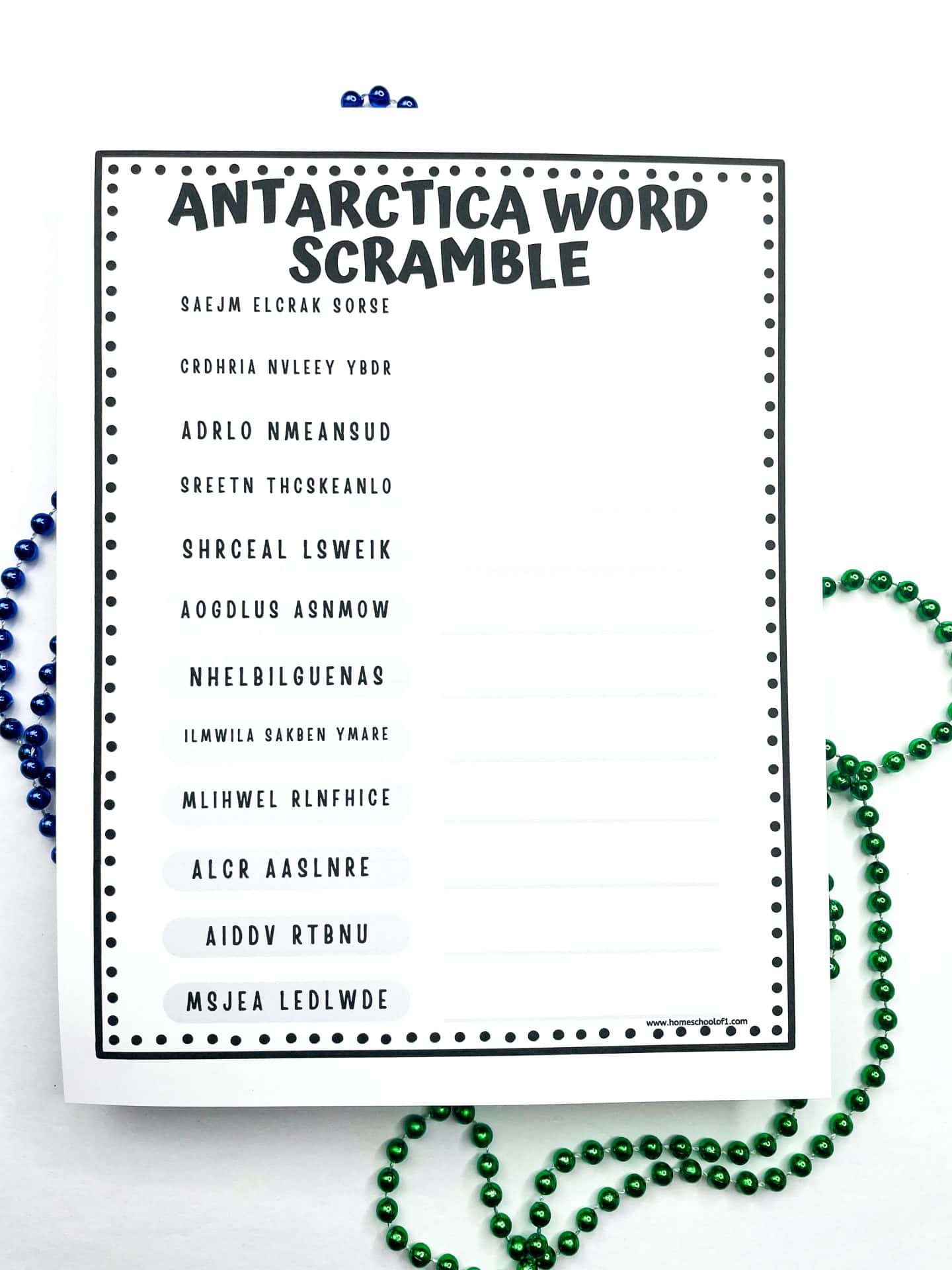
Names to unscramble:
- James Clark Ross
- Richard Evelyn Byrd
- Roald Amundsen
- Ernest Shackleton
- Charles Wilkes
- Douglas Mawson
- Bellinghausen
- William Bankes Amery (not an explorer but included as the Amery Ice Shelf was named after him.)
- Wilhelm Filchner
- Carl A. Larsen
- David Brunt
- James Weddell
This free word scramble printable is great for the classroom, the library, or homeschooling.
Antarctic Explorer Biography Worksheet
This Antarctic explorer worksheet invites students to choose a famous explorer and write a short biography about their life, expeditions, and contributions to Antarctic exploration.
Many of these explorers have seas, ice shelves, or other geographic features in Antarctica named after them, making this activity a useful way to connect history, research, and geography.
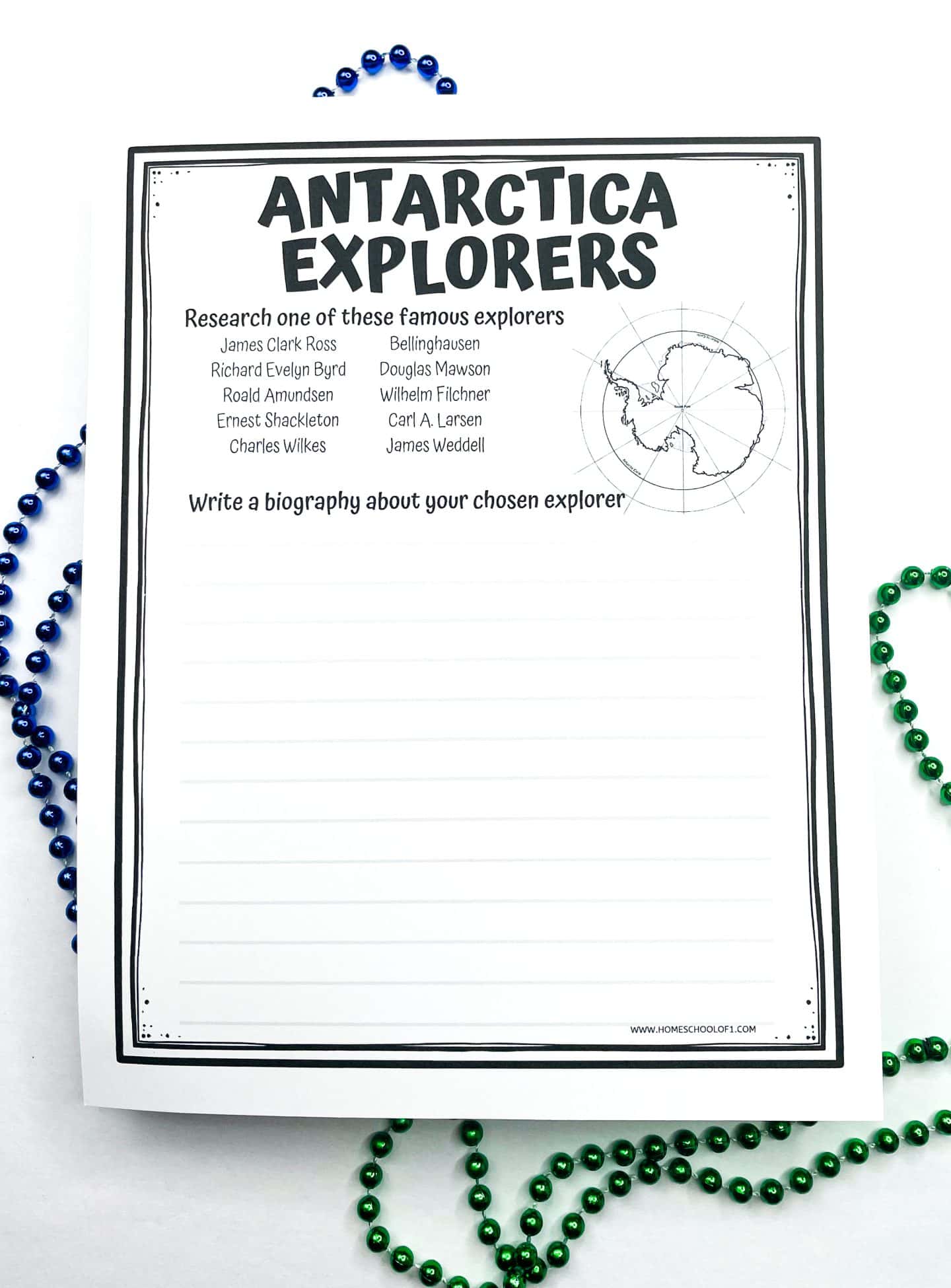
Explorers to research:
- Roald Amundsen (interesting fact – Roald Dahl was named after him!)
- Ernest Shackleton
- James Clark Ross
- Richard Evelyn Byrd
- Charles Wilkes
- Bellinghausen
- Douglas Mawson
- Wilhelm Filchner
- Carl A. Larsen
- James Weddell
The links above can help students get started with their research before completing the biography worksheet.
Fun Facts About Antarctica for Kids
Here are some fun and interesting facts about Antarctica that kids will enjoy:
- Antarctica is home to the emperor penguin, the largest penguin species in the world, which can grow to around four feet tall.
- Despite the extreme cold, animals such as Antarctic fur seals and Weddell seals are specially adapted to survive in Antarctica.
- Antarctica is the only continent with no countries and no permanent residents. Scientists and support staff live there temporarily at research stations.
- Antarctica’s ice is incredibly thick, reaching more than 4 km (2.5 miles) in some places.
- Antarctica is the driest continent on Earth and is classified as a polar desert because it receives so little precipitation.
- At the South Pole, the sun remains above the horizon throughout the Antarctic summer and below the horizon throughout the winter.
- Antarctica has no permanent towns or cities, so expeditions and research stations need to bring or arrange their own food and supplies.
- Hidden beneath Antarctica’s enormous ice sheet are hundreds of subglacial lakes, including Lake Vostok.
- Antarctic ice contains layers that preserve information about Earth’s past atmosphere and climate, making it extremely valuable to climate scientists.
- Roald Amundsen and his team were the first people to reach the South Pole, arriving on December 14, 1911. Robert Falcon Scott’s British expedition reached it about five weeks later.
Books About Antarctica for Kids
Looking to expand your Antarctica unit? These geography books for kids explore the continent’s geography, wildlife, history, and environment through engaging stories and fascinating facts.
- Except Antarctica – A hilarious picture book that plays with animal facts and surprises readers with a twist.
- A Kid’s Guide to Antarctica – A simple and informative introduction to the continent’s geography, wildlife, and scientific importance.
- Antarctica a Continent of Wonder – Packed with beautiful images and facts, this book highlights what makes Antarctica so unique.
- Where is Antarctica? – From the popular “Where Is?” series, this book provides historical and scientific context in a kid-friendly format.
- The Frozen Worlds: Explores both the Arctic and Antarctic regions, filled with detailed facts, illustrations, and environmental insights.
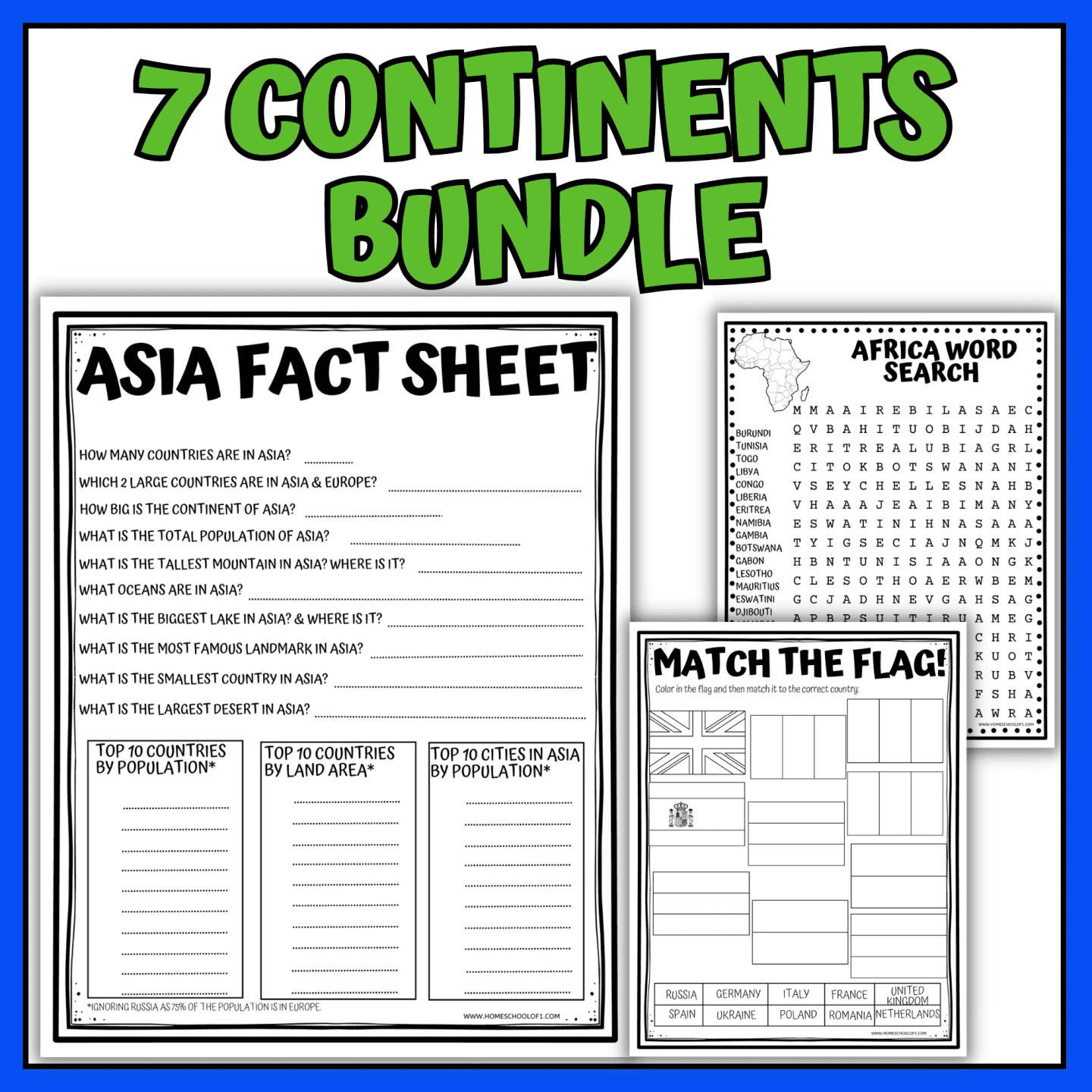
WANT ALL OF THE CONTINENTS WORKSHEETS NOW?
Antarctica Animal Worksheets
Explore Antarctic wildlife with these animal worksheets and activities. Kids can learn about penguins and their adaptations while comparing them with polar bears and other wildlife from the Arctic.
- Label the parts of a penguin worksheet: Kids can learn about penguin anatomy and how these birds are built for swimming and surviving in icy waters.
- Penguin memory match game: A fun way to boost memory skills while learning to identify different penguin species.
- Penguin life cycle worksheet: This printable traces the stages of a penguin’s life, from egg to adult, and highlights their unique adaptations for Antarctic survival.
- Label the parts of a polar bear worksheet: Focuses on the physical adaptations that help polar bears thrive in Arctic environments.
- Life cycle of a polar bear worksheet: Explains each stage of a polar bear’s life, emphasizing the challenges they face from birth to maturity.
Get Your Free Printable Antarctica Worksheets Here!
Ready to grab your free printable? Just pop your name and email into the form below, and it’s all yours!
Tip: Use a personal email address (like Gmail), school or work emails sometimes filter printable links.

If you don’t see the form below, click here to get the free worksheet.
Last Updated on 13 August 2026 by Clare Brown
