
Free Fox Worksheets

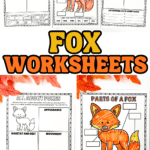
These free fox worksheets are a simple way to explore one of the most recognizable woodland animals while adding a little science to your nature studies.
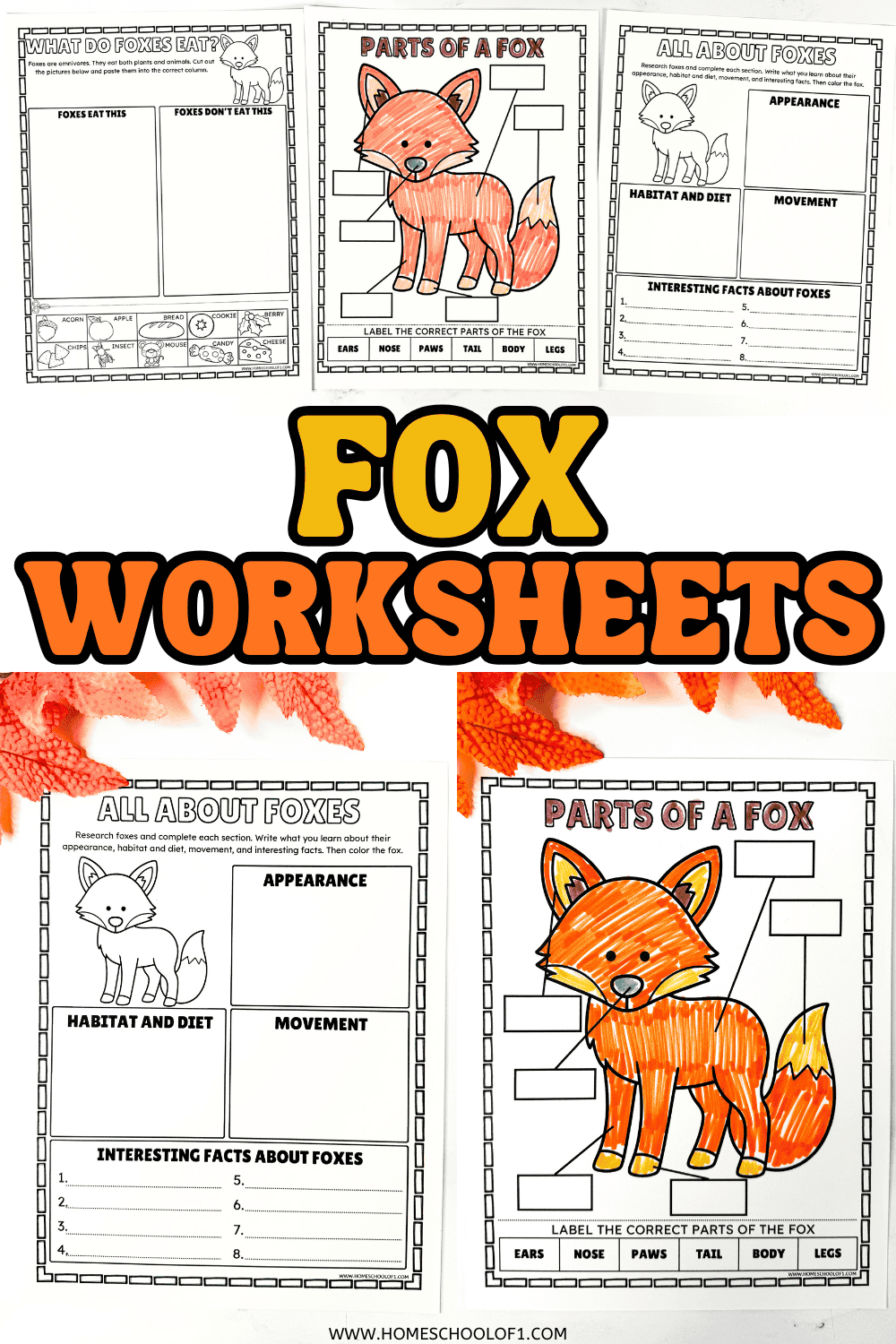
The printable set includes three activities that help elementary students learn about fox anatomy, appearance, habitat, diet, movement, and behavior.
Kids will label the main parts of a fox, investigate facts through a research activity, and sort different foods based on what foxes eat.
The educational worksheets work well for a forest animal unit, fall study, homeschool science lesson, or classroom activity, and answer sheets are included.
**This post may contain affiliate links. As an Amazon Associate and a participant in other affiliate programs, I earn a commission on qualifying purchases.**
Learning About Foxes
Foxes are a great animal to include in a woodland study because there is plenty to explore, from their distinctive physical features to how they hunt and find food. These three activities introduce some of those topics while also giving kids practice with research and labeling.
Parts of a Fox Worksheet
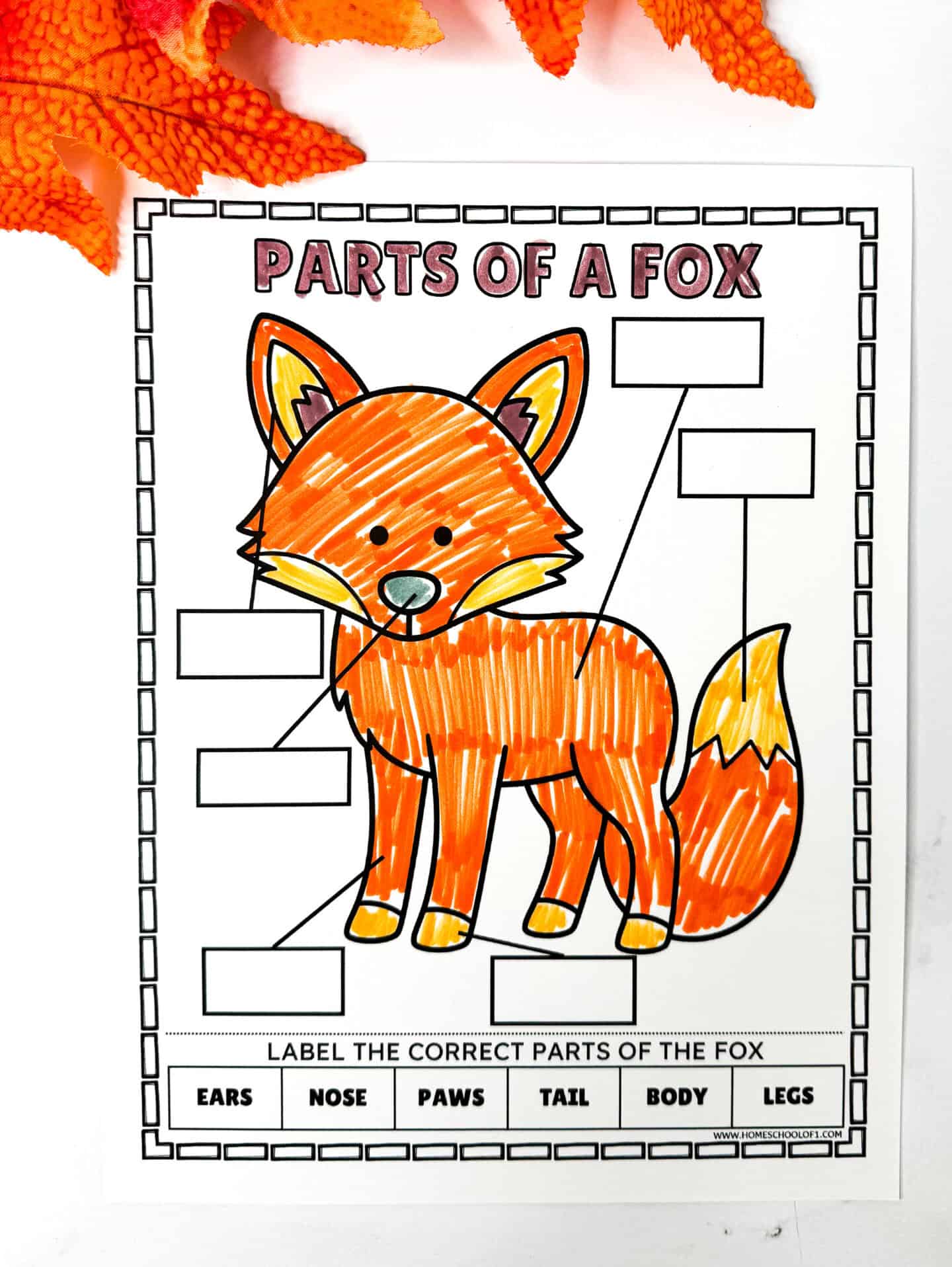
Begin with the fox anatomy activity. Kids use the word bank to identify and label the different parts of the fox before coloring the illustration.
As they work, encourage them to notice some of the fox’s most distinctive features, particularly its pointed ears, narrow muzzle, paws, and long bushy tail.
This makes a good introductory activity before moving on to researching how those physical features help foxes survive in the wild.
Fox Research Worksheet
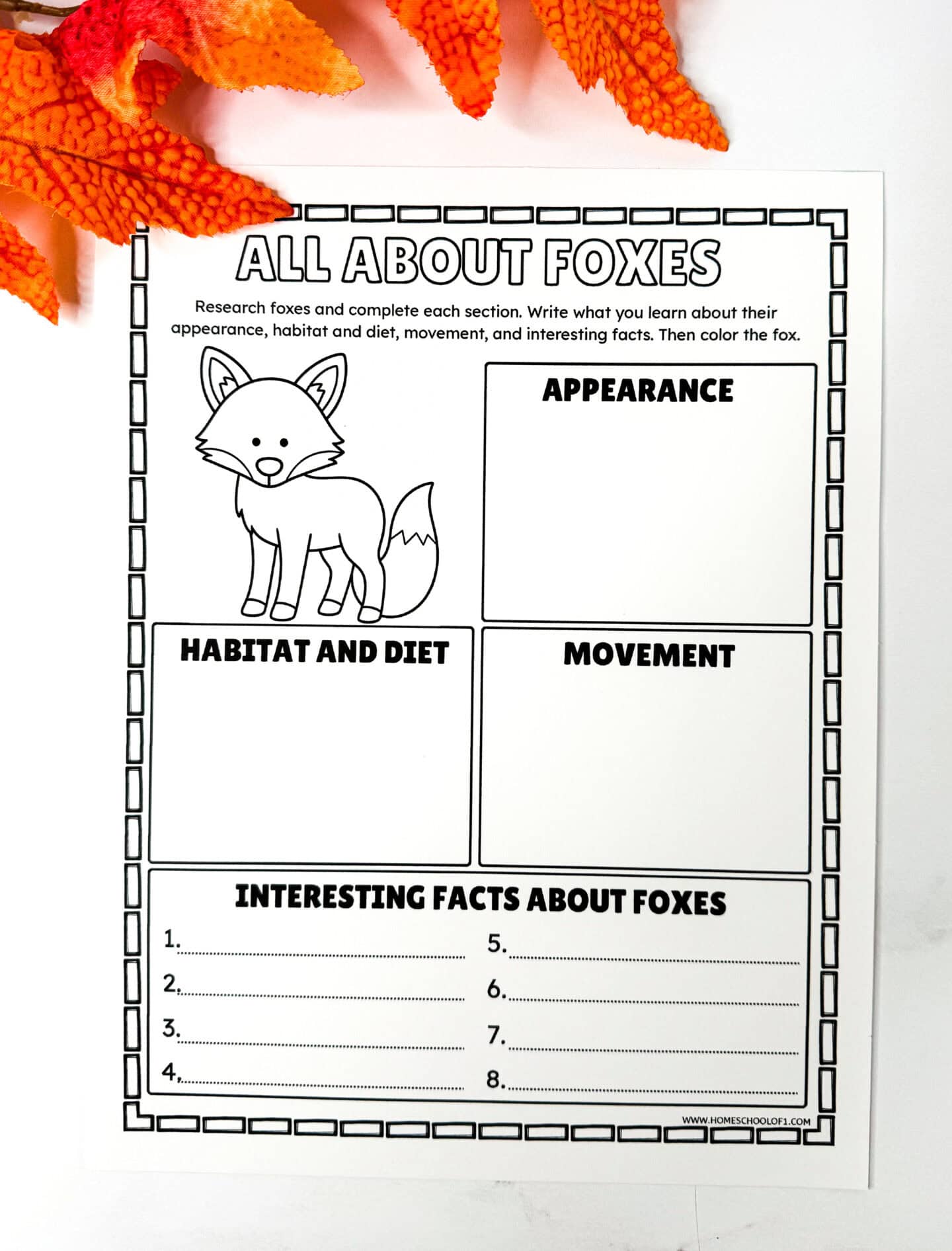
The research page encourages kids to discover more about foxes for themselves rather than simply being given a list of facts.
They’ll investigate the fox’s appearance, habitat and diet, movement, and other interesting facts. This is a good opportunity to discover where foxes make their dens, how they communicate, how quickly they can move, and the different environments where foxes can survive.
It’s an easy way to combine animal science with research and informational writing practice.
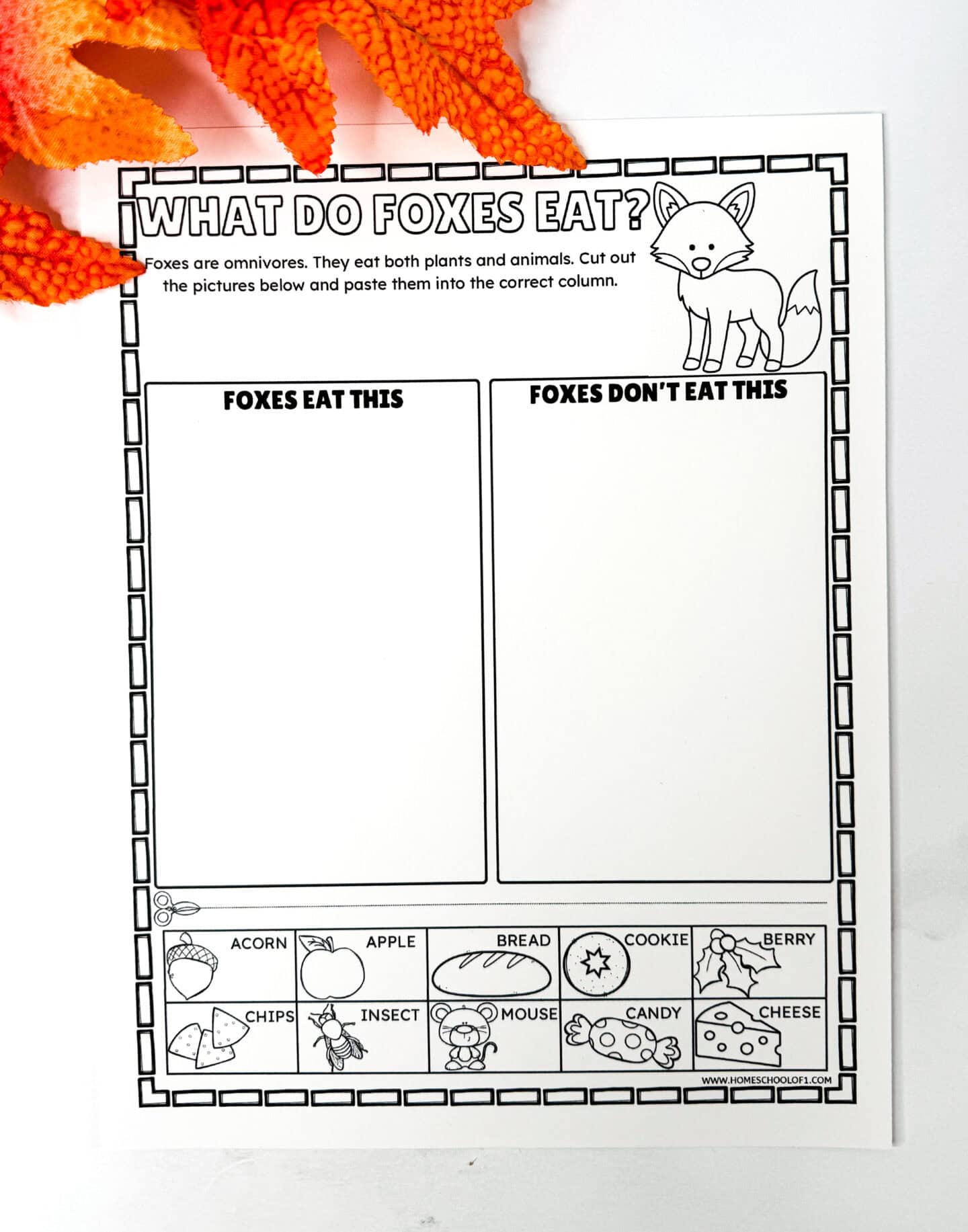
What Do Foxes Eat?
Foxes are omnivores, so their diet includes both plants and animals.
In this cut-and-paste activity, kids look at the different foods provided and decide which belong in the “Foxes Eat This” column and which belong in “Foxes Don’t Eat This.”
After sorting the pictures, they can compare their choices with the included answer sheet.
Books About Foxes for Kids
I like having a couple of fox books available while kids work on the research page. A good nonfiction book makes finding their own answers much easier, while a fox-themed story is a fun way to finish the lesson.
National Geographic Readers: Foxes – A good choice for independent research, with photographs and accessible facts about foxes.
Fox: A Circle of Life Story – Combines a fox story with information about nature, habitats, and the life cycle.
The Gruffalo – Not exactly a fox science book, but the fox makes an appearance and it’s a fun read-aloud to add to a woodland animal study.
More Woodland Animal Worksheets
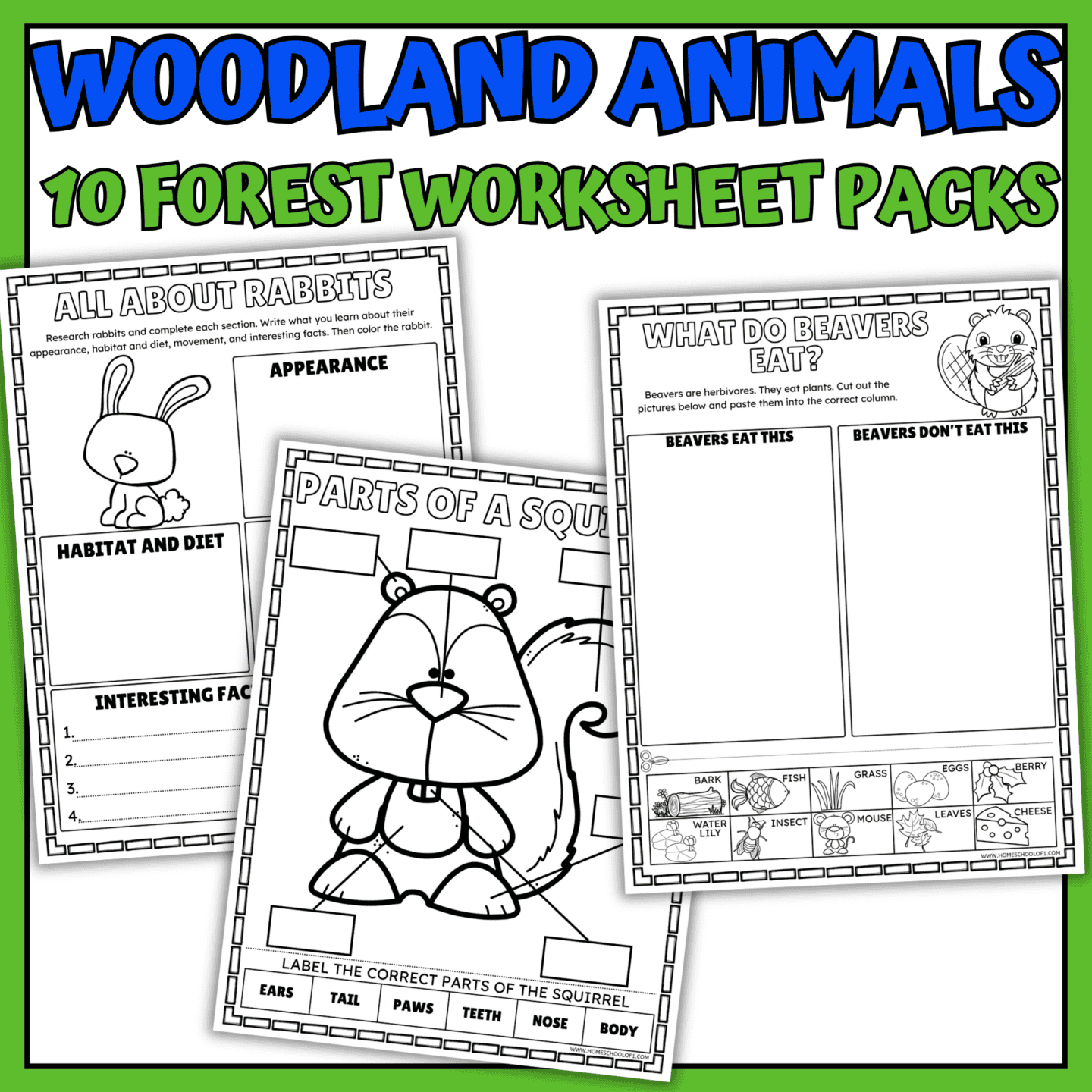
If you want to continue learning about forest animals, the complete woodland animal worksheets pack brings all 10 animals together in one resource.
Kids can complete the same style of anatomy, research, and diet activities for bears, beavers, chipmunks, deer, foxes, hedgehogs, rabbits, raccoons, skunks, and squirrels.
Each activity includes an answer sheet, making it easy to build a larger woodland animal study.
Woodland Animal Worksheets
Continue the learning with worksheets for 10 woodland animals, covering anatomy, research, diet, and more. Answer sheets included.
Get Your Free Fox Printables Here!
Ready to grab your free printable? Just pop your name and email into the form below, and it’s all yours!
Tip: Use a personal email address (like Gmail), school or work emails sometimes filter printable links.

If you don’t see the form below, click here to get the free PDF.
