Free Muscular System Labeling Worksheet

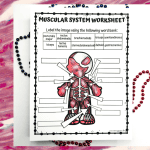
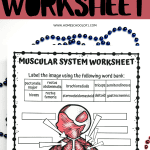
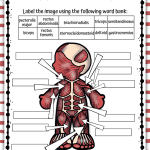
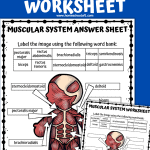
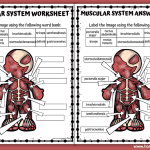
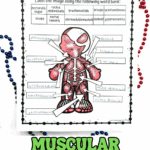
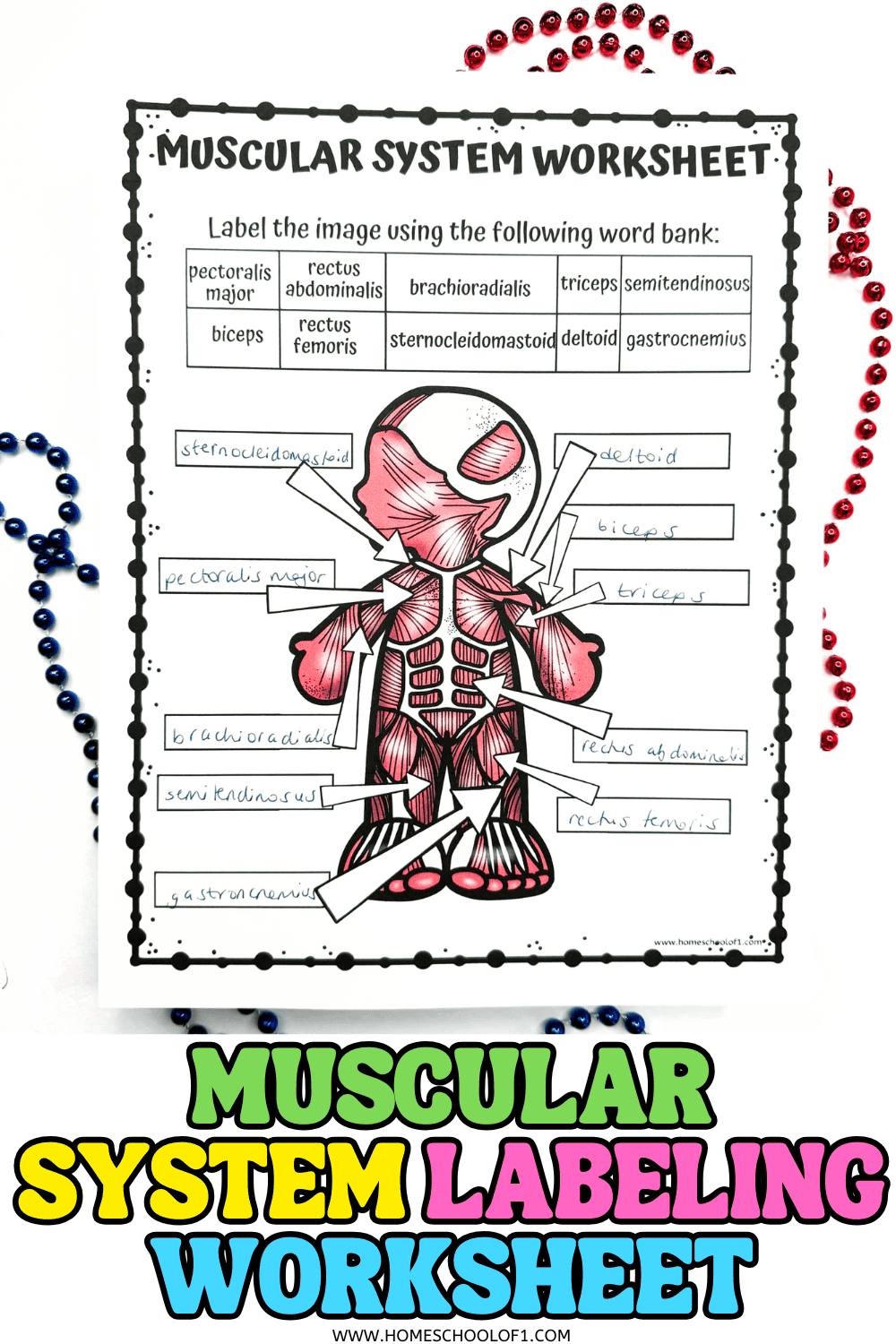
This free muscular system labeling worksheet helps kids identify the major muscles of the human body in a simple, hands-on way.
Using a labeled diagram, word bank, and answer key, students can learn where important muscles are located while building confidence with anatomy vocabulary. Whether you’re teaching at home or in the classroom, it’s an easy activity for upper elementary and middle school science lessons.
From the biceps and triceps to the deltoid, pectoralis major, and gastrocnemius, this printable helps make learning about the muscular system more engaging.
**This post may contain affiliate links. As an Amazon Associate and a participant in other affiliate programs, I earn a commission on qualifying purchases.**
Label the Muscles Worksheet
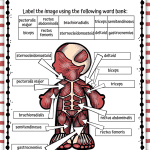
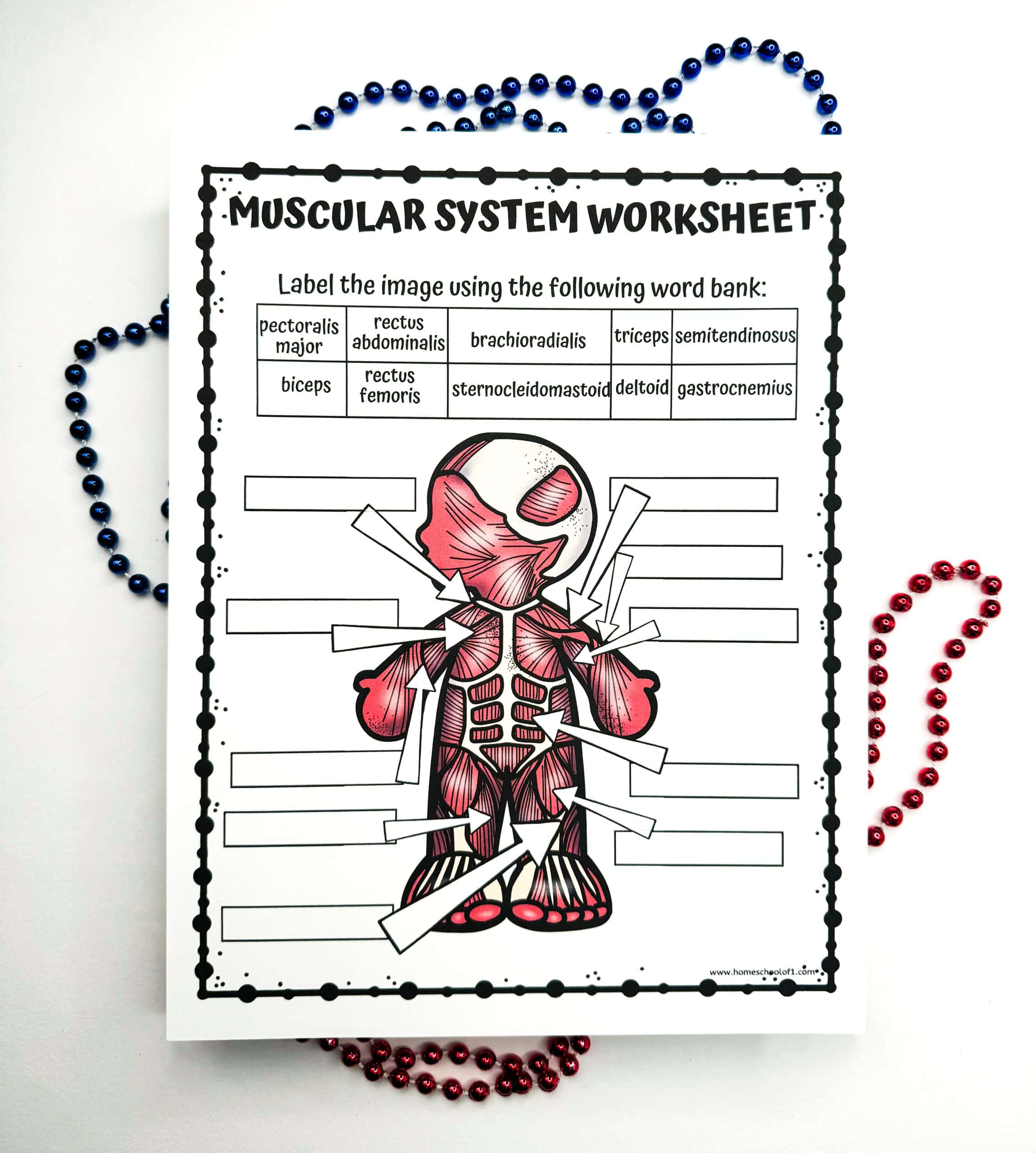
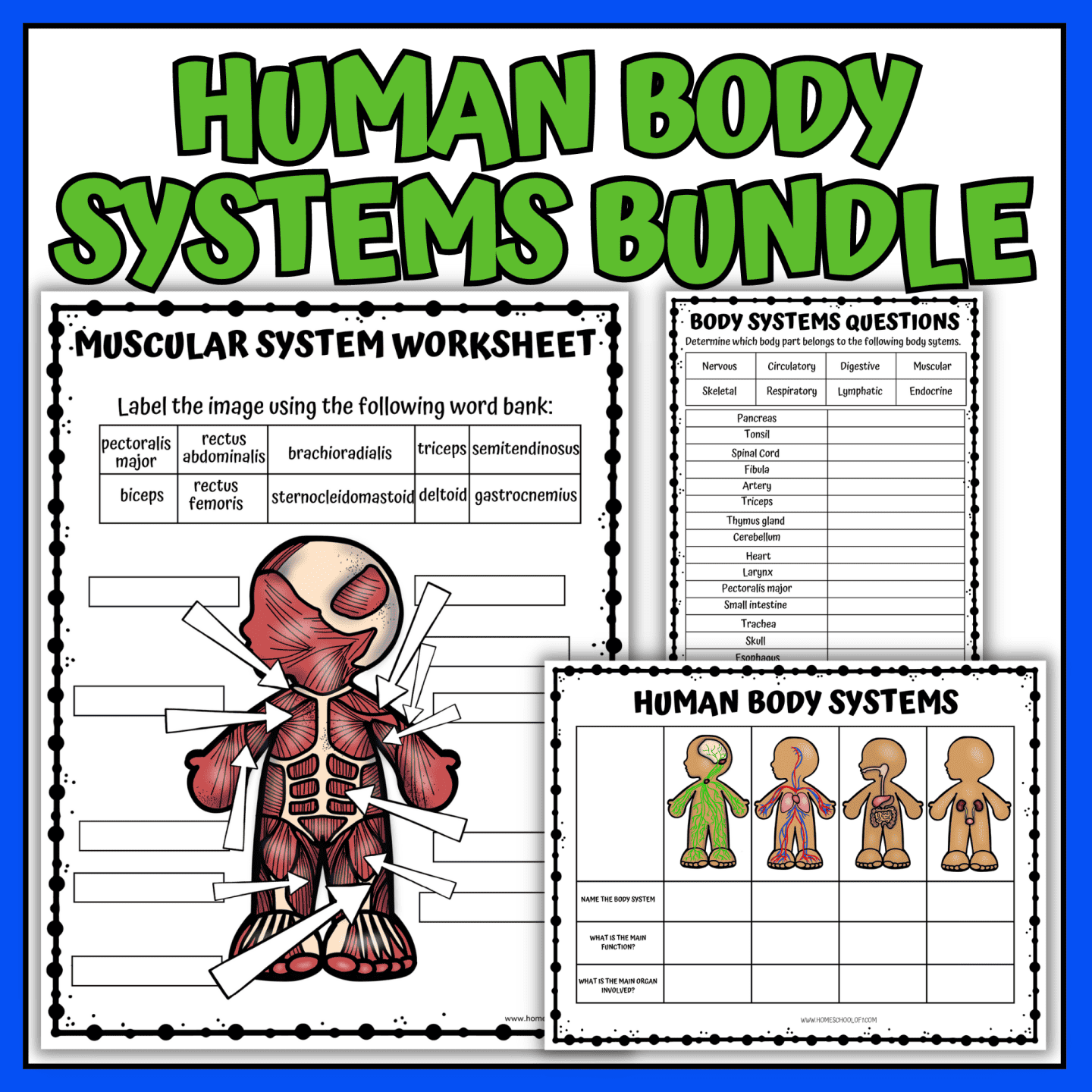
The worksheet includes a labeled diagram with blank spaces for students to identify each muscle using the word bank. A completed answer key is also included, making it easy to check answers or review the lesson together.
Students will label the following muscles:
- semitendinosus
- sternocleidomastoid
- deltoid
- pectoralis major
- biceps
- triceps
- gastrocnemius
- brachioradialis
- rectus abdominis
- rectus femoris
What is the Muscular System?
The muscular system makes it possible for us to move, from smiling and talking to running, jumping, and even breathing.
The human body has more than 600 muscles, but students usually begin by learning the major muscles and where they’re located.
This worksheet helps children identify and label some of the most important muscles using a clear diagram and word bank.
Major Muscles in the Worksheet
Here are some of the major muscles students will learn about while completing the worksheet:
Semitendinosus – Part of the hamstrings at the back of the thigh, it bends the knee. Walking upstairs or bending to pick something up activates it.
Sternocleidomastoid – Found in the neck, it lets you turn your head side to side. Kids can feel it working by putting a hand on their neck while shaking their head “no.”
Deltoid – The rounded muscle on your shoulder that helps lift and rotate your arm. Try lifting your arm out to the side — that’s your deltoid at work.
Pectoralis major – A large chest muscle that helps bring your arms toward the center of your body. It’s the one kids feel during push-ups.
Biceps – Located at the front of the upper arm, the biceps bends the elbow. Ask kids to “make a muscle” while lifting a book so they can feel it working.
Triceps – Found on the back of the upper arm, the triceps straightens the elbow. Try pushing against a wall to feel it working.
Gastrocnemius – The calf muscle that points the toes and helps us jump. Students can feel it tighten when standing on tiptoes.
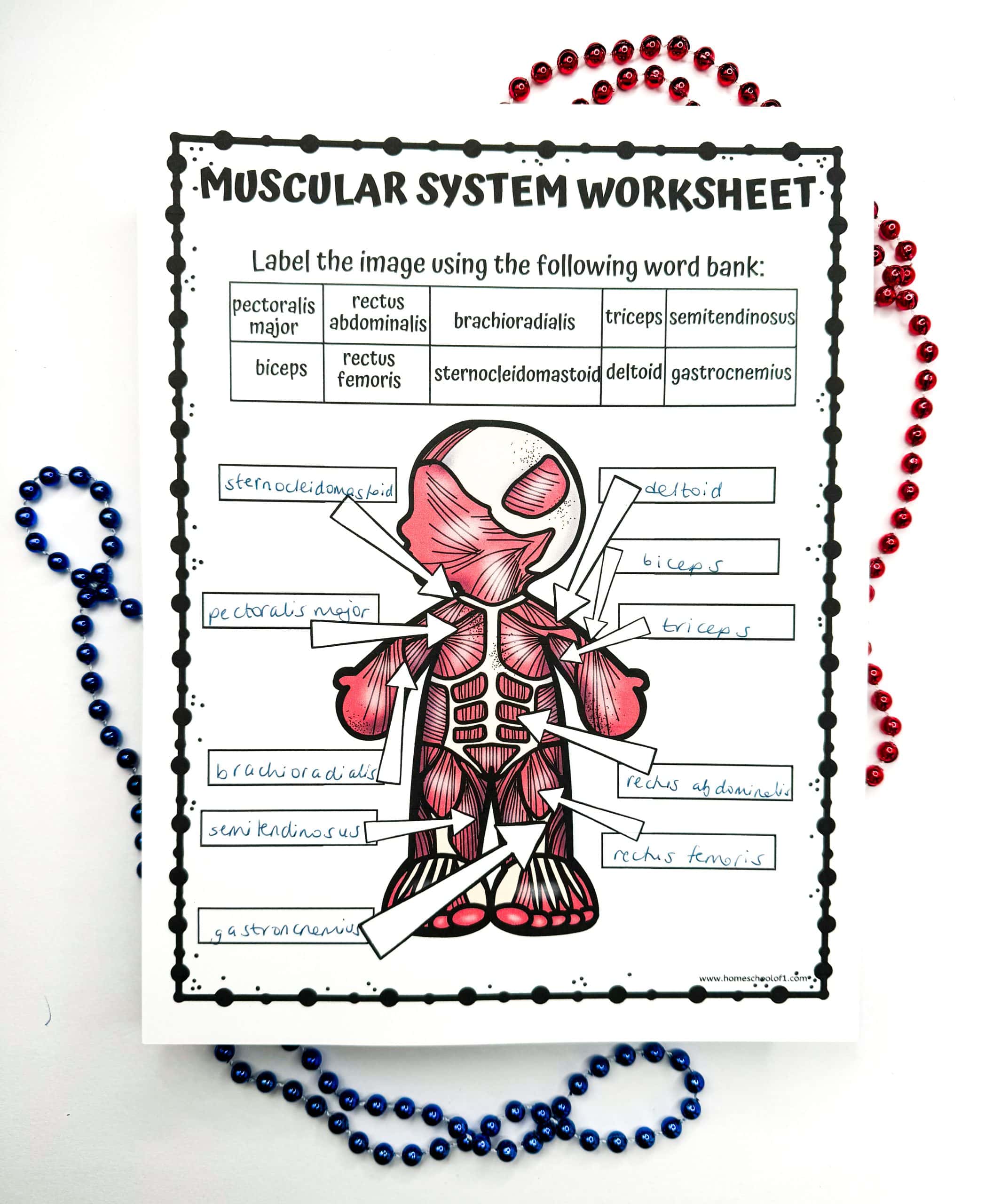
Brachioradialis – Runs along the forearm and helps bend the elbow. Kids use it every time they turn a doorknob or lift a glass.
Rectus abdominis – The abdominal muscle that helps with posture and bending forward. Sit-ups are an easy way to feel it working.
Rectus femoris – One of the quadriceps muscles in the front of the thigh, it helps lift the leg and straighten the knee. Kids can feel it working when kicking a ball.
Types of Muscles
The human body has three types of muscles:
- Skeletal muscles attach to bones and help us move voluntarily.
- Smooth muscles are found in organs like the stomach and intestines, where they work automatically.
- Cardiac muscle is found only in the heart and pumps blood throughout the body.
This worksheet focuses on the major skeletal muscles that students commonly learn in elementary and middle school science.
Human Anatomy Books for Kids
When we study anatomy, I always like to pair worksheets with good anatomy books.
They make the science feel more real and give kids stories or facts to hold onto long after the lesson. Here are a few that we’ve enjoyed:
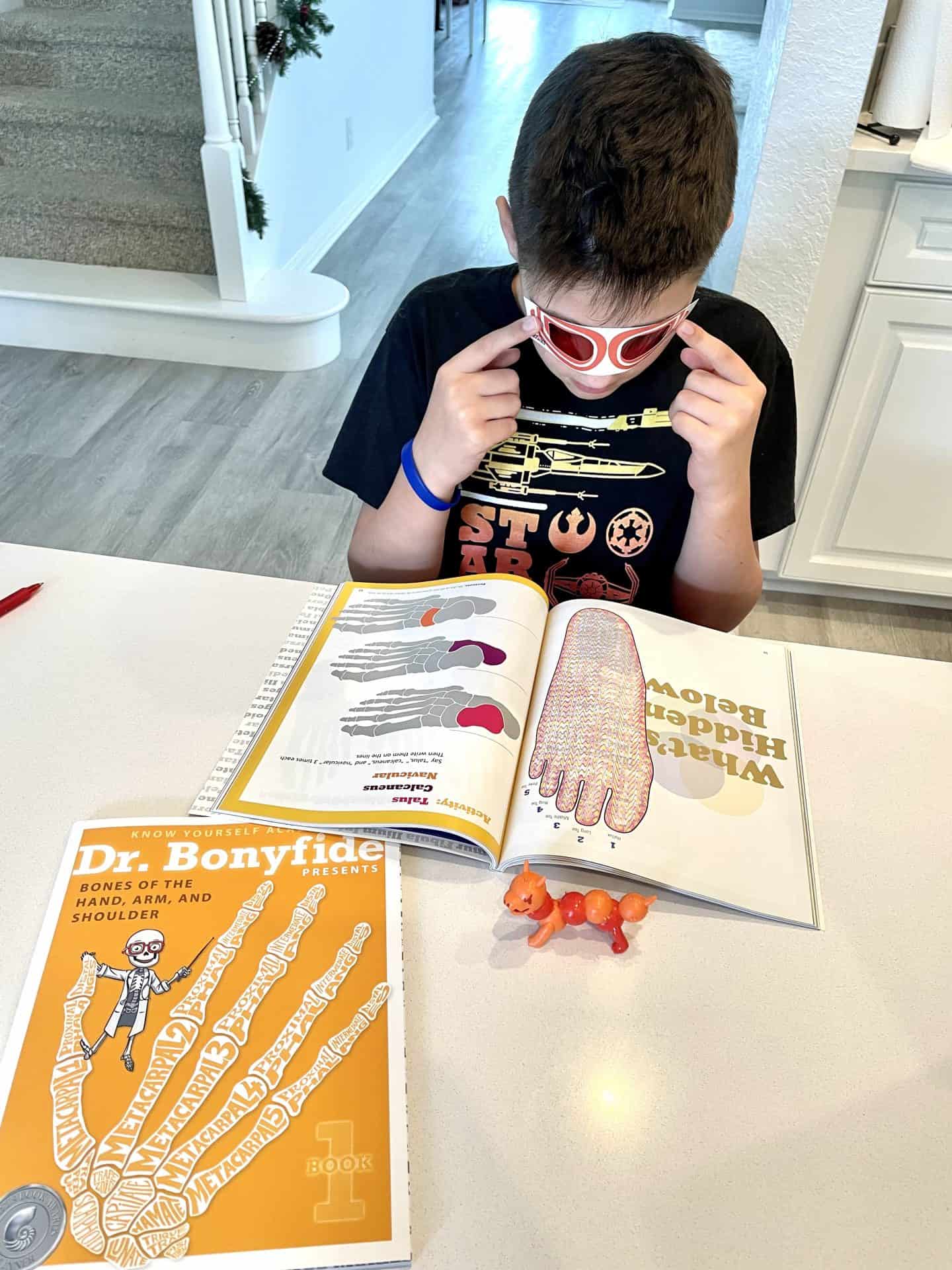
- Know Yourself Series – These interactive anatomy books are hands-on and fun. My son loved the comics and activities, and they really helped him remember tricky terms.
- Human Anatomy for Kids – A clear and colorful introduction that explains movement, breathing, and growth in ways children can grasp. Great as a read-aloud for younger learners or independent reading for older ones.
- Weird but True: Human Body – Not a straight textbook, but full of quirky facts that keep kids curious. We used it as a fun break between labeling worksheets.
- Human Body! – Packed with illustrations and simple explanations. It covers muscles, bones, and senses in a way that’s broad but still accessible.
More Human Anatomy Activities
After learning the major muscles, keep exploring the human body with these free anatomy activities:
- Body systems word search – Reinforce anatomy vocabulary with a fun printable word search.
- Human body crossword printable – Review the major body systems and key anatomy terms with an engaging crossword puzzle.
- Human body systems trivia quiz – Test your knowledge of the body’s organs, systems, and functions with our interactive online quiz.
- Interactive human body skeleton model – Build a 3D human body with removable bones, muscles, and organs for hands-on anatomy learning.
Ready to Teach the Entire Human Body?
Upgrade from a single free worksheet to a complete 28-page human body systems unit.
- 10 body systems
- Labeling activities – Review questions
- Word search puzzles – Answer keys included
Perfect for upper elementary science and homeschool anatomy lessons.
Get Your Free Muscular System Labeling Sheet Here!
Ready to grab your free printable? Just pop your name and email into the form below, and it’s all yours!
Tip: Use a personal email address (like Gmail), school or work emails sometimes filter printable links.

If you don’t see the form below, click here to get the free PDF.
Last Updated on 30 June 2026 by Clare Brown
