Homeschool Curriculum for High School (What We’ve Used)

If you’re searching for the best homeschool curriculum for high school, this list is built from what we’ve actually used and trusted over the years.
From math and science to electives and foreign languages, we’ve tried a wide range of options, some that worked brilliantly, and others we quickly replaced.
What we’ve learned is that high school homeschooling doesn’t need to be complicated, but it does need to be flexible.
A program might be perfect for one subject or grade, and a total mismatch the next, so over the years we’ve ended up building high school around a mix of curriculum, supplements, and whatever actually kept my son moving forward.

**This post may contain affiliate links. As an Amazon Associate and a participant in other affiliate programs, I earn a commission on qualifying purchases.**
Math High School Curriculum
When it comes to high school math, we’ve relied on two standout online homeschool programs: Mr. D Math and Teaching Textbooks. When we were weighing alternatives, this secular math homeschool curriculum roundup helped us see how the options really compare.
Mr. D. Math
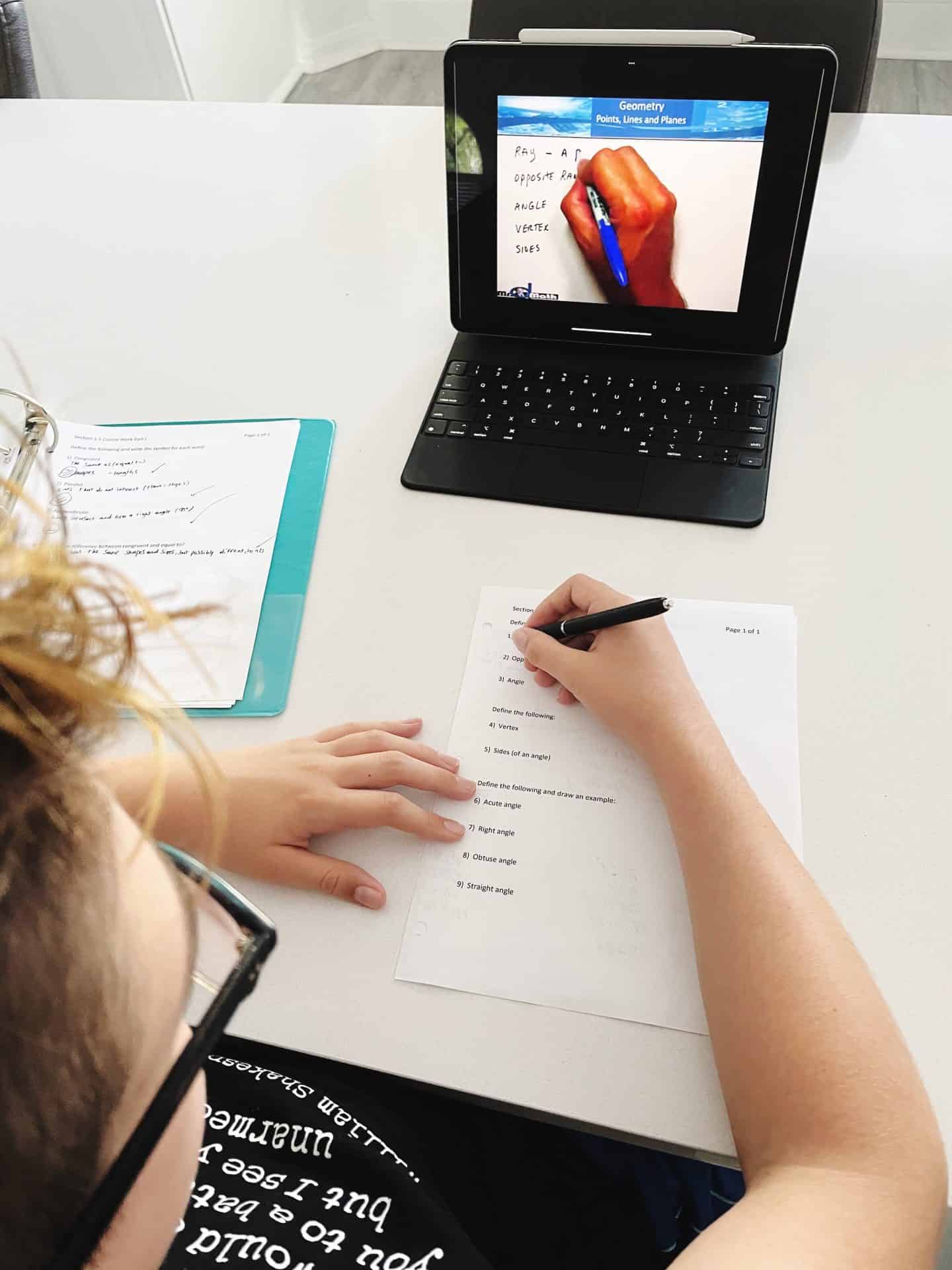
We ended up using Mr. D Math once geometry rolled around, and it’s honestly been the best fit we’ve found for that stage.
My son is currently working through the 10th grade geometry course, and unless something changes, we’ll probably stick with Mr. D when he reaches calculus as well.
What’s worked well for us is the balance between independence and support. The video lessons mean he can move through the material on his own schedule, but there’s still an actual teacher available if he gets stuck.
We’ve stayed with the self-paced option because it fits our routine better, especially during weeks where everything else gets busy or we’re traveling, but I know quite a few families who prefer the live classes.
Teaching Textbooks
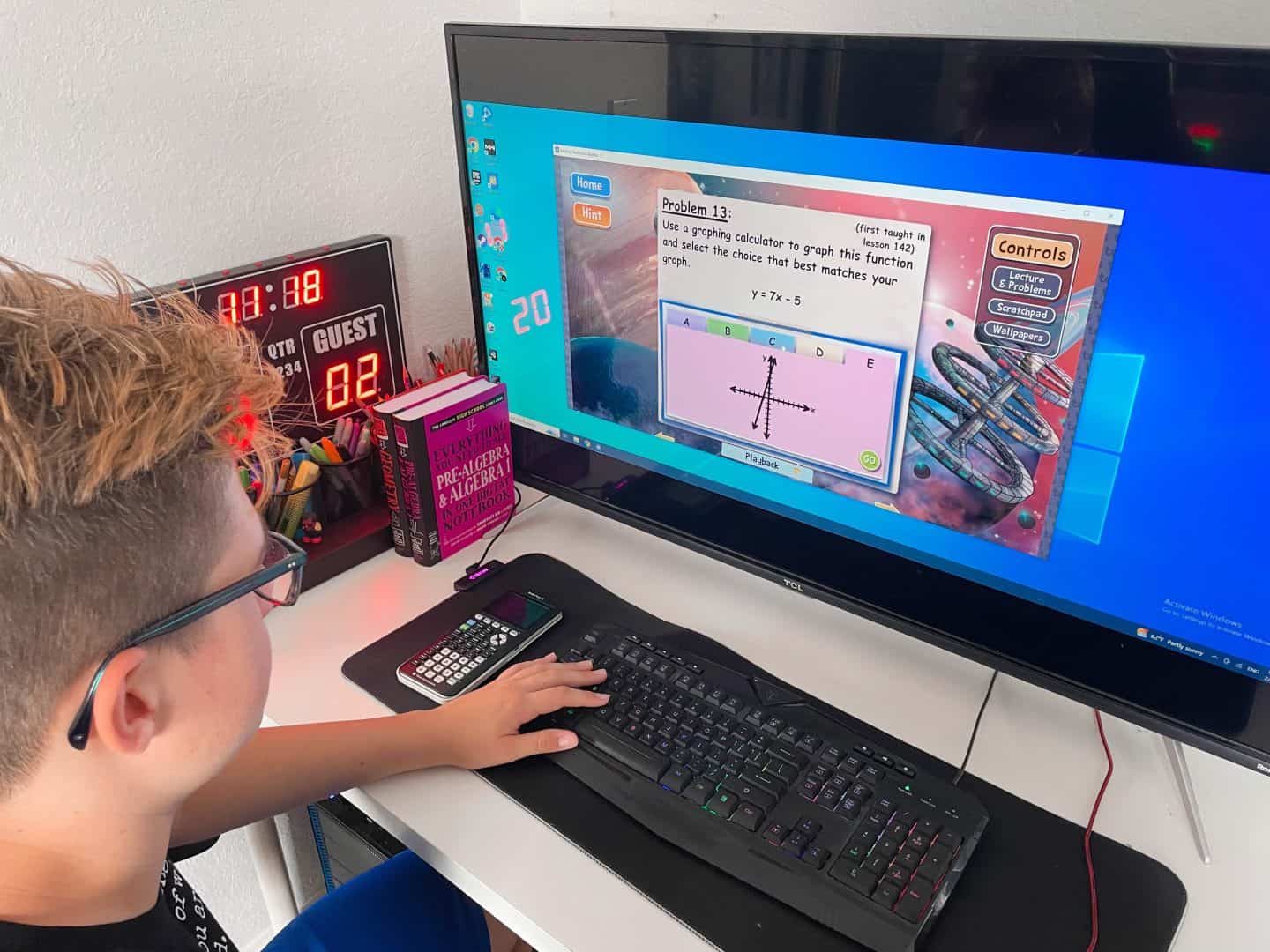
We used Teaching Textbooks for 9th grade algebra, mainly because it suited how my son prefers to work.
He’s always been comfortable working independently, so the format made sense for us. There isn’t a live teacher, but the built-in help has been enough when he’s hit the occasional problem he couldn’t figure out on his own.
Before committing, we ran through the placement test and free trial, which gave us a pretty clear idea it would be a good fit. Since then, he’s been working through the lessons digitally and still doing some written practice alongside it, and that combination has worked well.
Algebra has generally been one of his stronger areas, so this style of program hasn’t caused much frustration. For geometry, though, we’ve already decided we’ll go back to Mr. D Math, then likely return to Teaching Textbooks again later for Algebra II.
If you want the full breakdown, I’ve shared our experience in more detail in the Teaching Textbooks review.
Science Homeschool Curriculum
Science has been one of the most interesting parts of our high school homeschool journey. We’re taking a secular approach and focusing on giving our son a strong foundation as he prepares for college.
Real Science Odyssey
Real Science Odyssey has been a great fit for us, especially because it offers two secular high school courses: Biology 2 and Astronomy 2.
That alignment with our worldview mattered, but it also helped that we’d seen strong reviews before trying it ourselves. You can read more about how it worked for us in our Real Science Odyssey review.
Guest Hollow’s Chemistry in the Kitchen
Guest Hollow’s Chemistry in the Kitchen has been a surprise favorite, especially because neither of us is math-focused. It’s hands-on and practical, making chemistry feel more like a real-life skill than a list of formulas.
To round it out, we’re also using Everything You Need To Ace High School Chemistry, which helps reinforce key concepts in a more traditional format.
KiwiCo and Mel Science Boxes
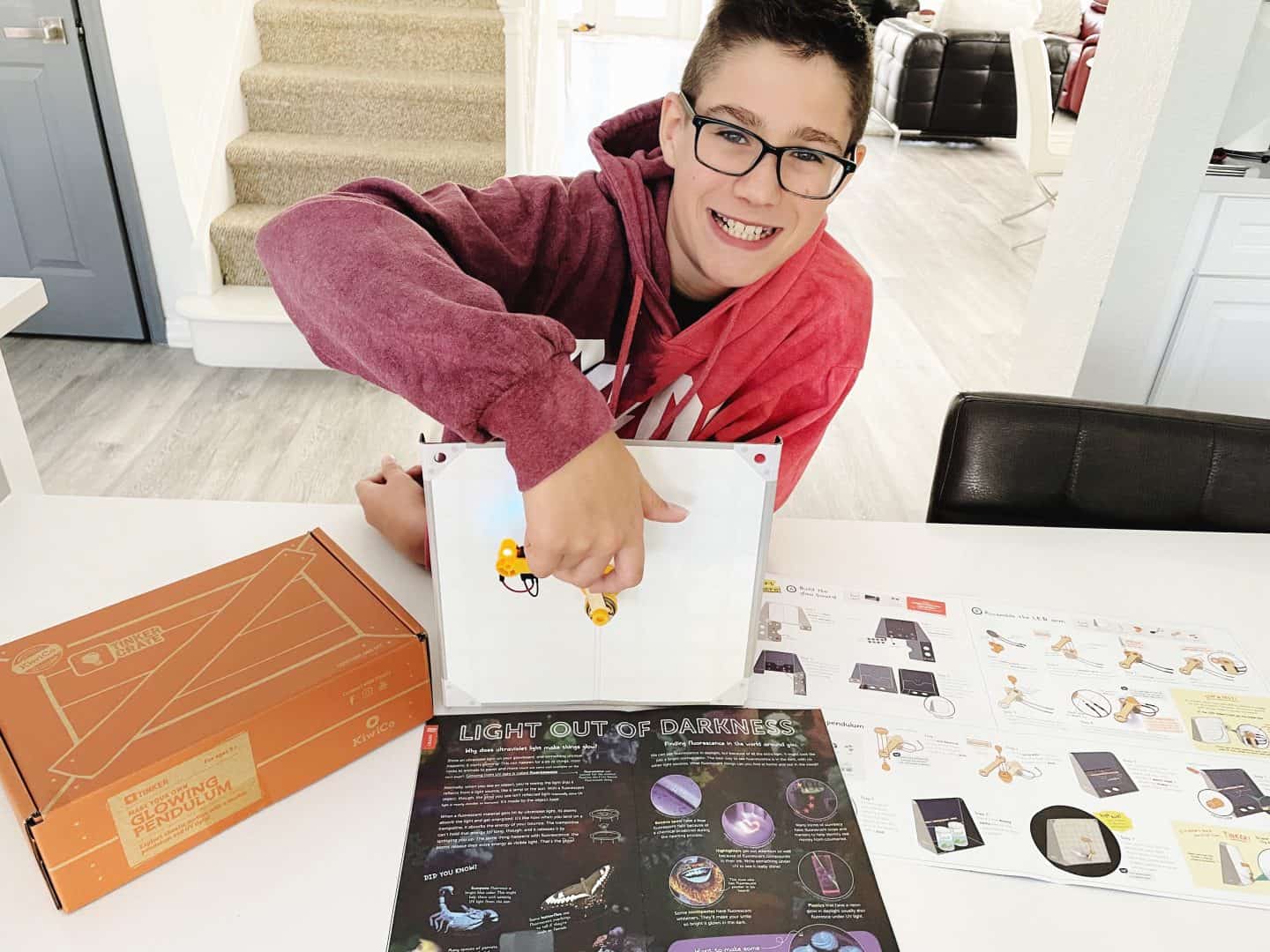
We also supplement with KiwiCo and Mel Science kits. These monthly boxes have been a fantastic way to keep science hands-on and fun, especially when interest starts to dip.
They’re not full curriculum on their own, but they’ve sparked some great conversations and deeper curiosity, plus, they break up the textbook routine in the best way. You can read our Mel Science kits reviews to see more about why we love them.
Language Arts Curriculum
We started using Common Sense Press back in middle school, and it quickly became a favorite, so we’ve stuck with it for high school. Their American literature program has been especially solid for us.
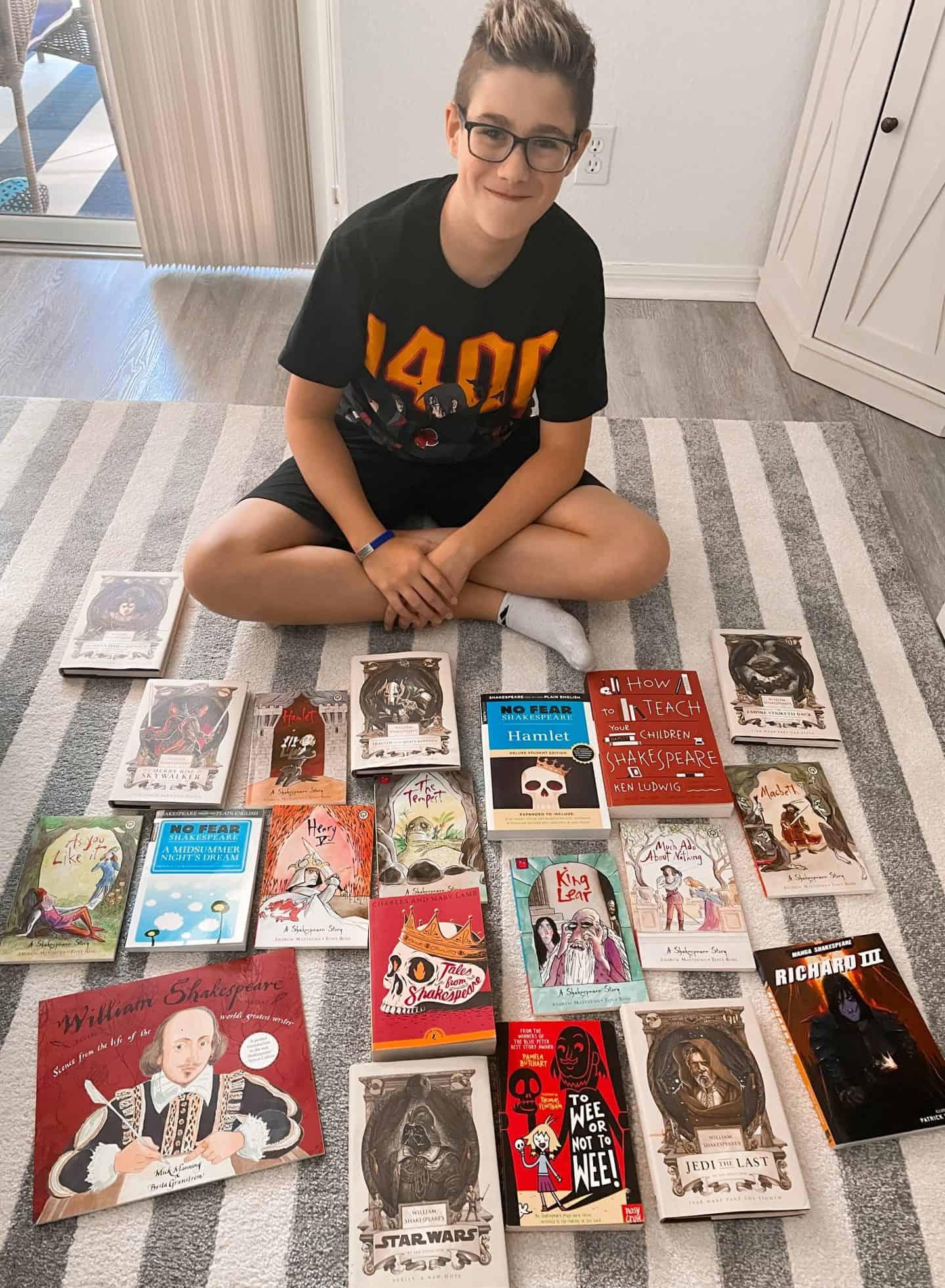
Alongside that, we’ve expanded into world and British literature, with a special focus on Shakespeare. What began as a 10 week Shakespeare course in grade 6 has grown into a multi-year study.
We continue reading adapted versions of his plays for teens and try to attend live performances whenever we can. It’s been one of the most engaging parts of our homeschool literature plan.
High School History Curriculum
History is a favorite subject in our homeschool, so we’ve mixed and matched different resources across the high school years to keep things fresh and well-rounded.
History Odyssey
For Ancient and Medieval history, we’ve used History Odyssey from Pandia Press. It’s one of our top picks for secular homeschooling.
We relied on it heavily during middle school and still turn to it in high school for its strong historical narratives and critical thinking approach.
Check out our middle school History Odyssey reviews.
Sonlight
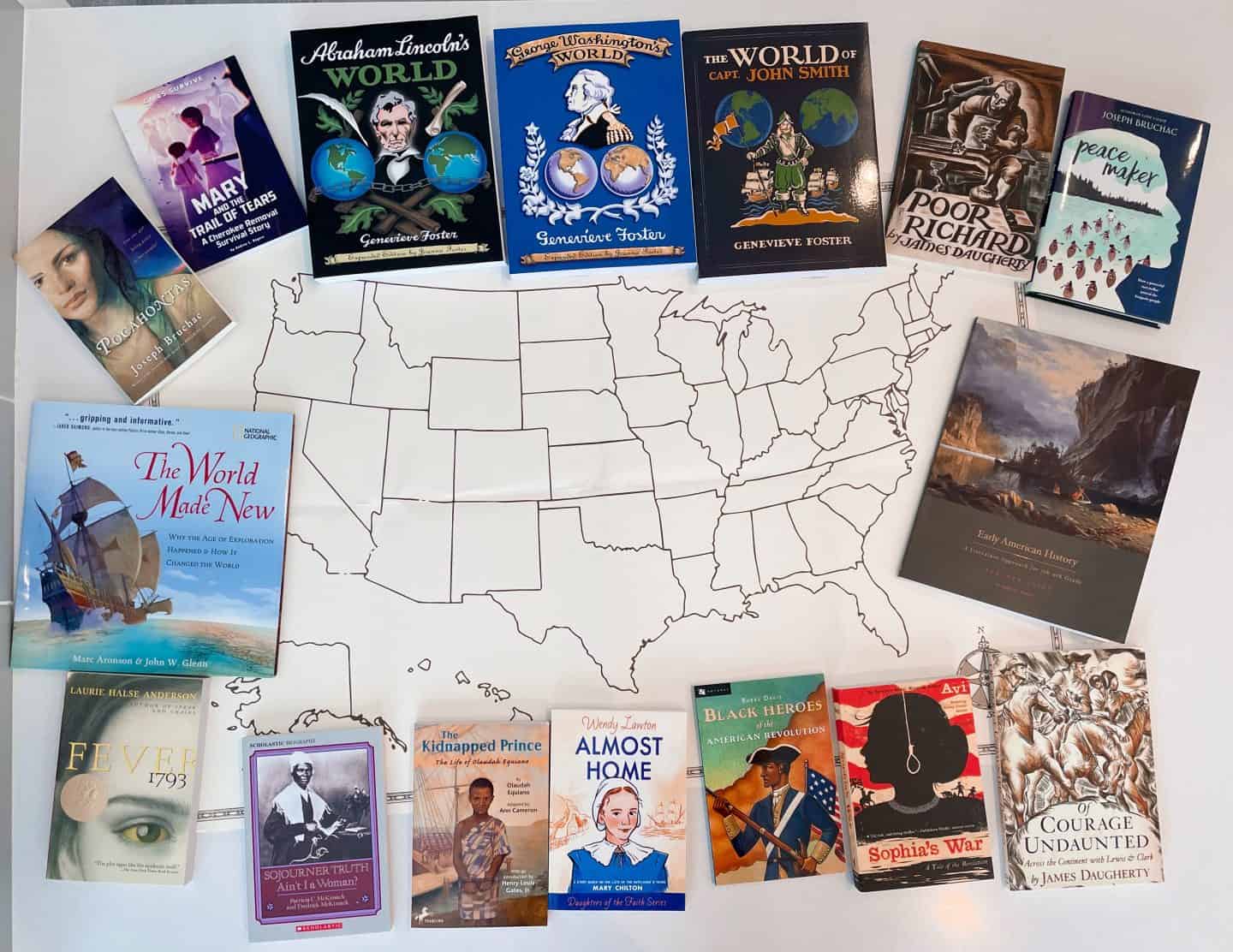
For American history, we’ve incorporated Sonlight. Although it’s a Christian curriculum, we’ve found it incredibly rich in literature and historical context. We simply skip or adapt any religious elements that don’t align with our approach.
Read our honest Sonlight review.
Electives We’re Using in High School
As part of our high school social studies lineup, we’re covering three core areas: U.S. government, economics, and financial literacy. These subjects not only meet credit requirements but also teach real-world life skills that matter.
Government
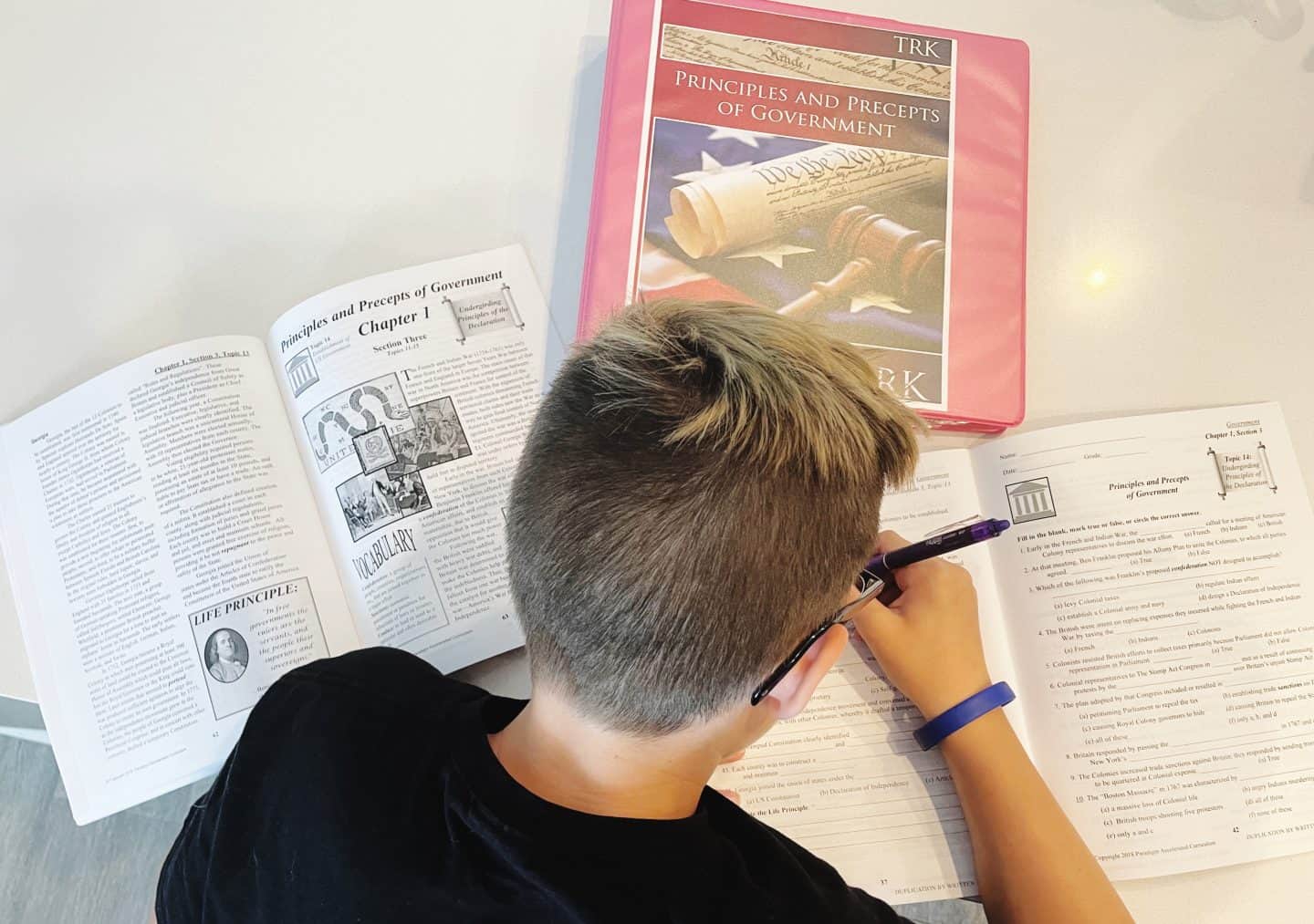
We’re using the Principles and Precepts of Government, which has been a great fit for our high school government curriculum. It’s straightforward and earns a full 0.5 credit in U.S. government.
Economics & financial literacy
For economics, we’ve chosen the self-paced Mr. D Math high school course. It’s well-structured and easy to follow, perfect for independent learning and a solid option for high school economics for homeschool families.
To go deeper with money management and real-world finance, we also use a mix of hands-on resources. You can check out our full list of financial literacy activities for high schoolers, which pair nicely with any core curriculum.
And when it comes time to track grades, we use our Homeschool GPA Calculator to compute both term and cumulative GPAs, including weighted scores for Honors and AP courses.
We’ve also made space for creative subjects over the years, and you can see the programs we’ve enjoyed most in this Fine Arts Options for High School guide.
High School Foreign Language Curriculum
Depending on your child’s goals, some colleges may require an accredited world language curriculum or an AP exam score, so it’s worth checking early.
We chose to take on the challenge of learning Japanese, starting back in grade 7 and continuing through high school. Our main resource is Japanese from Zero, which has been an excellent fit for self-paced study. We supplement it with DuoLingo for extra vocabulary and listening practice.
If we need an accredited option later, we’re considering BYU‘s online program, but it’s quite expensive, so we’re holding off for now.
We’re also using Visual Latin from Compass Classroom, not as a core world language credit, but as an elective. It’s been a fun change of pace and is going well so far.
And since we’re already on a language-heavy path, my son is also taking two years of American Sign Language through Mr. D Math. It gives us a broad mix of language exposure and flexibility.

These are the high school homeschool curriculum resources that have worked best for us. If you’ve found something that’s been a great fit in your own homeschool, I’d love to hear about it in the comments.
Last Updated on 23 October 2025 by Clare Brown
